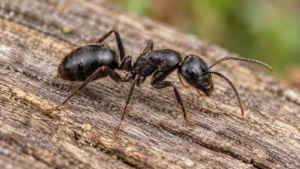
Identification
Carpenter ant damage: what it looks like and when to worry
Understand what carpenter ant damage can reveal in exposed wood, how moisture and termites complicate identification, and which findings deserve a pest or building inspection.
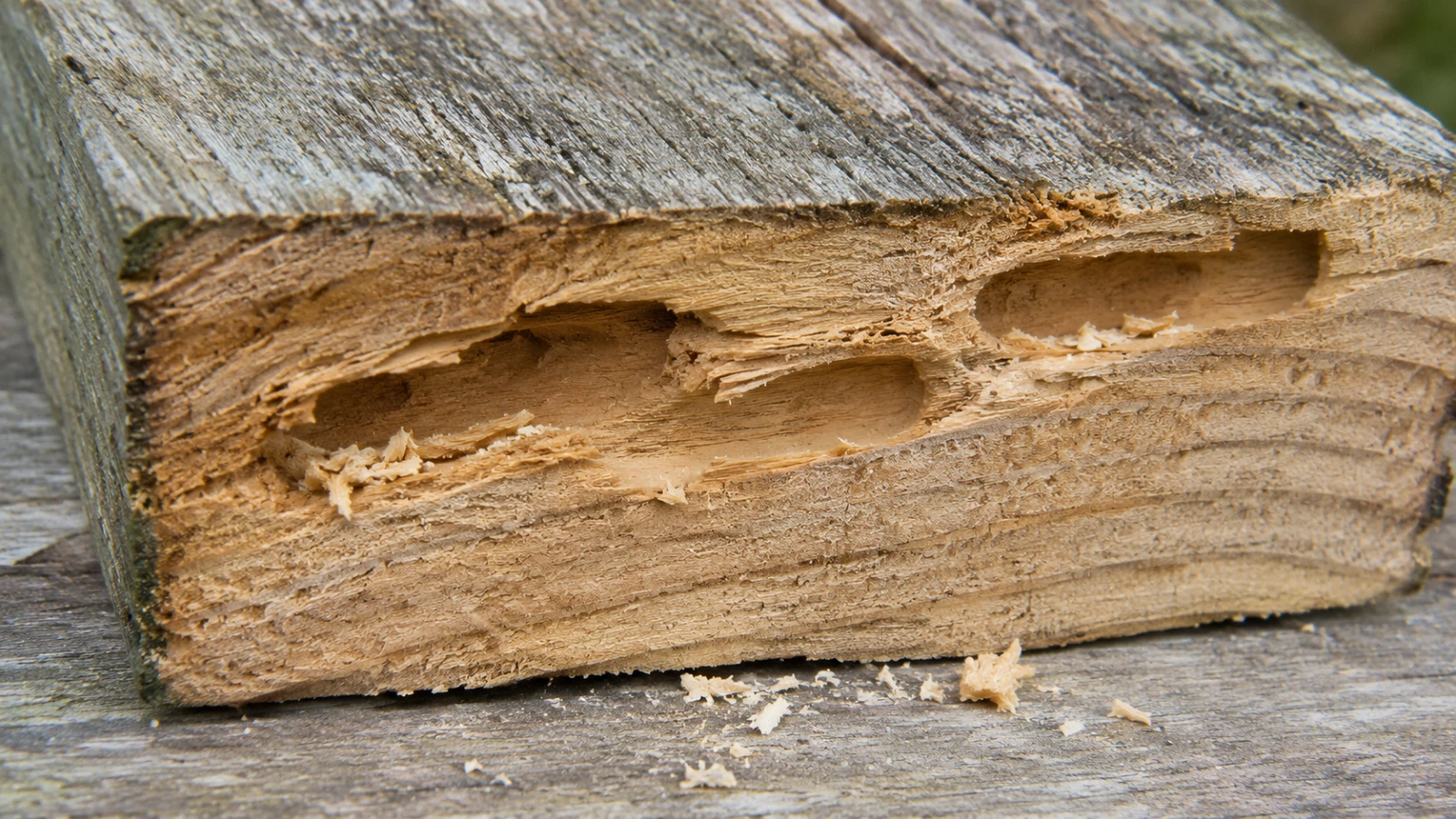
You pull away some loose trim beneath a window and find hollow passages in the wood. Or perhaps a porch post has softened, and you’ve noticed large ants nearby. The immediate questions are what caused the damage and whether the wood is still sound.
Carpenter ants, termites, and moisture-related decay can leave overlapping clues. Knowing what their damage actually looks like helps you avoid unnecessary treatments while recognizing when the wood itself needs professional attention.
What Carpenter Ant Damage Looks Like in Wood
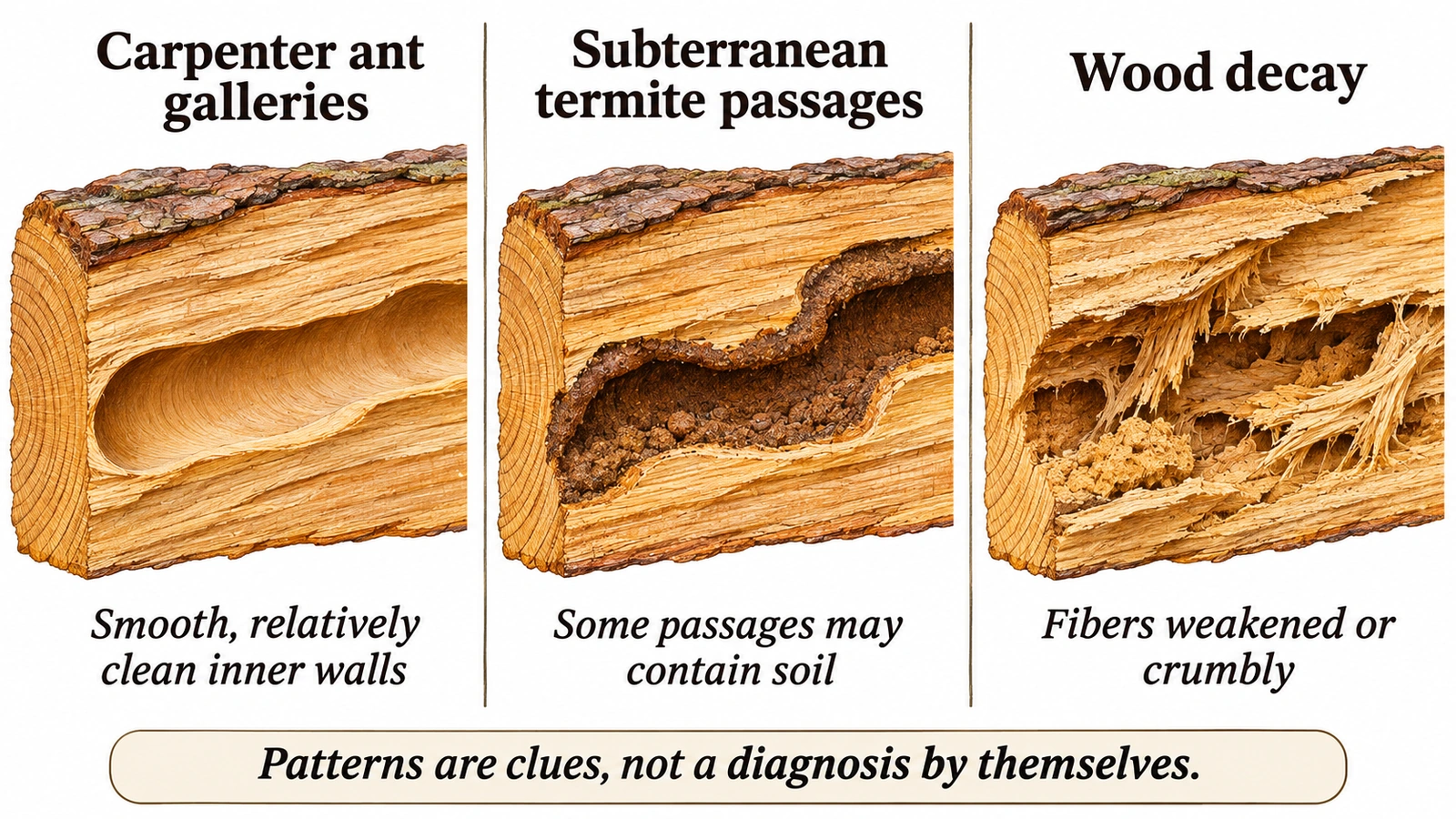
Carpenter ants excavate wood to create nesting space. They don’t eat it. When damaged wood is exposed, their galleries typically have smooth, clean-looking walls, almost as if they’ve been sanded. The tunnels may follow softer portions of the wood grain and connect across harder sections.
The wood around these passages can remain surprisingly intact on the outside. A painted window sill, porch post, or piece of wall framing may conceal cavities underneath. Carpenter ants commonly begin in moisture-damaged or decaying wood, although an established nest can extend into firmer lumber.

Identification in 30 Seconds
- Smooth, clean-walled tunnels: Strongly suggest carpenter ant excavation when exposed inside wood.
- Mud or soil-like material in the passages: Raises concern about subterranean termites rather than carpenter ants.
- Dark, soft, crumbling wood without distinct galleries: Points more toward moisture-related decay.
- Tiny round openings with very fine powder: Consider wood-boring beetles.
- A hollow area beneath intact paint: Indicates possible hidden deterioration, but the surface alone cannot reveal its extent.
An exposed gallery is more informative than the size of an opening in the outer surface. A small opening may lead into a larger concealed space, while visible damage in a short piece of decorative trim may be relatively localized.
How to Check Suspected Carpenter Ant Damage
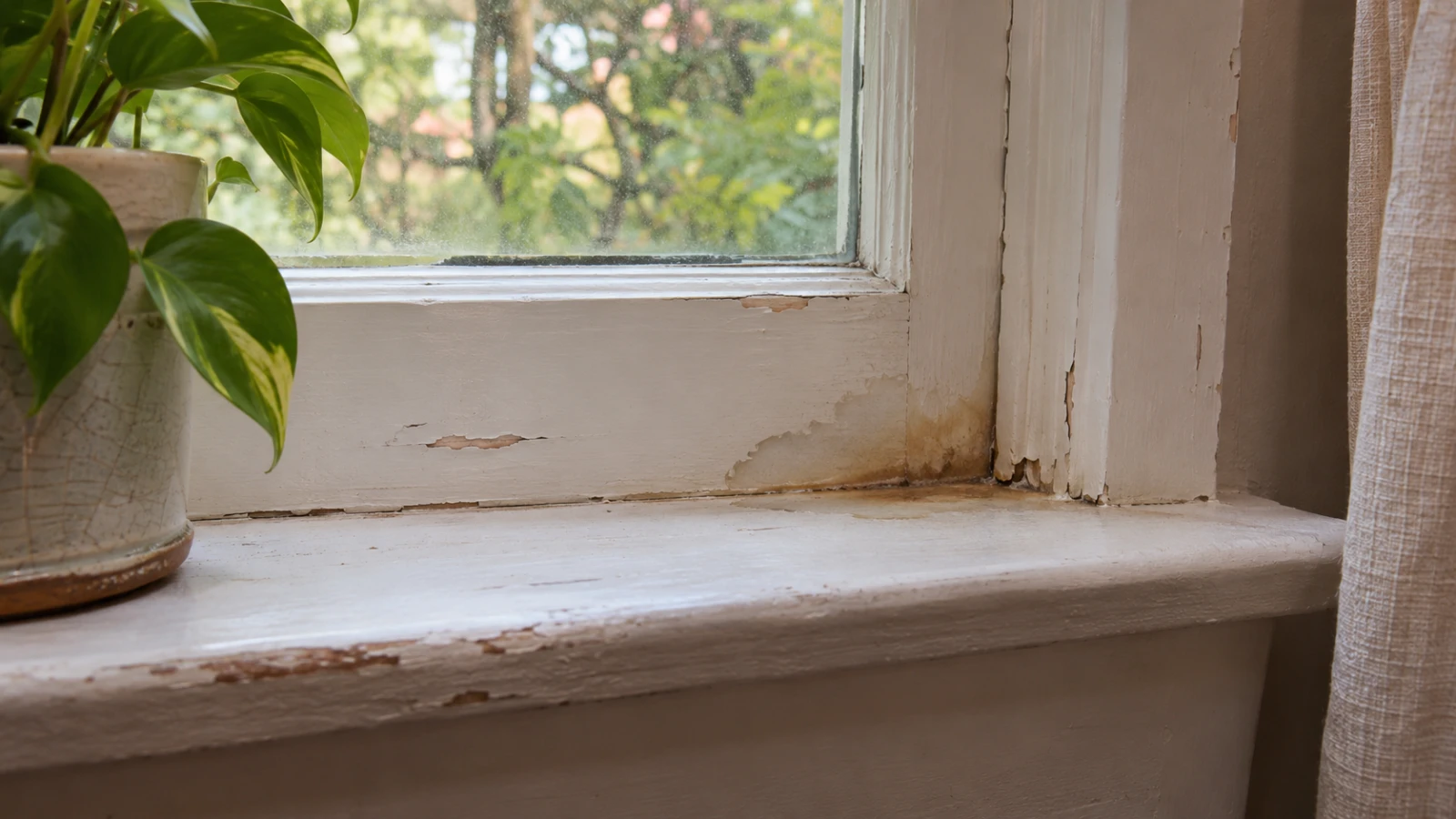
Start with areas of wood that are already exposed. Take one photograph showing the whole location, then closer photographs of the cavities, edges, and surrounding wood. If possible, place a real ruler alongside the damaged surface so its dimensions can be judged without relying on camera magnification.
Record exactly where the damaged wood sits. Is it window trim, a door frame, a porch post, a floor joist, or another structural member? Also look for water staining, deteriorated caulk, roof or gutter leaks, or plumbing problems nearby. A board that feels dry today may have been wet in the past.
Three observations will help you decide what needs checking next:
- Inside the exposed damage: Look for smooth gallery walls, soil-like deposits, or wood that is breaking down without defined tunnels. Inspect only accessible surfaces; don’t cut or pry open supporting lumber.
- Around the damaged area: Note staining, dampness, peeling finishes, or other signs of past or continuing water intrusion. Moisture damage can be part of the same problem.
- Beyond the visible opening: Identify which surfaces remain concealed. The length of a cavity behind drywall, beneath flooring, or inside a support cannot be established by looking at one exposed edge.
Loose wood shavings and small openings can help locate possible activity, but they aren’t a measurement of how much timber has been removed. For interpreting debris, openings, and ant sightings, see the separate guide to signs of carpenter ants.
Identification Mistakes
- Calling every hollow or soft board carpenter ant damage without examining the wood pattern.
- Treating a pile of sawdust-like debris as a measure of structural damage.
- Assuming intact paint or an undamaged outer face means the wood underneath is sound.
Key Clue
The interior of an exposed cavity tells you more than a single surface opening. Clean, smooth galleries support carpenter ant excavation, while soil-filled passages or wood crumbling without clear tunnels point toward different explanations.
What to Watch For
Carpenter ants can nest in wood already weakened by moisture or decay. Eliminating the ants will not restore that wood’s strength or repair the original water problem. In an affected structural member, the condition of the remaining timber needs separate attention.
Carpenter Ant Galleries, Termites, or Wood Rot?
Different causes of wood deterioration can occur in the same house, sometimes even in the same piece of lumber.
Subterranean termites consume wood and often leave soil-like material inside their galleries. They may also construct mud tubes along foundations or other surfaces. Drywood termites behave differently and can leave small, hard fecal pellets rather than mud. A lack of mud alone is therefore insufficient to identify carpenter ants.
Moisture-related wood decay can cause discoloration, softness, splitting, or a brittle, crumbly texture. Unlike a cleanly excavated gallery, decay breaks down the wood itself. It may already have weakened the material before carpenter ants begin nesting there.
Wood-boring beetles are another possibility. Some leave small, rounded exit holes with powder-fine dust. Ordinary construction or repair work can also produce loose wood debris. Those observations need to be considered in their proper context.
These patterns help narrow the possibilities without turning one feature into a final diagnosis.
The pattern matters, but so does the surrounding material. Clean galleries beside a rotten section can indicate both excavation and decay rather than a single cause.
| Observation | More consistent with | What it suggests | Useful next check |
|---|---|---|---|
| Clean, smooth, connected galleries | Carpenter ant excavation | Wood has been hollowed for nesting | Look for corroborating ant activity and moisture conditions |
| Soil-lined cavities or mud tubes | Subterranean termites | Possible termite feeding or travel | Arrange appropriate termite identification |
| Hard, fairly uniform pellets near openings | Drywood termites | Possible drywood termite activity | Preserve the material for pest identification |
| Soft, stained, cracked, or crumbly wood | Moisture-related decay | Wood fibers have deteriorated | Identify the water source and assess the affected wood |
| Small, round exit holes with very fine powder | Wood-boring beetles | Possible beetle emergence from wood | Identify the insect and examine the affected material |
How Serious Is Carpenter Ant Damage?
The seriousness of carpenter ant damage depends less on the number of ants seen than on where the excavation occurs, how much sound wood remains, and whether moisture or decay has already weakened the material.
Damage to a removable piece of trim has different implications from cavities in a floor joist, sill plate, beam, or load-bearing post. Carpenter ant galleries can develop slowly, but damage in an important structural member may still be significant. A photograph cannot establish its remaining load-bearing capacity.
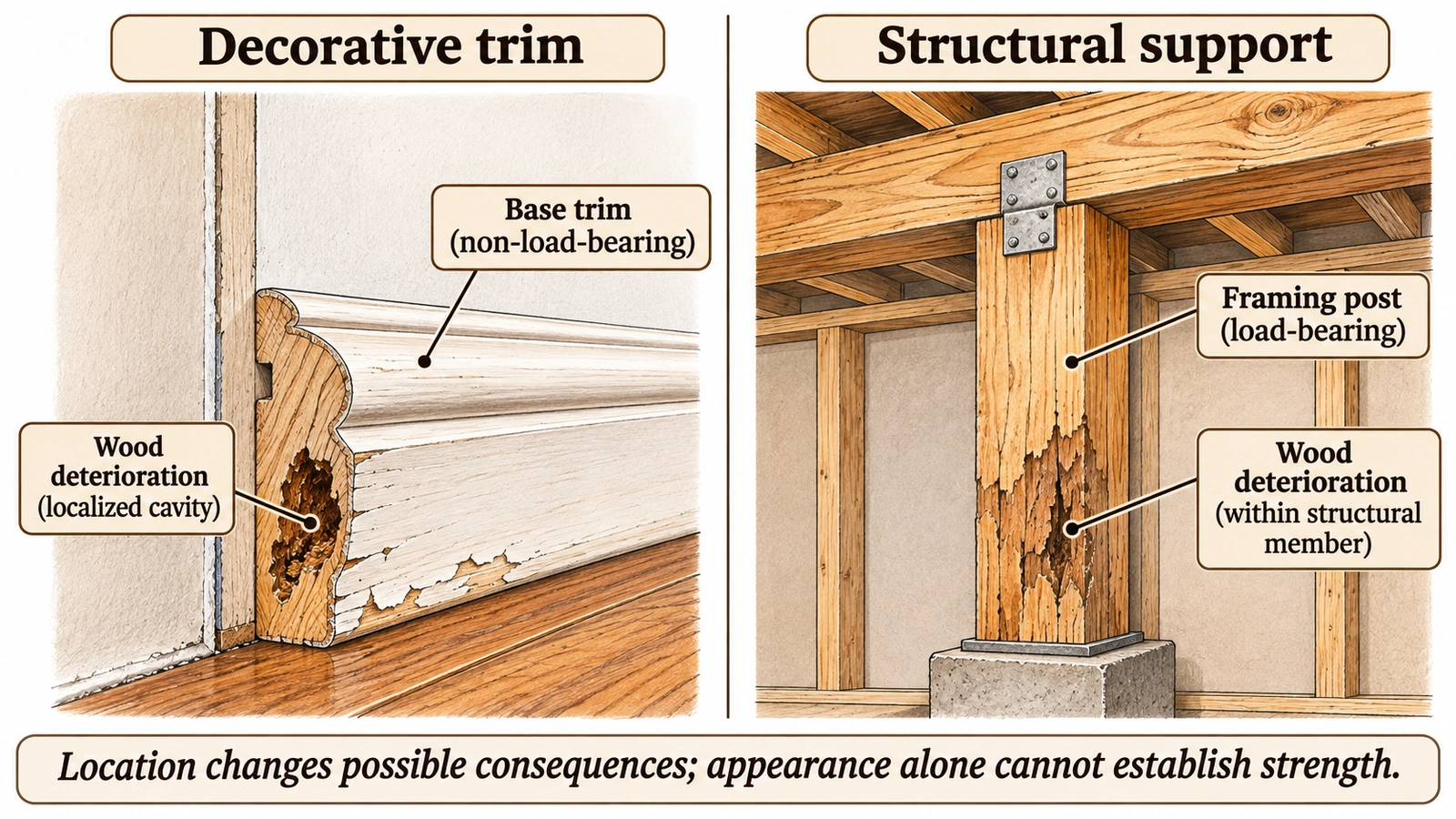
Use the wood’s location and condition to determine your next step:
- Localized damage to decorative trim: If the surrounding material appears sound and there are no indications of instability, document the affected area and check for moisture or continuing pest activity. Ordinary repair may be sufficient once the cause has been addressed.
- Exposed galleries or deterioration near framing: Arrange a closer assessment when cavities extend toward structural wood, moisture is recurring, or possible carpenter ant activity continues. A pest specialist can investigate the insect activity, while a qualified building professional can evaluate the wood.
- Damaged supports or visible instability: A weakened porch post, deteriorated joist, sagging floor, or loose stair structure warrants prompt building assessment. Avoid using or further disturbing an affected area that may be unsafe until a qualified professional evaluates it.
The distinction between pest activity and structural condition is important. A pest-control professional can identify carpenter ants and investigate whether a nest is active. A qualified contractor or structural engineer is the appropriate person to determine whether a damaged structural member needs reinforcement, replacement, or another repair.
Whatever the extent of excavation, unresolved moisture should not be overlooked. Repairing an active leak and addressing damaged wood may be just as important as controlling the insects.