Explanation
What do cockroaches eat? Food sources, water, and survival
Roaches eat everything from grease and crumbs to pet food and hidden organic debris. See why moisture can matter even more, how long roaches can go without food, and where these resources hide at home.
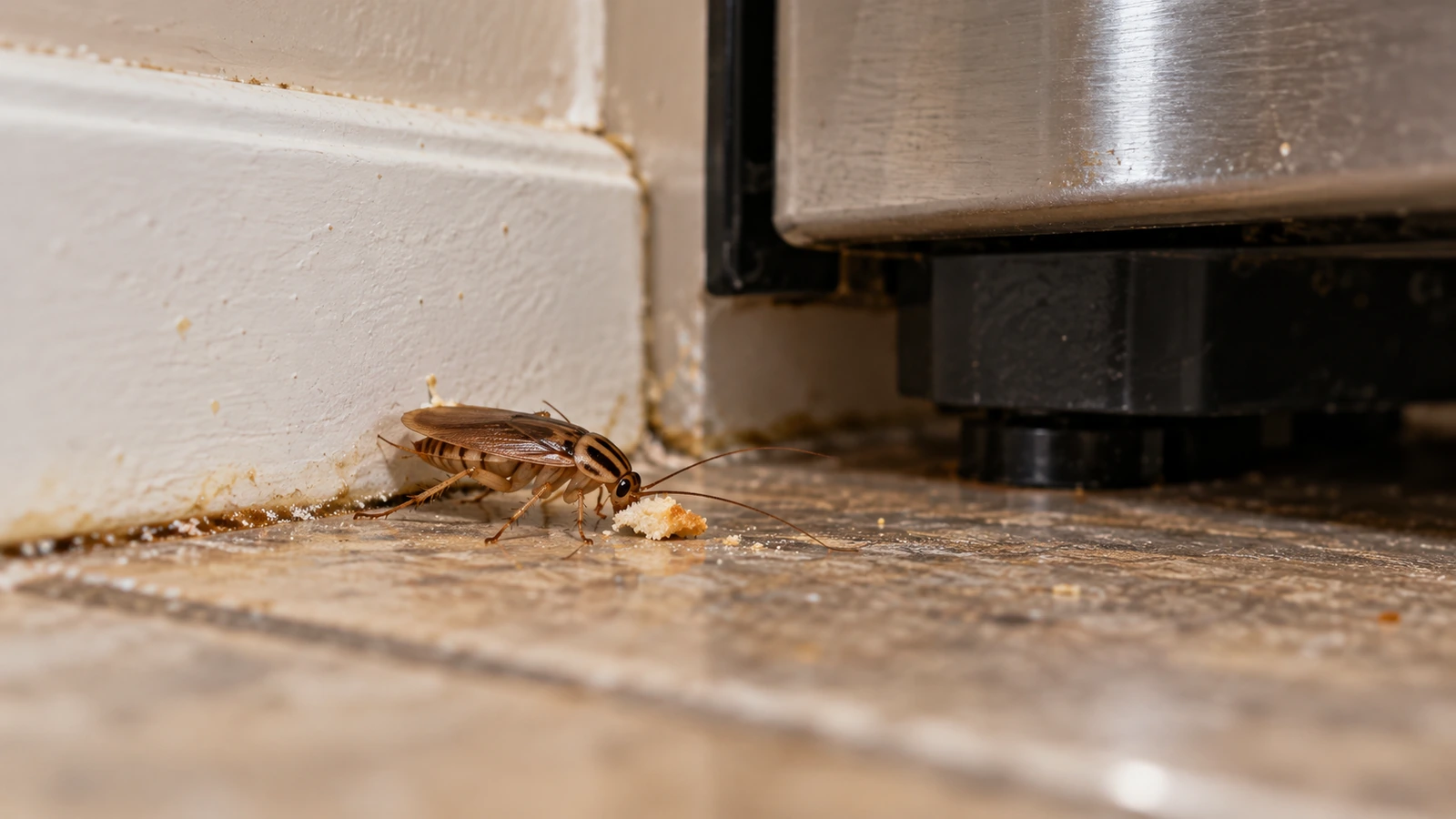
You can wipe every countertop and still spot a roach crossing the kitchen at night. The missing clue may be a thin film of grease behind the stove, a few pieces of pet food, or moisture beneath the sink.
Understanding these small resources helps explain where cockroaches feed, why they persist between meals, and which conditions matter most inside your home.
Quick Answer
Cockroaches are omnivorous scavengers. They eat crumbs, grease, sweets, meat scraps, pet food, garbage, and other organic material. They can also use less obvious food sources, including starchy adhesives and decaying matter. Water is often the tighter survival limit: some roaches can endure weeks without food when moisture remains available.
What Do Cockroaches Actually Eat Around the House?
Roaches are generalist feeders, but they seek organic material rather than consuming every surface they crawl across. German cockroaches commonly feed on starches, sugars, grease, meat scraps, and other kitchen residues. They are especially likely to forage near appliances, cabinets, and areas where food accumulates.
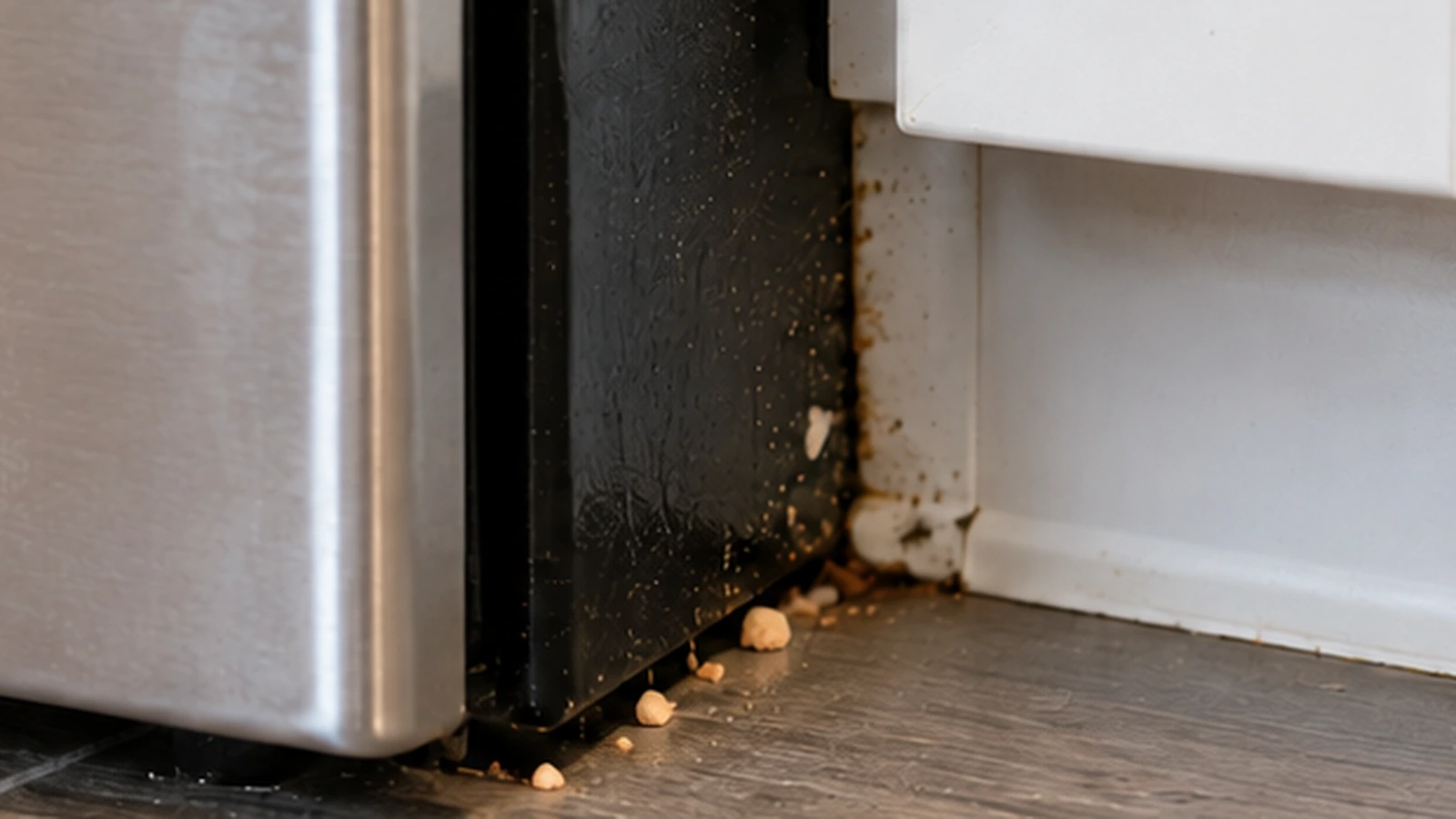
An unnoticed smear of grease or a few crumbs trapped in a narrow gap may provide food long after the countertop has been cleaned.
Everyday Food Sources
The most accessible foods are often familiar household leftovers:
- Crumbs from bread, cereal, crackers, and other starchy foods.
- Grease, cooking oil residue, and meat scraps around stoves and food-preparation areas.
- Sugar, syrup, sticky drink residue, and spilled sweet foods.
- Dry or wet pet food, including pieces scattered around feeding bowls.
- Food waste in trash cans, recycling containers, sink strainers, and unwashed dishes.
A sticky jar lid or a few pieces of kibble beneath a cabinet can offer food without anything resembling a full meal.
Cockroaches usually forage after dark, so food left accessible overnight can be particularly useful to them.
What Do Roaches Eat When Ordinary Food Is Scarce?
Cockroaches can turn to less obvious organic materials when preferred food is limited.
Depending on the species and circumstances, they may feed on starch-based glues, residues on paper packaging, decaying plant material, hair, skin flakes, and other organic debris.
Some cockroaches also gnaw paper products or bookbinding materials. However, materials such as cardboard have another important function: their folds and gaps provide protected hiding spaces.
This flexibility helps explain how roaches can continue feeding in places where no obvious food has been left out.
How Long Can Cockroaches Survive Without Food or Water?
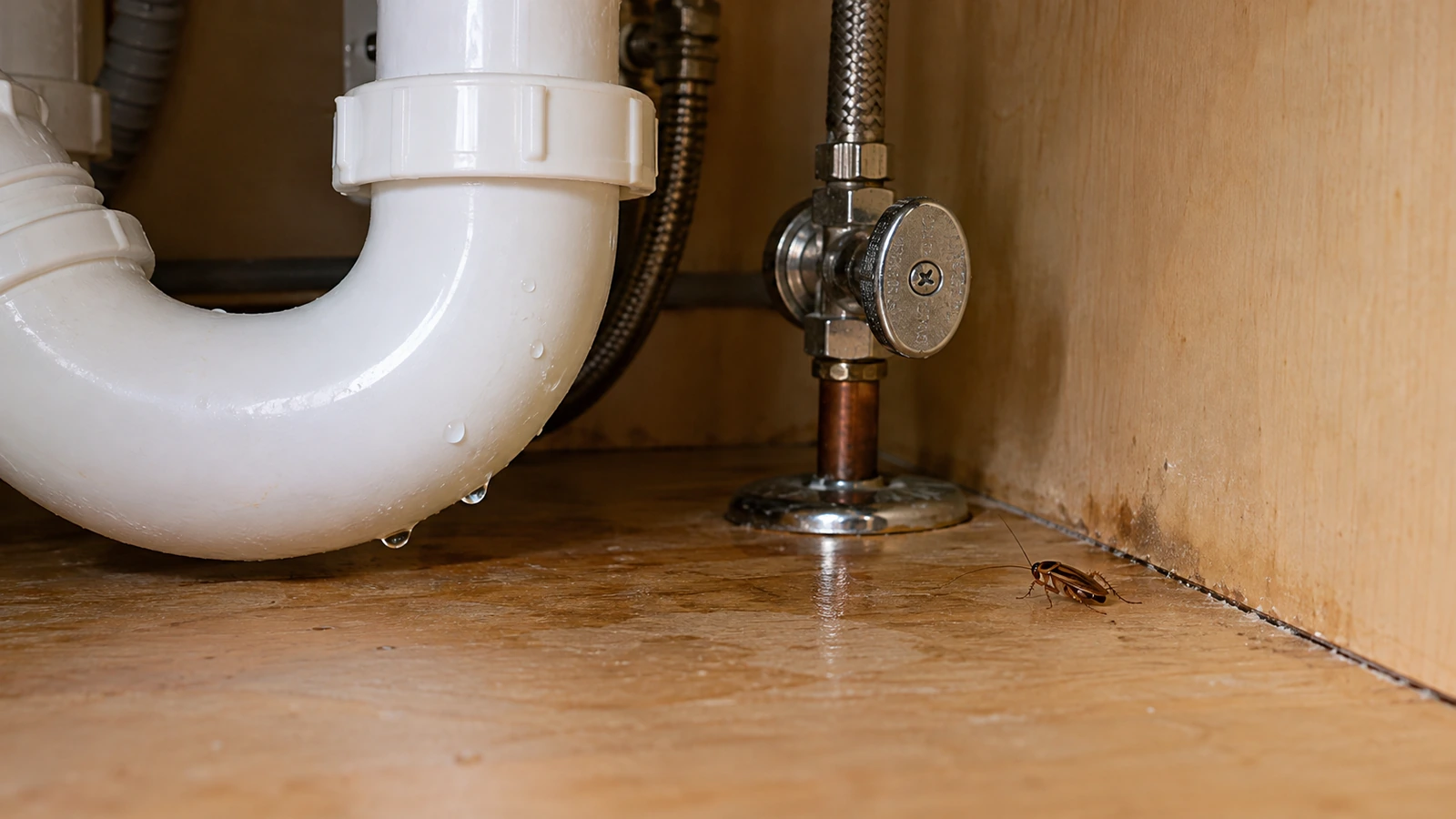
Food deprivation and water deprivation affect cockroaches differently. A roach with access to moisture can survive much longer between meals than one deprived of both food and water.
Inside a home, accessible water may come from small sources: droplets around plumbing, condensation beneath a sink, wet areas near appliances, or water around a pet bowl. A visible puddle is unnecessary.
Without Food, but With Water
Cockroaches can survive for weeks without eating, and some species last considerably longer under favorable conditions.
In controlled tests involving newly emerged adult females at about 81°F, German cockroaches survived an average of roughly 35 days with water but no food. American cockroaches averaged about 90 days under the same conditions.
These figures illustrate how substantially survival differs between species. They are experimental averages rather than a reliable countdown for a household infestation. Temperature, humidity, life stage, and access to even tiny food sources can change the outcome.
Without Access to Water
Water deprivation generally shortens survival more sharply.
In the same controlled tests, German cockroach females provided with dry food but no water survived an average of about 15 days.
Dry food alone cannot fully compensate for the loss of moisture. Conversely, a home with no visible standing water may still contain accessible moisture in damp materials, condensation, or food.
This is why removing crumbs while leaving a persistent moisture source can have a limited effect on cockroach activity.
Does the Cockroach Species Make a Difference?
Yes. Both feeding opportunities and survival conditions vary.
German cockroaches are closely associated with indoor kitchens and bathrooms, where human food, moisture, and protected spaces are often concentrated.
American cockroaches commonly exploit damp utility areas, drainage environments, garbage, and decaying organic matter. They can survive longer without food under some conditions.
The location of a roach can therefore help explain which resources it may be using, although feeding behavior alone is insufficient for species identification.
If you are unsure which type you have encountered, our cockroach identification guide provides the broader context.
Good to Know
Cockroaches can also scavenge dead cockroaches and feed on waste left by other roaches. These hidden organic materials help explain why removing ordinary food scraps is useful but rarely enough to starve every cockroach hiding inside a building.
What Their Diet Means for Your Home
Understanding what roaches eat changes where you look for the resources supporting them.
The important places are not always the visibly dirty ones. Small food deposits and recurring moisture can remain in a kitchen or bathroom that otherwise looks clean.
Look Beyond the Countertop
Food residue often collects in places that receive less attention during routine cleaning.
Check the edges of the stove, the space beneath the refrigerator, crumbs around small appliances, sticky recycling containers, and areas around pet-feeding stations.
A small amount of residue in a protected location can keep offering food repeatedly.
Keeping opened foods in tightly closed containers, cleaning up grease, and removing accessible food waste reduce these opportunities without requiring the entire kitchen to be emptied or dismantled.
Pay Attention to Recurring Moisture
A kitchen sink may be dry when you check it, while a pipe connection or cabinet seam remains damp.
Moisture around refrigerator components, plumbing, or frequently wet surfaces may continue to provide water. These small sources deserve attention because food availability alone does not determine survival.
Repairing leaks and cleaning up spills addresses resources that regular surface cleaning can miss.
Why Removing Food Helps, but Is Only Part of Control
Accessible food can compete with cockroach baits. Reducing alternative food makes it easier for roaches to encounter and feed on properly placed bait.
That does not mean a kitchen must be completely food-free before bait can work. The location and suitability of the bait, the species involved, and where roaches are hiding also matter.
Sanitation helps reduce the resources supporting cockroach populations. It works best as part of broader control rather than as an attempt to wait for every insect to starve.
What to Watch For
Do not withhold drinking water from pets in an attempt to dehydrate cockroaches. Keep fresh water available for your animals, clean feeding areas and surrounding spills, and focus on household leaks and accessible food residues instead.
Frequently Asked Questions
Do Cockroaches Eat Cardboard and Paper?
Cockroaches may gnaw paper products and feed on starch-based adhesives or organic residues associated with packaging. Corrugated cardboard is also a useful hiding place, and boxes can transport concealed roaches into a home. Its shelter value is often more important than its value as food.
Can Cockroaches Eat Soap?
Some cockroaches may nibble soaps containing fats or other organic ingredients. Soap is an occasional alternative rather than a preferred food source. Ordinary food debris, grease, and accessible moisture are more useful places to focus your attention.
Explore this topic further: