Comparison
Do cockroach foggers work? Bug bombs vs. targeted control
Cockroach foggers promise broad treatment, but indoor infestations often require a more targeted approach. Compare bug bombs with baits and nonchemical measures, including their effectiveness, exposure risks, and practical limitations.
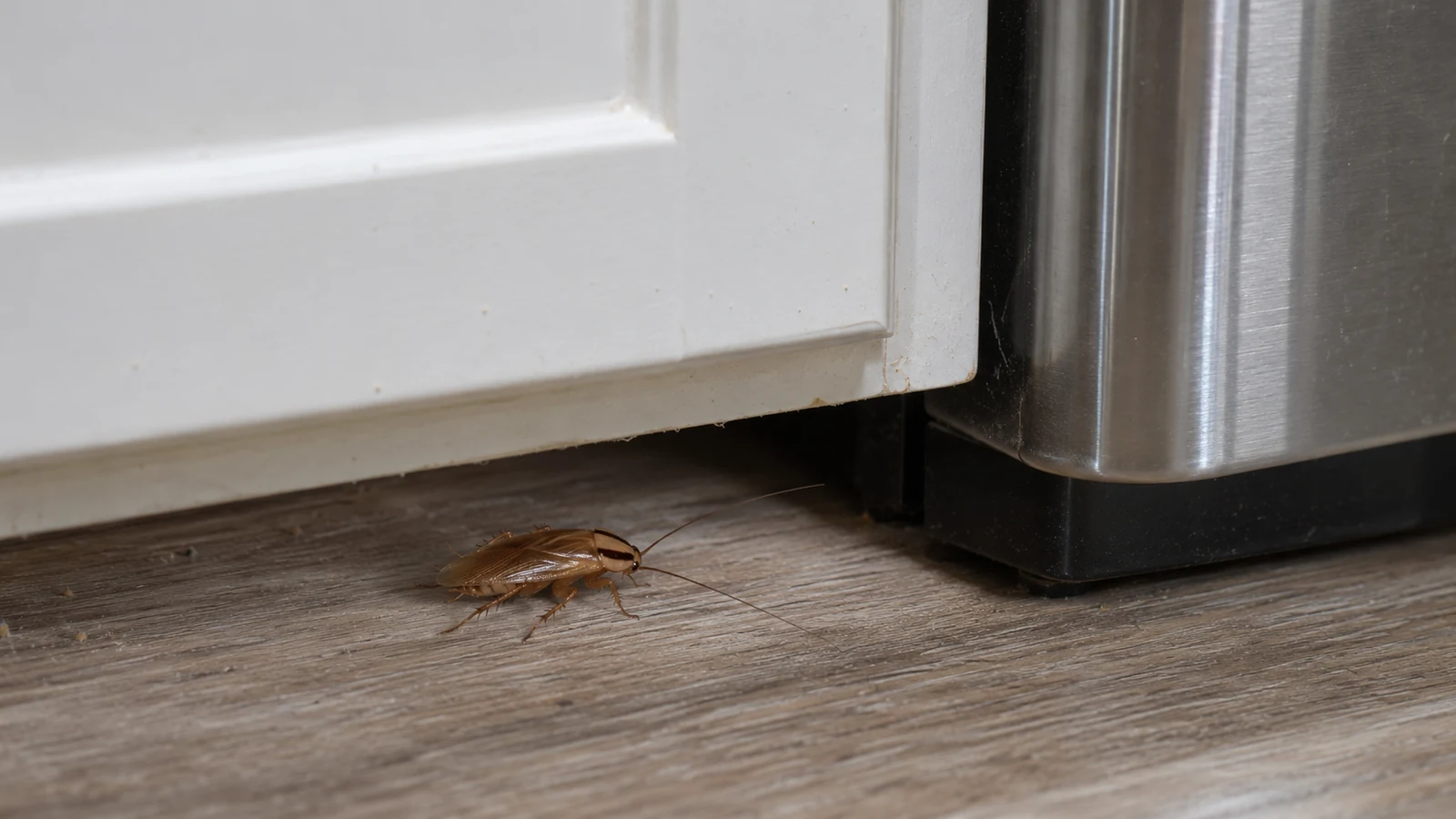
Finding roaches behind your refrigerator can make treating the entire room seem like the quickest solution. A bug bomb may kill some exposed cockroaches, but the insects you see afterward tell you little about the ones still hiding. For an established German cockroach infestation, targeted control is generally the better choice.
What matters when comparing a fogger with targeted control?
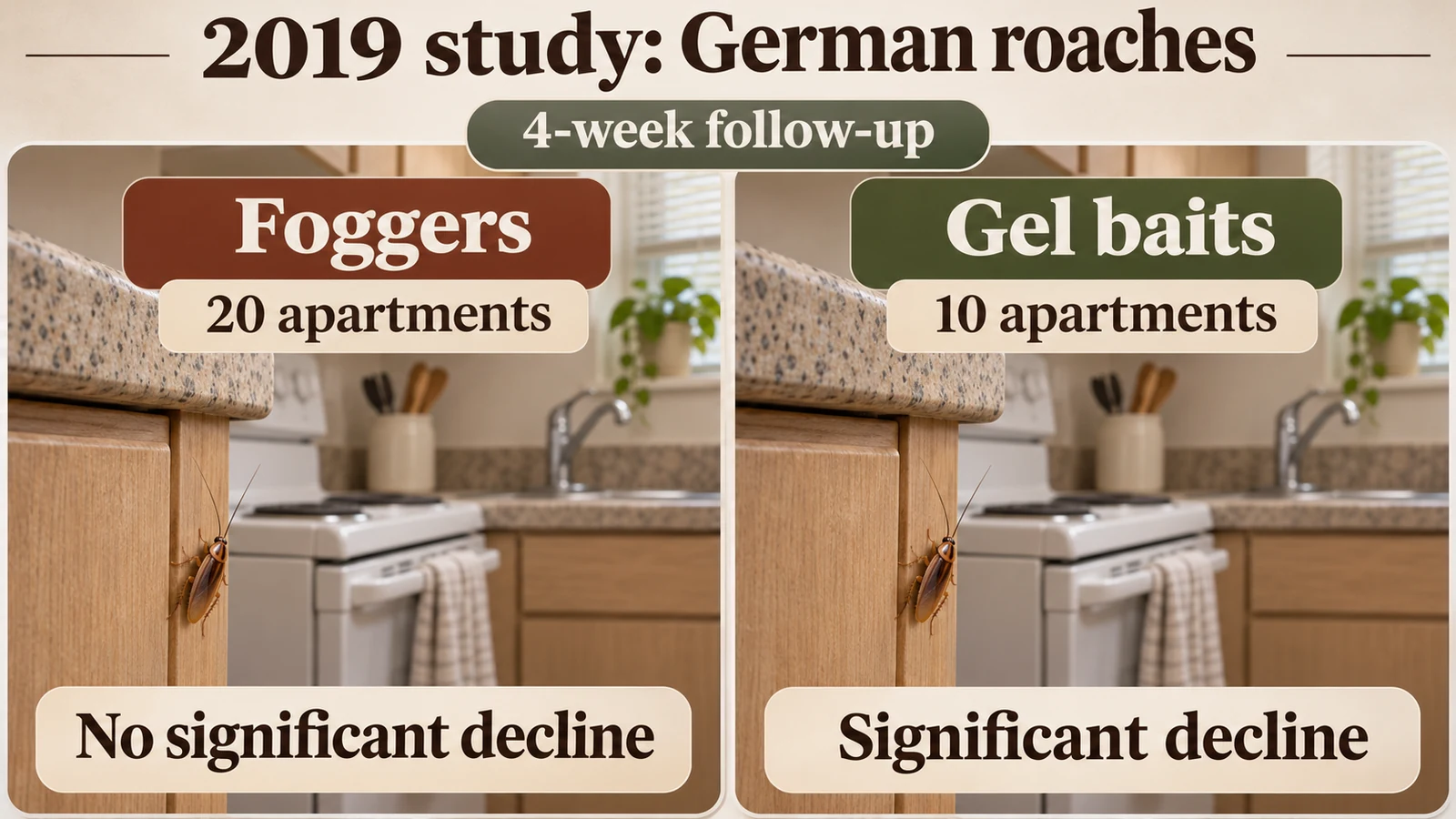
In a 2019 field study, researchers compared four total-release fogger products in 20 infested apartments with two gel bait products in 10 other apartments. None of the tested foggers significantly reduced German cockroach populations over four weeks, while both gel bait treatments produced significant declines.
These findings apply to the products and German cockroach infestations studied. They are particularly relevant if small indoor-breeding roaches keep appearing around your kitchen or bathroom. They do not mean that every fogger kills no insects.
Access to hiding places
German cockroaches spend much of their time in sheltered gaps, including spaces behind cabinets and appliances. Airborne droplets can settle on the tops of counters and other exposed surfaces without delivering effective amounts of insecticide into those protected areas.
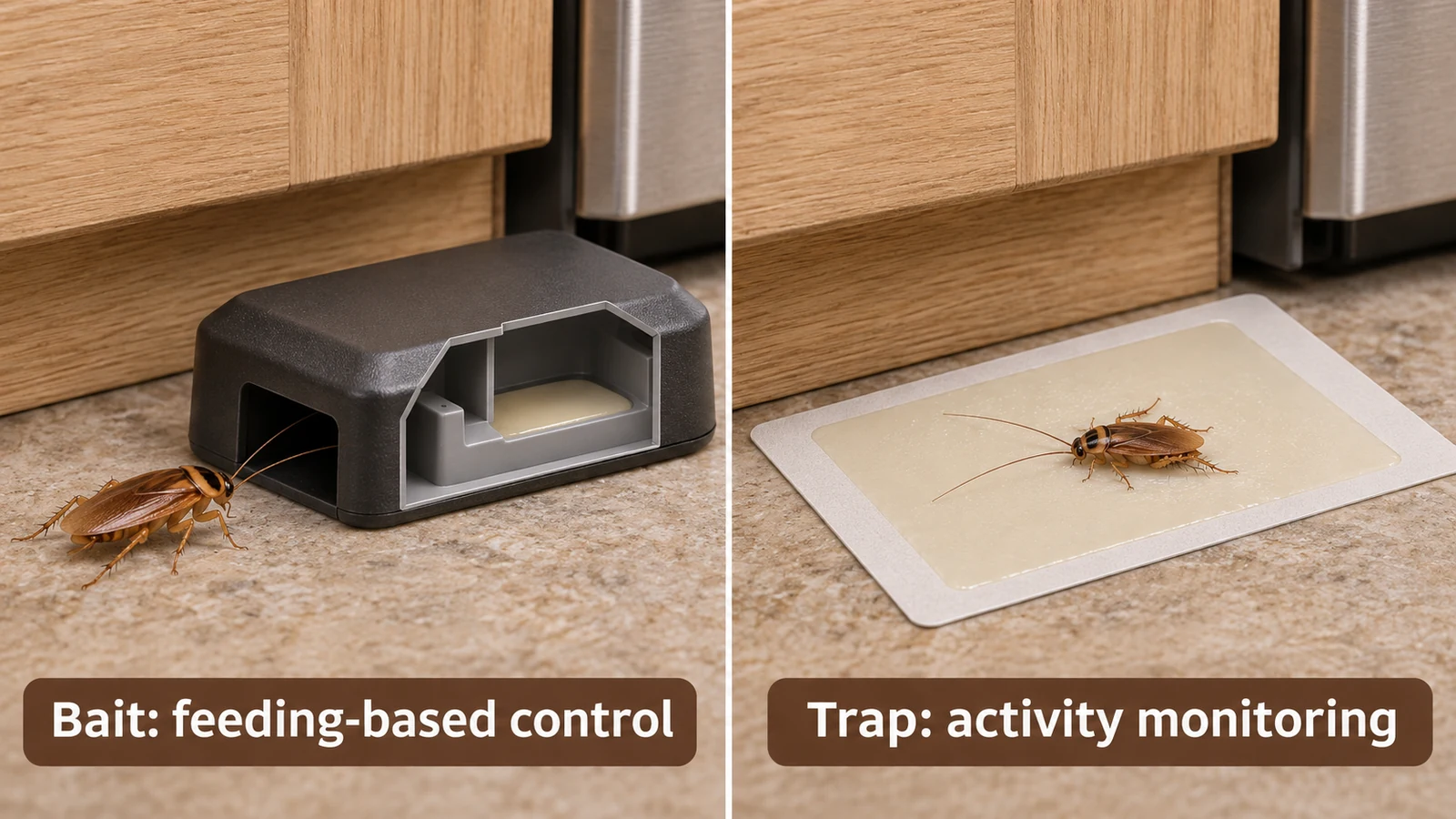
Baits work differently: a cockroach encounters and consumes the insecticide as it moves through the home in search of food. Success still depends on whether the roaches accept the bait and are able to reach it.
Resistance and recurring activity
Resistance to pyrethroid insecticides, a common class of active ingredients in foggers, can further reduce their effectiveness against German cockroaches. A roach surviving treatment may have avoided exposure, received too little insecticide, or been resistant to the active ingredient.
Seeing dead adults after fogging is therefore a poor measure of population control. Living nymphs, surviving adults, and viable egg cases can sustain an infestation after visible activity temporarily declines.
Here is how these approaches compare in a home with established indoor cockroach activity.
| Criterion | Total-release fogger | Targeted insecticide bait | Monitoring and nonchemical measures |
|---|---|---|---|
| Main purpose | Expose susceptible insects to insecticide | Reduce the population through feeding | Locate activity and reduce favorable conditions |
| Access to hidden roaches | Limited delivery into protected gaps | Reaches roaches that encounter and eat bait | Traps sample moving insects; habitat changes reduce support |
| Evidence for German roach control | Poor results in the 2019 household study | Significant reductions with the tested gel baits | Supports control and helps assess progress |
| Pesticide exposure | Broad airborne release and surface deposits | Localized pesticide use; exposure still possible | No pesticide from these measures alone |
| Best fit | Generally a poor choice for established indoor infestations | Confirmed indoor-breeding cockroach activity | Assessment, ongoing monitoring, and support for treatment |
Understand the trade-offs and safety risks
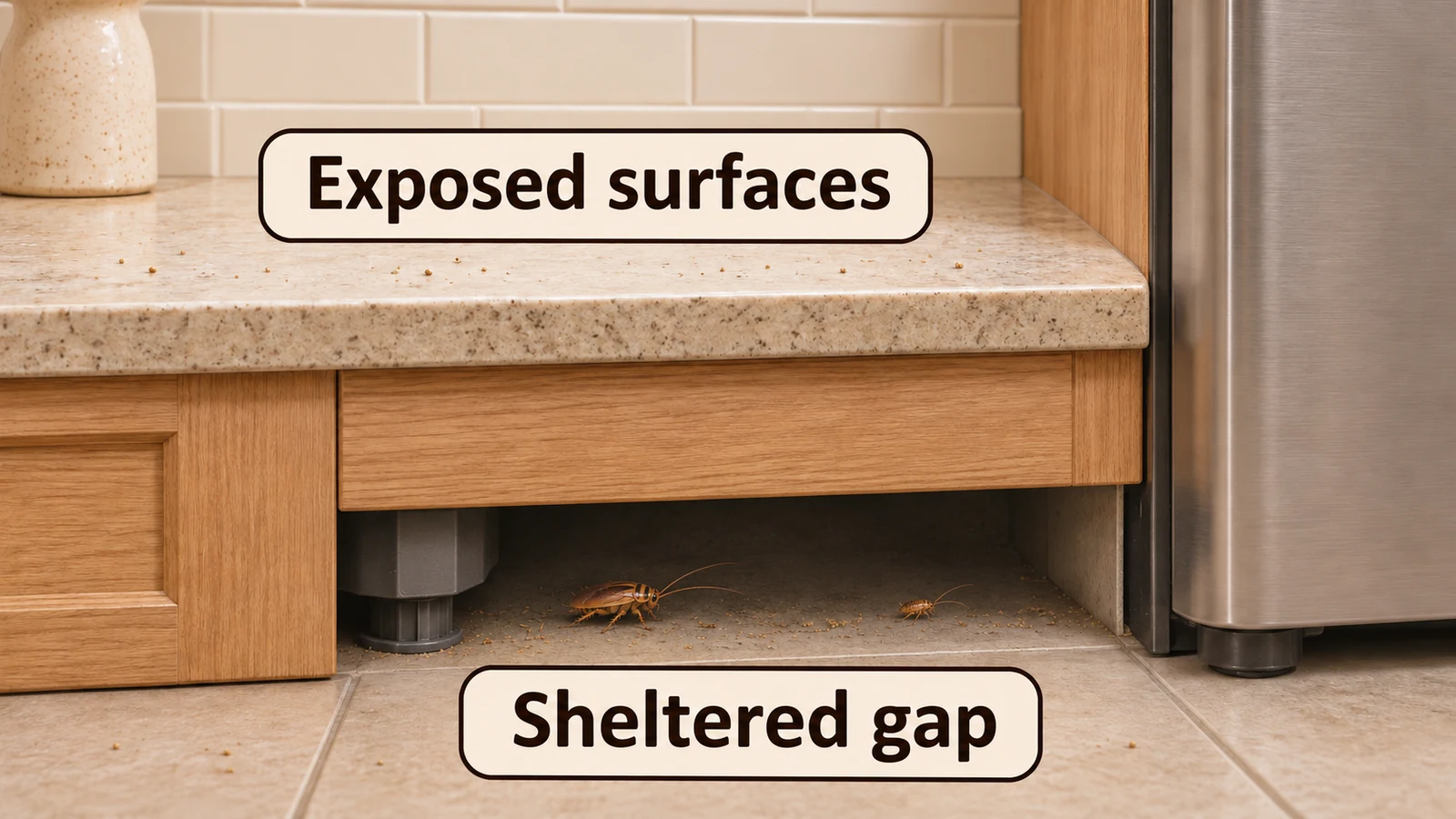
A fogger can deposit insecticide where household members have frequent contact, rather than where roaches spend most of their time. In the 2019 study, residues increased substantially on exposed kitchen surfaces after fogging. Some sampled surfaces still had elevated residue levels one month later.
Exposure and fire hazards
Fogger aerosols can pose a fire or explosion hazard because their propellants are often flammable. Exposure to the spray or premature reentry can cause illness, and people with asthma may be especially vulnerable to respiratory effects.
In the United States, pesticide products must be used consistently with their labels. A fogger’s approved locations, food and pet precautions, and reentry and ventilation requirements depend on the product. People and pets must stay out of the treated premises as directed by the label. If you cannot meet the label’s evacuation, reentry, and ventilation requirements, do not use the fogger. Never improvise an application in a cabinet or other small enclosed space.
If you have already used a fogger, follow that product’s directions for reentry and cleanup. For suspected pesticide exposure, contact Poison Control at 1-800-222-1222. Seek emergency medical help for severe symptoms such as trouble breathing.
Why targeted treatment is not risk-free
A bait contains insecticide too. It must be suitable for the pest, the application location, and the people and animals in the home. Follow the product label and keep it inaccessible to children and pets. An enclosed station can be an option where exposed gel would be unsuitable.
Baits also take time to affect a population. Their performance can suffer when roaches have abundant competing food or reject the formulation. Learn more about choosing and using cockroach bait if you need a targeted treatment.
The advantage of targeting the infestation
For indoor-breeding roaches, baiting directs treatment toward the insects’ feeding behavior rather than distributing insecticide broadly across the room.
What to Watch For
A fogged apartment can still contain hidden roaches and pesticide residues. A temporary drop in sightings is not a reason to repeat fogging or add another pesticide indiscriminately.
Which approach should you choose?
If you see small roaches repeatedly indoors
For likely German cockroach activity, choose a targeted bait-based approach supported by monitoring and habitat management. If you are unsure which bait format suits the location, compare enclosed stations with roach gel bait rather than treating the entire room by default.
If you find an occasional large roach
Some species enter homes from outside or from adjoining areas without establishing a breeding population indoors. Use cockroach traps to clarify where the insects are appearing and address likely entry routes or favorable conditions. A fogger is a poor response to occasional introductions.
If roaches return after fogging
Do not judge the result solely by the number of dead insects. Check whether live roaches continue to appear and whether the same areas remain active. Inform anyone providing pest control which product was used, so subsequent treatment decisions account for existing pesticide residues.
In an apartment building, recurrent activity can involve neighboring units or shared service openings. Coordinate with property management if that is a plausible source. Consider a licensed pest control professional if activity is widespread, inaccessible, or persists despite appropriate targeted measures.
Why baiting and monitoring work well together
A bait targets the population, while a sticky trap tells you where activity continues. Comparing trap catches from equivalent locations and observation periods helps you assess progress and identify areas that may need attention.
Addressing food, water, and shelter at the same time supports both approaches. These complementary measures are generally more useful for established indoor roaches than repeated room-wide fogging.
Explore this topic further: