Identification
Cockroach in the bedroom: what it means and how to check
A roach in your bedroom may be a stray visitor or a sign of activity nearby. Use physical clues, targeted checks, and monitoring to choose your next step.
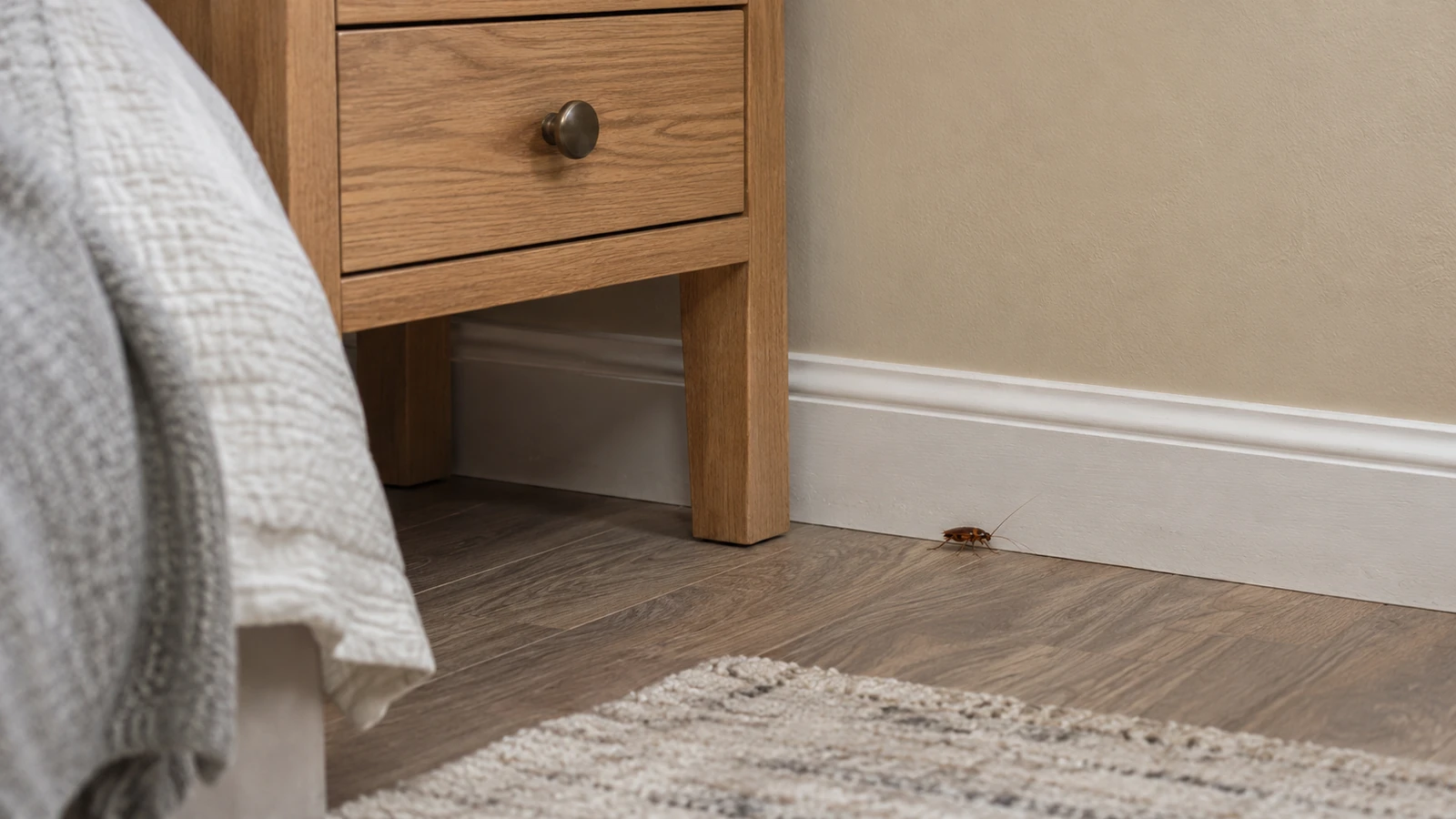
You turn on the bedroom light and an insect darts toward the baseboard. Even a tidy room can have an unexpected roach visitor. The useful question is whether it wandered in or whether there is evidence of ongoing activity in or near the bedroom.
Start with the insect itself, check a few specific hiding places, and watch for a pattern. A single sighting calls for an inspection, not an automatic room-wide pesticide treatment.
First, confirm that it was a cockroach
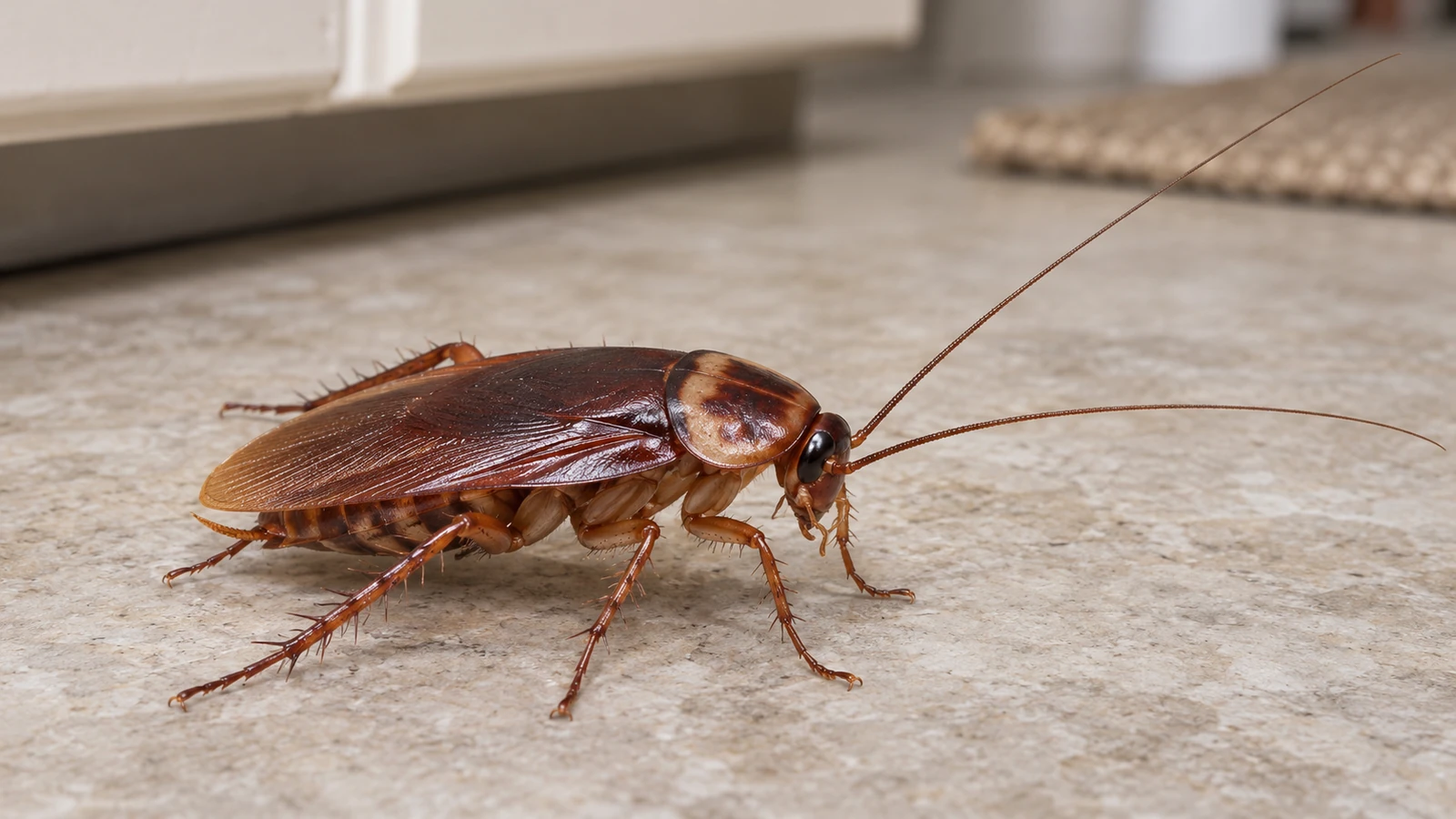
Look for a flattened, oval body, very long antennae, and six legs with visible spines. Adults may have wings, while young cockroaches, called nymphs, do not have fully developed wings. Size varies considerably: some common indoor adults are about 1/2 inch long, while larger species can exceed 1 inch.
If the insect is still available, take a clear photo from above or save the specimen in a closed container. A blurry glimpse of something brown or fast-moving is a weak basis for naming a species.
Identification in 30 Seconds
- Does it have six legs, long threadlike antennae, and a low, oval body?
- If it is small and wingless, could it be a nymph rather than a tiny adult?
- Can you see actual markings on its back, instead of judging by color or room location?
Beetles have hard wing covers, while crickets have enlarged hind legs for jumping. Bed bugs are wingless and more rounded, with shorter antennae than cockroaches. If the features are unclear, compare the specimen with a cockroach identification guide before treating the room.
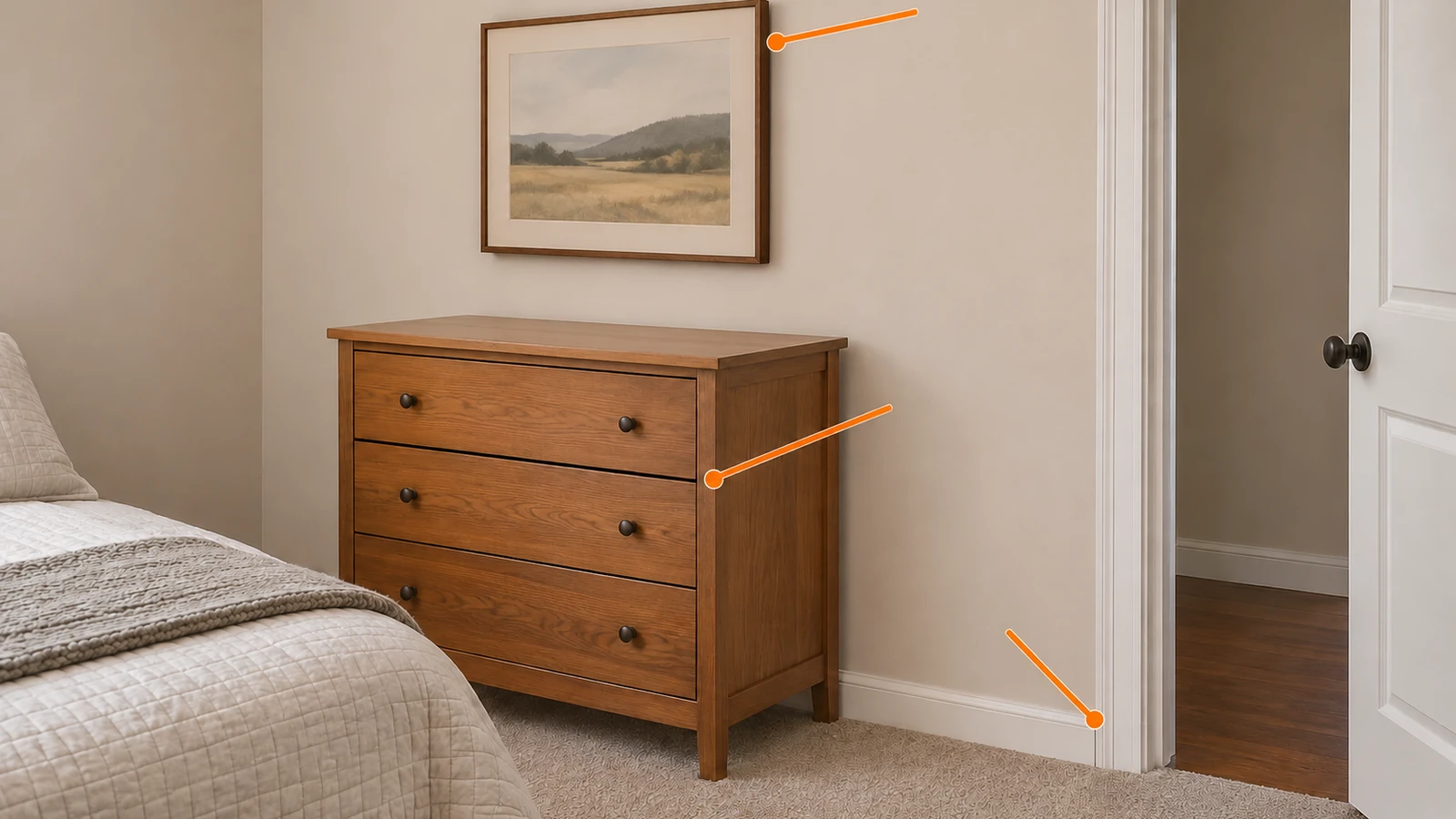
A bedroom can suit brown-banded cockroaches, which use warm, relatively dry places such as closets, dressers, and the backs of picture frames. But the room itself cannot identify the species. If you can see its markings, compare them with those of a brown-banded cockroach. Other roaches may pass through bedrooms from nearby rooms or outdoors.
Check the bedroom and the routes leading into it
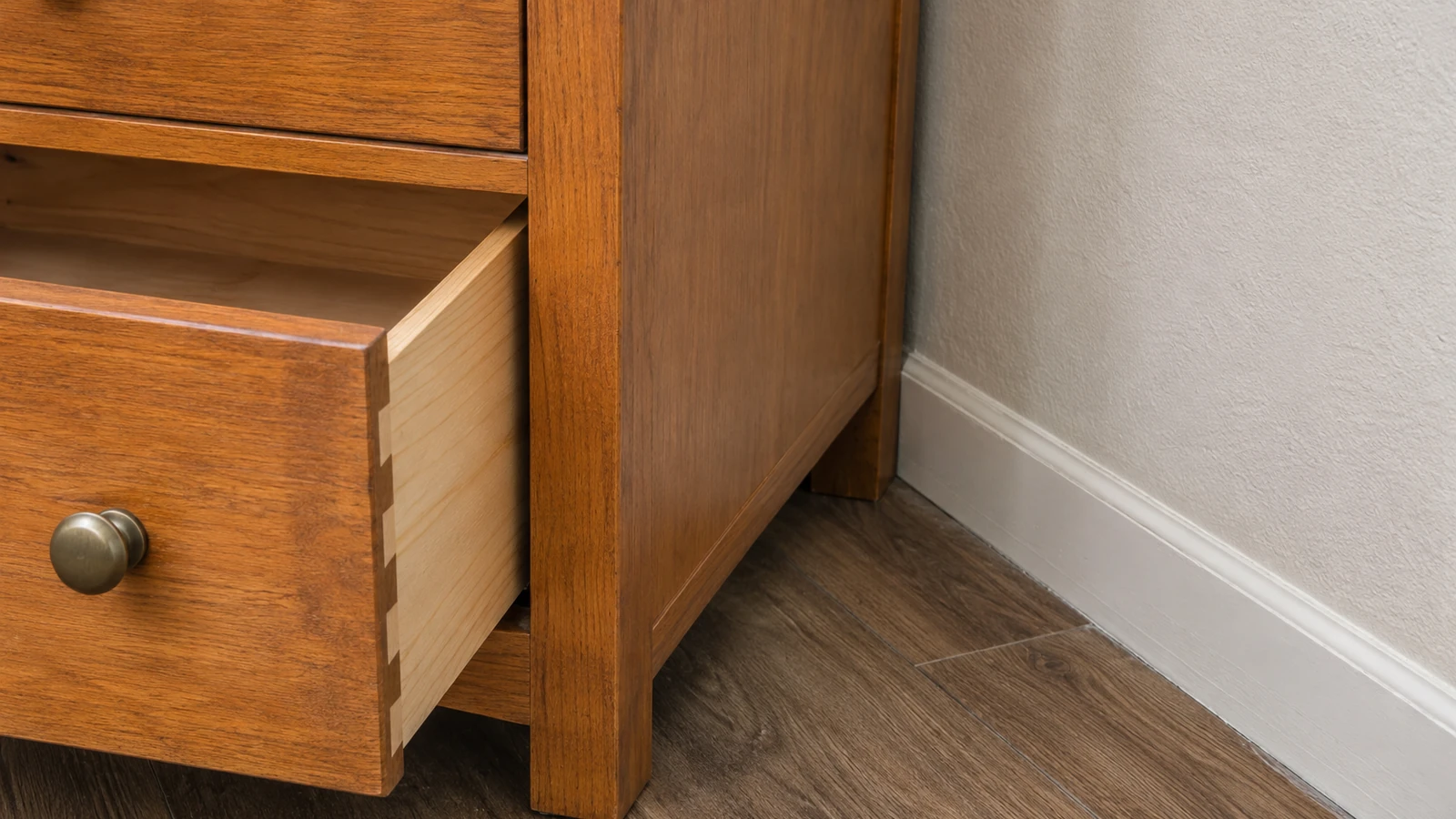
Begin where the insect was seen. Use a flashlight along the baseboard, beneath the nightstand, behind the headboard, at the bedroom doorway, and near the window or window air conditioner. Move small objects carefully so you can inspect rather than scatter any insects.
Then look beyond the floor. Check the backs of dressers, closet shelves, drawer joints, and wall hangings. Some roaches hide in higher, drier furniture spaces. Do not open electrical outlets or spray into electronics to investigate.
Look for more than a live insect:
- Small, dark droppings or smears concentrated near a seam or hiding place.
- Shed skins from growing nymphs.
- A brown, capsule-shaped egg case, sometimes attached to a protected surface.
- More insects of different sizes in the same area.
Dark specks by themselves can be ordinary dirt. Photograph or retain an unfamiliar specimen, and compare several clues before drawing a conclusion.
If the bedroom search is quiet, check the nearest bathroom, kitchen-side wall, hallway, or entry route. Also consider boxes and belongings recently brought into the room. A roach seen beside the bed may have arrived from somewhere else in the home.
Identification Mistakes
- Assuming a roach was breeding under the bed simply because that is where it was spotted.
- Labeling a small, dark insect “German” or “brown-banded” without seeing the identifying features.
Key Clue
Repeated sightings or catches close to one protected furniture seam, especially when small nymphs are involved, carry more weight than one wandering adult.
What to Watch For
A trap beside the bedroom door may show a travel route rather than a hiding place. Compare the catches with nearby rooms before deciding where the activity starts.
Read the pattern, not just the room name
One large adult near a door or window may be an outdoor species that came inside. Repeated smaller roaches near furniture, especially with nymphs, shed skins, or egg cases, make sustained indoor activity more likely. Different species and U.S. regions change the possibilities, so use the specimen and the pattern together.
These common scenarios call for different next checks:
| What you find | What it suggests | Best next check |
|---|---|---|
| One adult near a window or doorway, with no other signs | An incidental visitor is plausible | Look for an opening and monitor that edge |
| Repeated sightings or nymphs beside a dresser | Activity in or close to that room is more likely | Inspect furniture joints, wall decor, and nearby seams |
| Bedroom monitor stays empty but the bathroom monitor catches roaches | Movement from an adjacent area may explain the sighting | Trace the route and inspect the adjoining room |
| Egg case or clustered droppings in a protected bedroom spot | Stronger evidence of a nearby hiding or breeding site | Preserve evidence, identify the insect, and widen the inspection |
↔ Scroll horizontally to see all table columns.
If insects turn up in several rooms, use the broader cockroaches in the house guide to put those findings in context. Skin irritation or unexplained marks on bedding, without a specimen or physical roach evidence, call for a separate investigation rather than a roach diagnosis.
How serious is a bedroom sighting?
A single adult is a reason to look around, but repeated observations make the situation more concerning. Pay particular attention to nymphs, egg cases, droppings concentrated near hiding spots, and captures in more than one part of the home.
For a clearer picture, place a cockroach sticky monitor snug against the baseboard near the original sighting and another near the bedroom doorway. If possible, add one along the closest bathroom or kitchen route. Keep traps away from children and pets, and check them daily for several days. Note where insects are caught and their approximate size. This is more informative than setting traps only under the bed.
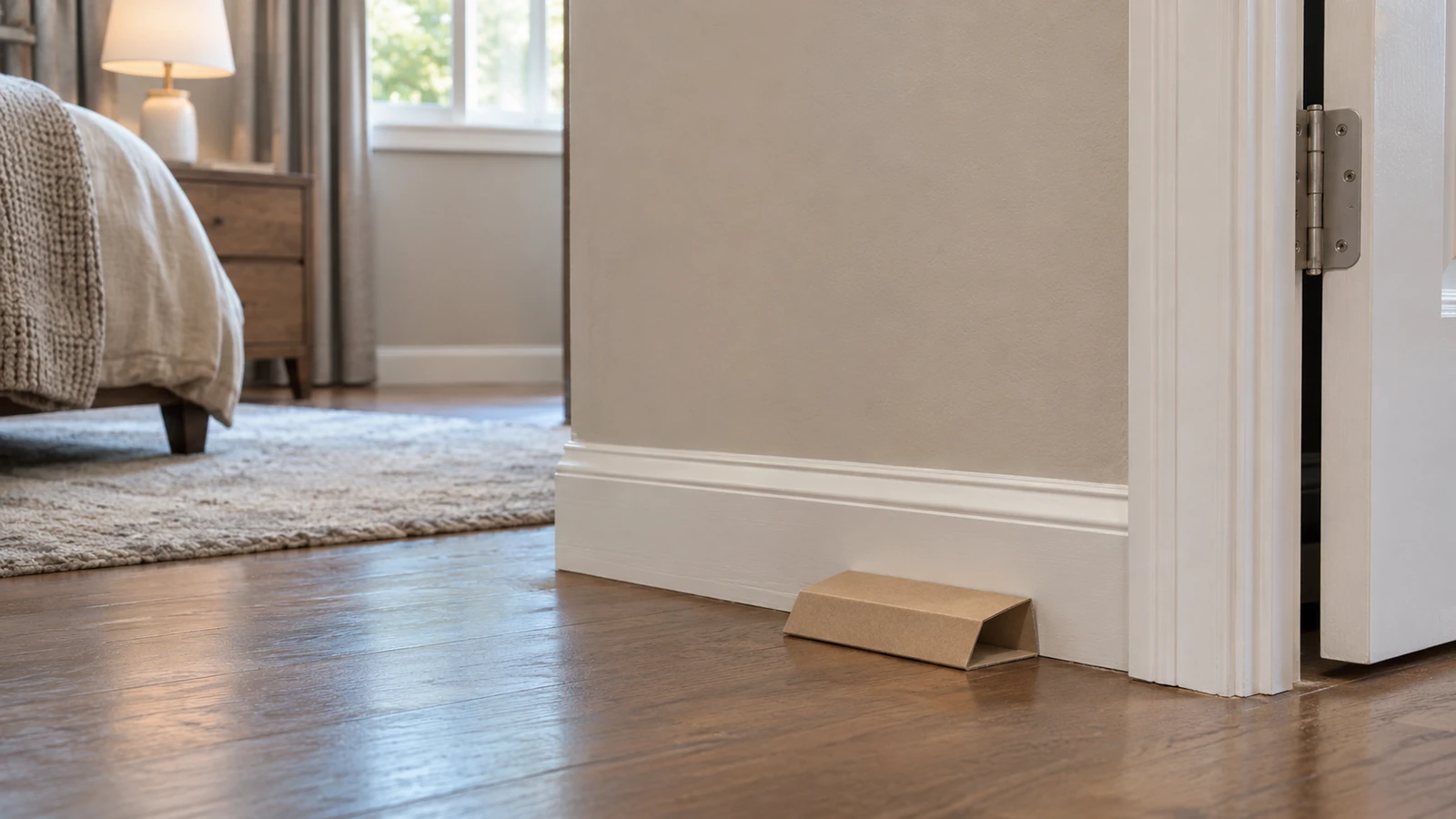
An empty trap reduces concern at that location, but does not settle what is happening elsewhere. Roach debris can aggravate allergies and asthma, so clean accessible droppings with a damp cloth and vacuum crevices rather than brushing dry debris into the air.
Learn more: