Comparison
Best Flea Killer for Your Yard: Which Type Should You Choose?
A bottle labeled “yard flea killer” tells you little about which life stages it controls or where it can be used. Compare outdoor formulations, label restrictions, and practical trade-offs before you buy.
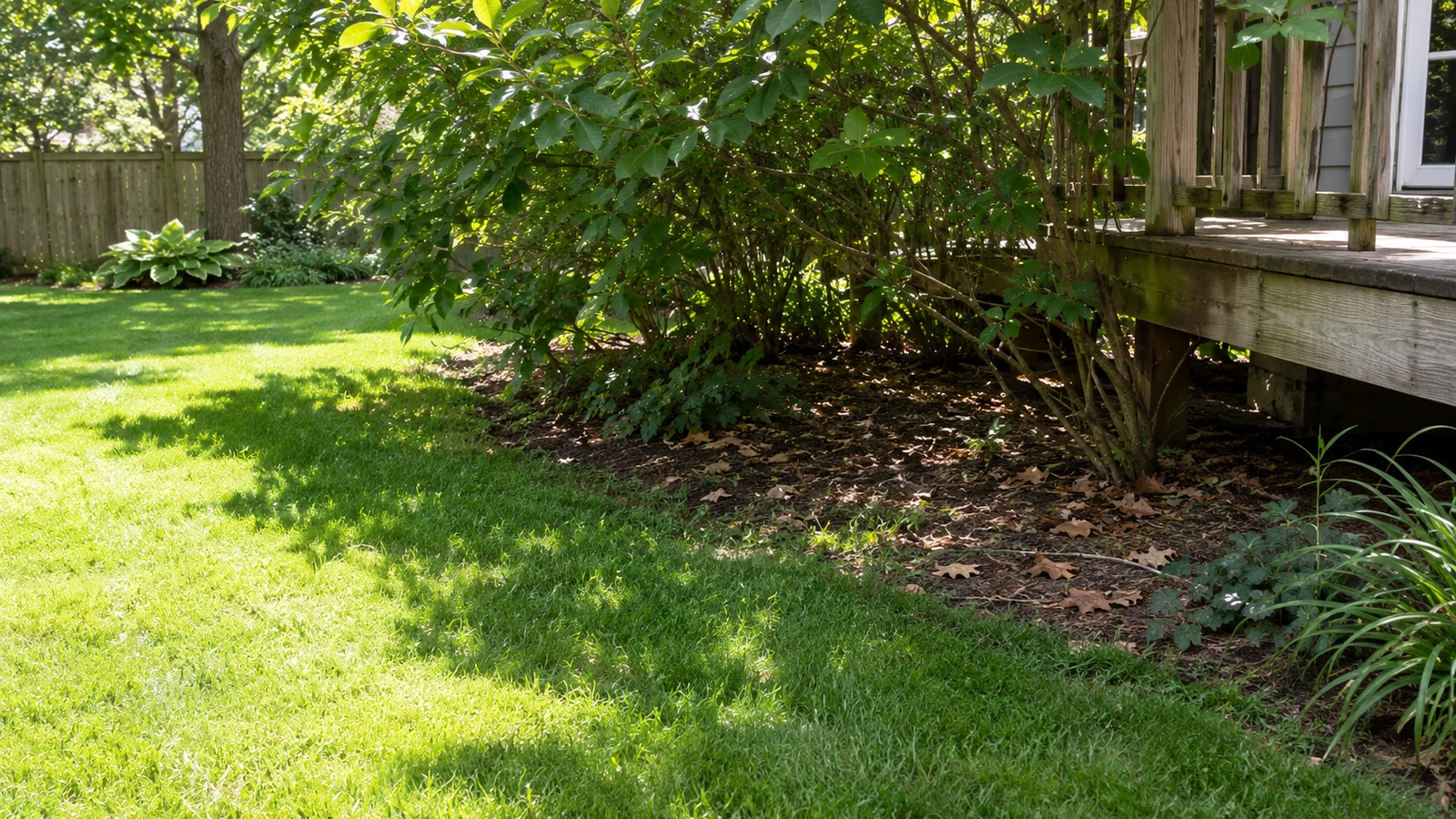
A flea treatment labeled for 5,000 square feet may sound like the obvious choice when your backyard is full of bites and jumping insects. But most outdoor flea problems concentrate in particular places, especially shaded areas where pets or other animals rest.
The better purchase depends on what you have found, where the fleas are developing, and what the product can legally and effectively treat. An adult-killing spray, a formula with an insect growth regulator, and a plant-oil spray do not work in exactly the same way.
What matters most when comparing yard flea products?
The first test is the full product label. It must include fleas and permit the intended outdoor application. “For lawns,” “for yards,” and “for outdoor use” are not interchangeable instructions for every surface.
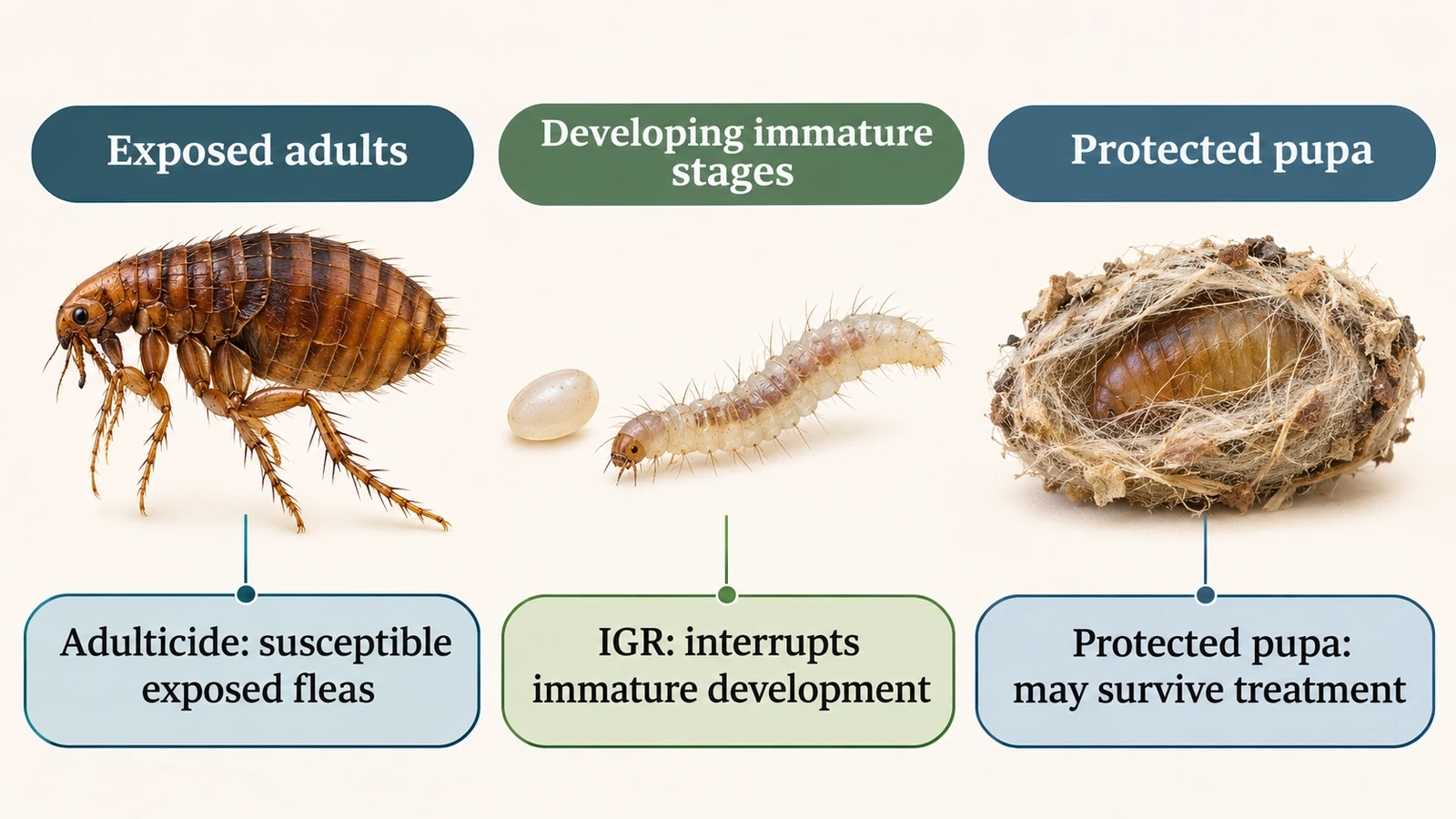
The second test is the flea population you are trying to affect. Adult fleas are the most visible stage, but eggs, larvae, and pupae can be present in protected locations. An adulticide and an IGR address different parts of that problem.
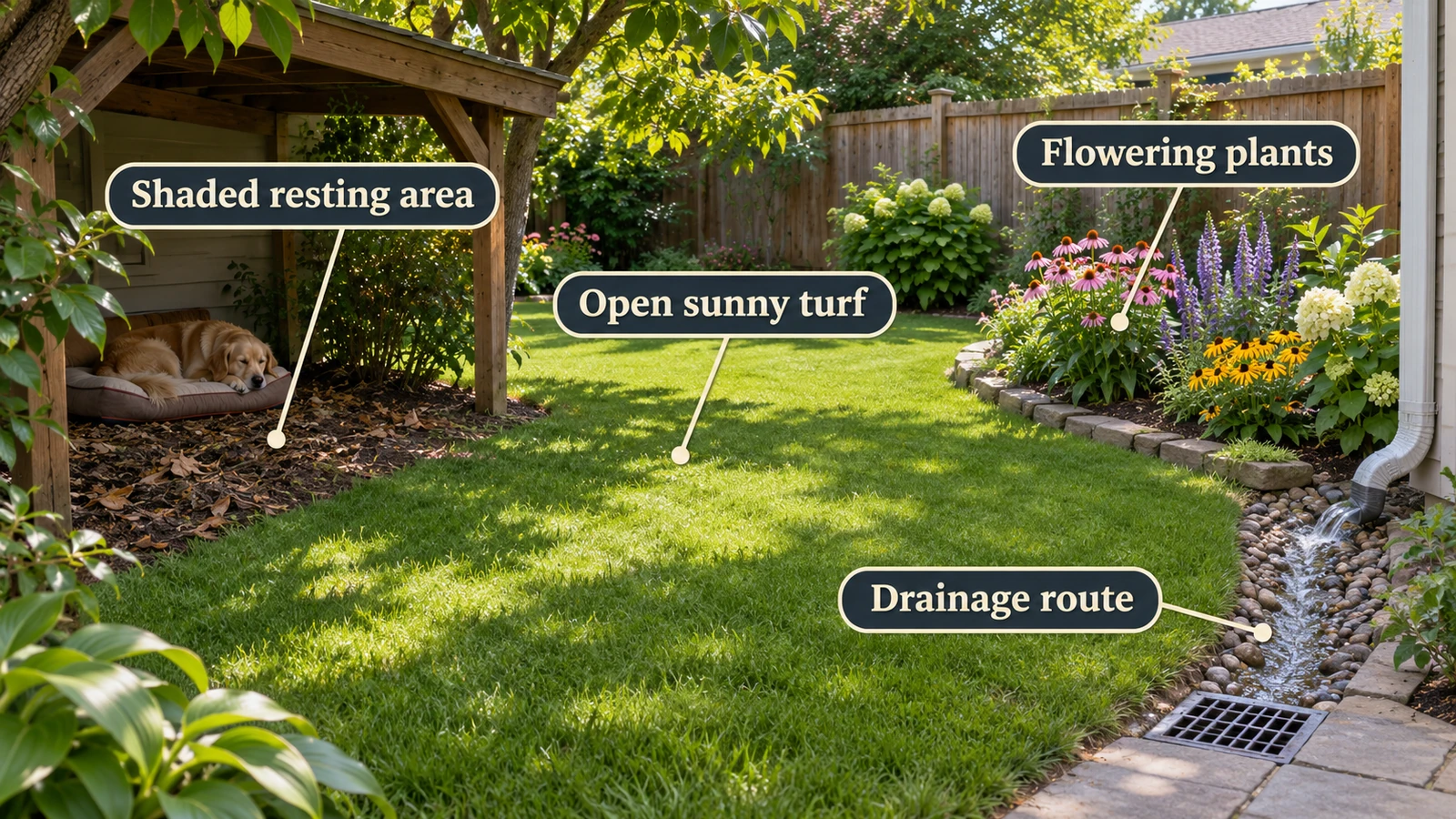
Check these four factors before comparing bottle size or price:
- Treatment site: Is the product approved for turf, ornamentals, soil, around structures, or another specific location? A label that permits lawn treatment may restrict applications to patios, drains, edible plants, or other surfaces.
- Life-stage coverage: Does the formulation contain an adulticide, an IGR, or another type of active ingredient? Check the actual claims rather than assuming “kills fleas” means all stages.
- People and pets: What does the label require before anyone can return to the treated area? Consider pets that lick vegetation, dig in soil, or repeatedly use the same resting spot.
- Application and exposure: Does the format suit a small shaded area or a larger permitted surface? Consider flowering plants, runoff routes, weather restrictions, and the equipment required.
Flea species also deserve some context. The cat flea commonly affects both cats and dogs, despite its name. A suspected wildlife-associated problem may have a continuing host source that a yard spray alone cannot resolve.
For a closer explanation of why the stages respond differently, see the flea eggs and life cycle guide.
Yard flea killers compared by use
The following comparison uses identifiable U.S. product formulations where available, plus broader treatment categories. It evaluates their documented mechanisms and practical limitations rather than assigning unsupported performance scores.
| Treatment type and example | What it targets | Potentially useful when | Main limitation |
|---|---|---|---|
| Adulticide + IGR spray: Black Flag Yard Treatment | Exposed susceptible fleas plus immature development through pyriproxyfen | Confirmed flea activity in a permitted outdoor area where immature stages may also be present | Label-specific site restrictions, aquatic and non-target exposure risks; protected pupae may persist |
| Adulticide hose-end spray: ADAMS Plus Yard Spray | Susceptible exposed fleas through permethrin | Adult flea activity where the label permits application | No IGR listed in this formulation; additional developmental stages and sources may remain |
| Plant-oil hose-end spray: Vet’s Best Yard & Kennel Spray | Fleas covered by the formulation’s contact-treatment claims | A labeled outdoor contact option where its application conditions fit | Residual performance and repeat-use requirements differ; natural ingredients are not a safety guarantee |
| Outdoor insecticide granules: formulation dependent | Fleas only when specifically listed on the selected product’s label | A permitted turf or ground application where granular delivery is appropriate | Some products require watering in and longer pet-exclusion periods; not every lawn granule targets fleas |
| Beneficial nematodes | Susceptible soil-dwelling developmental stages | Suitable moist soil where a biological approach is preferred | Variable field performance; not a rapid adult flea treatment |
The comparison does not establish a single best product. A label-appropriate formulation used on a confirmed flea hotspot is more defensible than an expensive broad-coverage product chosen without checking where the fleas are.
The trade-offs that product descriptions often hide
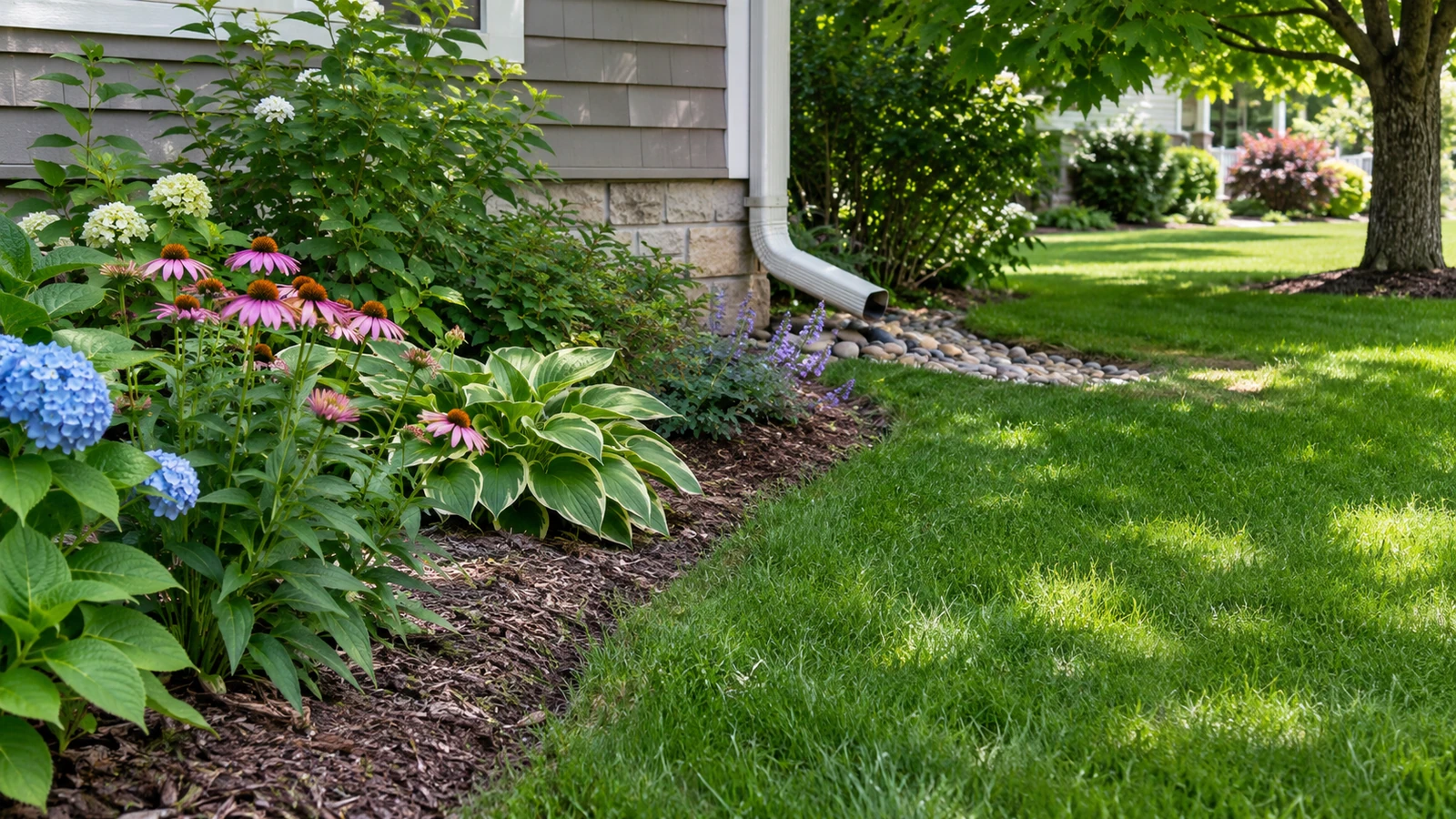
A hose-end sprayer makes it easy to cover a large area, but that convenience can encourage unnecessary treatment. Flea development is much more favorable in sheltered, humid places than in exposed, dry, sunny turf.
Common hotspots include the soil beneath shaded shrubs, areas around outdoor animal shelters, and protected spaces beneath decks. A large lawn can have only a few meaningful breeding sites. Coverage claims tell you how much area a package can treat under labeled conditions, not how much of your yard needs treatment.
Fast adult control versus developmental control
An adulticide may reduce exposed fleas relatively quickly when used correctly. It does not necessarily reach insects developing beneath debris or inside protected pupal cocoons.
An IGR adds developmental control, but it does not replace the adult-killing ingredient. Continued flea activity after treatment can reflect newly emerging adults, an untreated hotspot, or a recurring animal source rather than a simple need for a stronger spray.
Pet access and environmental exposure
The phrase “flea killer for yard safe for pets” expresses an important concern, but it cannot be answered with a universal safety claim.
For pesticide sprays, remove animals, their toys, food, and water bowls from the treatment area. Keep pets away for the period required by the actual product label or until treated surfaces are completely dry, whichever takes longer. Granular formulations may have different watering and reentry requirements.
Plant-derived active ingredients can also cause unwanted exposure. Do not equate “natural,” “essential oil,” or “pet-friendly” with unrestricted contact, especially where pets may lick treated plants or soil.
Environmental conditions matter just as much. Many conventional outdoor insecticides are hazardous to aquatic organisms and can affect pollinators. Avoid applications that could enter drains or waterways, and respect restrictions involving flowering plants, rain, wind, and runoff.
A yard product must never be substituted for a product intended for indoor surfaces. If fleas are established inside the home, compare the separate indoor flea killer options.
The strongest buying criterion
Choose a formulation that explicitly lists fleas and your intended treatment site. A verified label match matters more than the largest coverage claim on the package.
What to Watch For
A product described as natural or pet-friendly can still require restricted access or careful handling. Check the actual formulation and label, not the marketing phrase.
Which flea killer should you choose for your yard?
Match the option to the confirmed hotspot
If fleas have not been confirmed: Do not start with a pesticide purchase. Identify the insect and establish whether there is a persistent outdoor source. An open, sunny lawn with no convincing flea activity may need no chemical treatment.
If fleas repeatedly occur in shaded animal resting areas: A flea-labeled outdoor formulation combining an adulticide and an IGR may be worth considering, provided its permitted uses cover that location. The combination addresses more than one part of the population, but it does not replace source control.
If the main issue is exposed adult flea activity in a limited area: An appropriately labeled adulticide-only option may be sufficient for reducing those exposed insects. Check whether additional breeding activity or repeated introduction from animals is likely before assuming that adult control alone will finish the job.
If you prefer a plant-based option: Compare the actual active ingredients, flea claims, application limits, and retreatment directions. Choose it for those specific characteristics, not because “natural” guarantees superior safety or effectiveness.
If the hotspot borders a pond, vegetable bed, or flowering plants: Product restrictions may rule out otherwise suitable insecticides. Reducing favorable habitat and seeking a more targeted approach can be preferable to risking drift or runoff.
If animals are continually introducing fleas, a yard product alone may provide only temporary relief. Environmental treatment, host-source control, and monitoring must fit together. Pet-specific prevention or treatment decisions belong with appropriate veterinary guidance.
Buying mistakes that can make the problem harder
A few common purchasing decisions deserve special attention:
- Buying a general lawn insect killer without checking for fleas. The product may target unrelated pests or lack authorization for the location you want to treat.
- Choosing by square-foot coverage alone. A broad spray pattern is not proof that the product reaches the protected places where fleas develop.
- Using an indoor spray, pet spray, or unlabeled homemade mixture outdoors. Product directions depend on the intended use and exposure conditions; never improvise concentrations or substitute applications.
- Assuming one empty trap or one quiet day means elimination. Monitoring can reveal activity, but it does not kill the whole population or guarantee that protected stages are gone.
If fleas persist, reassess the identified hotspot and animal sources before purchasing another product or repeating an application. Follow the chosen label’s directions for any retreatment rather than establishing an arbitrary spray schedule.
Explore this topic further: