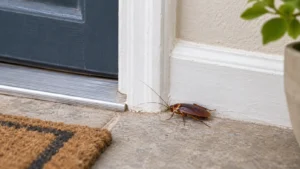
Identification
Small black cockroach: How to tell what you found
“Black cockroach” describes a color, not a species. Use body features, markings, and the place you found it to narrow your options and decide whether further inspection is worthwhile.

A tiny, almost-black insect runs across the kitchen tile and disappears beneath a cabinet. It could be a young cockroach, but a beetle or a roach that came in from outside may look similar during a quick sighting.
Start with the body, then the markings and the exact place you saw it. These clues help you narrow the possibilities and decide what to inspect next.
What a small black cockroach looks like
From above, a cockroach generally has a flattened, oval body and a head partly covered by a shieldlike plate called the pronotum. It has two long, threadlike antennae and six legs with noticeable spines. A close view may also show the segments of its abdomen.
Measure the body without counting the antennae. A small, dark insect may be a nymph rather than a miniature adult. Nymphs lack fully developed wings, and their markings can look quite different from those of adults.
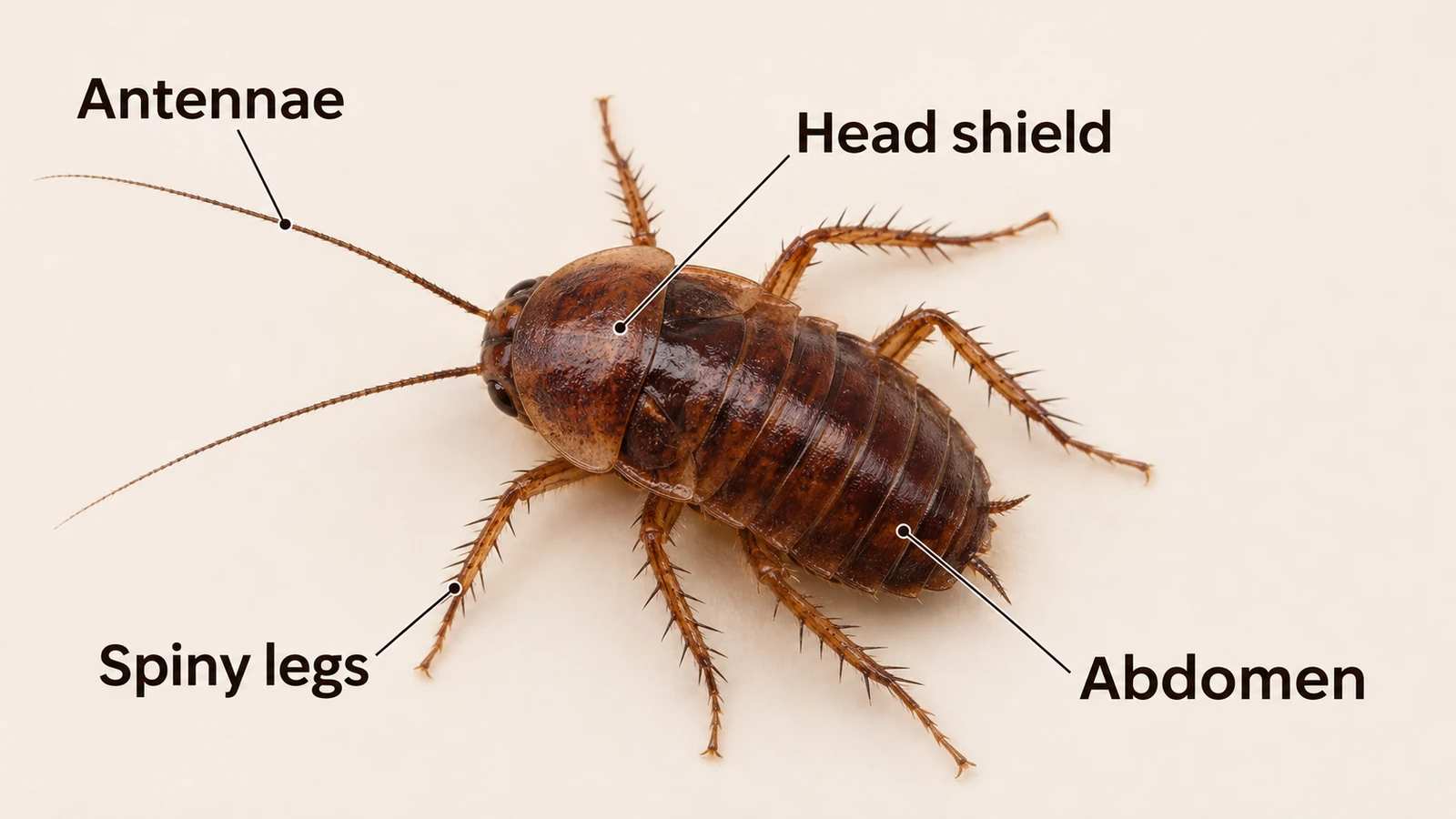
Identification in 30 Seconds
- Flat, oval body rather than a rounded, domed shell.
- Long, slender antennae, six spiny legs, and a head partly tucked beneath a shield.
- Very small and without full wings? Compare nymphs before using adult photos.
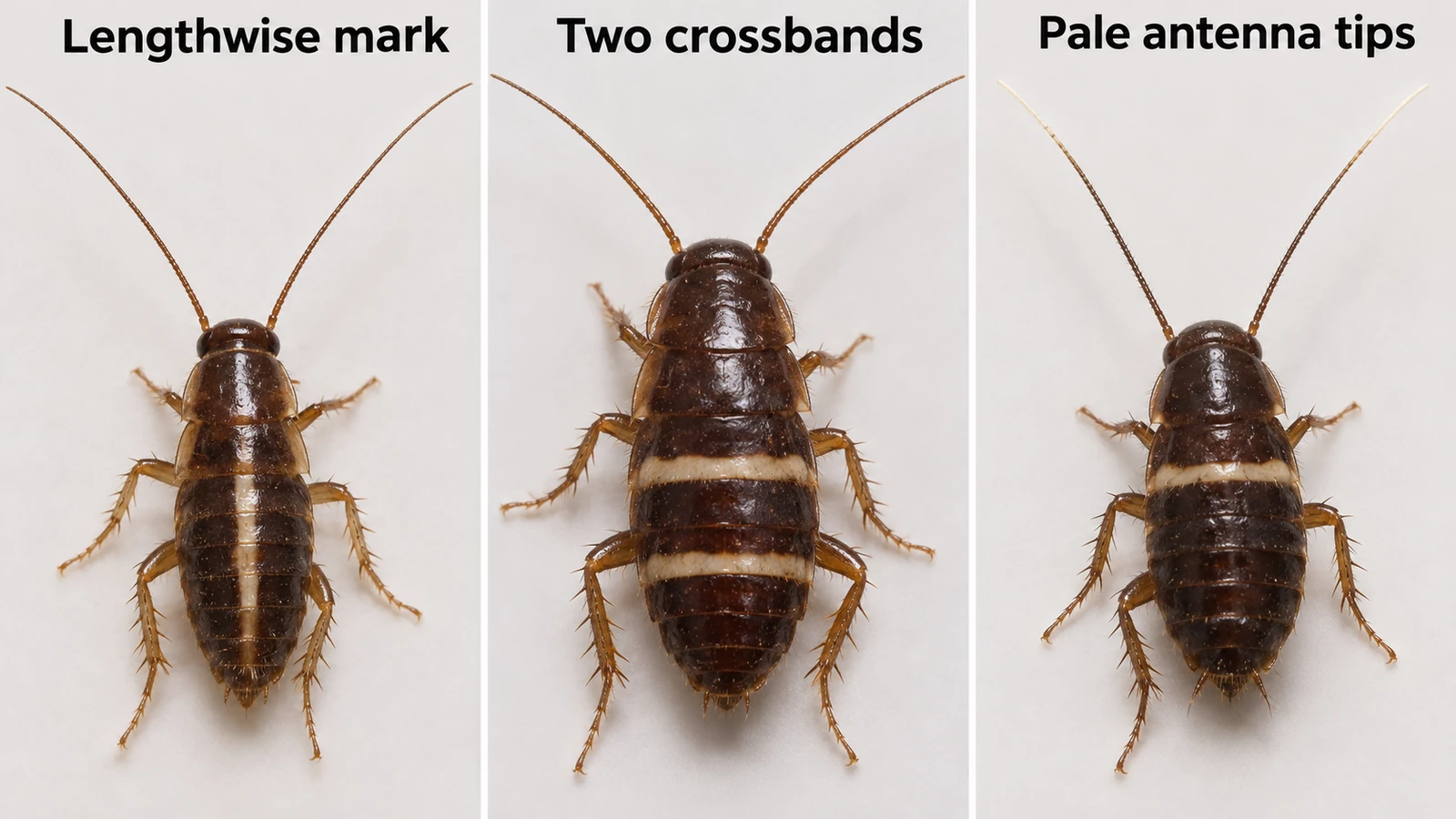
- Pale mark on the back? Notice whether it runs lengthwise or across the body.
A beetle often has two rigid wing covers that meet along a straight seam down its back. A cricket has enlarged hind legs for jumping, while an ant has a noticeably narrow waist. If the overall insect shape is still uncertain, use our guide to what cockroaches look like before choosing a species.
Check the markings and where the insect appeared
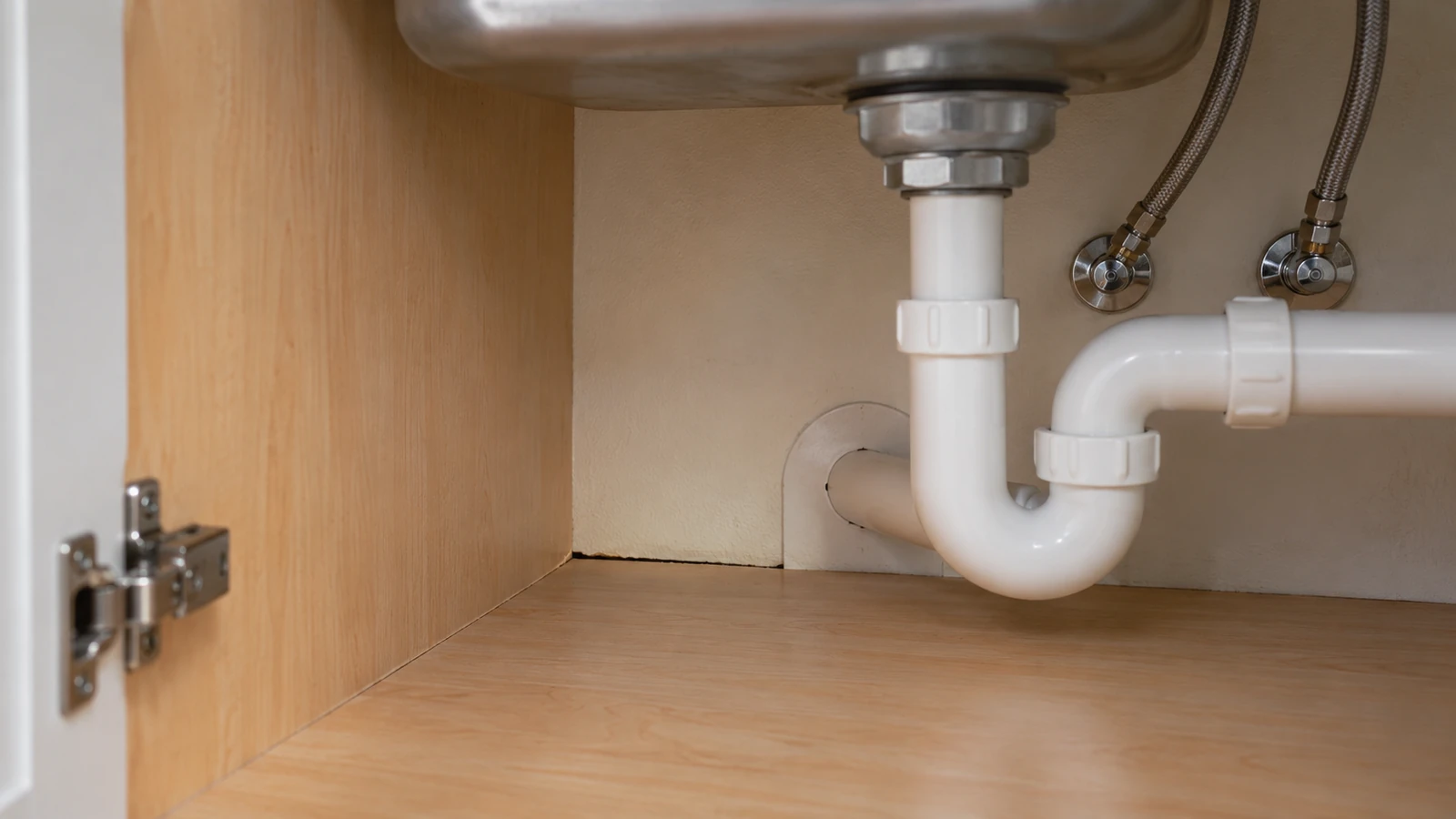
The setting helps narrow the search. Warm, sheltered gaps near kitchen appliances can harbor indoor-breeding roaches. Damp basements and exterior thresholds suggest a different route. A high, warm, relatively dry cabinet may be relevant for another type.
If you can safely contain the insect, take a clear picture from above beside a ruler or coin. A zoomed-in photo without scale can make a tiny nymph look as large as an adult. There is no need to move heavy appliances or reach into electrical spaces to get a better view.
Check these details together:
- Body length: Measure the insect itself, excluding the antennae.
- Back markings: Look for a pale streak running from front to back or one or two bands running across the body.
- Antenna tips: Note any contrasting pale tips, if the photo is sharp enough to show them.
- Location and company: Record the room, nearest gap or entry point, and whether you have seen others.
Identification Mistakes
- Naming an adult black roach species from the color of a wingless youngster.
- Using an enlarged photo as a size reference.
- Mistaking a beetle’s hard wing covers for a cockroach’s back.
Key Clue
A clear view of the pale markings, combined with body length and location, usually narrows the possibilities more than whether the insect looks black or dark brown.
What to Watch For
Markings change as nymphs grow, and dim lighting can hide a pale band or antenna tip. Keep more than one possibility open if the view is incomplete.
Which cockroaches can look small and black?
Dark nymphs in kitchens and bathrooms
A German cockroach nymph can be dark gray to almost black, even though the adult is tan. A newly hatched nymph is only about 1/8 inch (3 mm) long. As nymphs grow, a lighter marking often forms a lengthwise streak along the back. Repeated finds in protected kitchen or bathroom gaps make this possibility important.
Brown-banded cockroach nymphs may also look dark, but their pale bands run across the body. They can occupy warmer, relatively dry indoor spots, including higher cabinets and furniture. For a closer comparison of immature stages, see our baby cockroach identification guide.
Dark roaches near damp areas or outdoor entrances
Adult Oriental cockroaches are glossy, dark brown to nearly black, but they are usually about 1 to 1 1/4 inches long. A much smaller roach in a damp basement or near a ground-level entrance might be an immature Oriental cockroach or another dark, outdoor-associated species.
In parts of the West and Southwest, Turkestan cockroach nymphs may be dark with reddish heads and legs. In humid Southern areas, young smokybrown cockroaches can have a pale band across the back and white-tipped antennae. Neither clue should override the insect’s shape, stage, and location.
A dark insect that is not a cockroach
Small beetles are a frequent source of confusion. Many have a more domed outline and a distinct seam between hard wing covers. An immature cockroach has a segmented abdomen and no fully developed adult wings. Jumping hind legs point more toward a cricket.
Use the combinations below to choose the next useful check, not to assign a species from one mark.
| What you noticed | A possibility worth checking | Best next check |
|---|---|---|
| Small, wingless, dark insect with a pale lengthwise mark in the kitchen | German cockroach nymph | Look for additional nymphs or tan adults with two dark lines behind the head |
| Dark nymph with two pale crossbands in a warm upper cabinet | Brown-banded cockroach nymph | Check the direction of the bands and nearby sheltered upper areas |
| Dark nymph with a pale back band and white antenna tips near a Southern doorway | Smokybrown cockroach nymph | Examine antenna tips and nearby outdoor shelter |
| Dark, roach-shaped insect beside a damp basement or ground-level entrance | Young Oriental or another outdoor-associated roach | Check body length, regional species, and whether finds continue indoors |
| Glossy oval insect with a clear seam between hard wing covers | Beetle rather than cockroach | Photograph the back and antennae before treating it as a roach |
Does a small black roach mean an infestation?
A single sighting is a reason to identify the insect, not a count of the roaches living in your home. One dark insect at an open patio door after rain is a different situation from several small roaches emerging repeatedly from the same kitchen crack.
If sightings continue, place a few sticky roach monitors against wall edges near the original spot and likely hiding places, following the monitor’s directions. Record where each one is placed and check the catches over the following days. Keep monitors off food-contact surfaces and away from children and pets.
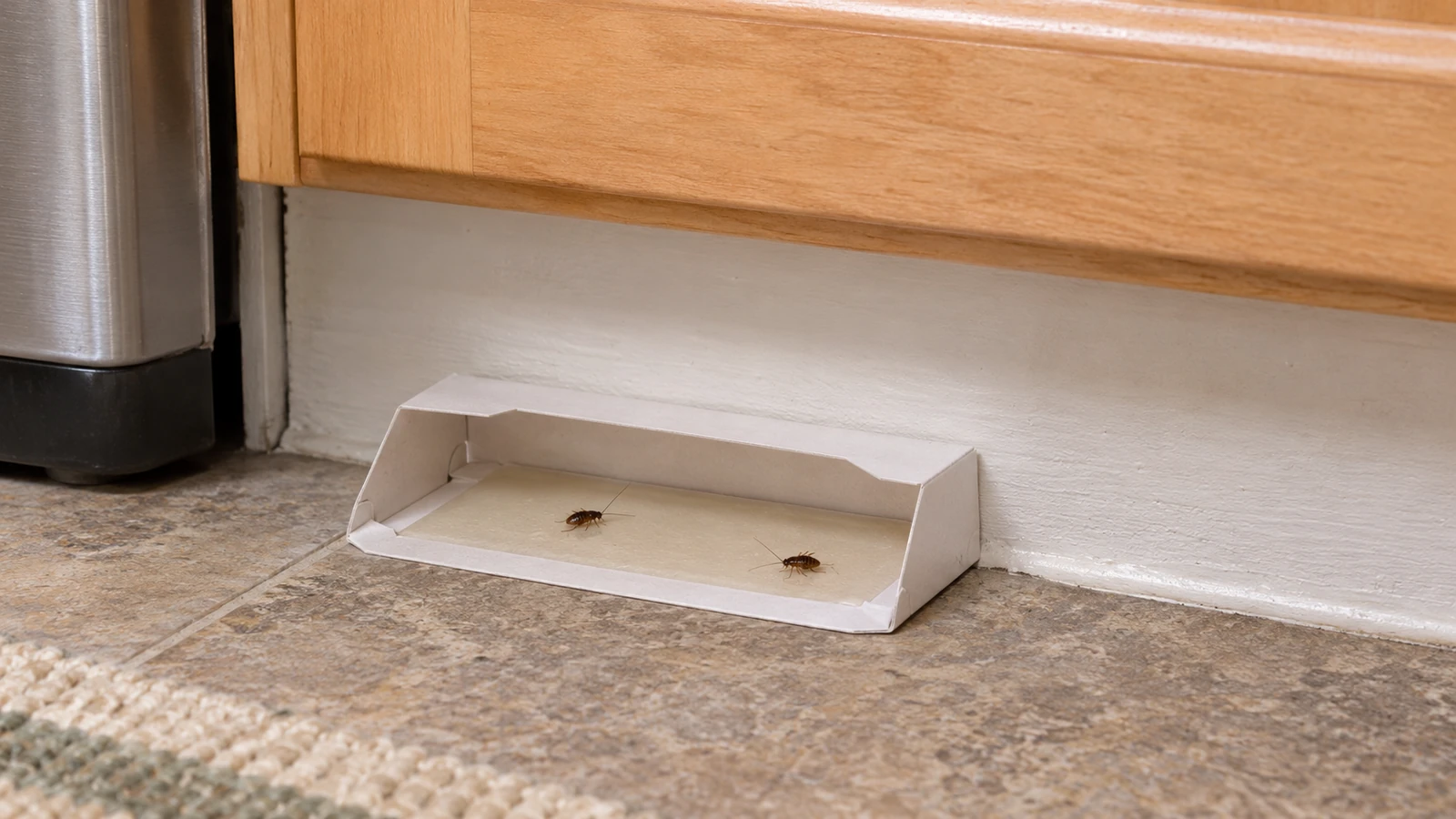
Repeated captures of small roaches in a sheltered interior area, especially alongside shed skins, egg cases, or dark specks, make ongoing indoor activity more plausible. Catches concentrated at an exterior entry suggest checking that route first. An empty monitor in one place is not a complete survey of the home.