
Guide
Fire ant pest control: when professional treatment makes sense
Decide when fire ant activity calls for a professional, what a responsible treatment plan should include, and which yard problems may be manageable without a service.

One fire ant mound appears in a quiet corner of the yard. Another shows up beside the walkway your family uses every day. Those situations deserve different responses, even if the ants are the same species.
Professional fire ant pest control is most useful when sting exposure, recurring colonies, property access, or the treatment setting makes the problem hard to manage safely. This guide helps you decide when to request an assessment, what to expect from a provider, and when a limited homeowner response is reasonable.
When does a fire ant problem justify professional help?
The decision depends less on whether you have seen a mound and more on who uses the area, how often colonies reappear, and whether a safe, appropriately labeled homeowner option fits the site.
One isolated mound away from routine activity may be monitored or managed with a suitable labeled approach. Repeated mounds next to a children’s play area, a pet enclosure, a busy entrance, or a shared property create a different level of exposure and coordination.
Geography and identification come first
Imported fire ants are established in much of the southern United States and some other areas, but they are not equally common nationwide. A reddish ant or a mound alone is not enough for a confident species identification. Check the local context and seek identification help when the insects are uncertain before choosing a fire-ant-specific service.
If the activity is occurring indoors, the immediate questions differ from those in a lawn. The guide to fire ants in the house addresses that separate situation.
Key Takeaways
- A quiet, isolated mound: Professional treatment is not automatic if the area can be avoided and a safe homeowner response is appropriate.
- Repeated activity where people or pets spend time: A targeted professional plan may be worth the cost and added coordination.
- Widespread or difficult-to-reach colonies: Assessment matters before committing to repeated spot treatments.
- A credible sting hazard: Protect the area first; do not disturb a suspected mound to confirm it.
- A useful contract: It explains coverage, methods, site restrictions, follow-up, and what happens when new mounds appear.
What should you observe before calling a fire ant exterminator?
A fire ant mound may look like a low, loose pile of soil in a lawn, beside a sidewalk, or near a landscaped edge. Mounds differ with soil and weather, and small colonies can be active before a prominent mound appears.
Observe from a safe distance. Note whether workers are active nearby, where the mound sits relative to routine foot traffic, and whether there have been actual stings. Do not kick, dig into, or pour water on a mound to test the ants.

Patterns that change the decision
Several mounds across frequently used turf, repeated new mounds after reasonable control attempts, or activity around inaccessible paving or equipment make a site assessment more useful than reacting to each visible pile independently.
A single mound beyond a fenced-off unused section presents a different practical risk from one beside a doorway. The purpose of an inspection is to determine the areas needing protection, not to declare every ant on the property a problem.
If stings are already happening
Keep people and animals away from the active area while the problem is assessed. If someone develops breathing difficulty, throat swelling, faintness, or other signs of a severe allergic reaction after a sting, seek emergency medical care immediately. Pest-control scheduling is not a substitute for medical help.
Why can fire ants return after treatment?
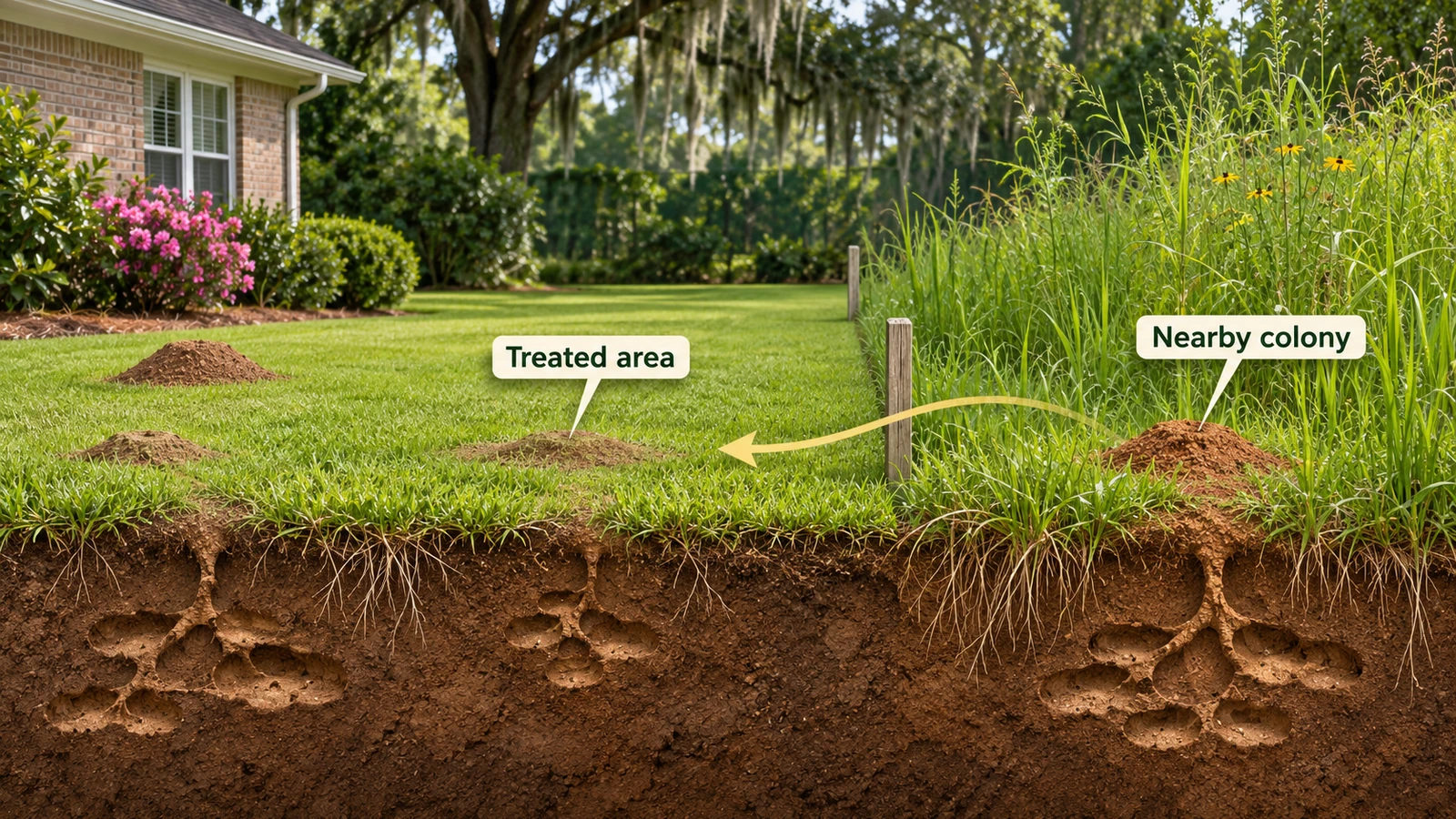
Visible mounds are only part of the picture. Young or hidden colonies may be missed, queens can establish new colonies, and ants may move into an area from neighboring untreated ground.
That is why a proposal promising to eliminate every fire ant permanently is unrealistic in an established infestation region. The useful objective is a safer, more manageable property, with attention concentrated where people are most likely to encounter ants.
A larger property, connected lawns, disturbed soil, and recurring pressure from surrounding areas can make ongoing monitoring more important. But even then, repeated whole-yard pesticide applications are not automatically justified.
How to decide whether your property needs an assessment
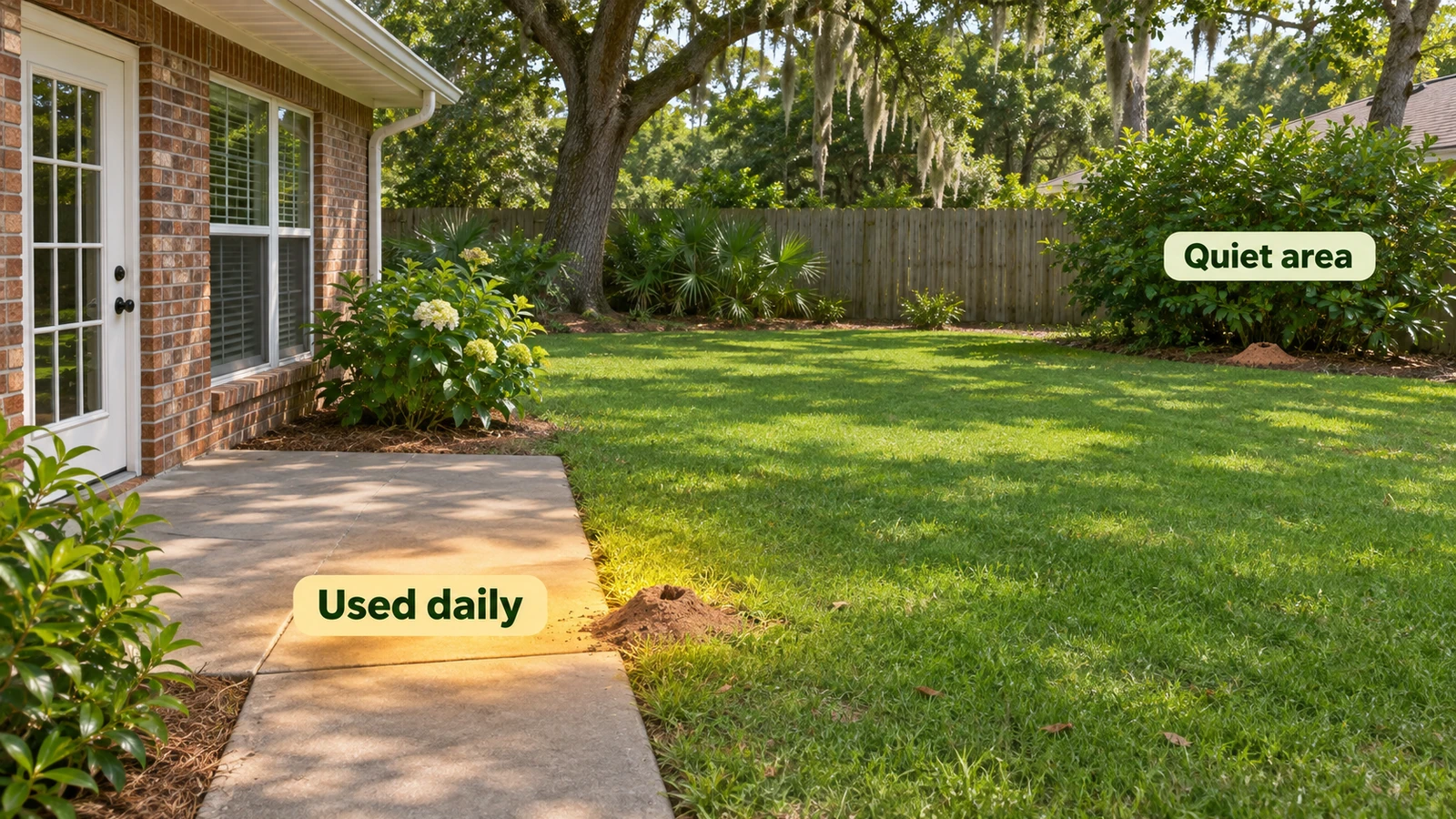
Start by separating areas where people or animals must move safely from locations where ordinary outdoor ant activity is less disruptive. The highest-priority zone may be a playground, patio, accessible yard entrance, or animal run rather than the entire lot.
A professional can help establish whether suspected fire ants are the actual target, where activity extends, and what level of suppression is practical for those zones.
Situations worth escalating
- High-use areas: Active mounds where young children, pets, visitors, or people with limited mobility may encounter them repeatedly.
- Repeated stings or serious exposure concerns: Activity that cannot be safely isolated while a simple response is attempted.
- Multiple recurring colonies: New activity continues across the same important areas despite a reasonable, properly used approach.
- Sensitive or restricted sites: Mounds near water, drainage, edible plants, electrical equipment, or places where a proposed product is not labeled for use.
- Shared or complex property: Access, responsibility, or nearby untreated grounds make a coordinated approach necessary.
An isolated, accessible mound without recurring exposure may not merit a paid contract. If the main goal is a basic outdoor ant plan, start with outdoor ant control around the house rather than hiring someone by default.
Practical Tip
Before contacting a company, mark the trouble spots on a simple property sketch and note where stings or repeated mounds occurred. It helps define the service area.
Watch For
Do not approach or disturb a suspected active mound for a better photo, especially near children, pets, or anyone with a history of severe sting reactions.
What can professional fire ant treatment include?
A useful visit begins with the site, not a promise to spray everything. The provider should discuss likely identification, active mounds, the highest-risk areas, access, and any relevant site restrictions before proposing a program.
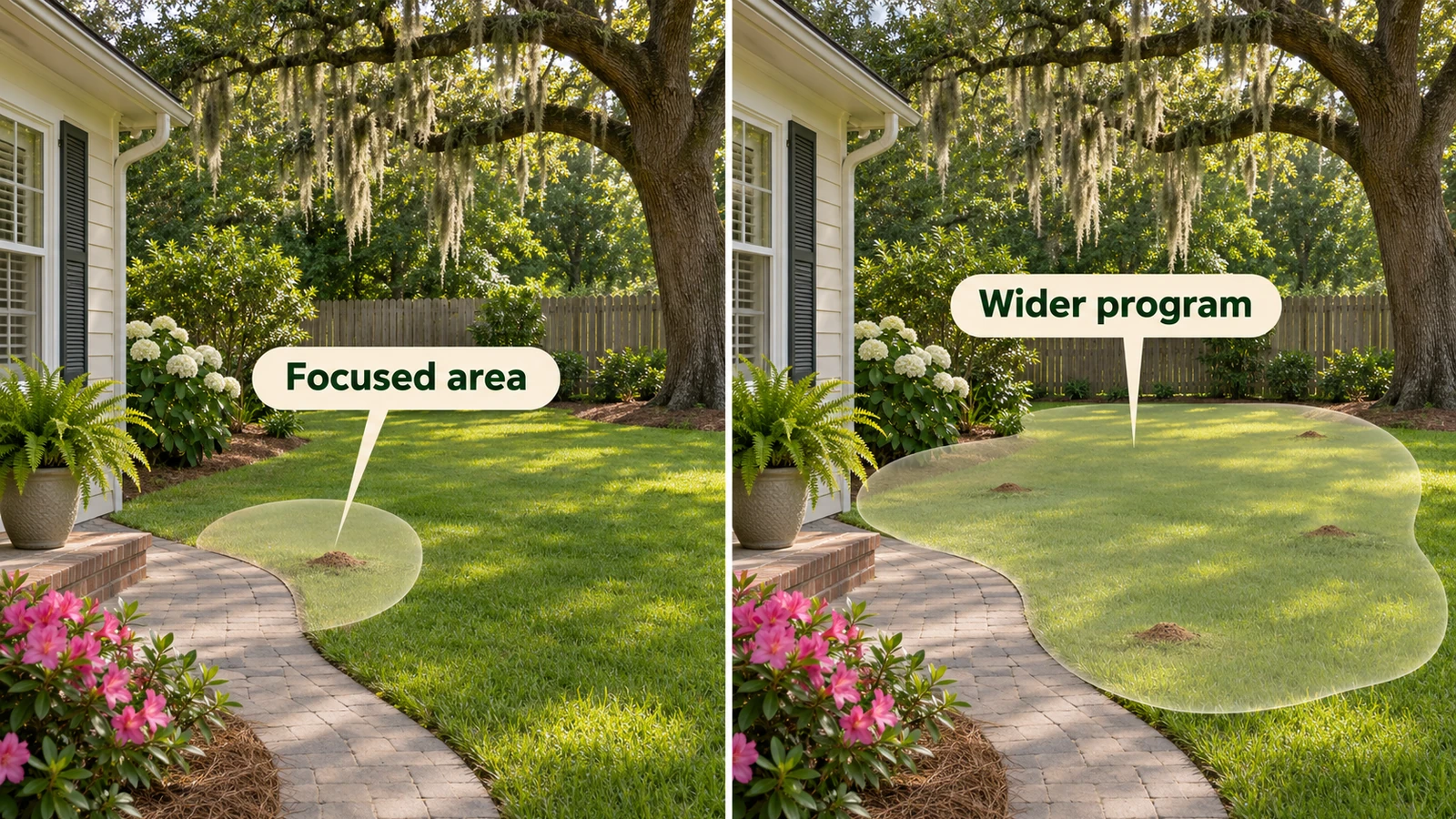
Depending on the problem, a plan may focus on selected mounds or protective zones, use a broader labeled strategy for extensive activity, and include later reassessment. Different methods work on different timescales; the professional should explain what changes to expect and when to check again.
What to ask before accepting a proposal
Ask for a written scope that answers these questions:
- Which areas are included, and which are excluded?
- What evidence supports treating fire ants rather than another ant species?
- Is the proposal for individual problem mounds, broader suppression, or both?
- Which pesticide products or nonchemical measures are proposed, and are they authorized for these sites under current labels and local requirements?
- What access, preparation, pet or child restrictions, return visits, and additional fees apply?
- How will activity be checked, and what does a callback or service guarantee actually cover?
Check the company’s required state credentials and whether the person applying pesticides is appropriately qualified. Get comparable written estimates when feasible. A lower initial price is not necessarily better if the important return visits or high-use zones are excluded.
When to keep the work limited
A small number of accessible mounds away from people can often be handled without a recurring service. For readers comparing suitable DIY treatments, the separate fire ant product guide covers the differences among baits and mound treatments. Keep any pesticide use within the current label for the pest, site, and state; do not improvise mixtures or apply a lawn product to a vegetable bed or near water unless expressly permitted.
Essential Steps
- Define the exposure: Identify the specific paths, play spaces, animal areas, or shared grounds that need protection.
- Verify the proposal: Ask how the provider identified the target ant and why the suggested coverage fits the activity.
- Clarify the terms: Compare written scope, label-sensitive sites, preparation, follow-up, and possible additional charges.
- Reassess the same areas: Use the agreed monitoring plan to distinguish reduced activity from new colonies or missed hotspots.
What helps keep the problem manageable afterward?
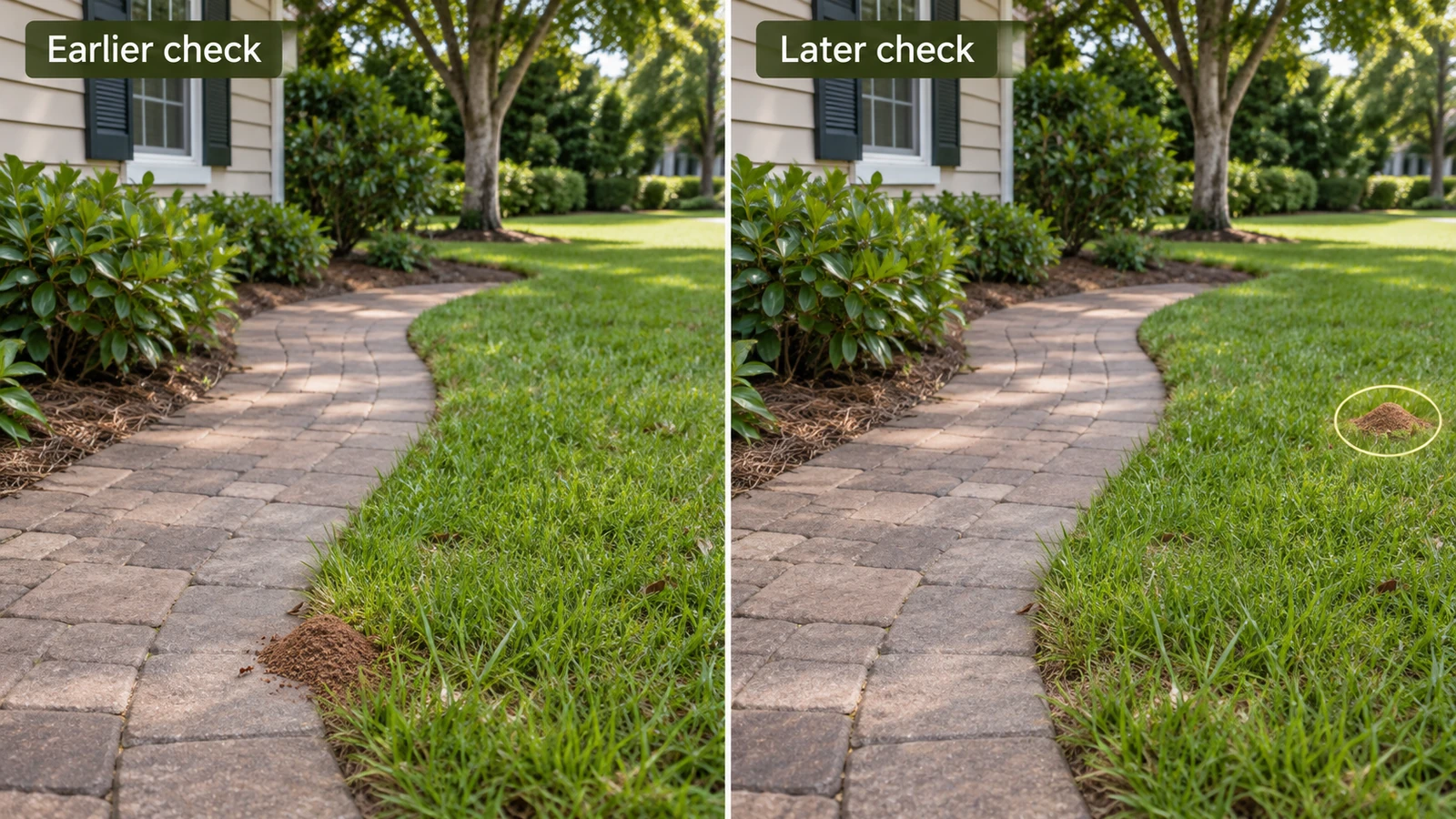
Even a successful intervention can be followed by new fire ant activity in a region where colonies are established. The goal of follow-up is to catch important new activity without treating the entire landscape reflexively.
Recheck the same access routes and high-use areas under comparable conditions. If a new mound appears, record its location and ask whether it falls within the agreed return-service terms before applying a second product.
Where suitable, reduce unnecessary disturbance of soil and maintain the physical access controls that keep people and pets away from active areas. If the property borders other heavily infested ground, discuss realistic suppression and coordination rather than expecting a permanent barrier.
Good to Know
A provider may offer a single visit, a seasonal program, or a return-service agreement. Ask what counts as a new colony, what triggers a callback, and which areas remain covered.
Frequently Asked Questions
Does every fire ant mound require an exterminator?
No. The relevant questions are where the mound is, who is likely to encounter it, and whether the site can be managed safely with an appropriate homeowner method. High-exposure or recurring problems justify a more careful professional discussion.
Should a company treat the whole lawn to protect one play area?
Not automatically. The most appropriate coverage depends on the colony activity, the site, the chosen method’s label, and the level of protection needed. Ask the provider to explain why a focused treatment would or would not meet the objective.
What if a neighbor’s yard also has fire ants?
New activity can move into treated areas from adjacent ground. Discuss realistic monitoring and whether coordination is possible, without assuming you may enter or treat someone else’s property.
Explore this topic further:
Fire ant killer: how to choose between baits and mound treatments