Identification
Fire ants in the house: How to tell what is happening
Fire ants indoors may be gathering food or moving a disturbed colony. Learn which signs distinguish the two situations and when to act.
A few reddish ants heading toward pet food and a sudden stream of ants carrying pale material through a baseboard gap are very different situations. The first may be workers foraging from a nest outdoors. The second needs closer attention. Start by observing where the ants enter, what they are carrying, and whether they are actually fire ants.
Are the ants inside your home really fire ants?
Imported fire ants are well established in parts of the southern United States, but not uniformly across the country. In those areas, red imported fire ants are one possibility when small reddish ants enter a house. Several other ant species can look similar.
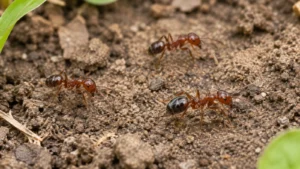
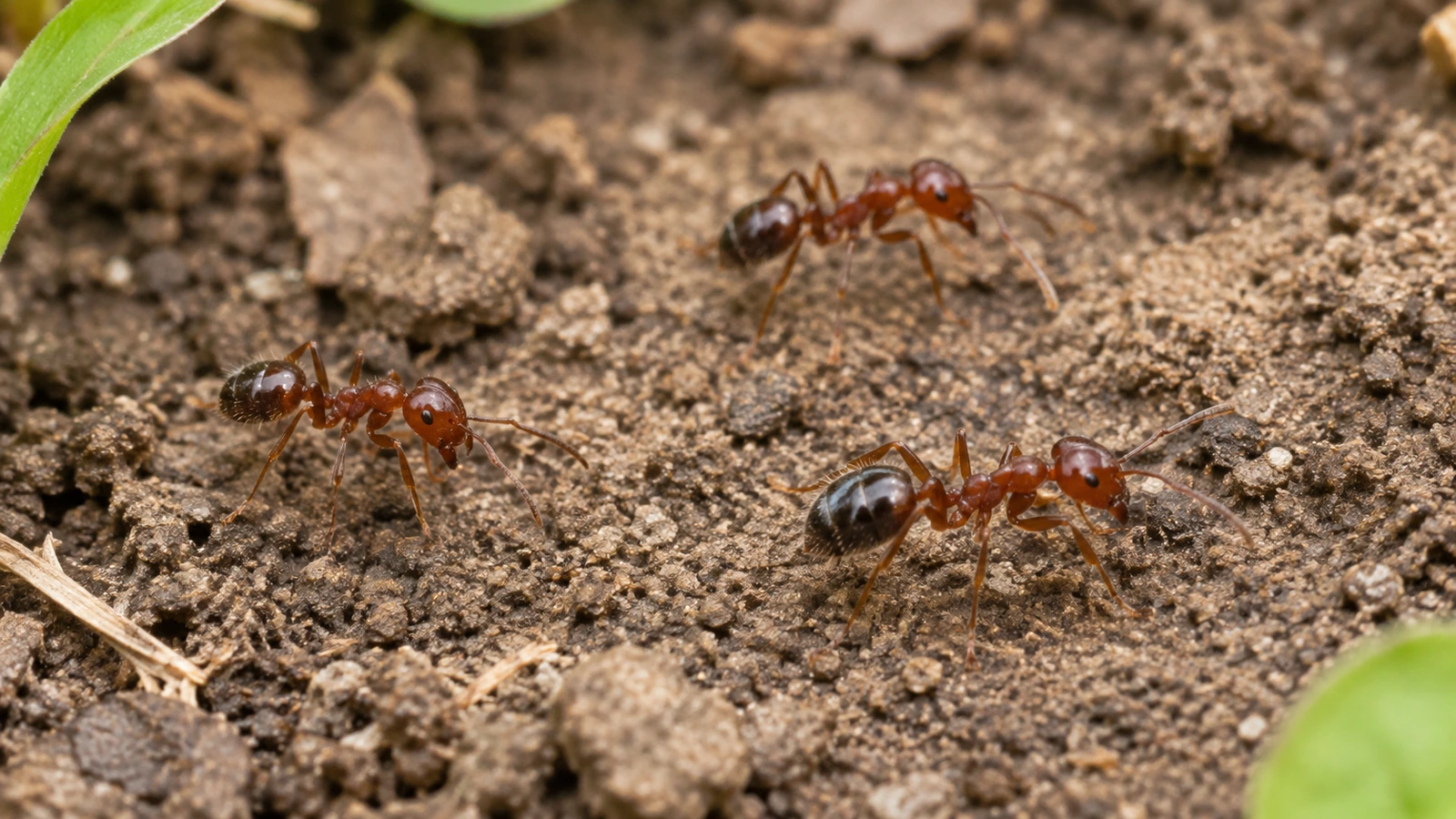
Fire ant workers may be as small as about 1/16 inch or approach 1/4 inch, with noticeably different sizes in the same group. Red imported fire ants typically have reddish-brown heads and midsections and darker abdomens. Their two-part waists and elbowed antennae are useful under magnification, but color and size alone are unreliable identifiers.

Identification in 30 Seconds
- Look for workers of noticeably different sizes traveling together, rather than deciding from one reddish ant.
- Check a clear close-up for a narrow, two-node waist and bent antennae. These details require enough magnification.
- Consider whether imported fire ants occur in your region and whether the trail appears to lead toward an outdoor soil nest.
Do not test the identification by touching the ants or disturbing a mound to see whether they sting. A close photograph or a safely collected specimen can be checked against fire ant identification features.
Where should you inspect first?
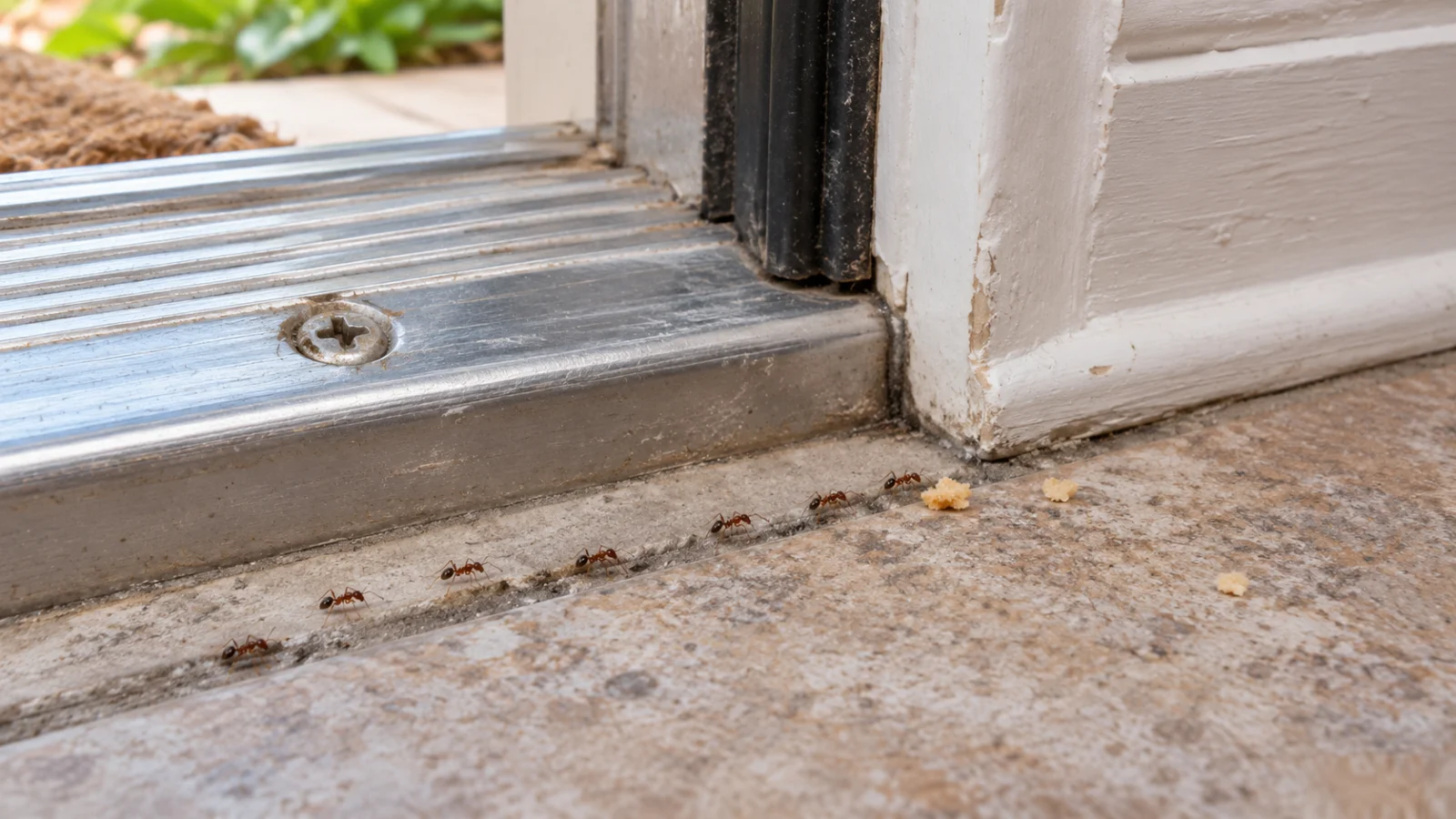
Follow the movement from a safe distance. A line of ants traveling through a door threshold, a foundation gap, or around a pipe may lead to spilled food, a pet feeding area, or another accessible resource. Observe the route before wiping it away so you can see where it begins.
Then look outside near the relevant wall for active soil mounds and entry routes. Fire ant mounds often lack a conspicuous opening at the top because workers use underground passages. A nearby mound is worth noting, but it does not by itself establish the identity or source of the ants indoors.
Record the useful details
- Entry: Note the exact doorway, wall gap, baseboard, or other point where workers appear.
- Destination: Are they gathering around crumbs, pet food, or another obvious source, then traveling back toward the entry?
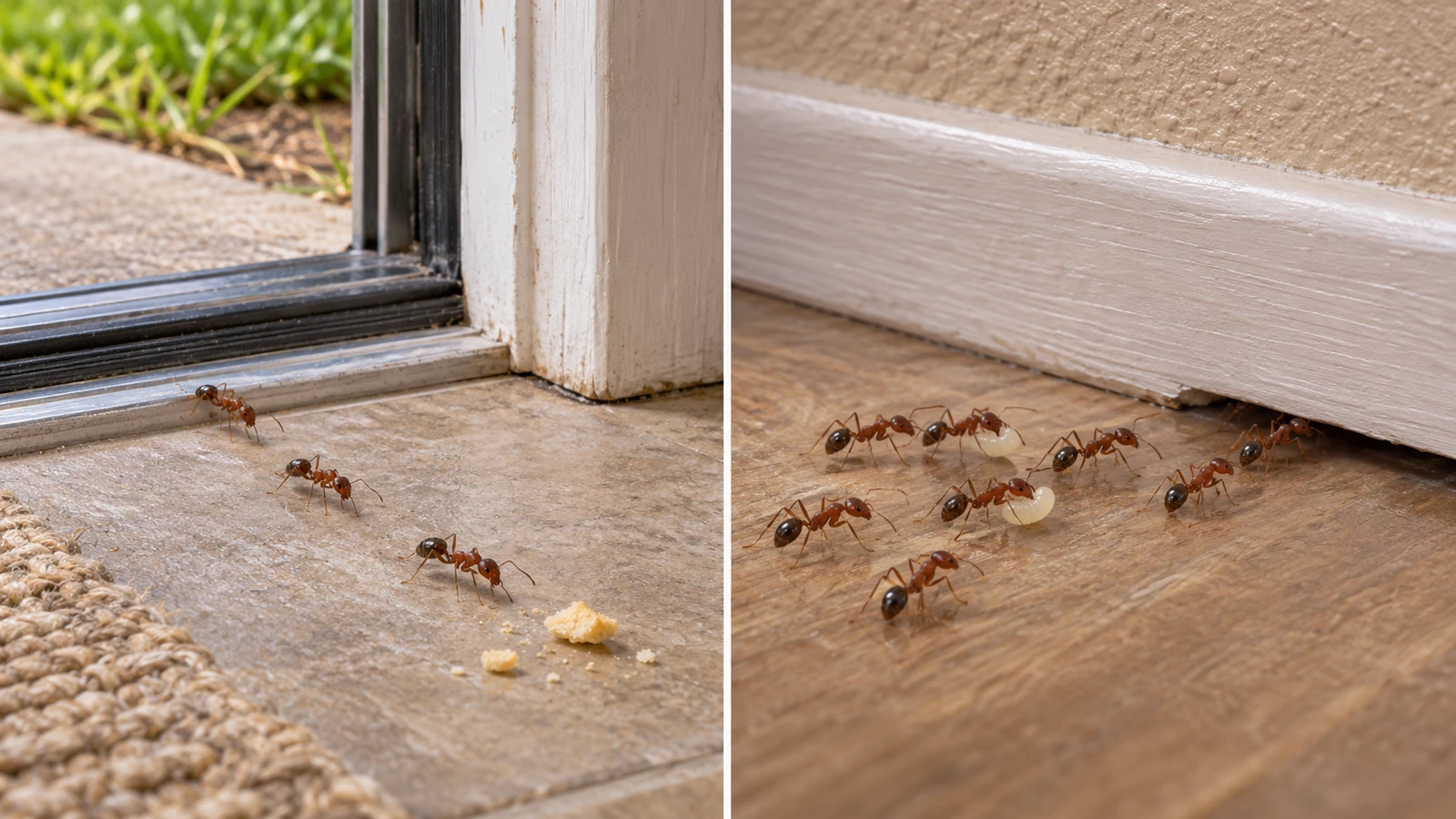
- What they carry: Are workers transporting food, or pale, rice-like brood such as larvae and pupae toward an indoor gap?
- Spread: Is the activity confined to one route, or are workers emerging in several places, including rooms where people sleep?
Take photographs from a safe position if possible. Keep children and pets away from the active trail. Do not dig into the mound, remove wall coverings, or open electrical equipment to follow the ants.
Identification Mistakes
- Assuming every small red ant is an imported fire ant.
- Treating a mound outside as proof that a colony has settled inside.
- Stirring up a mound or spraying a trail before identifying the entry route.
Key Clue
A steady line visiting indoor food usually points toward foraging. Workers carrying pale brood and soil into the building are a more important clue that a disturbed colony may be relocating.
What to Watch For
Large numbers of agitated workers entering living or sleeping areas can create an immediate stinging risk, particularly for people with limited mobility and for pets. Keep clear of the activity rather than approaching it to count ants.
What do the observations mean?
The more common indoor fire ant problem is foraging: workers leave a colony outside, discover food or moisture inside, and recruit nestmates. The ants may concentrate around the source and travel back along a recognizable route. The colony can remain entirely outdoors even when many workers are inside.
Less commonly, a colony disrupted by flooding, drought, landscaping, or another disturbance may move into a building. Workers carrying their pale brood, sometimes along with soil, are a stronger sign of relocation than a trail to food. That calls for prompt attention, without assuming every visible worker belongs to an established indoor nest.
The pattern is easier to interpret when you consider the insects, their direction of travel, and what is happening near the entry:
| What you see | What it suggests | Useful next check |
|---|---|---|
| Workers repeatedly entering for pet food or crumbs | Foraging from a colony that may be outdoors | Trace the entry route and check nearby exterior soil without disturbing it |
| Workers moving pale brood or soil into an indoor gap | Possible colony relocation or protected indoor activity | Keep people clear and arrange a targeted inspection |
| A few scattered reddish ants with no clear trail | Species and source still uncertain | Photograph a specimen and compare it with other household ants |

How serious is the activity indoors?
A small, localized trail near an accessible food source is different from ants emerging in large numbers from a wall or floor gap. If the insects are confirmed as fire ants, a localized foraging route often allows you to start with removing attractants and inspecting the outdoor source, while protecting the area from stings.
An apparent movement of brood into the structure, repeated heavy activity, or insects gathering around occupied bedrooms merits quicker assessment. Fire ants can sting repeatedly; keep people and animals away and avoid attempting to expose a hidden colony.
When further inspection matters
If ants continue to appear after the food source is removed, or if they repeatedly emerge from inaccessible gaps, the route may need professional inspection. Multiple sightings alone do not locate a nest. A specialist can distinguish outdoor foraging from a colony occupying a structural void and address areas you cannot safely access.