
How-To
How to get rid of fleas in your yard: a targeted control plan
Fleas in the yard often cluster where pets rest and shade keeps soil damp. Use this practical plan to confirm outdoor activity, focus on the right spots, coordinate pet and home care, and check whether control is working.

Finding fleas around your back steps or seeing them jump onto your dog’s legs can make you want to spray the entire lawn. But outdoor flea activity is often concentrated in a few sheltered places rather than spread evenly across the grass.
The most useful approach is to confirm where fleas are present, reduce the conditions that support them, and treat only the affected outdoor areas when necessary. Keeping pets protected and addressing any indoor infestation are important parts of preventing fleas from returning.
- Difficulty: Basic to moderate, depending on access to shaded areas and whether an outdoor infestation is confirmed.
- Equipment: Knee-high white socks, a flashlight, a phone or notebook, a rake or mower where needed, washable pet bedding, and any protective equipment required by a pesticide label.
Check Your Yard Before Treating Anything
Begin by looking for adult fleas rather than assuming that every bite or jumping insect comes from your lawn. Adult fleas are small, dark, wingless insects that jump. If identification is uncertain, compare your specimen with these flea identification clues before choosing a treatment.
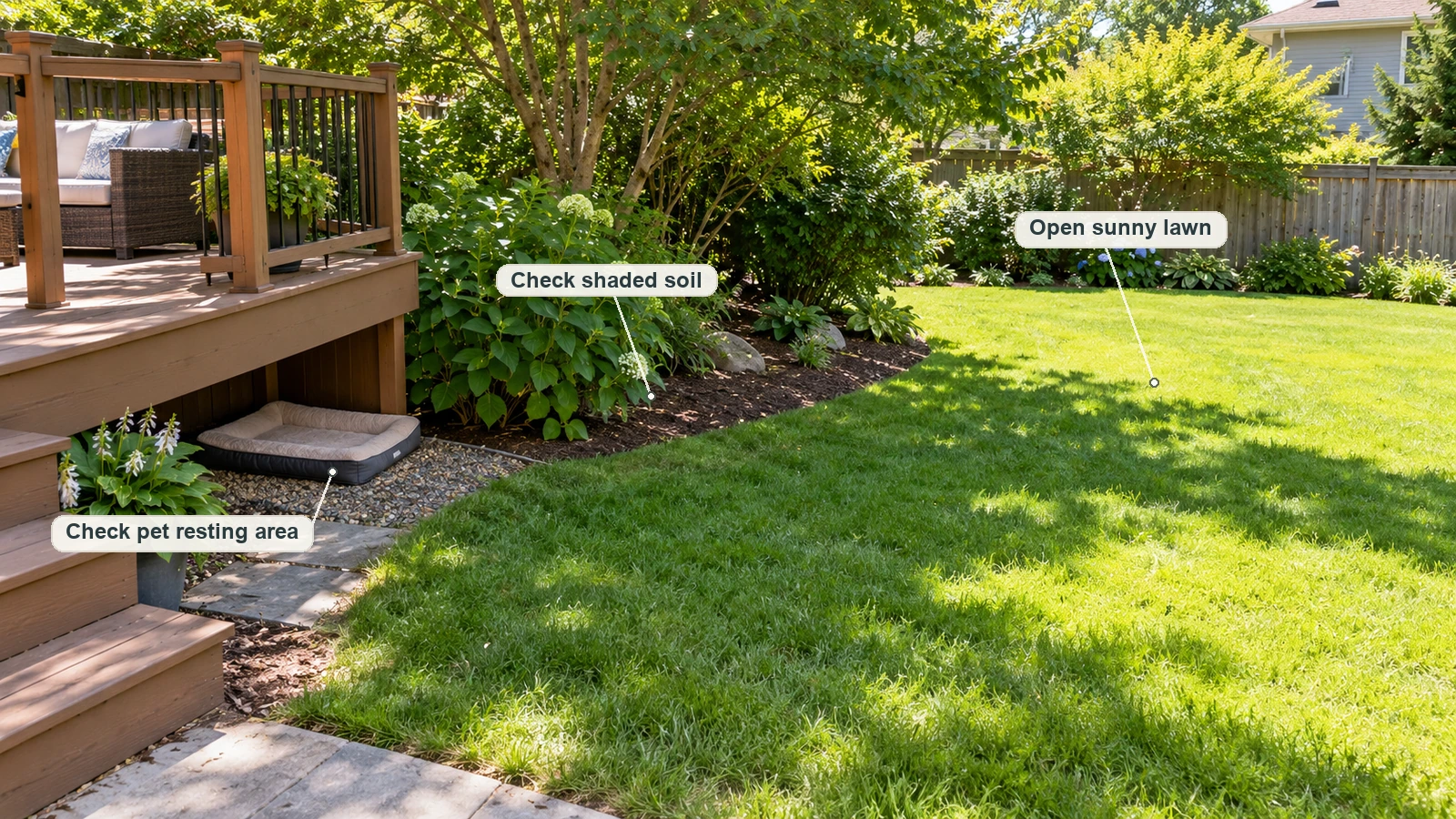
Fleas are more likely to develop in shaded, protected areas where animals regularly rest. Hot, exposed, heavily used lawn areas are generally less favorable for their immature stages.
A simple white-sock inspection can help you locate outdoor activity. Pull clean white socks up toward your knees, then walk slowly through the areas you suspect. Pause occasionally and examine the socks for small, dark insects that have jumped onto the fabric.
Prepare a short list of places to inspect:
- Pet resting spots: Outdoor dog beds, kennels, dog runs, and sheltered places where pets regularly lie down.
- Shaded ground: Soil under decks, shrubs, porches, or dense vegetation, especially where moisture and organic debris accumulate.
- Animal access points: Areas used by stray cats or wildlife, including sheltered spaces beneath sheds and other structures.
Record where you actually find fleas. If possible, note whether they appear repeatedly in the same area and whether your pets spend time there.
A negative sock check is useful information, but repeat the observation if other evidence continues. Adult fleas may not jump onto your socks during every visit, and the method does not reveal eggs or larvae hidden in the soil.
Before You Start
Do not apply an outdoor pesticide solely because of unexplained bites or a suspicious insect. Confirm flea activity and identify the affected area first. If treatment becomes necessary, arrange a separate place for children and pets to stay away from the application area, and use only a product whose label permits the intended outdoor use.
Treat Flea Hotspots in This Order
Focus on the places where fleas have been found and where animals regularly spend time. Flea eggs can fall from hosts into their surroundings, while larvae develop best in sheltered conditions with sufficient humidity and organic material.
A sunny stretch of closely maintained lawn may need no treatment at all. A shaded dog resting area, the ground beneath a deck, or a protected strip beside the house may deserve much more attention.
Step 1: Reduce Shade and Damp Cover in the Affected Areas
Begin with the conditions you can change without pesticides.
Mow overgrown grass where appropriate, rake excessive leaf litter from confirmed problem spots, and trim low vegetation that keeps heavily used animal areas dark and damp. Removing unnecessary debris can expose the soil to more sunlight and reduce protected flea habitat.
Avoid overwatering the lawn, and correct persistent dampness where practical. Pay particular attention to places that remain wet beneath shrubs, around outdoor pet shelters, or beside structures.
The goal is not to strip the yard of vegetation. Concentrate on the affected locations and make them less favorable for flea development.
Step 2: Clean Outdoor Pet Resting Areas
Outdoor pet bedding and sheltered sleeping spaces can accumulate flea eggs and organic debris.
Wash washable bedding according to its care instructions and dry it thoroughly. Clean accessible kennel floors and the ground immediately around resting places, removing accumulated hair, litter, and loose debris.
Where practical, move a pet’s resting place to a cleaner, drier, more exposed location that remains comfortable and offers appropriate shelter.
Also check whether other animals are using the same spaces. Stray cats and wildlife may maintain a flea problem even when household pets are being protected. Secure pet food and garbage, remove unnecessary shelter around structures, and avoid handling wild animals or entering unsafe crawl spaces.
Step 3: Coordinate Outdoor Control With Pets and the Home
Yard maintenance alone may have little lasting effect if fleas continue to feed and reproduce on untreated animals.
Make sure every household pet has an appropriate flea-control plan developed with a veterinarian. Different animals require different products, and a treatment intended for a dog may be dangerous to a cat.
If fleas are also present in the house, coordinate outdoor work with indoor cleaning and control. Pay particular attention to indoor pet resting areas, where eggs and developing fleas may accumulate.
Treating the outdoor environment does not replace flea treatment for animals. Similarly, controlling fleas on pets does not automatically resolve a heavily infested outdoor resting area.
Step 4: Use a Labeled Yard Flea Treatment When Needed
If repeated checks confirm substantial flea activity in specific outdoor locations, a properly labeled pesticide may be useful alongside habitat changes and animal care.
Select a U.S. pesticide whose actual label lists fleas and permits the intended application site, such as the relevant lawn, outdoor animal area, or other identified location. Check that the product is registered or otherwise lawfully available for that use in your state and that the application is authorized for a homeowner.
Some outdoor flea formulations target adult fleas with an insecticide. Others also contain an insect growth regulator, such as pyriproxyfen, that interferes with flea development. The presence of an insect growth regulator does not mean every adult flea or protected pupa will be killed immediately.
Follow the container label for preparation, application method, permitted surfaces, protective equipment, weather restrictions, and any required interval before another application. Do not invent a dilution, mix different products together, or use an indoor or pet product outdoors unless its labeling specifically authorizes that use.
Concentrate treatment on the documented problem areas to the extent the label permits. Do not assume a whole-yard application is required simply because the product is sold for lawns.
What to Watch Out for During Yard Treatment

Pesticide use outdoors requires particular attention to people, pets, weather, and surrounding areas.
Keep children, pets, their toys, feeding bowls, and other movable belongings away from the application area. Follow the product’s reentry instructions before allowing anyone back. For sprays, this commonly means waiting until the treated surface is dry, but some labels impose additional restrictions.
Do not spray in windy or rainy conditions that conflict with the label. Avoid drift or runoff into storm drains, ponds, streams, swimming pools, neighboring properties, and other restricted areas.
Avoid Treating Places That Do Not Need It
A confirmed hotspot beneath a deck is not evidence that the entire backyard is infested. Broad applications can increase unnecessary pesticide exposure without addressing an overlooked host or shaded resting area.
Pay attention to flowering plants, vegetable gardens, aquatic habitats, and other sensitive locations. A product’s permission for use on a lawn does not automatically authorize spraying every adjacent surface.
Be equally cautious with products promoted as natural or pet-safe. Those claims do not replace the need to check the permitted site, directions, exposure risks, and precautions.
Check Whether Yard Flea Activity Is Decreasing
Return to the locations where your first inspection found fleas. Use the same white-sock method and, as far as practical, similar conditions so that your observations are comparable.
Record whether fleas still jump onto your socks, which places remain active, and whether your pets continue to encounter fleas after visiting those areas. A phone note identifying the location and observation is more useful than trying to remember whether the yard seemed better.
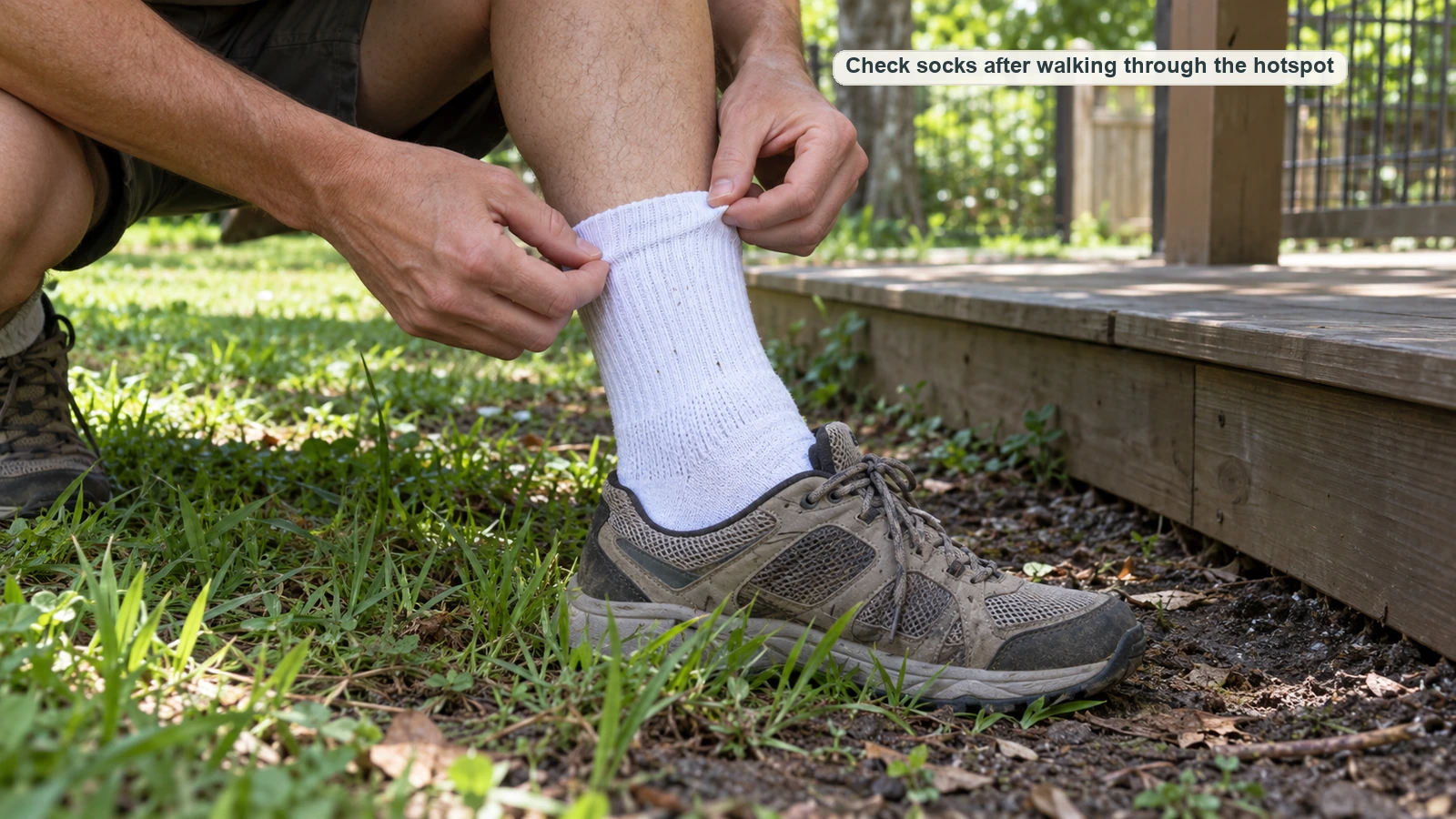
A single flea-free walk is encouraging, but continue checking if there was previously substantial activity. Fleas protected inside pupal cocoons can emerge after earlier control measures, and new hosts can introduce additional fleas.
For a clearer assessment, look for a sustained reduction in adult fleas in the originally affected locations. If activity shifts to another shaded area, inspect that location rather than automatically expanding pesticide treatment to the entire lawn.
Understanding flea eggs and the flea life cycle can help explain why new adults may appear even after the environment has been cleaned.
Expected Result
Across repeated, comparable checks, fewer adult fleas should be found in the previously active outdoor hotspots. Protected pets should also be less likely to pick up fleas during yard visits. Continued sightings call for another source check, not an automatic pesticide reapplication.
If Fleas Keep Appearing, Recheck the Source
Persistent outdoor flea activity usually calls for another look at the affected location, animal hosts, and access to sheltered spaces.
If fleas continue jumping onto your socks in one spot, check whether that area remains shaded and damp, whether animals are still using it, and whether earlier cleaning or treatment reached the relevant habitat.
If fleas are primarily found on a pet while yard inspections remain negative, the exposure source may be elsewhere or indoors. Do not assume the backyard requires another spray.
When Should You Call a Professional?
Professional pest control becomes useful when confirmed outdoor activity remains substantial despite coordinated measures, when the source lies beneath an inaccessible structure, or when wildlife is involved and safe access or exclusion requires specialized help.
A professional can assess the affected sites and applicable treatment restrictions. If the issue involves a wild animal living beneath a building, wildlife exclusion or removal may also require an appropriately qualified service.
A small, accessible hotspot that responds to basic measures does not automatically require professional treatment.
The next check depends on the pattern you are seeing:
| What you observe | Possible explanation | What to check or change |
|---|---|---|
| Fleas repeatedly jump onto socks near a dog run | The resting area remains favorable or animals continue introducing fleas | Recheck bedding, moisture, shade, pet protection, and the exact hotspot |
| Fleas are found on a pet but not during yard checks | Exposure may occur elsewhere, or indoor activity may be continuing | Review the pet’s flea-control plan with a veterinarian and check relevant indoor resting areas |
| Fleas return after an apparent improvement | Additional adults may emerge from pupae, or hosts may reintroduce fleas | Compare repeated observations, inspect animal access, and reassess before considering another labeled treatment |
| Fleas cluster near an inaccessible deck or crawl space | A sheltered animal resting site may be maintaining activity | Avoid unsafe entry or blind pesticide application; seek qualified assistance if the source cannot be accessed safely |
Follow Up Without Automatic Reapplication
Continue checking the same locations while flea activity is declining, particularly where pets rest or where adult fleas were previously found. Keep animal protection and relevant indoor control measures in place during this period.
There is no single outdoor reapplication schedule that fits every flea problem. Weather, local climate, ongoing animal activity, the flea’s developmental stages, and the product’s label all affect what happens next.
If repeated checks remain clear and pets are no longer picking up fleas from the affected spots, there is no reason to keep applying pesticide simply because a calendar date has arrived.
If activity persists, review your observations and the label before taking another step. Identifying a missed source is often more useful than repeating the same treatment without a clear reason.
Explore this topic further:


