Explanation
What eats cockroaches? Natural predators explained
From spiders and centipedes to lizards and egg-attacking wasps, discover which natural enemies target cockroaches and what they can realistically accomplish.
A house centipede chasing a roach across the floor or a lizard hunting insects near a porch light is a reminder that cockroaches have natural enemies. But the animals you see catching individual roaches are only part of the picture. Some insects attack their eggs instead, and the conditions that allow a cockroach population to thrive also determine how exposed it is to predators.
Quick Answer
Spiders, house centipedes, some ants and beetles, lizards, frogs, toads, birds, and small mammals eat cockroaches. Certain parasitoid wasps destroy their eggs. These natural enemies can reduce cockroach numbers, especially outdoors, but ordinary predation is not a dependable way to eliminate an infestation inside a home.
Which animals eat cockroaches?
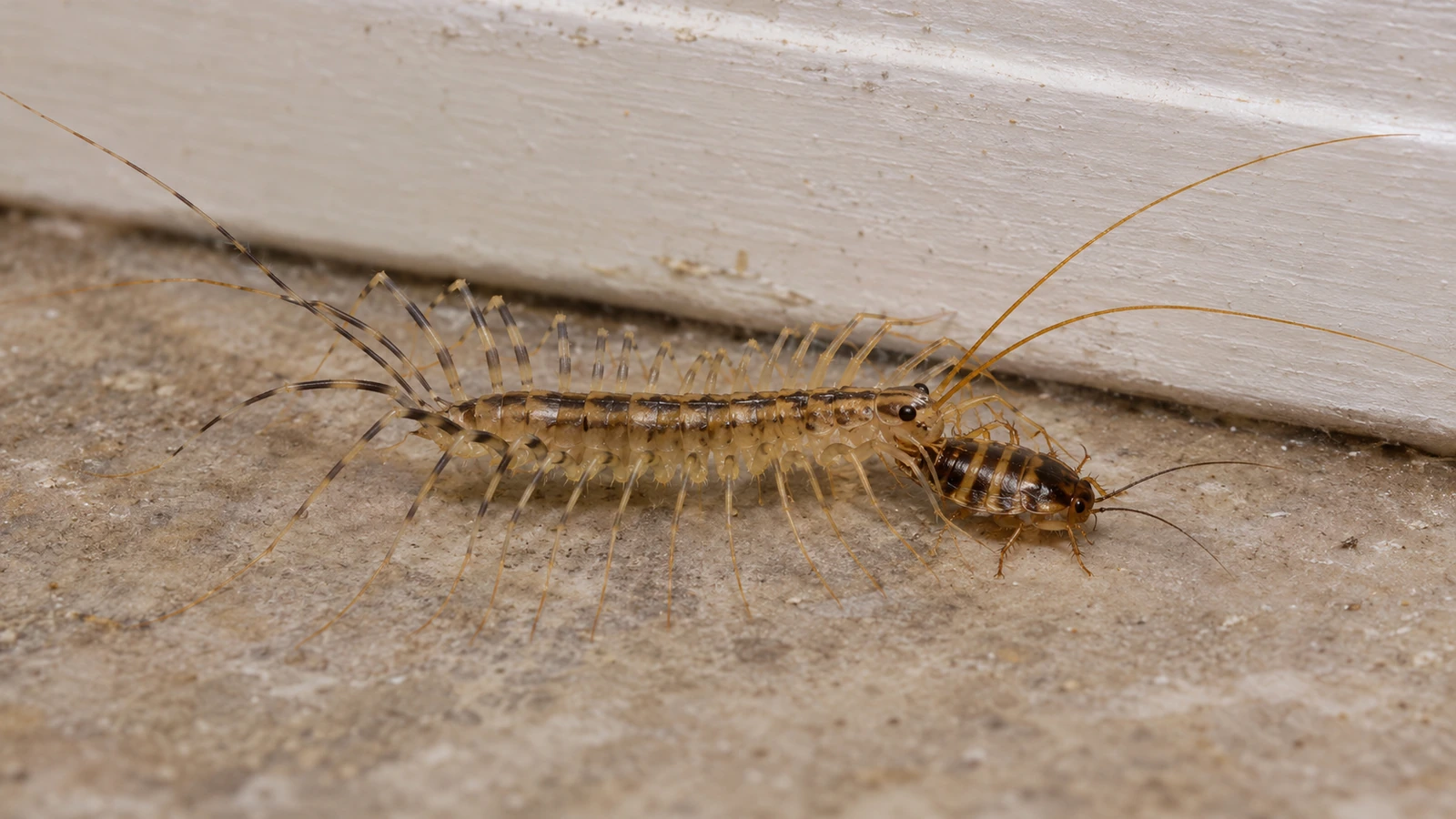
Spiders and centipedes are among the predators most likely to encounter roaches around buildings. A hunting spider can seize a cockroach directly, while a web-building spider may catch one that wanders into its web. House centipedes actively hunt insects at night and can capture smaller roaches.
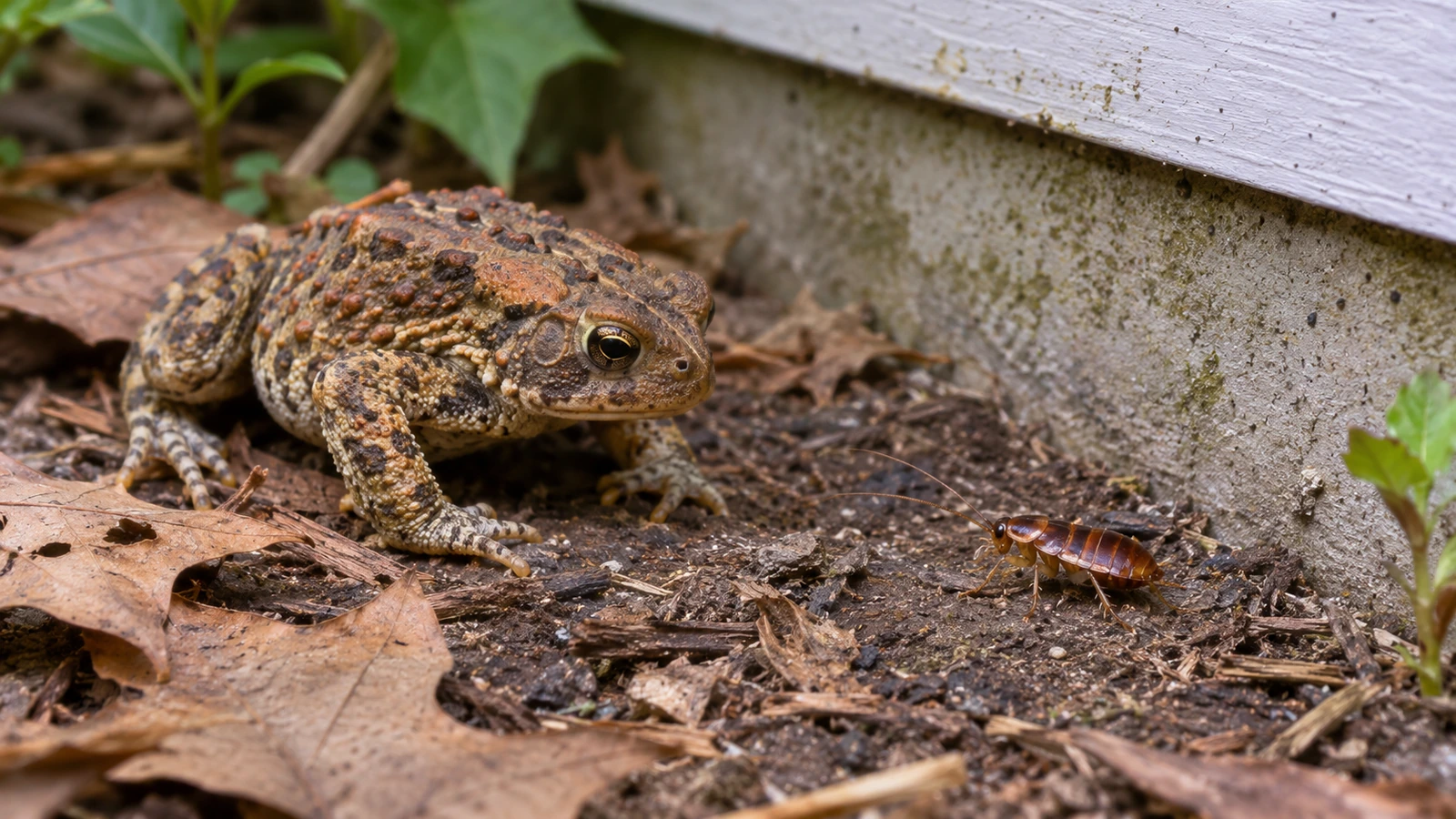
Outside, cockroaches moving through leaf litter, around a foundation or across a patio may encounter a wider range of animals. Which predators they face depends on the habitat, the local climate and the size of the roach.
Insects and other arthropods
Some predatory beetles, ants and praying mantises also feed on cockroaches. A small roach or a young nymph may be easier to capture than a large adult. Ants may attack vulnerable live insects or gather around dead ones, so finding ants feeding on a cockroach does not necessarily mean they killed it.
Lizards, frogs, birds and mammals
Geckos and other insect-eating lizards can catch cockroaches while hunting around vegetation and buildings. Frogs and toads also take suitably sized roaches as prey. Ground-foraging birds and small mammals, including mice, may eat them when they are accessible.
These animals eat a variety of other prey as well. A gecko hunting near a porch light, for example, can switch to moths or beetles rather than pursuing cockroaches exclusively.
Wasps that attack cockroach eggs
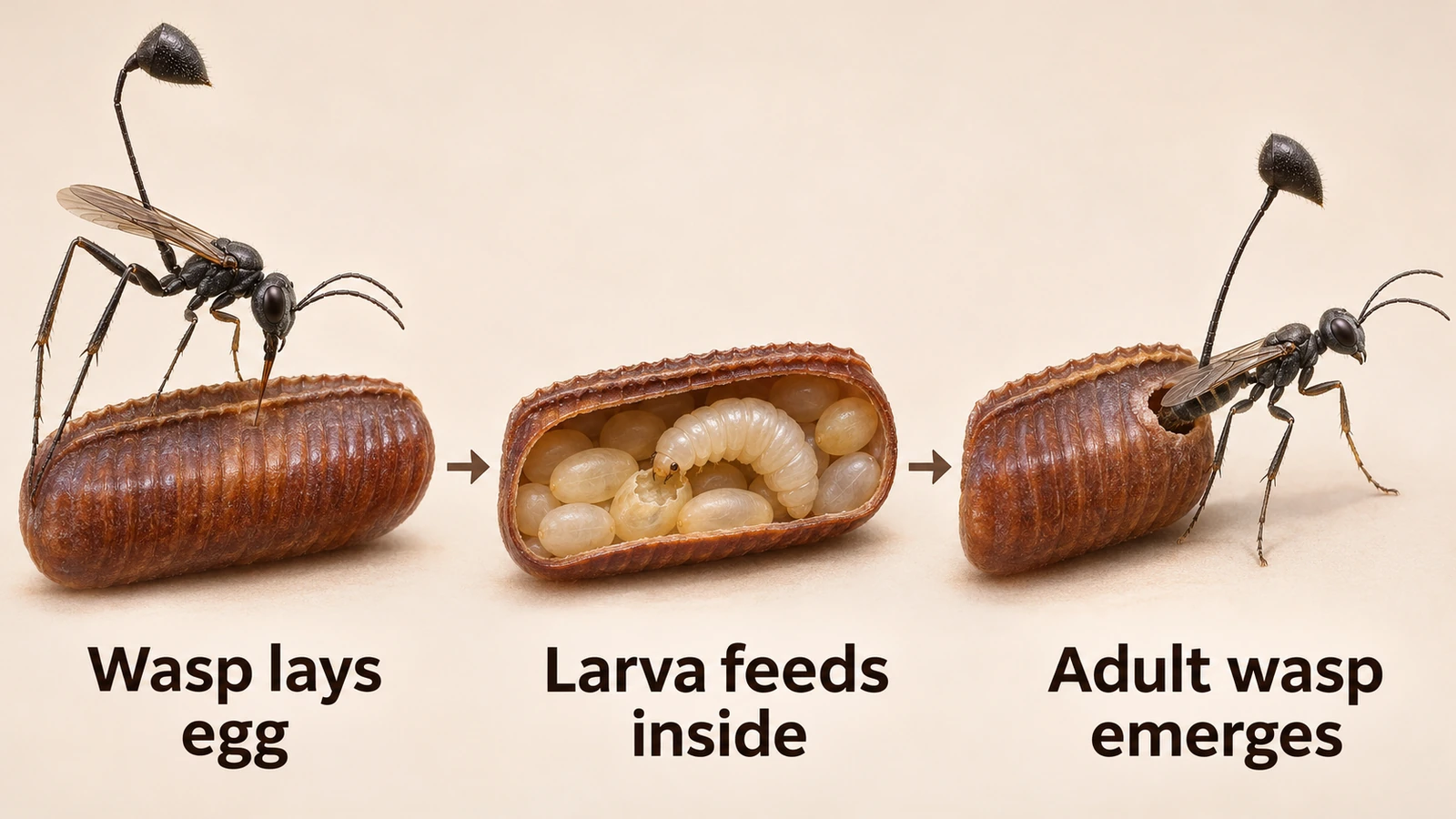
Ensign wasps use a different strategy. A female ensign wasp of the species Evania appendigaster deposits an egg inside a cockroach egg case, also called an ootheca. The developing wasp larva consumes the cockroach eggs inside, preventing them from hatching. An adult wasp eventually emerges through a small opening in the case.
This is parasitism of the eggs, rather than predation on roaming cockroaches. Other species of tiny parasitoid wasps target particular cockroach species, including the brown-banded cockroach. Insect-infecting fungi and nematodes can also kill cockroaches, but they are not animals hunting and eating individual roaches.
What eats roaches inside a home?
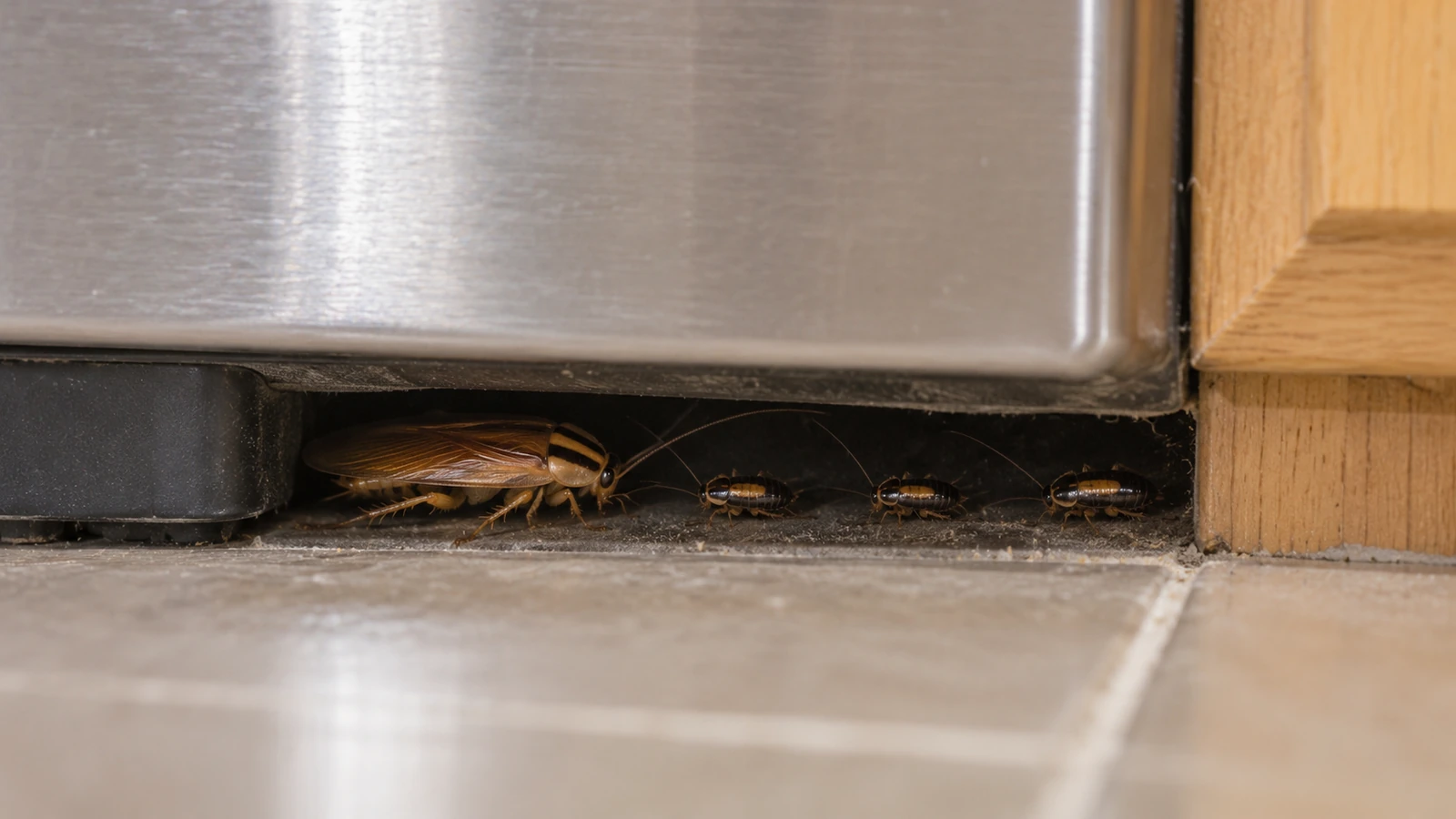
A spider or house centipede may catch a cockroach that ventures out of its hiding place at night. The difficulty is reaching the roaches that remain sheltered. A German cockroach can squeeze into narrow gaps around appliances and cabinets, where a larger predator cannot follow.
American cockroaches, by contrast, often occupy outdoor or partly sheltered sites such as utility areas, drains and crawl spaces. Those habitats may expose them to natural enemies, although they can still enter buildings.
Egg cases present another obstacle. The female German cockroach normally retains hers until shortly before the eggs hatch. This differs from species that deposit their egg cases in sheltered places, where some parasitoid wasps can find them. A wasp that attacks the eggs of one cockroach species may be ineffective against another.
Even where a predator regularly catches exposed roaches, the population may continue growing if enough insects survive in protected locations and produce offspring. The number of cockroaches seen in the open is therefore a poor measure of what a predator has actually accomplished.
Good to Know
House centipedes also hunt silverfish, spiders and other small arthropods. Seeing one indoors is not, by itself, a sign that you have a hidden cockroach infestation.
Can natural predators control a cockroach infestation?
Biological control can work under specific conditions. In a monitored study of brown-banded cockroaches living in an insect-rearing room, parasitism of their egg cases by the wasp Comperia merceti rose substantially. Cockroach captures subsequently declined, beginning with the youngest nymphs. The sharp decline occurred roughly three to four months after the increase in parasitism.
That example shows how preventing new cockroaches from hatching can reduce a population over time. It involved a compatible parasitoid and a particular cockroach species in a monitored setting, not simply a few spiders or lizards loose in a kitchen.
For a household problem, the appropriate response depends on the cockroaches themselves. If you see a large outdoor roach near an exterior door, the immediate concern may be how it entered. If small roaches repeatedly appear around the refrigerator or inside kitchen cabinets, an established indoor population becomes more likely. Start by identifying the type of cockroach you are dealing with.
Reducing access to food, moisture and shelter, blocking entry routes and using targeted cockroach control when necessary address the conditions that keep the infestation going. For recurring activity, especially in shared buildings or hard-to-reach areas, professional pest control can help locate the source and assess whether the population is actually declining.
Do not release centipedes, spiders, lizards or other animals into your home to treat roaches. They cannot be relied on to reach all the hiding places, and introducing wildlife or other insects can create additional problems. If you already have a pet that chases roaches, its hunting is no substitute for controlling the infestation.
Explore this topic further: