Identification
What does termite damage look like?
Learn to recognize termite damage in exposed wood, distinguish it from rot and carpenter ant excavation, and understand when a pest inspection or structural assessment is needed.
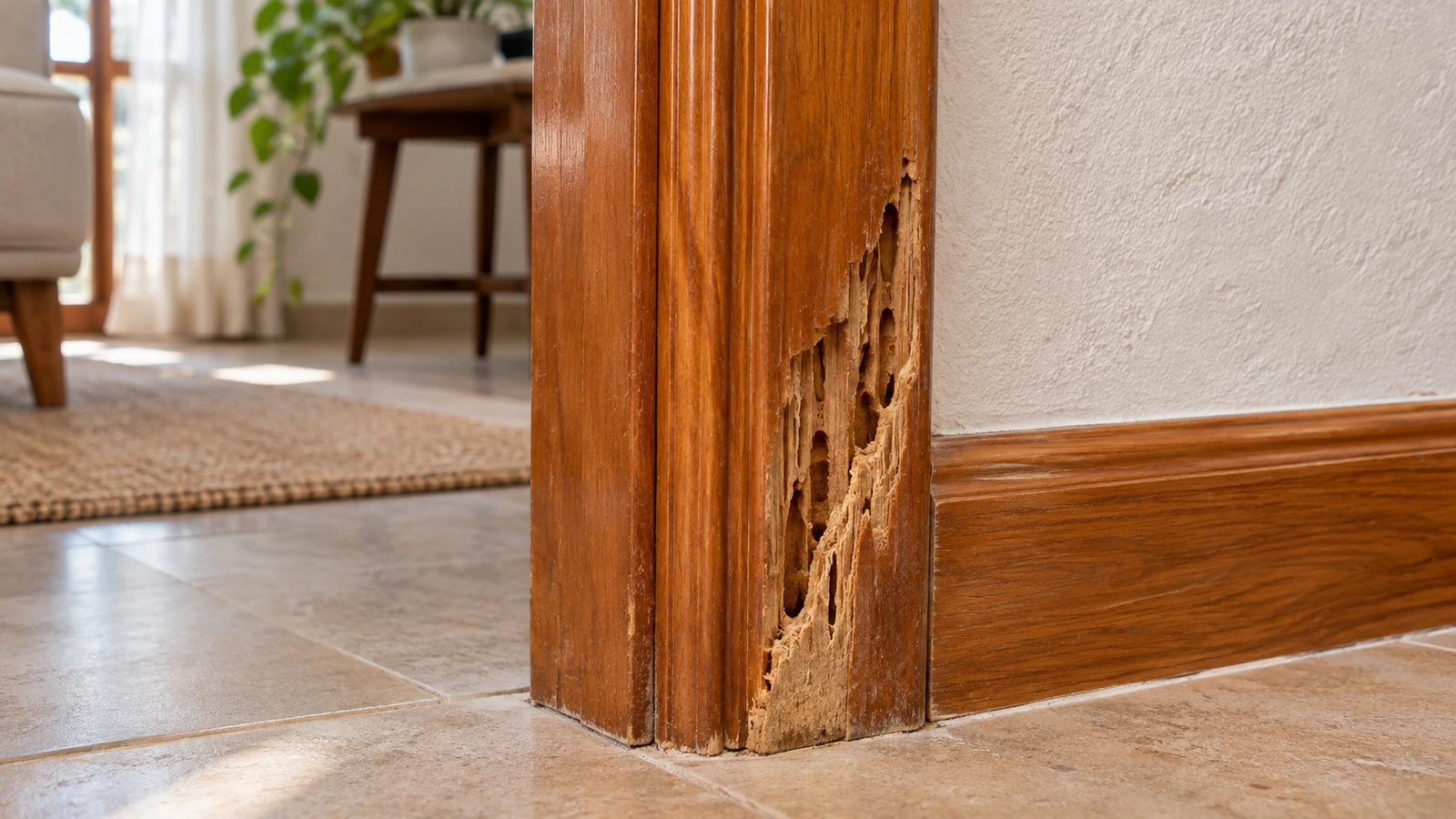
You notice a section of damaged wood while replacing a baseboard. The exposed surface is uneven, with channels running beneath a thin outer layer. Is it termite damage, wood rot, or something else?
The shape of the damage and the material inside the cavities can help you narrow down the cause. The next question is whether the affected wood is decorative or part of the structure that supports your home.
Recognizing termite damage in wood
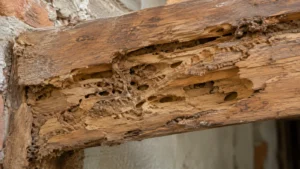
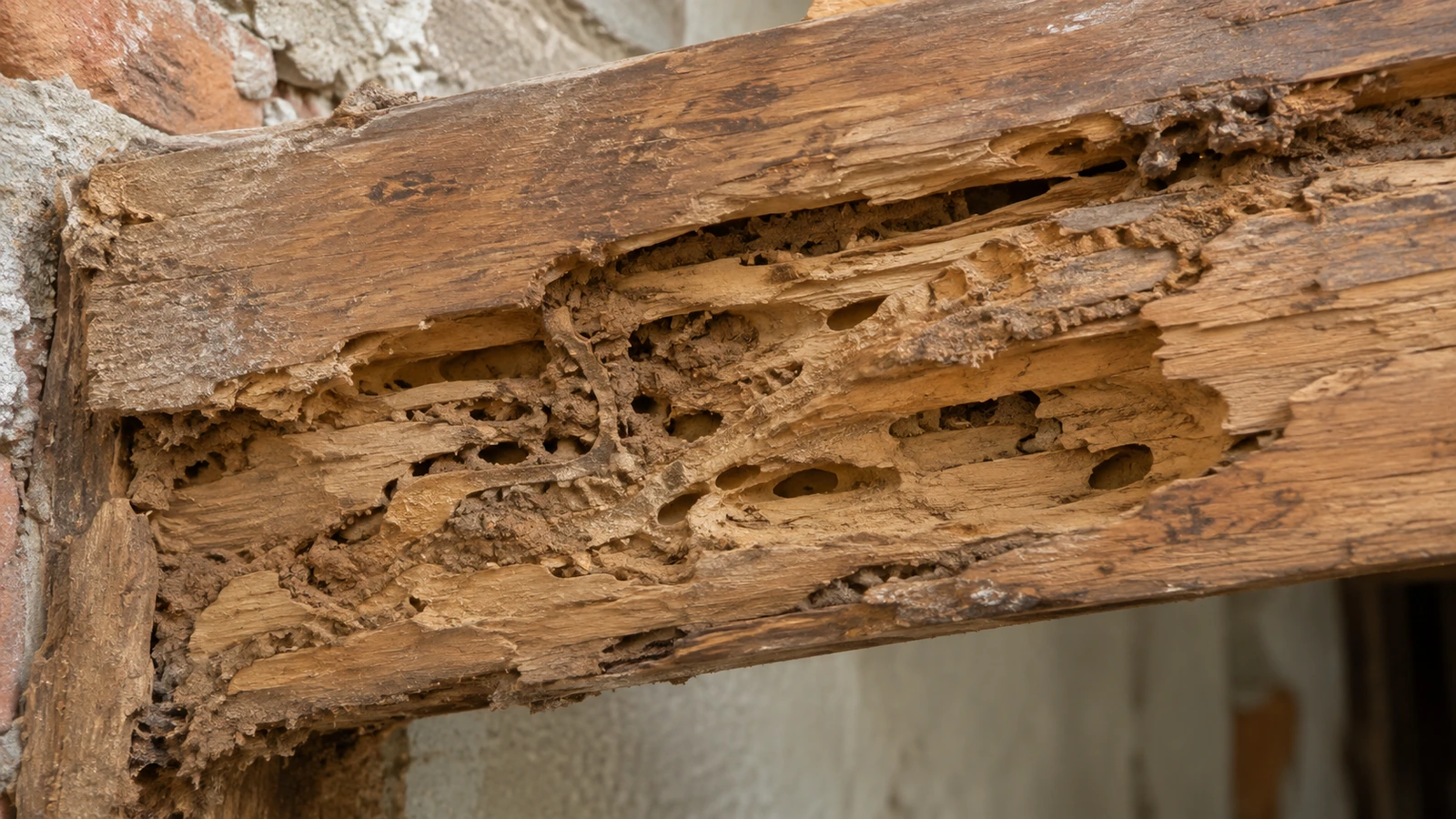
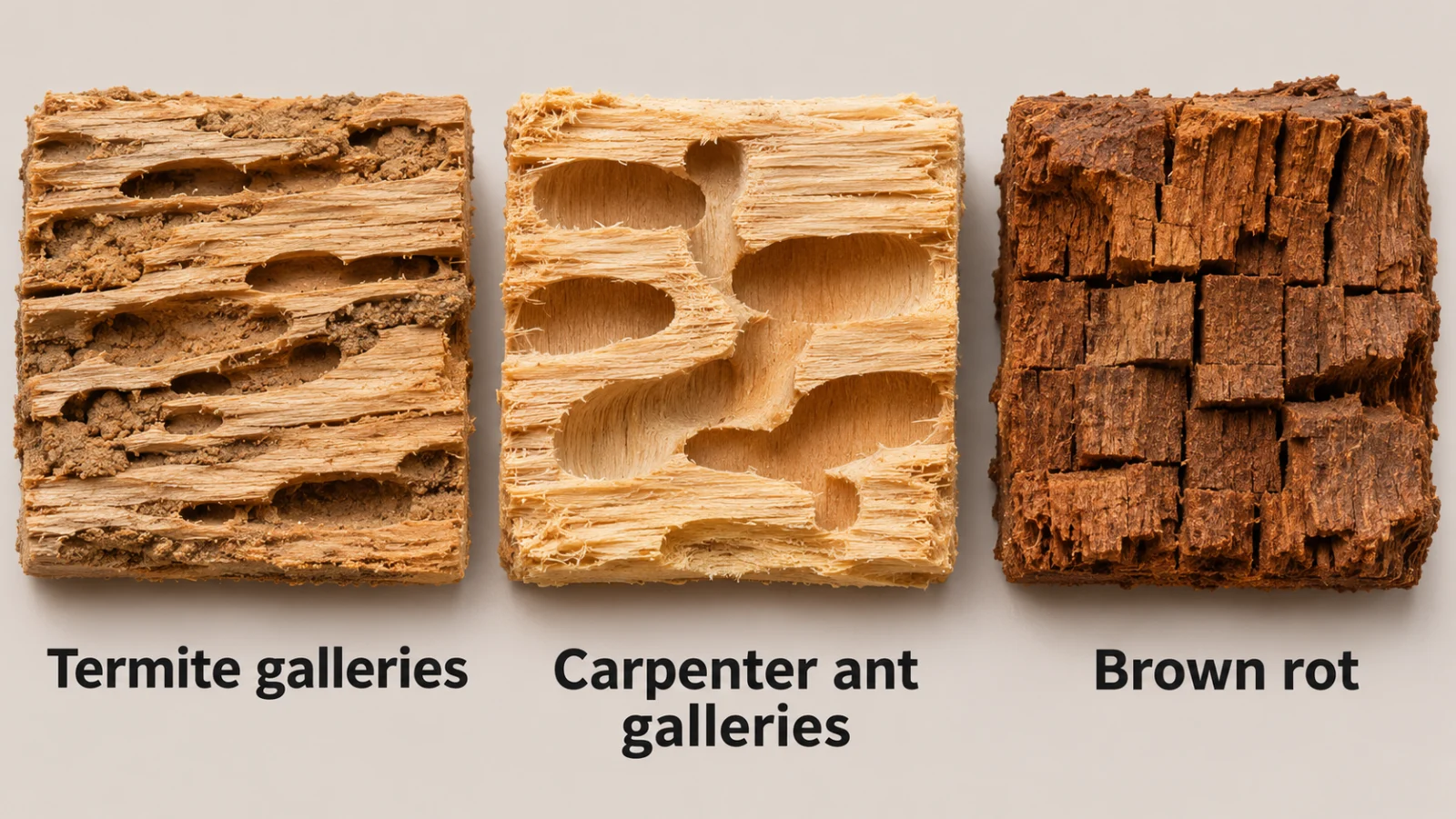
Termites consume wood from within, leaving irregular cavities called galleries. Subterranean termites commonly remove the softer layers of wood along the grain, leaving thin partitions of harder wood. Their galleries often contain dried soil.
Drywood termites can excavate chambers across the grain as well as along it. Their galleries may contain hard fecal pellets rather than soil. Both groups can leave an outwardly intact surface over damaged wood.
Identification in 30 Seconds
- Long, layered cavities containing soil suggest subterranean termite damage.
- Chambers containing hard pellets suggest drywood termite activity at some point.
- Smooth, clean tunnels may indicate carpenter ants instead.
- Crumbly wood with block-shaped cracks suggests fungal decay.
Look at wood that is already exposed or damaged. The interior pattern is usually more informative than the color of the wood or the appearance of its painted surface.
Where termite damage becomes visible
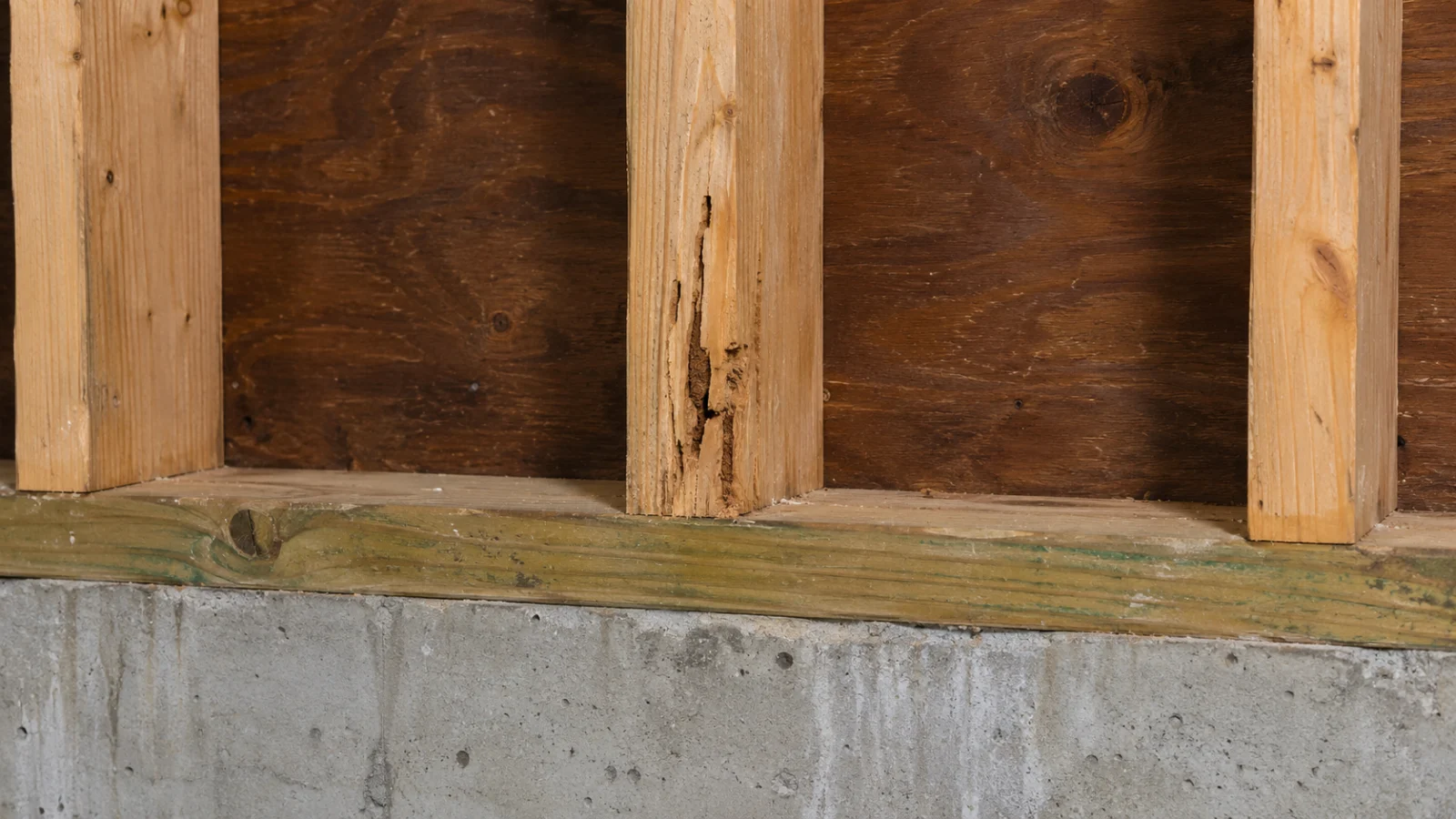
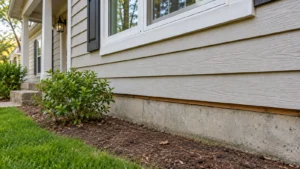
In homes affected by subterranean termites, damage may be discovered around sill plates, floor joists, the lower ends of wall studs, and wood near foundations. These locations are worth noting because termites can reach them from the soil through protected routes.
Drywood termite damage can also occur in window frames, roof framing, and furniture above ground. A lack of contact with soil is therefore not enough to rule out termite damage.
Check the surrounding context safely
Look at accessible surfaces near the affected material. Note whether the wood is near the foundation, a leak, or an area with other exposed damage. Record where the cavities, debris, or changes to the surface appear.
Narrow depressions in painted drywall may develop when termites feed on the paper facing beneath the paint. They do not consume the gypsum core. Moisture and other building defects can also alter the appearance of drywall, so a surface change alone is a reason to investigate further.
Take photographs showing both the detail of the damage and its location in the room. Keep existing inspection reports and treatment records if you have them. Do not pull away wall coverings, break open galleries, or enter a crawl space beneath a potentially weakened floor.
Identification Mistakes
- Assuming that every hollow area in wood was caused by termites.
- Treating discoloration or blistered paint as confirmation.
Key Clue
Soil lining the cavities of exposed wood is a particularly useful clue when distinguishing subterranean termite damage from carpenter ant excavation.
What to Watch For
A small opening in a painted surface can conceal more extensive material loss. Its size is not a dependable measure of the damage behind it.
Distinguishing termite damage from other causes
Carpenter ants excavate wood to create nesting space rather than consume it. Their tunnels tend to have smoother surfaces and less material inside them than subterranean termite galleries. Coarse wood fragments around an opening can provide another clue. Learn more about carpenter ant damage if these features match what you see.
Fungal decay changes the wood itself rather than creating the same pattern of excavated passages. Brown rot, for example, can leave dark, brittle wood with cracks forming small blocks. Other forms of decay can produce pale or fibrous wood.
A water leak can create conditions favorable to several wood-damaging organisms at once. Finding decay in one section does not rule out termite activity in the surrounding material.
Use the following distinctions to decide what deserves closer assessment.
| Appearance of the exposed material | Plausible explanation | What to check next |
|---|---|---|
| Layered cavities along the grain with soil residue | Subterranean termite damage | Nearby accessible wood and connection to the foundation |
| Irregular chambers with hard pellets | Drywood termite damage | Whether the debris matches termite droppings |
| Clean, smooth galleries with coarse wood debris nearby | Carpenter ant excavation | Signs of ants and nearby moisture problems |
| Dark, brittle wood with block-shaped cracks | Fungal decay | Evidence of current or previous moisture exposure |
Assessing whether the damage is serious
Damage to a piece of decorative trim and damage to a floor joist can look similar in a close-up photograph. Their consequences differ because the joist carries part of the building’s load. The location of the affected material matters as much as its visible condition.
A small section of exposed damage may be the edge of a larger concealed problem. On the other hand, extensive old damage can remain after the termites have been eliminated.

Separate activity from structural condition
Finding live termites in damaged wood establishes that the insects are currently present there. Empty galleries and old debris cannot reliably date the damage or tell you whether activity continues elsewhere. If pellets are present, compare them with the characteristics of termite droppings, keeping in mind that old pellets can remain after treatment.
A receipt for termite treatment is useful history, but it is not proof that the damage has been repaired. Killing termites stops their feeding; it does not restore the wood they have removed.
Recognize potential structural warning signs
Pay particular attention to damaged wood at the ends of joists, around their supports, or within beams and other framing. New sagging, visible distortion, or a damaged support beneath a floor requires prompt professional assessment, regardless of whether termites caused it.
The remaining strength of wood depends on factors such as its internal condition, the location of material loss, and the loads it carries. You cannot establish a safe load or a reliable severity rating from surface photographs.