
Identification
Termite Droppings: How to Recognize Frass and What It Means
Found sand-like grains beneath wood? Learn what drywood termite droppings look like, how to distinguish frass from sawdust, and when the evidence needs inspection.
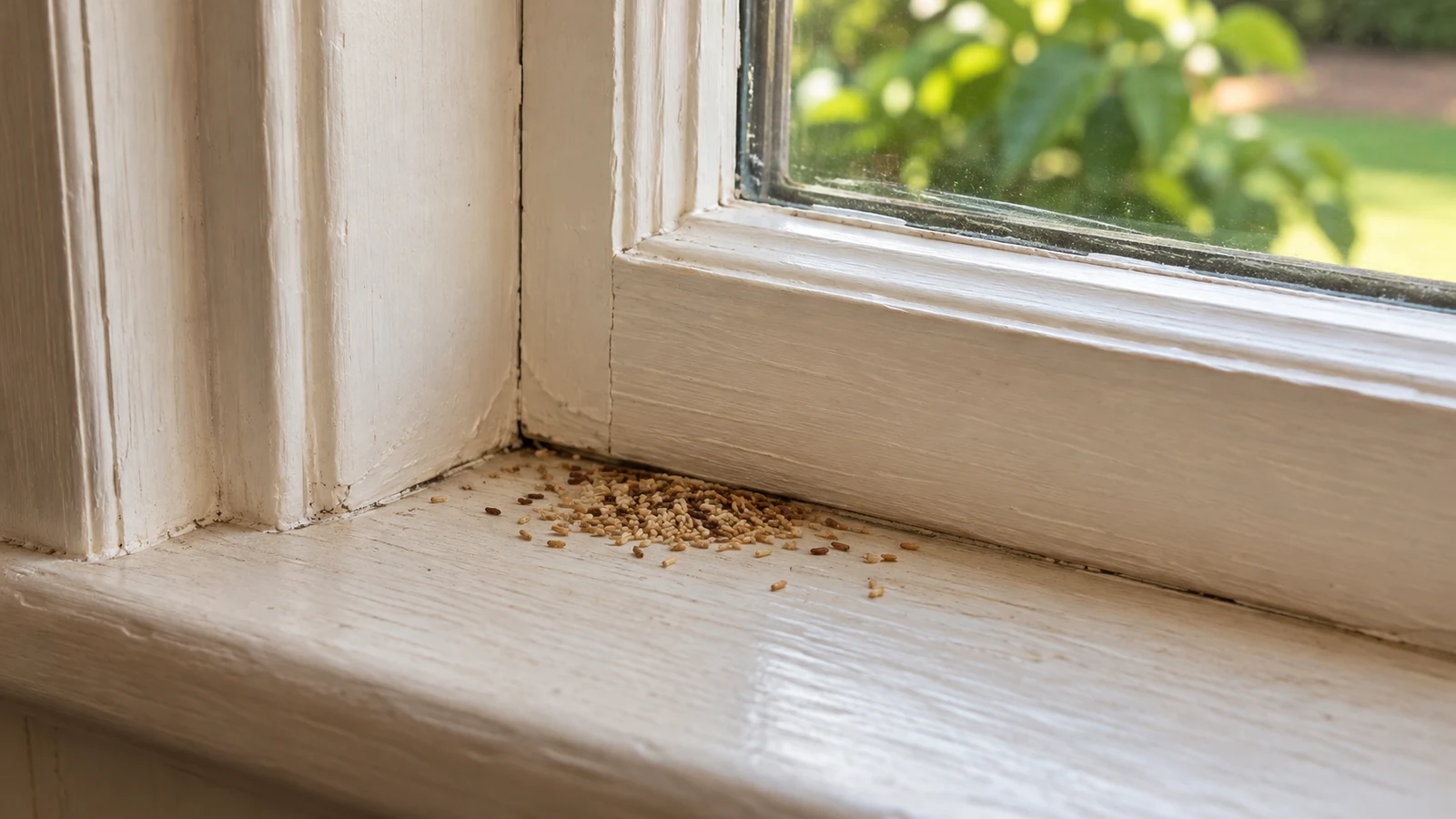
A small pile of tan grains has appeared beneath a window frame or wooden shelf. It looks like sand or sawdust, but it keeps catching your eye. Could it be termite droppings?
The useful question is what the particles actually are. Certain pellets are a distinctive clue to drywood termites, while ordinary wood dust and debris from other insects look different. Examining the material and where it collects can help you decide whether the wood needs a closer inspection.
What drywood termite droppings look like
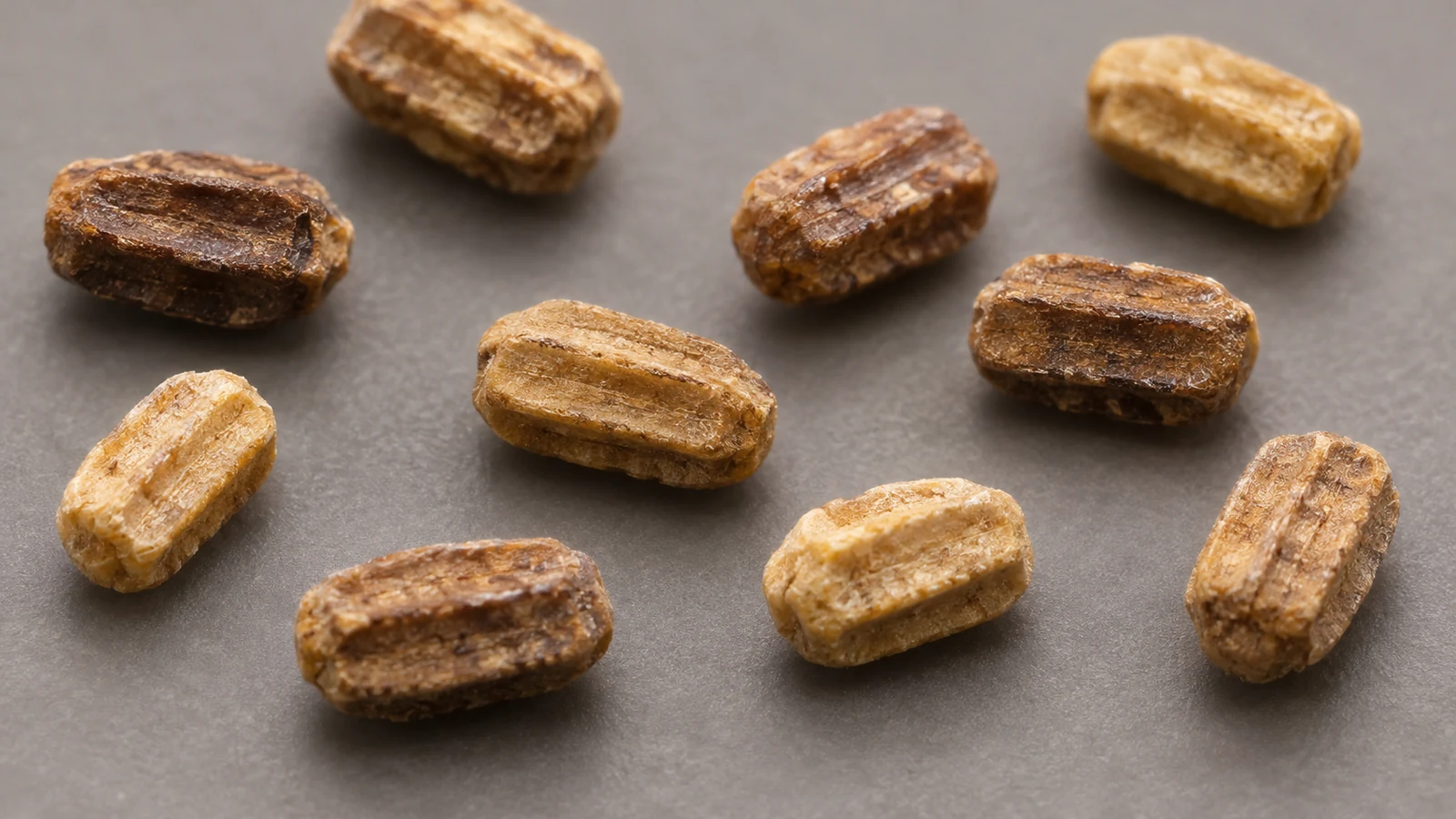
Drywood termite droppings, often called frass, are tiny, hard pellets that tend to be remarkably uniform in size. Each is roughly 1/32 inch (about 0.8 mm) long. At a glance, a pile may resemble coarse sand, fine grains, or ground pepper rather than anything recognizable as insect waste.
Under magnification, the pellets have an elongated, six-sided shape, with shallow depressions and lengthwise ridges. Their ends are rounded or blunt. Color is less useful: pellets can be cream, tan, brown, or quite dark, and more than one shade may occur in the same pile.
Identification in 30 Seconds
- Small, separate, similarly shaped grains: Examine them as possible drywood termite pellets rather than assuming they are sawdust.
- Six lengthwise ridges visible with magnification: This is the strongest visual clue to characteristic drywood termite frass.
- A pile beneath a wooden frame, beam, or piece of furniture: Look for a tiny opening in nearby wood, but do not assume the hole will be obvious.
Drywood termites expel pellets from their galleries through small openings called kick-out holes, often around 1 to 2 mm across. These openings may be closed or hidden, and pellets can fall some distance before settling. The pile shows where material landed, not necessarily the precise location of the gallery.
Check the pile and the wood around it

Start with a close look at the material, then inspect the accessible wood nearby. A flashlight and a basic magnifier are useful; opening walls, drilling holes, or pulling off trim is not part of this check.
Look above the pile as well as beside it. Window and door frames, shelving, furniture joints, beams, and wood trim can all provide places to inspect. A pin-sized opening or more than one pile strengthens the reason to investigate, but a missing visible hole does not rule out a source inside the wood.
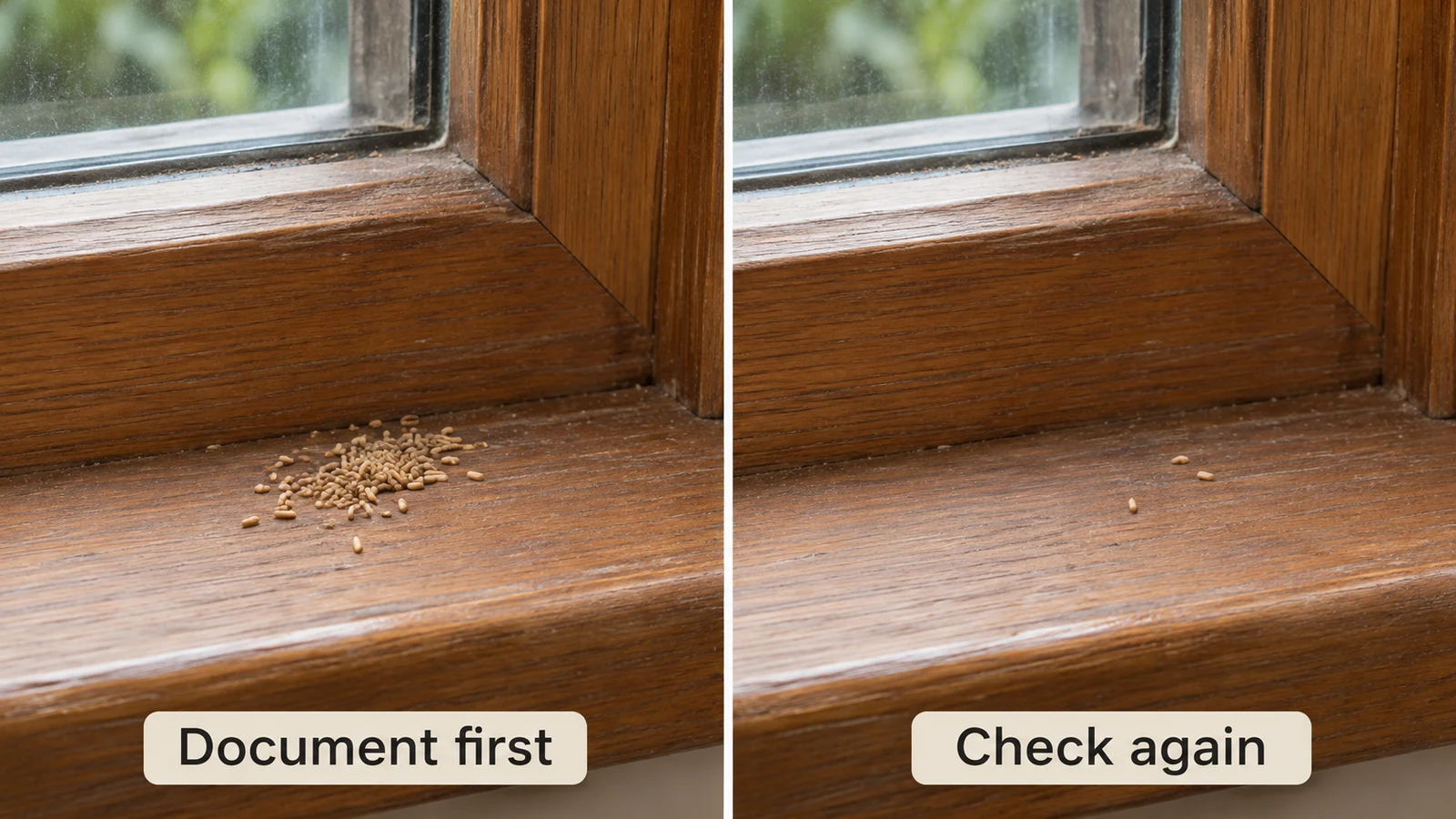
- Photograph the finding before cleaning. Include the grains, the adjoining wood, and a ruler or another familiar object for scale.
- Look closely at several grains. Check whether they are individual, similarly sized pellets with lengthwise grooves, rather than loose fibers or dust.
- Keep a small sample if practical. Collect a few grains in a sealed clear container for identification without mixing them with household dirt.
- Check the same spot again. After documenting and clearing an accessible surface, look for fresh accumulation over the next several days. Record any change rather than treating one reappearance as a final diagnosis.
Identification Mistakes
- Mistaking any pile of wood-colored dust for uniformly shaped termite pellets.
- Calling a soil-based mud tube a pile of termite droppings.
- Identifying an exact termite species from pellet color or a single photograph.
Key Clue
A collection of hard, consistently shaped pellets with six longitudinal ridges beneath wood is much more characteristic of drywood termites than the material’s color or its location alone.
What to Watch For
Old pellets can be dislodged from galleries by vibration or movement, even after a colony is no longer active. New accumulation deserves investigation, but its timing must be interpreted with the other evidence.
Termite frass vs. sawdust and other debris
The word frass is used broadly for insect waste and boring debris. Not everything described as frass comes from termites. Focus on the particles themselves rather than the name someone gives them.
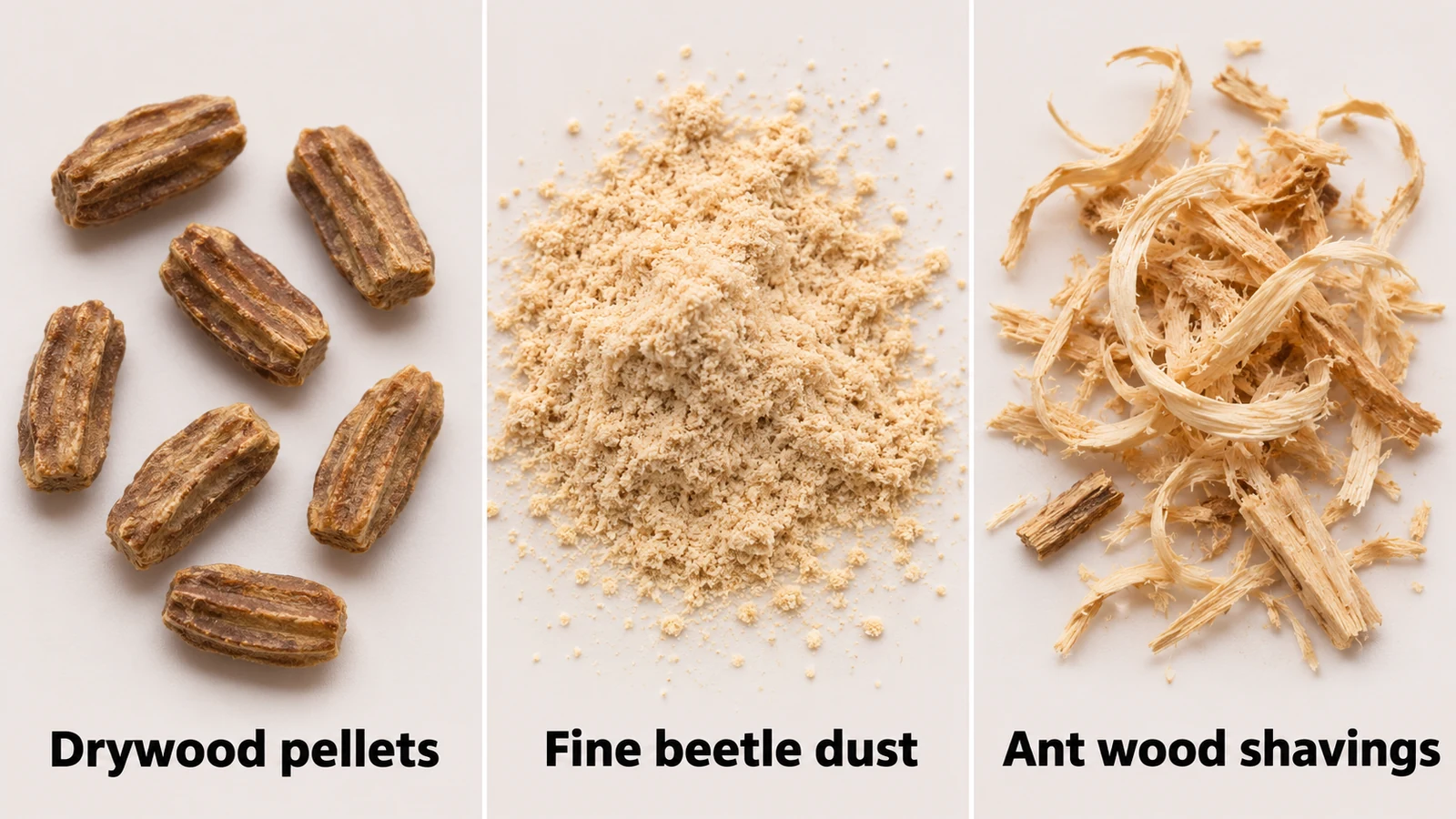
Powderpost beetles can leave fine, flour-like wood dust near small holes. Carpenter ants excavate wood and may leave fibrous shavings, sometimes mixed with insect fragments. Neither type of debris has the repeated, ridged pellet shape typical of drywood termite droppings.
Also keep the termite groups separate. Subterranean termites generally construct shelter tubes from soil and other material rather than producing the little piles of dry, six-ridged pellets associated with drywood termites. Dampwood termites can produce elongated fecal pellets too, but their shape and surface ridges can differ. The appearance of a pile is not a reliable way to name a termite species.
Compare the finding before deciding what kind of inspection you need:
| Finding | More consistent with | Useful next check |
|---|---|---|
| Uniform, hard, grooved pellets beneath wood | Drywood termite frass | Examine several grains with magnification and check accessible nearby wood for kick-out holes. |
| Very fine, flour-like powder near small wood openings | Some wood-boring beetles | Photograph the powder and holes; seek identification of the material and insect. |
| Fibrous shavings or uneven wood fragments, sometimes with insect remains | Carpenter ant excavation debris | Check for nearby ants and moisture-affected wood without opening a suspected nest. |
| An attached, soil-like tube along masonry or wood | Subterranean termite shelter tube | Leave the tube intact and document its location for a termite inspection. |
| Irregular grit, seeds, or household dust without consistent pellet structure | Non-termite debris remains possible | Check the particles and the surface above before attributing them to a wood pest. |
Does finding termite pellets mean the infestation is active?
A convincing pellet sample strongly supports a drywood termite explanation, but it does not date the activity, identify the species, or measure how much wood is affected. Pellets can remain inside wood after earlier activity or treatment.
Finding more pellets after the area was cleaned raises the need for closer evaluation, especially if the pattern repeats or appears around several wooden areas. It still takes an inspection to establish where the material is coming from and whether live termites are present.
The kind of termite found in a home varies by U.S. region, and drywood termites can also arrive inside moved wooden items. Do not use the state you live in, the number of pellets, or a photo of one pile to draw conclusions about structural damage.
Good to Know
If the pile is directly beneath a movable wooden item, that item could be the source rather than the wall or floor beneath it. Note whether the debris follows the furniture when it is moved, but avoid disturbing suspected infested wood simply to test the idea.
Learn more:

