Guide
American cockroach: identification, habitat, and control
A large roach is not always a sign of an indoor infestation. Learn to recognize the American cockroach, understand where it lives and enters buildings, and decide when monitoring, repairs or professional control are appropriate.
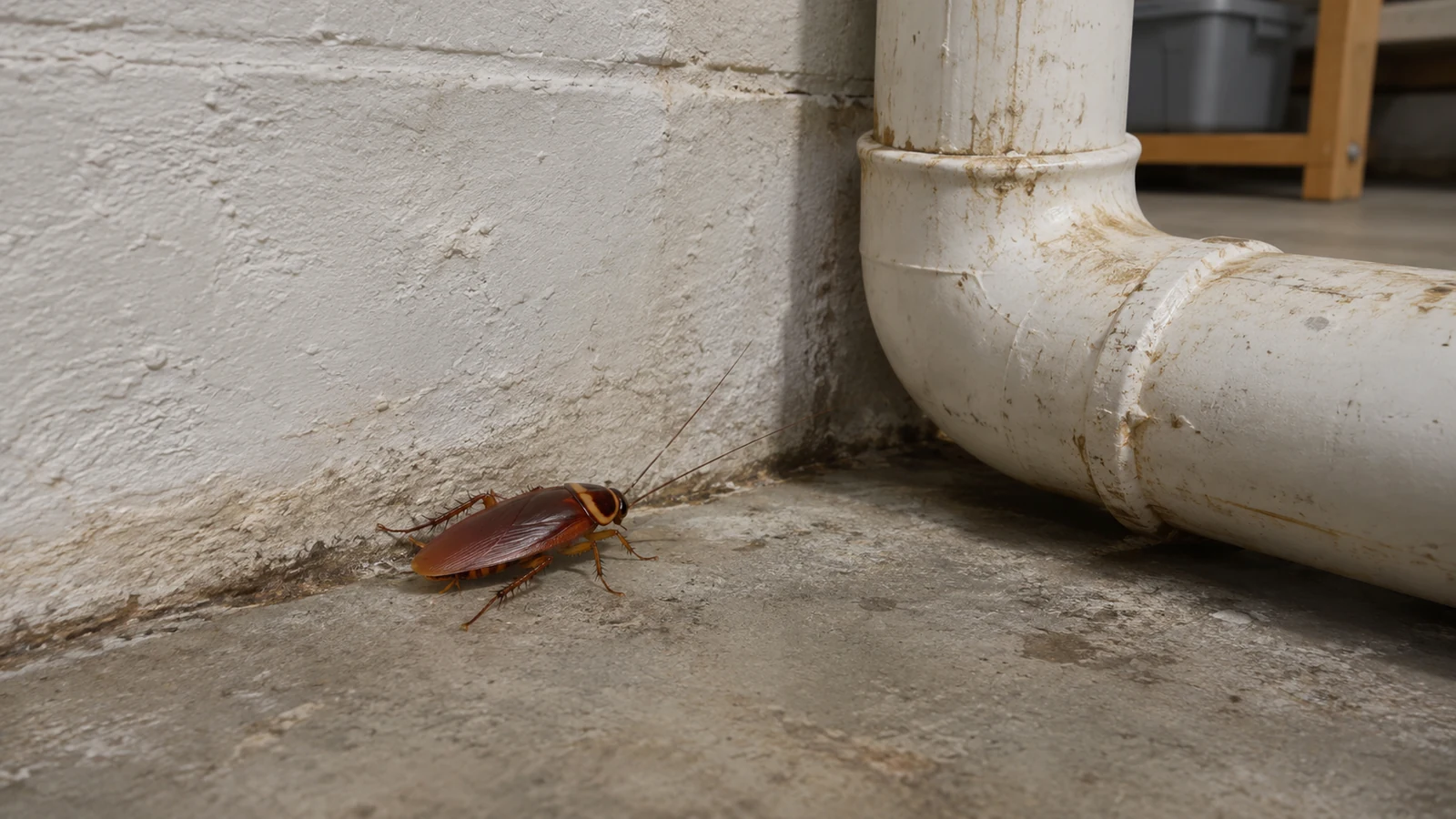
You switch on the bathroom light and a large reddish-brown roach races along the baseboard. Before you reach for a spray, take a closer look. An American cockroach can enter a home from outdoors or from a shared part of the building, but it can also breed indoors when conditions are right.
Knowing which roach you have helps you decide where to look for the source and whether you are dealing with an occasional intruder or an ongoing problem.
What is an American cockroach?
The American cockroach (Periplaneta americana) is one of the largest cockroaches commonly encountered in buildings in the United States. It is established in many parts of the country and thrives particularly well in warm, humid climates. Farther north, heated buildings and underground infrastructure can provide suitable conditions throughout the year.
You may hear large roaches called palmetto bugs, water bugs or sewer roaches. These regional names are used for more than one species. The insect’s physical features are more reliable than its nickname.
Unlike the smaller roaches that commonly breed behind kitchen appliances, American cockroaches are often associated with sewers, basements and other moist, sheltered spaces. A home can be part of their feeding route without being the place where they spend most of their time.
Key Takeaways
- Adults are usually about 1½ to 2 inches long, with a reddish-brown body and a pale marking behind the head.
- Young American cockroaches have no developed wings and can be much harder to identify by appearance alone.
- Repeated sightings around plumbing, entrances or lower levels of a building warrant an inspection of the surrounding areas.
- Finding young roaches or egg cases along with adults raises concern about breeding in or near the building.
- Reducing moisture and blocking entry routes are especially important for this species.
How to identify an American cockroach
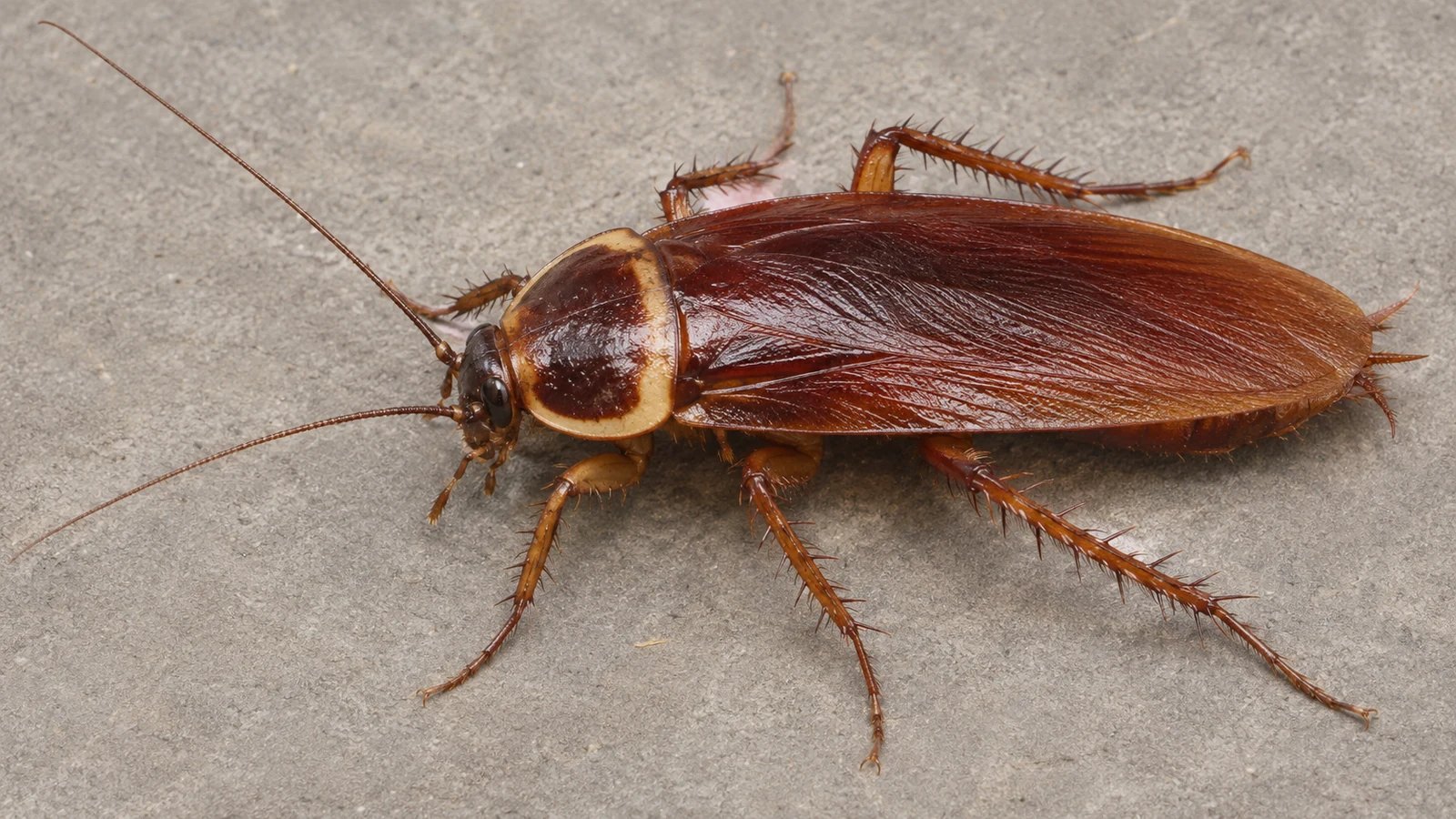
Look first at the broad shield immediately behind the head, called the pronotum. On an adult American cockroach, a yellowish or tan border contrasts with the darker central area. This marking is particularly helpful when viewed from above.
The adult has an elongated, flattened body, long antennae, six spiny legs and wings that cover the abdomen. Its body length is generally around 1½ to 2 inches, not counting the antennae. A large roach may look even longer when its antennae are extended.
Nymphs and egg cases
Young American cockroaches, known as nymphs, resemble smaller, wingless versions of the adult. Their color changes as they develop, and their exposed, segmented abdomen is easier to see than on a fully winged adult. A tiny reddish-brown roach cannot be identified confidently as this species from size alone.
Females produce a dark, oblong egg case called an ootheca. An American cockroach egg case is roughly ⅜ inch long and commonly contains 14 to 16 eggs. It may be attached to a sheltered surface. Finding a case or a cluster of small nymphs in the same area is a reason to investigate nearby hiding places.
How it differs from similar roaches
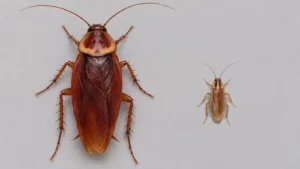
- German cockroach: A much smaller adult, usually about ½ to ⅝ inch long, with two dark lengthwise stripes behind the head. It commonly breeds indoors around food and warmth.
- Oriental cockroach: Typically darker, often nearly black. Adults have noticeably shorter wings relative to their bodies, particularly females.
- Smokybrown cockroach: Another large, fully winged species, generally a more uniform dark reddish-brown without the American cockroach’s pale border behind the head.
Use the combination of features rather than color alone. If the marking is unclear or you only have a small nymph, compare the common types of cockroaches in the U.S. or have a specimen identified.
The American vs. German cockroach distinction matters particularly because it can change which parts of your home you should inspect first.
Do American cockroaches fly?
Adults can fly, especially in warm conditions, but they usually travel by running. Flight is less commonly observed in cooler regions. A large roach that flies toward an open window may be an American cockroach, but several other species also have wings. Being able to fly is only one clue when identifying flying cockroaches.
Where American cockroaches live and why they come inside
American cockroaches favor places that offer shelter, warmth, access to water and organic material to feed on. Outside, they may live in damp leaf litter, shaded debris, mulch, or protected spaces around foundations. In cities, sewer and drainage systems can support populations close to buildings.
Inside, look for conditions resembling those habitats: a damp basement, a crawl space, a utility room with condensation, or an enclosed area around leaking pipes. They hide during much of the day and move out to feed at night.
Common ways they get indoors
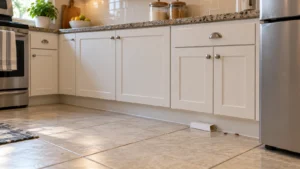
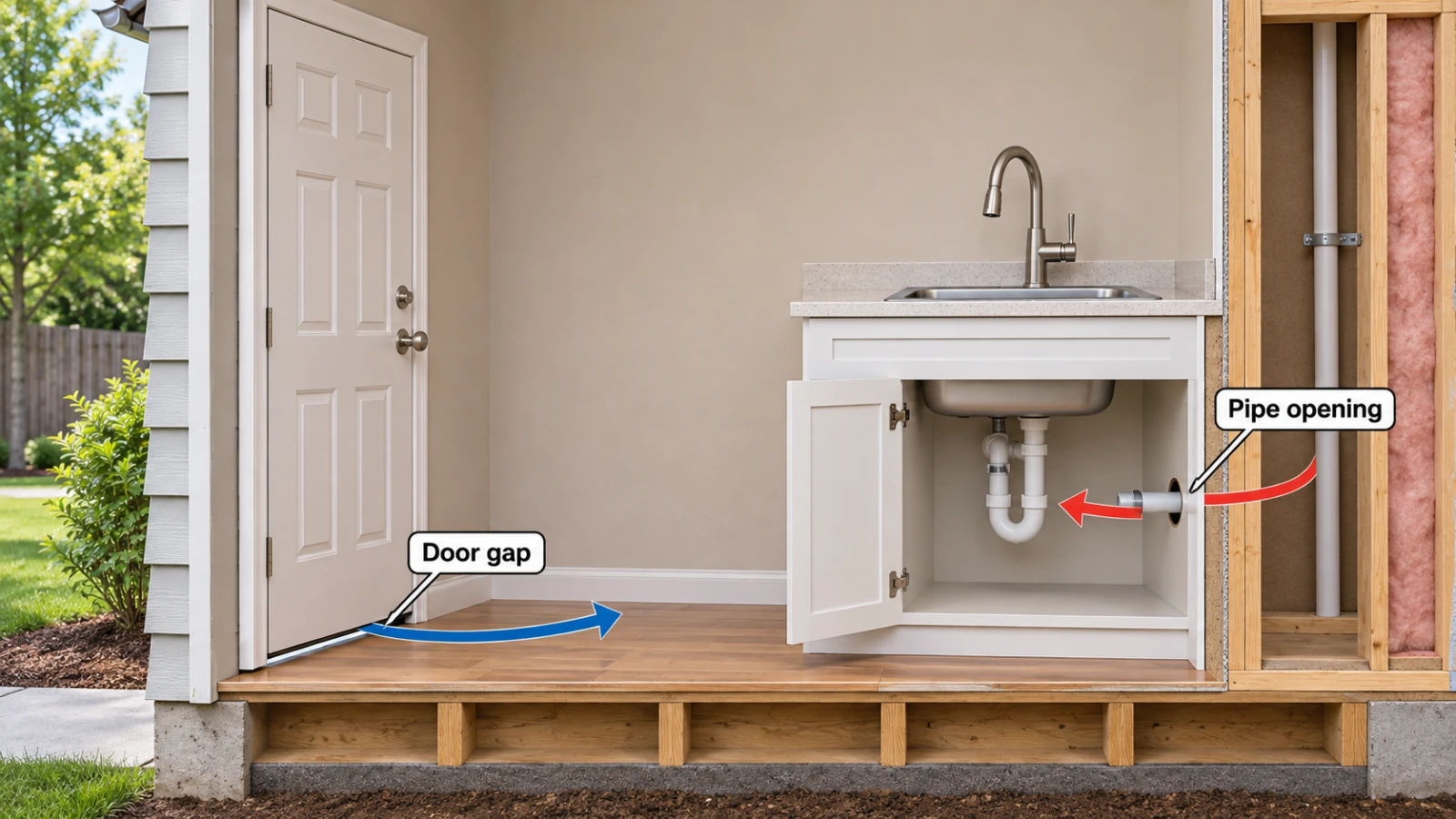
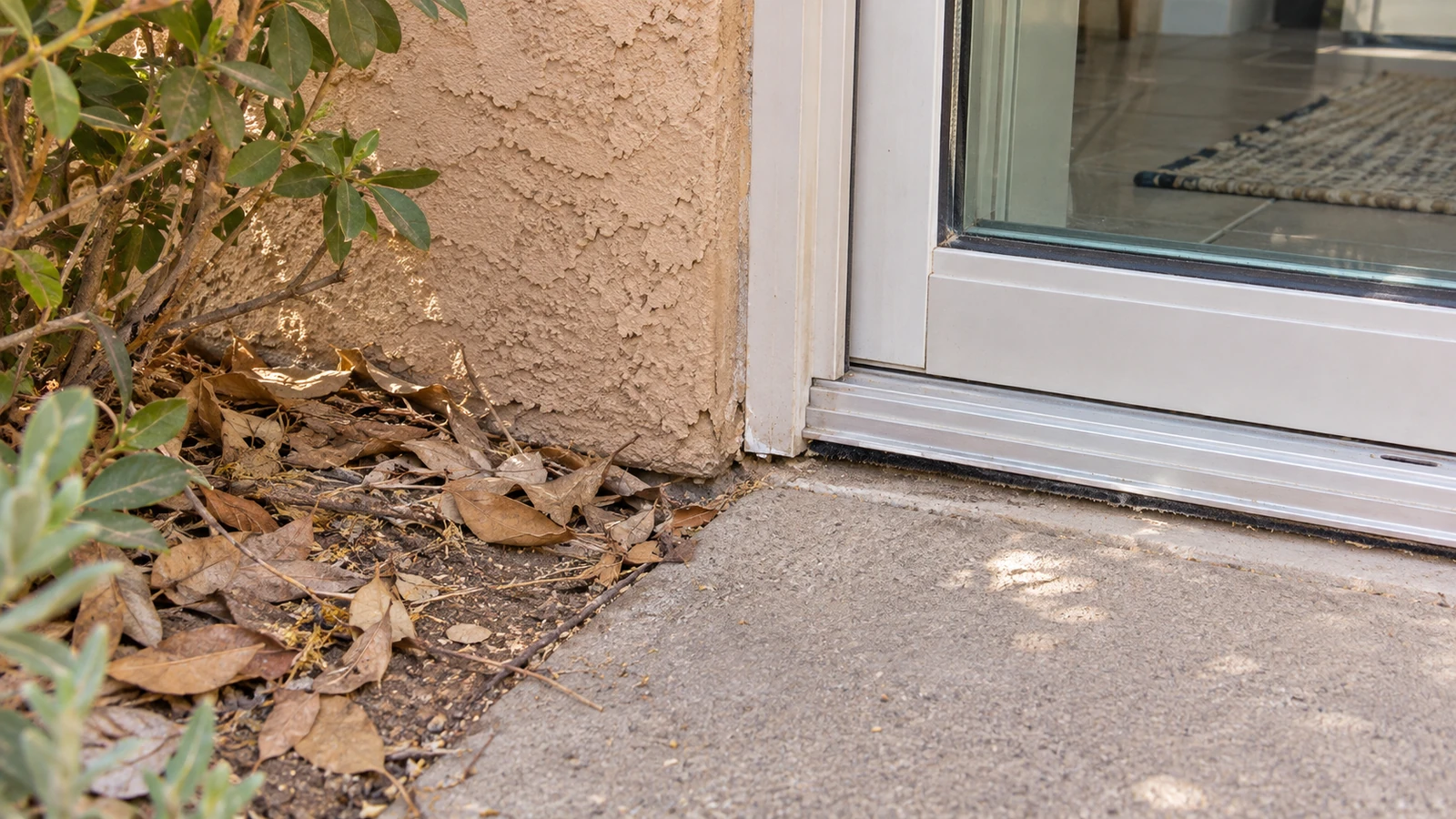
An opening under an exterior door, a poorly fitted screen or a gap around a plumbing penetration can give roaches access to living areas. Damaged drainage pipes and dried-out drain traps can also create a route from the sewer system.
Seeing one next to a sink does not necessarily mean it came through the drain. A roach can reach the same spot through a gap behind the vanity or by traveling along the wall. Check both the fixture and its surroundings.
Outdoor conditions can change where they seek shelter. Heavy rain or extreme heat may prompt roaches to move into buildings. In apartments, utility spaces and shared pipe routes can allow activity to recur even when the individual unit is clean.
How to tell whether you have an infestation
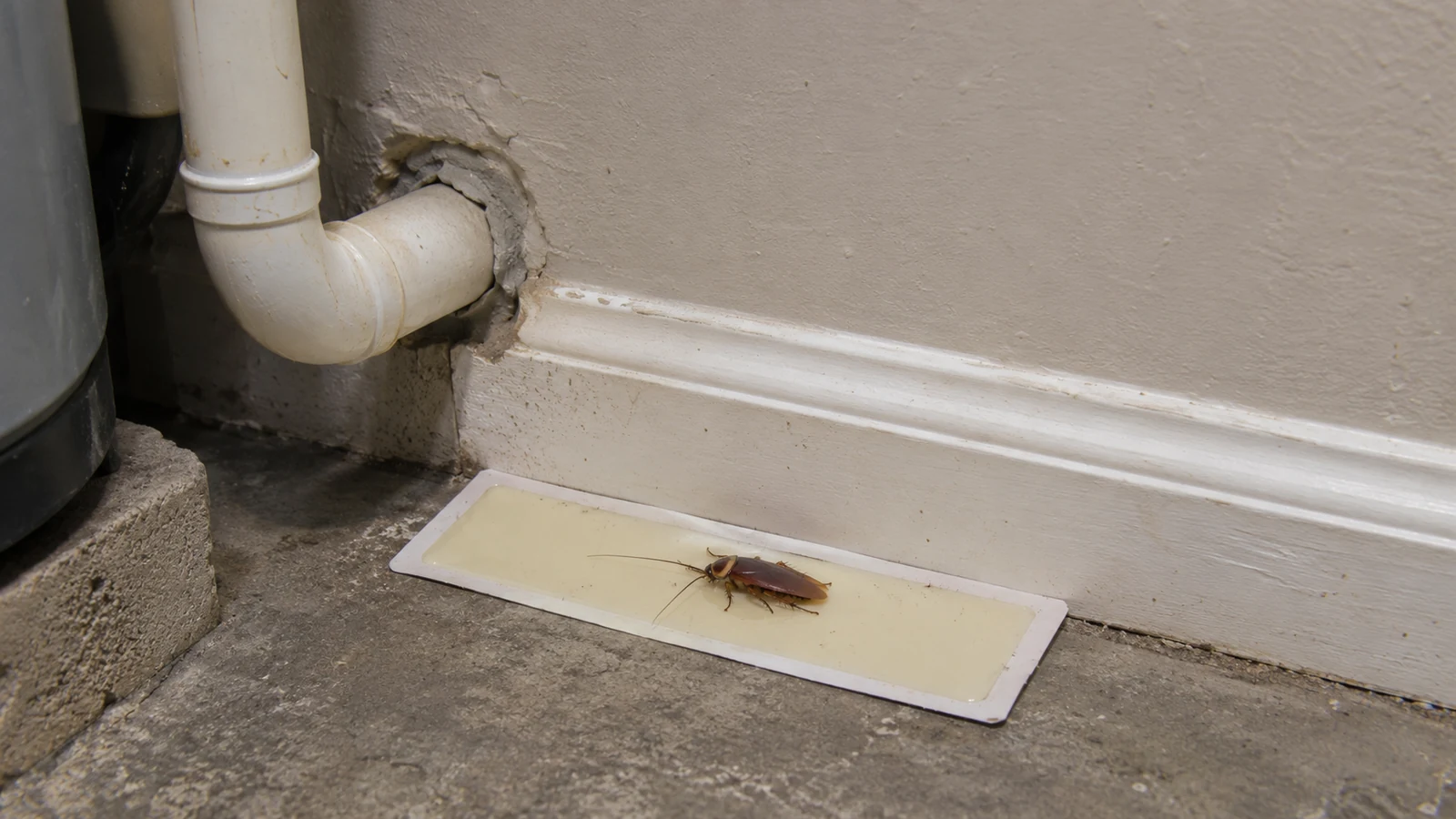
A single large adult near an exterior door after a storm is a different situation from finding roaches of several sizes under the bathroom sink every week.
Begin with the area where you saw the insect and use a flashlight to inspect sheltered spaces along walls, behind accessible fixtures and around pipe openings. Look for live insects, shed skins, droppings and egg cases. Droppings can resemble those of other pests, so try to identify an actual insect whenever possible.
Use the pattern of activity to guide your inspection
- An isolated adult near an entrance: Check the door, window or other nearby opening, and monitor for further activity.
- Repeated adults near the same fixture or utility area: Inspect moisture sources and possible routes into that area, including shared building spaces when relevant.
- Nymphs of different sizes or egg cases near shelter: Give greater priority to locating a breeding area in or near the building.
- Activity in several rooms or common areas: Consider a wider source rather than treating each sighting as an unrelated event.
Place sticky monitoring traps against walls near suspected entry points or hiding places. Choose a trap large enough for adult roaches, position it away from children and pets, and check it regularly. Compare the locations, numbers and life stages caught over several days. Around a week of monitoring can help establish a pattern; a quiet week is not a guarantee that every roach is gone.
Practical Tip
If you catch most roaches near a bathroom pipe opening but none under the kitchen appliances, concentrate your next inspection around the plumbing route. Where the traps catch roaches is often more informative than the total number alone.
Watch For
An adult-only pattern can change. If small nymphs begin appearing in the same traps, or new egg cases turn up after cleanup, reassess the possibility of nearby breeding instead of assuming that every roach is arriving from outside.
What to do about American cockroaches
When the evidence points to an occasional intruder, correcting an obvious entry point and monitoring may be more useful than applying insecticide throughout the home. With recurring activity, investigate the source and combine physical repairs, moisture management and appropriate pest control.
Remove visible roaches and egg cases when you find them. Address leaks and reduce accessible food waste, but do not stop at cleaning the room where the roach appeared. A damp utility space, exterior harborage or shared plumbing route may still need attention.
When baits or professional control make sense
Cockroach baits can help reduce an active population when they are placed where the insects travel and feed. If you choose a bait station, check that it is suitable for large cockroaches; a station designed only for small roaches may be too narrow for an adult American cockroach to enter.
Use a pesticide only for the pest and location permitted on its U.S. label. Keep it away from food-contact surfaces and out of reach of children and pets, and follow the directions for placement. Avoid relying on room foggers or spraying indiscriminately: these approaches may scatter roaches without addressing the source.
Do not pour insecticide or household chemicals into drains to try to treat a suspected sewer population. A problem involving damaged plumbing or shared infrastructure needs an appropriate repair or building-level intervention.
A licensed pest control professional is worth considering when adults continue appearing despite obvious repairs, you find evidence of breeding, the suspected source is inaccessible, or activity extends across several apartment units. If you rent, report recurring sightings to your property manager so that shared areas can be assessed when necessary.
For an established household problem, a broader guide to how to get rid of cockroaches can help you understand the available control methods.
How to prevent American cockroaches from returning
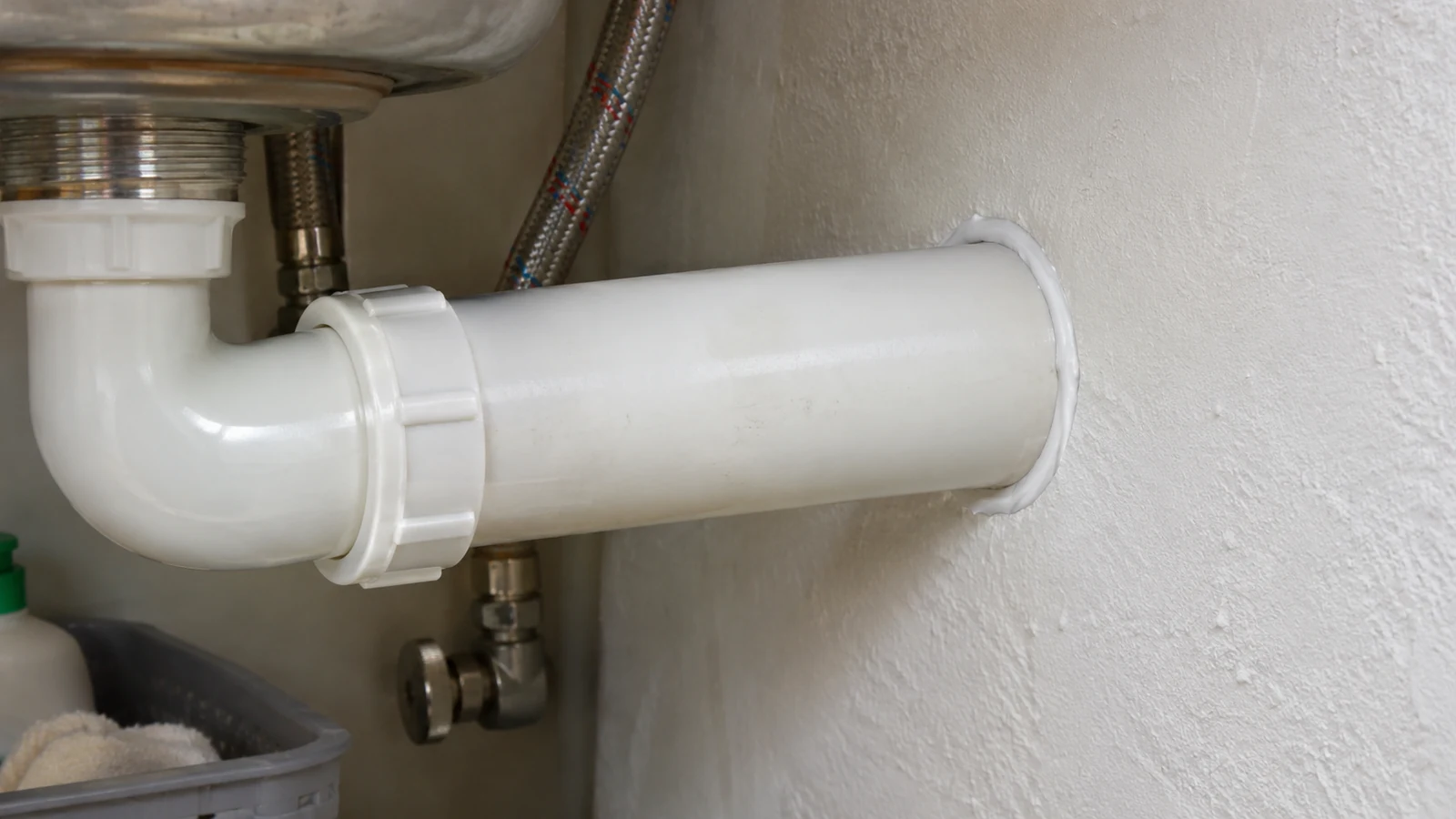
Focus on the conditions that allow this species to reach and remain in your home. A well-fitted door sweep, sealed gaps around accessible pipes and properly maintained screens reduce opportunities for entry. Fix leaks and address persistent moisture in basements, utility rooms and crawl spaces.
If you have a rarely used sink, shower or floor drain with a water trap, make sure the trap does not dry out. Ask a plumber or property manager to investigate damaged plumbing or a trap that repeatedly loses its water seal.
Outside, keep damp debris and unnecessary clutter from accumulating immediately against the building. Store trash securely and correct irrigation leaks or other sources of standing water.
Continue checking the monitoring traps near the original activity after repairs. Fewer catches and no new signs are encouraging; a continued cluster near the same entry point indicates that the source or route still needs attention.