Identification
Brown cockroach identification: Which type did you find?
A roach’s shade won’t tell you its species. Compare its size, head markings, wings, and location to narrow down the most plausible U.S. cockroach and choose the next check.
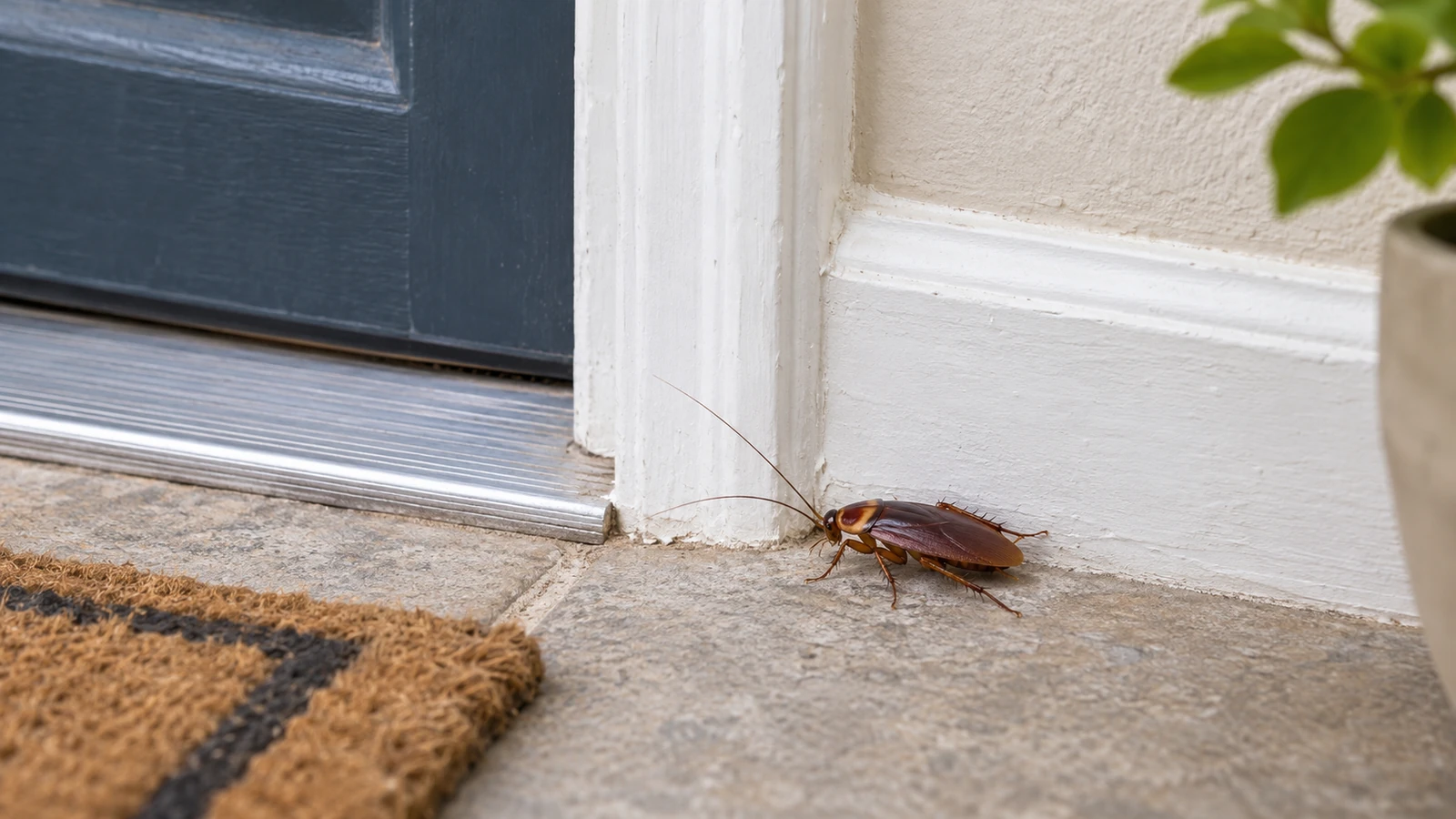
A small tan roach in a kitchen cabinet and a large chestnut-brown roach at the back door can look like the same kind of insect at first glance. Yet their size, markings, and location may point to very different situations.
“Light brown cockroach” and “dark brown cockroach” describe what you saw, not a reliable identification. Start with the body and head markings, then use the setting and behavior to narrow the possibilities.
What to look for on a brown cockroach
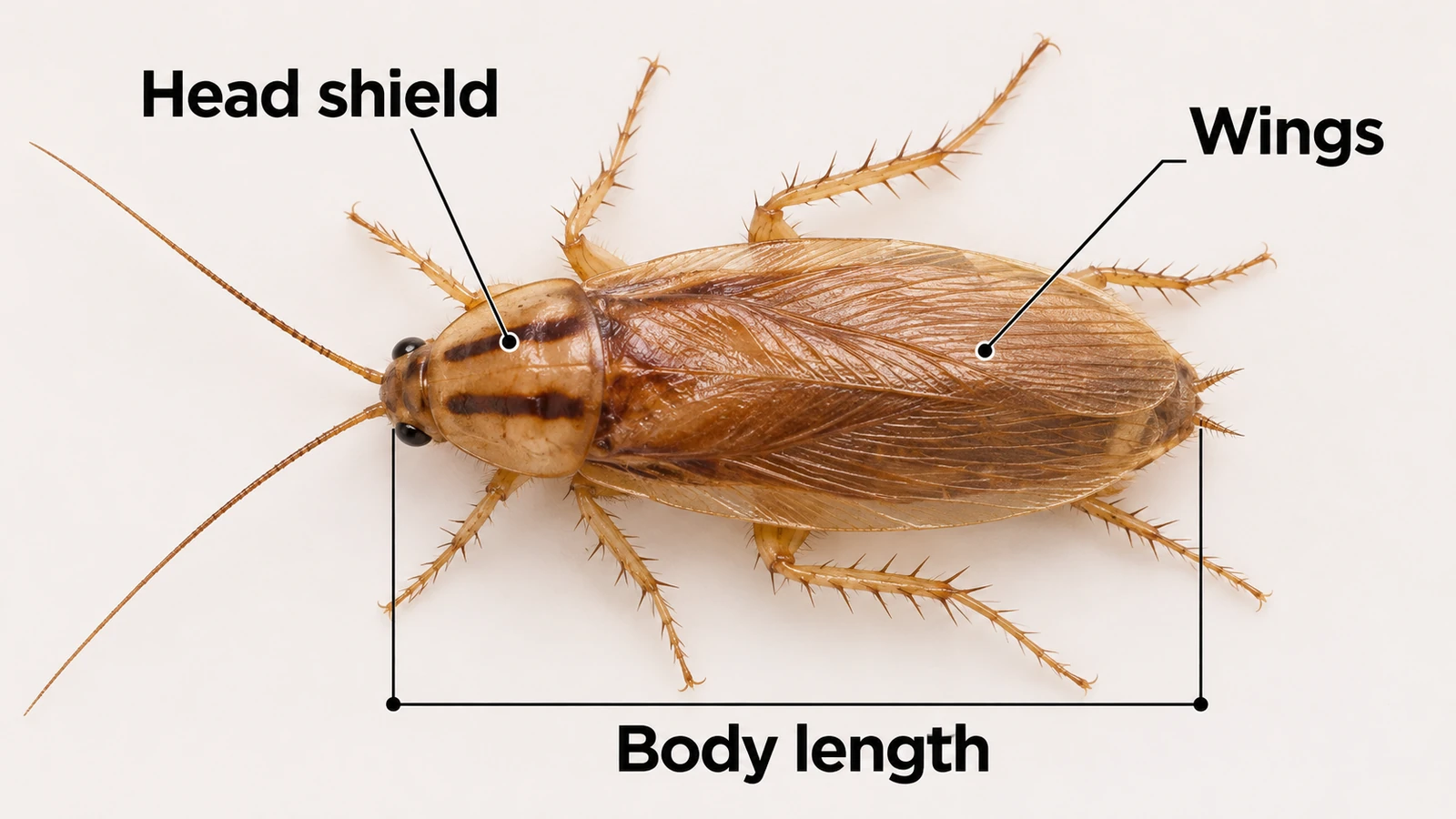
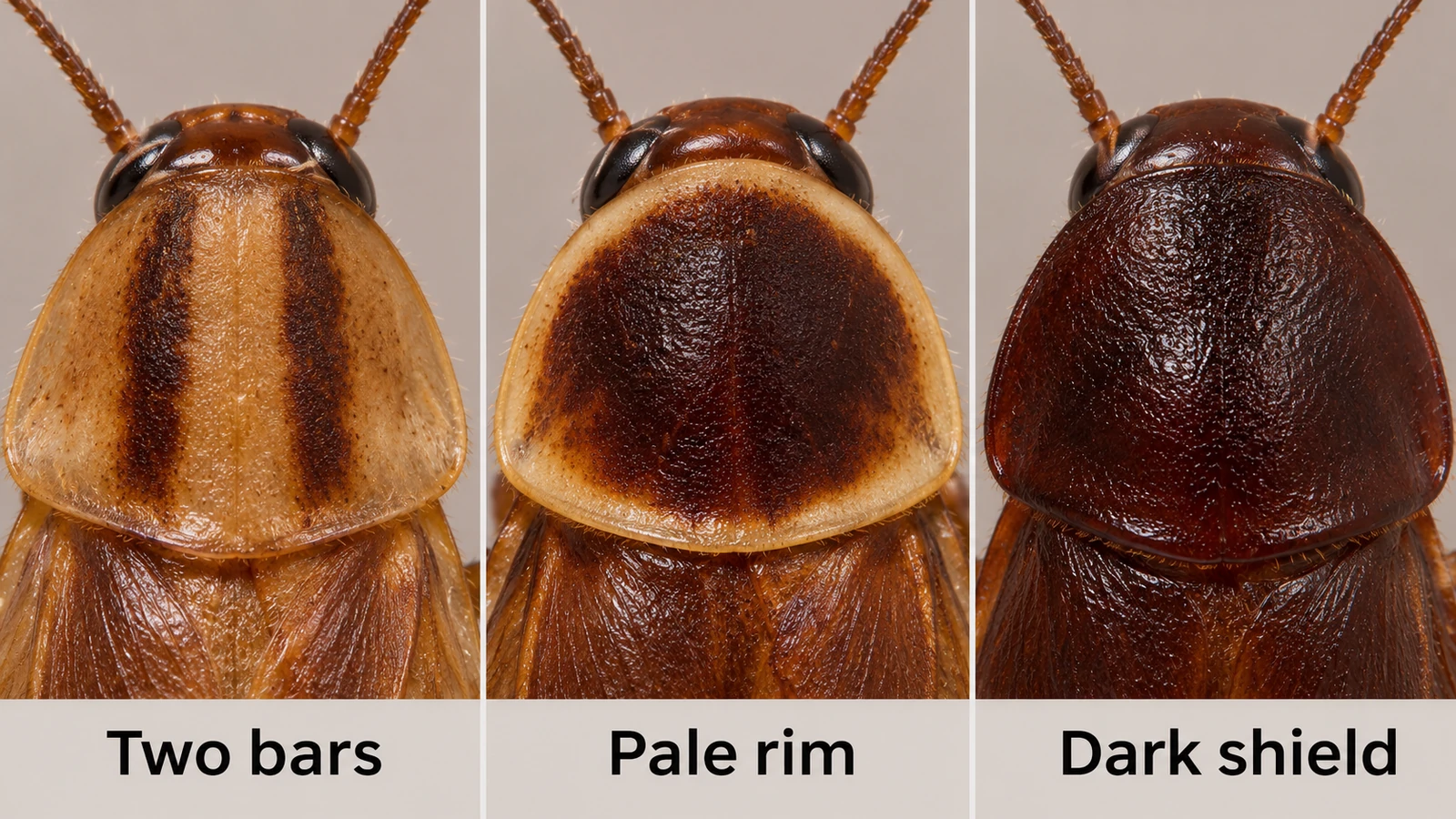
A cockroach usually has a flattened, oval body, long antennae, and six spiny legs. Look at the shieldlike plate immediately behind the head, called the pronotum. Two dark lengthwise stripes, a pale border, or a nearly uniform dark surface can be more revealing than the shade of the wings.
Judge the body length without counting antennae. Notice whether the wings cover the abdomen, stop short of it, or are absent. Young roaches, called nymphs, do not have fully developed wings and can look strikingly different from adults of the same species.
Identification in 30 Seconds
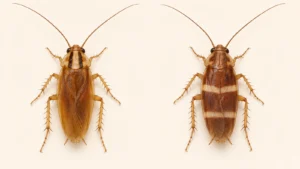
- Small and tan, with two dark parallel stripes behind the head: German or Asian cockroach; the setting and flight behavior help separate them.
- Small, with pale bands running across the body or wings: Brown-banded cockroach is a possibility, particularly in warm indoor hiding places.
- Large and reddish brown, with a pale-edged shield behind the head: Often an American cockroach or a similar large species.
- Large and evenly dark mahogany brown, with a very dark head shield: Consider a smokybrown cockroach.
- Almost black, with short wings, near a damp ground-level area: Oriental cockroach or another dark outdoor species may fit.
A brown beetle can have hard wing covers meeting in a straight seam down its back; a cricket has enlarged hind legs for jumping. Check the basic cockroach shape before comparing roach species. A nymph’s pattern may also differ from an adult’s, so do not force a young specimen into an adult identification chart.
How to check which brown roach you found
Get a clear view of the top of the insect, especially the area behind the head and the ends of the wings. If it is safely contained, photograph it beside a ruler to show body length. A blurred close-up without scale makes a half-inch roach and a much larger one surprisingly easy to confuse.
Record where it appeared: beside a stove, in an upper cabinet, near a floor drain, on an exterior wall, or by a lit doorway. Note whether it ran or actually flew. Wings alone do not tell you how readily a particular cockroach flies.
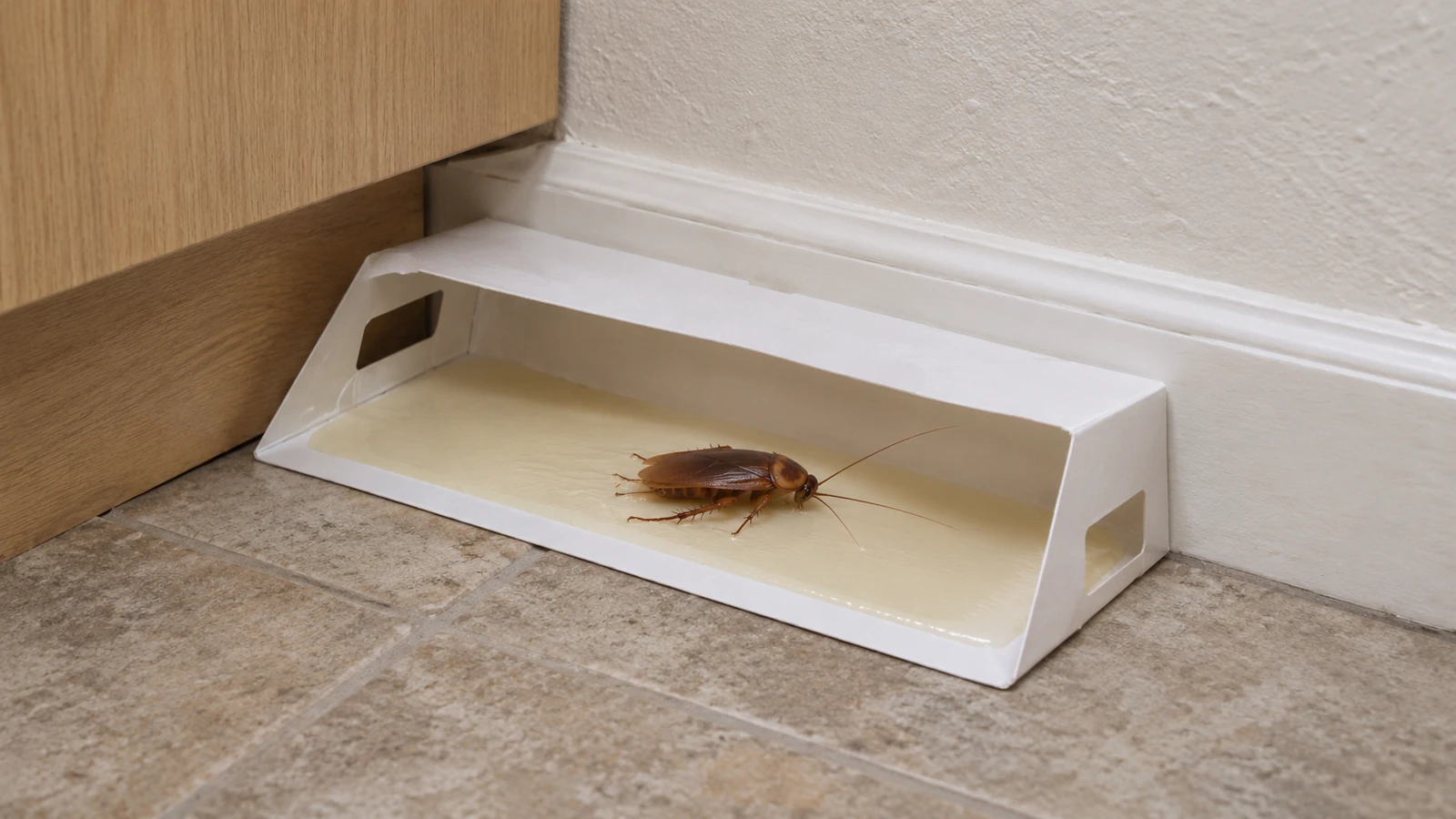
If you need more evidence, place cockroach sticky monitors flat against wall edges near the suspected route. Useful positions include behind an appliance, beneath a sink, and near an exterior entry if that is where you first saw it. Keep monitors away from food-contact surfaces and out of reach of children and pets. Check them over several days, recording which locations catch roaches rather than treating one trap as a verdict.
Identification Mistakes
- Choosing a species from “light brown” or “dark brown” alone.
- Comparing a wingless nymph only with photographs of adults.
- Assuming an outdoor roach found inside is breeding there.
Key Clue
The pattern immediately behind the head, combined with body size and where the roach was found, is often the most useful starting point. A tan, striped roach repeatedly caught behind a refrigerator suggests a different investigation from a similar-looking flier arriving from the yard.
What to Watch For
Pale bands are not exclusive to brown-banded cockroaches. Some dark nymphs of larger outdoor species also show pale markings. Compare the entire insect and its life stage before relying on one stripe.
What the combination of clues suggests
A small, light brown roach indoors
A German cockroach is commonly around half an inch long as an adult, with two dark, parallel stripes on the pronotum. Repeated sightings in warm kitchen or bathroom hiding places make this possibility more important. The German cockroach guide covers that species in detail.
An Asian cockroach can look almost identical, including the stripes, but is more associated with outdoor vegetation and readily flies toward lights in parts of the southern United States. Seeing genuine flight from the yard is useful context; the stripes themselves cannot settle the distinction.
If the insect instead has pale bands running crosswise over the wings or abdomen, look at the brown-banded cockroach guide. Brown-banded roaches may turn up in warmer, relatively dry indoor locations, including upper furniture and rooms away from plumbing. The bands tend to stand out more clearly on nymphs than on some adults.
A larger reddish or dark brown roach
An American cockroach is typically much larger, often around 1½ to 2 inches long, with a reddish-brown body and a lighter margin on the pronotum. A smokybrown cockroach is generally dark mahogany to nearly black, with a much less distinctly marked head shield. Both can be associated with damp outdoor or building-edge habitats.
An Oriental cockroach is darker still, often with wings that do not cover the abdomen. Damp lower areas such as basements and ground-level entrances are useful contextual clues. In parts of the West and Southwest, a Turkestan cockroach is another possibility: winged males can look tan or reddish brown, while females are darker with short wings and pale markings.
A brown roach that arrived from outdoors
Wood cockroaches occur around logs, leaf litter, and wooded properties. Some winged males fly toward lights and enter through open doors or windows, even though wood roaches generally do not establish breeding populations in homes. A single visitor near a porch is therefore a different signal from repeated small roaches in a kitchen cabinet.
Use this comparison to decide what to inspect, not to name an unfamiliar specimen from one photograph.
The combinations below summarize the next check that is most likely to help.
| What you observed | Plausible match | Check next |
|---|---|---|
| About ½ inch, tan, two dark lengthwise stripes behind the head | German or Asian cockroach | Repeated kitchen activity versus an outdoor flier at lights |
| About ½ inch, pale crossbands on body or wings | Brown-banded cockroach | Upper, warm indoor hiding spots; adult versus nymph pattern |
| Large, reddish brown, pale-edged head shield | American or a similar large cockroach | Body size, head-shield detail, and nearby drains or entry points |
| Large, uniformly dark brown, dark head shield | Smokybrown cockroach | Outdoor moisture, mulch, attic, or wall-entry routes |
| Nearly black, short-winged, low and damp location | Oriental or some female Turkestan cockroaches | Wing shape, pale margins, and region |
| Brown or tan, found by wood, yard vegetation, or a lit door | Wood roach, Asian cockroach, or another outdoor visitor | Whether it flew in and whether indoor captures continue |
Does one brown cockroach mean an infestation?
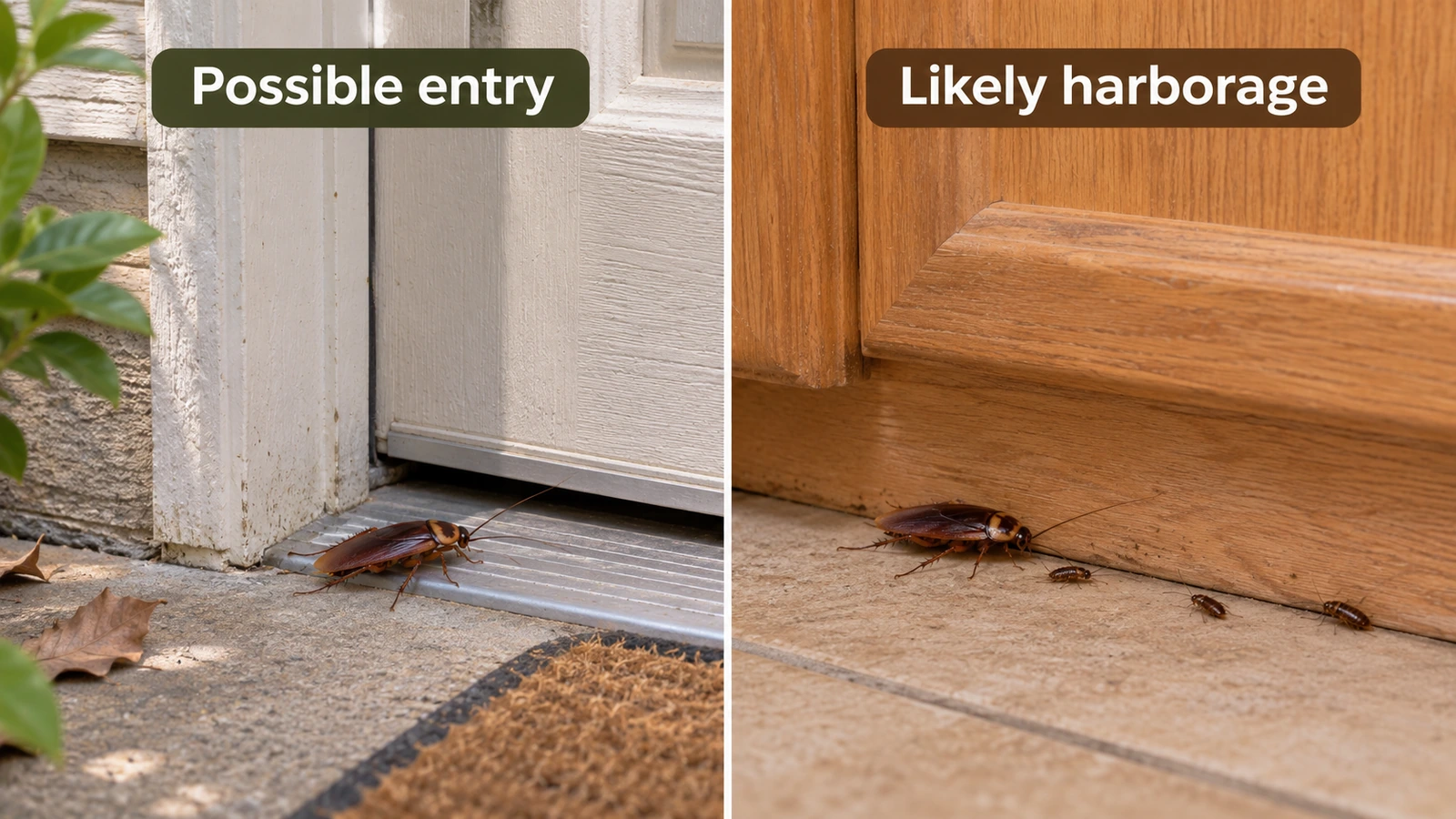
One adult next to an open exterior door gives you a reason to inspect the entry, not a reliable count of the insects living indoors. Repeated captures in the same interior area, small nymphs near protected hiding places, and egg cases or dark spotting close to active routes are more concerning together.
Check the distribution. If monitors by the door catch an occasional large roach but those behind appliances remain empty, an outdoor source is more plausible. If multiple life stages repeatedly appear in kitchen cracks, a resident population deserves prompt attention. Traps help locate activity but cannot, on their own, provide an exact population count.
Good to Know
“Brown cockroach” is also the actual common name of Periplaneta brunnea, a large species that resembles the American cockroach. That specific name is different from using “brown roach” to describe an insect’s color. Separating the two can require close examination of small anatomical features, not just a photograph of the back.
Learn more: