Comparison
Drain flies vs fruit flies: how to tell them apart
These two small flies can show up in the same kitchen but often develop in different material. Compare their appearance and movement, then check the likely breeding source before choosing what to do next.
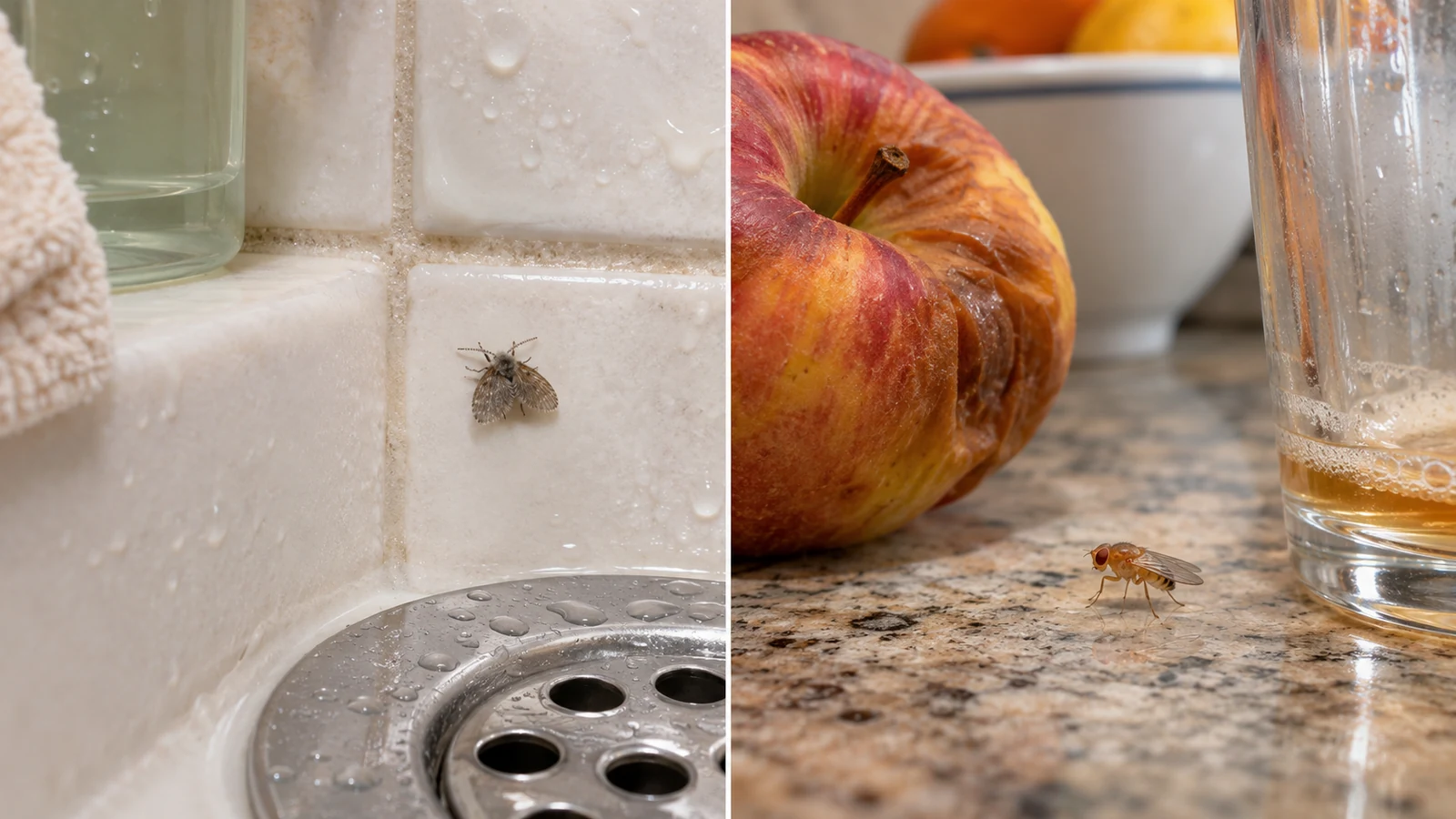
A few tiny flies keep appearing around the kitchen sink. One sits almost motionless on the backsplash; another darts toward a glass with leftover juice. They may be different insects, and the place where you notice an adult is not necessarily the place where its larvae are growing.
Which details actually separate them?
Start with a clear view of an adult at rest. The most useful visual difference is the fuzzy, moth-like wing outline of a drain fly versus the smoother body and more transparent wings typical of a household fruit fly. If you can see the eyes clearly, red eyes support a common fruit-fly identification, but not every fruit fly has obvious red eyes.
Next, consider movement. A drain fly often stays on a wall or sink surface and takes a brief fluttering or hopping flight when disturbed. A fruit fly is more likely to fly actively around ripe produce, a recycling bin, or a container with a fermenting drink. These patterns help prioritize a source check; they are not strict rules.
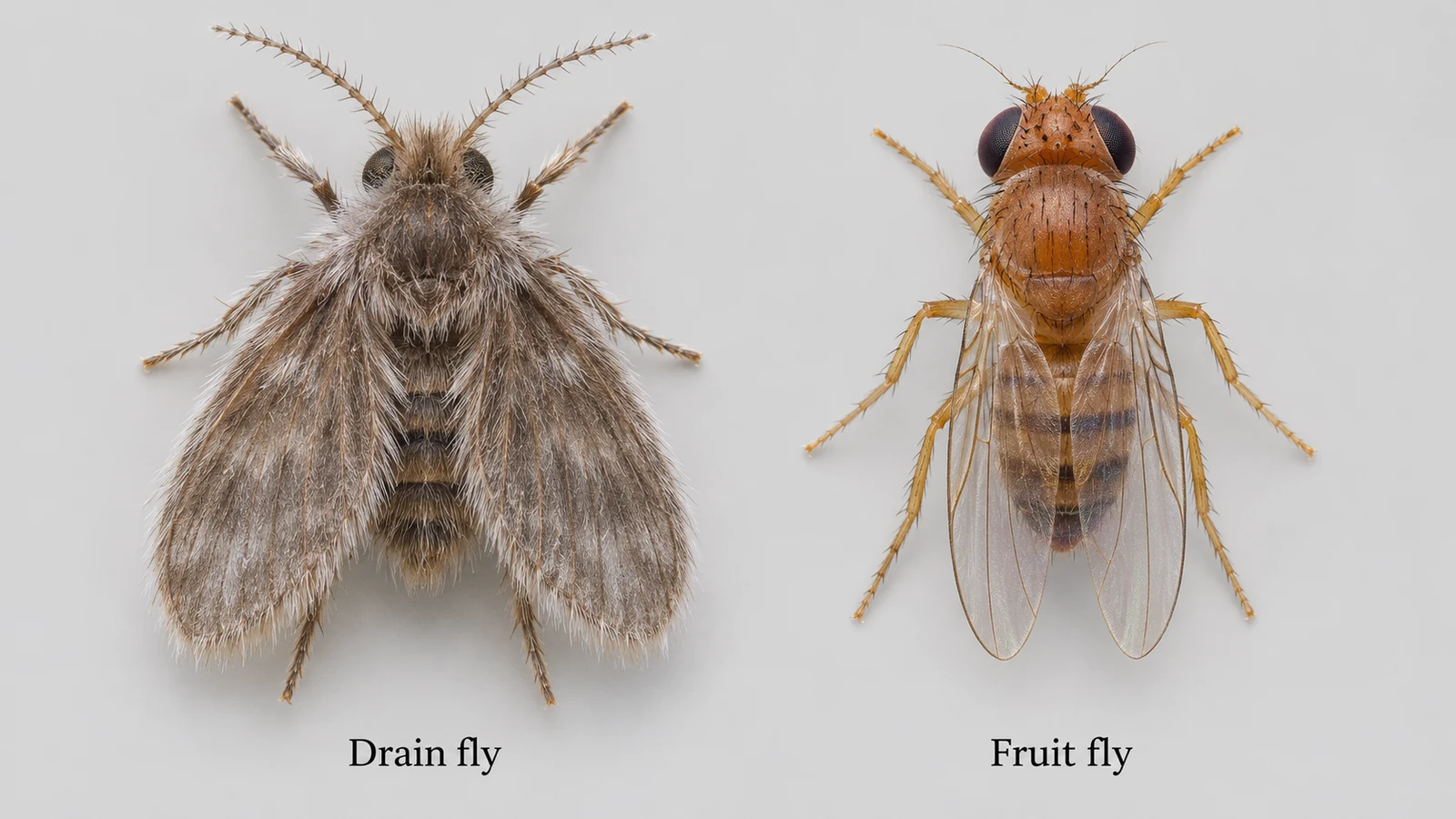
Size is less useful than people expect. Common household adults of both groups are often around 1/8 inch long, so calling one “the smaller fly” rarely settles the question. A close photograph that shows the wings and body is more helpful than an estimate made while the insect is moving.
Drain flies vs fruit flies at a glance
Use the table to narrow the possibilities, then check the actual breeding material. The best match combines what the insect looks like with where repeated activity is concentrated.
| Clue | Drain fly (moth fly) | Fruit fly (vinegar fly) | How to use it |
|---|---|---|---|
| Adult appearance | Dark, hairy body; broad, fuzzy wings held roof-like at rest | Usually tan to brown, smoother body, clearer wings; eyes often red | Compare a resting insect, not a fast-moving blur |
| Flight and resting | Weak, short fluttering flights; often rests on walls | More active flight around fermenting residues | Observe several insects over time |
| Frequent indoor location | Sink, shower or floor-drain areas; nearby walls | Produce bowl, trash, bottles, recycling or kitchen counters | Location suggests where to inspect, not proof |
| Typical larval material | Moist organic film and other persistently wet waste | Fermenting produce, sweet liquids and damp food residues | A confirmed breeding material is more decisive |
| Common misleading clue | A fly near a drain might have arrived from another wet source | Fruit flies can also use residue in a drain | Check the insect and substrate together |
Where the clues overlap
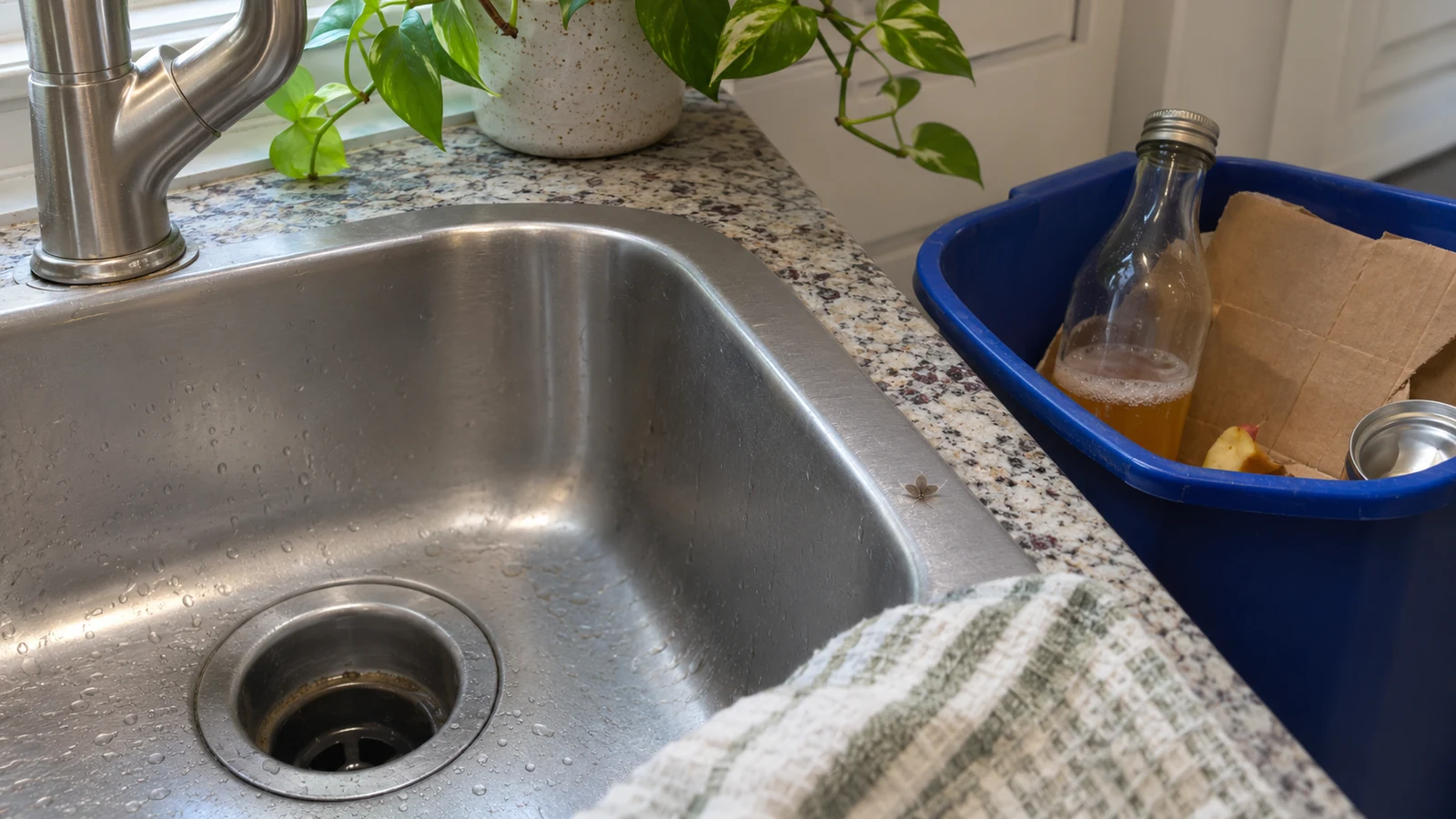
A drain is a location, not a species label. Moth flies often develop in the organic film that accumulates inside a drain, but an adult seen at a sink may have come from elsewhere in the room or building. Conversely, a fruit fly can be attracted to food residue in a disposal or drain opening. The visible insect, its behavior, and evidence of the breeding site need to agree.
Likewise, a kitchen is not automatically fruit-fly territory. Drain flies may appear there if a sink, floor drain, or persistently wet area contains suitable material. Fruit flies can spread beyond the fruit bowl and gather at trash bins, recycling containers, or damp cleaning items that retain fermenting residue.
A small vinegar-baited trap may catch fruit flies and reduce the adults you notice. That alone does not reveal where they developed. Finding adult flies next to a drain also does not confirm larvae in that drain. If needed, a short, non-destructive observation of an accessible, unused drain opening with a clear container can support a possible source connection when adults emerge, but a negative check does not eliminate other hidden sites.
Look beyond the most obvious spot
If you cannot match the fly to a visible source, examine other accessible wet or fermenting material rather than repeatedly treating the first drain you notice. The underlying problem may be a forgotten beverage container, a dirty recycling bin, residue under an appliance, or a moisture issue requiring a different assessment.
Best first clue
A fuzzy, roof-winged fly points you toward moist organic deposits; a smoother, active fly points you toward fermenting food or drink. Confirm the material before choosing a remedy.
What to Watch For
Both kinds can occur in one home. A trap full of adults, or insects resting beside a drain, does not identify every breeding site or prove that one treatment will solve the problem.
Which source should you check first?
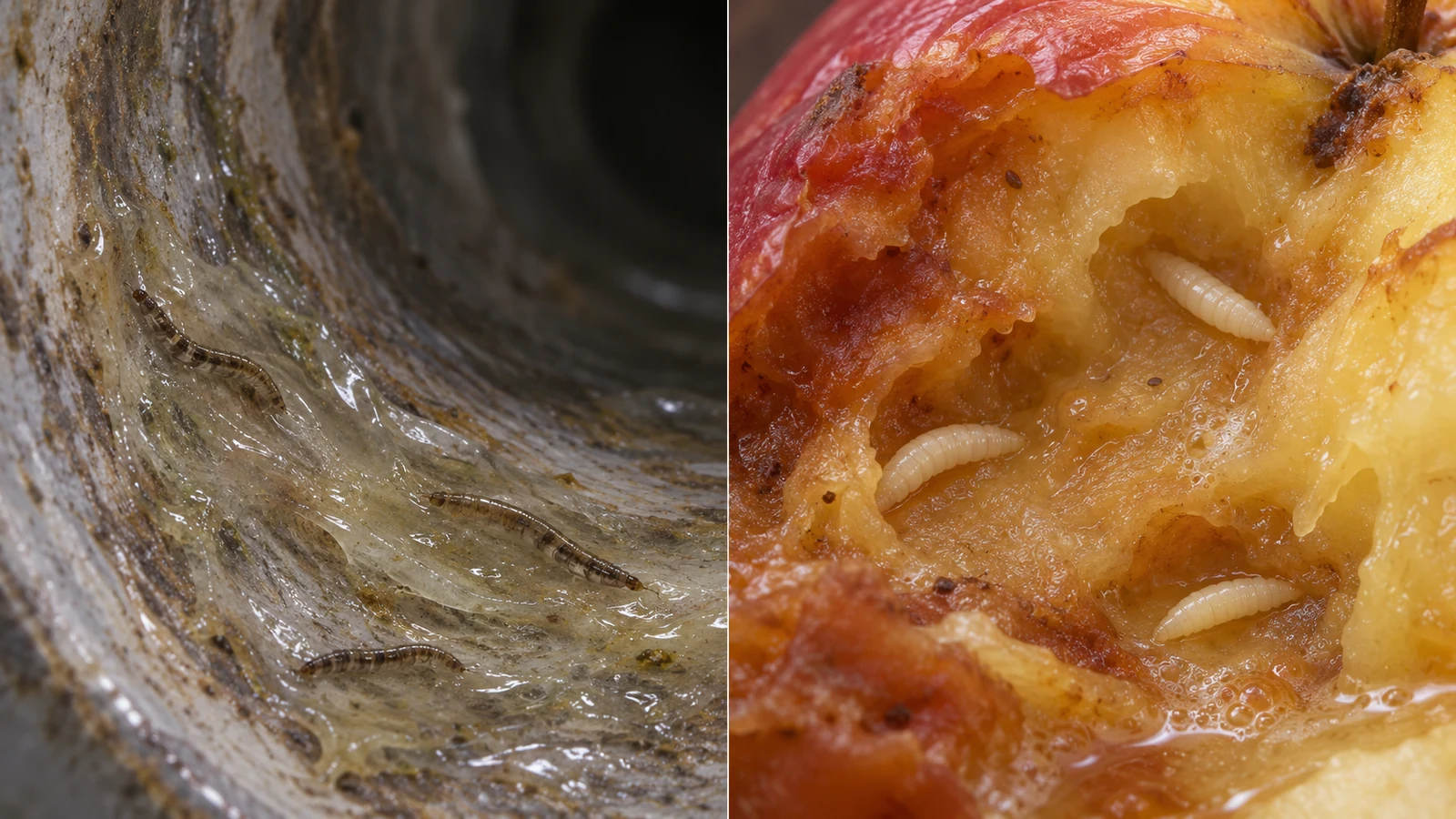
Match the fly with the material it can breed in
Fuzzy, weak-flying insects near plumbing: Look for repeated activity at a sink, shower, or floor-drain area and accessible signs of organic buildup. If the drain appears to be producing the flies, follow the targeted drain-fly source-removal guide rather than trying to control adults alone.
Smoother, more active flies around food or containers: Check overripe produce, discarded peels, unwashed beverage containers, and fermenting residues in trash or recycling. When those sources fit the insect and the pattern, use the fruit-fly source and control guide for the next steps.
Neither profile fits clearly: Small dark flies can also be fungus gnats or other indoor flies. A houseplant’s consistently damp potting mix, for example, points toward a different source from either of the two groups compared here. Return to the broader guide to flies found in the house instead of forcing an identification.
Whatever the likely group, removing or correcting the material that supports larvae matters more than repeatedly catching adults. Do not mix bleach, drain cleaners, or pesticides to test a theory about a drain.
Explore this topic further: