Explanation
Where do bed bugs come from, and what causes an infestation?
Bed bugs reach homes from places where they already live, often hidden in belongings or moving between connected units. Learn what makes an arrival become an infestation and where to check first.

Maybe you spotted a bed bug after a trip. Or perhaps you have not traveled or bought used furniture, yet one has appeared in your apartment. In either case, the insect had to come from somewhere. The hard part is working out whether it was recently carried in, was already present, or moved from another part of the building.
That distinction is more useful than trying to judge the home by how clean it looks. It points you toward the right places to check without assigning blame or assuming a full infestation.
Quick Answer
Bed bugs come from places where they already live. They can reach another home hidden in luggage, bags, furniture, and other belongings, or crawl between connected units. An insect arriving is different from an infestation becoming established. Dirt, dust, and poor hygiene do not create bed bugs.
How bed bugs get inside a home
Bed bugs are small, wingless insects that feed on blood and hide in tight spaces between meals. They do not develop from dirt, food scraps, or mattress fabric. For one to appear in a home, it must have been transported there or crawled in from another affected space.
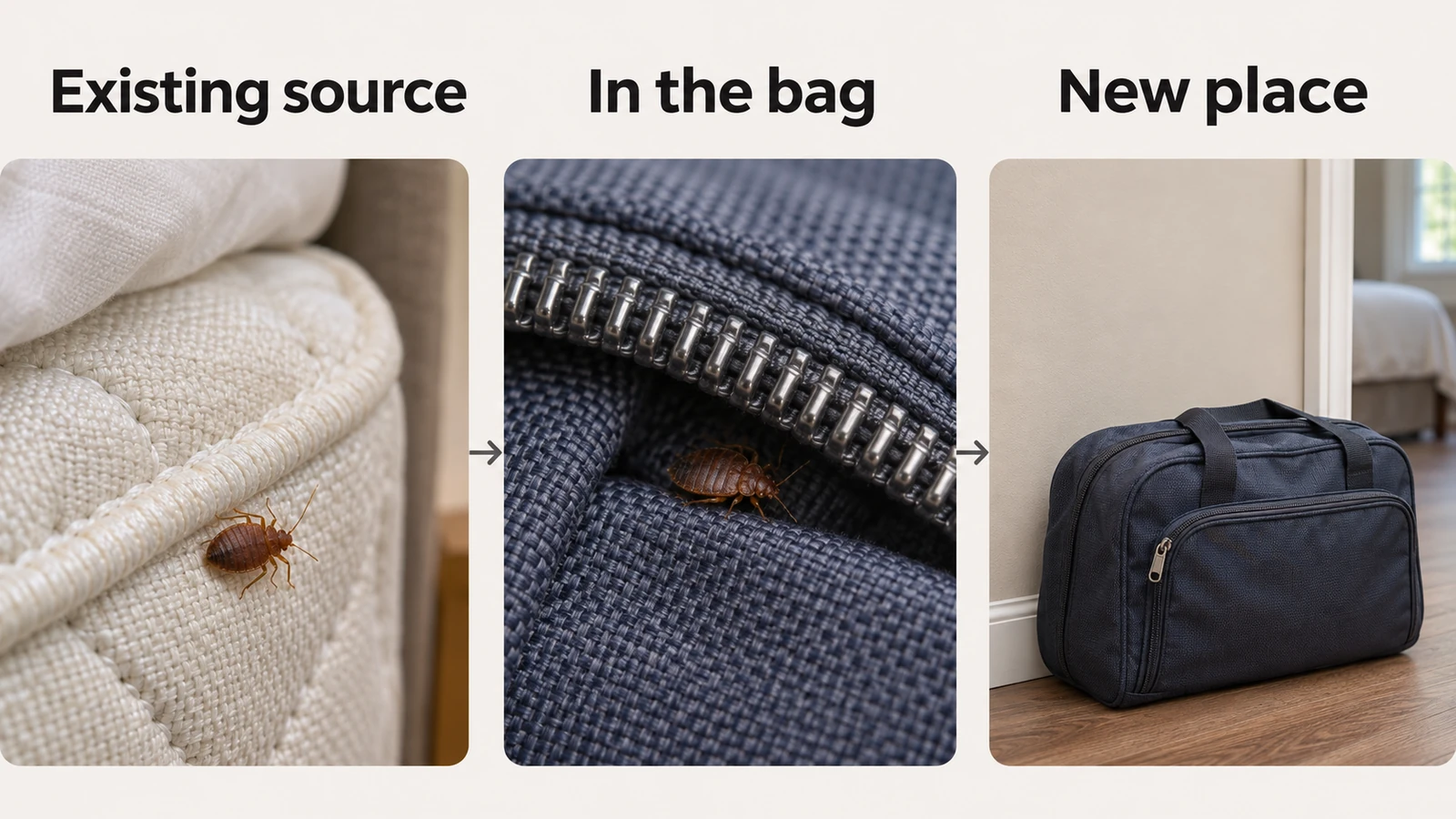
A bug can shelter unnoticed in a folded item, zipper seam, furniture joint, or other narrow gap. When that item is carried somewhere new, the insect may emerge later, often without anyone knowing which object brought it.
Luggage, backpacks, and overnight bags
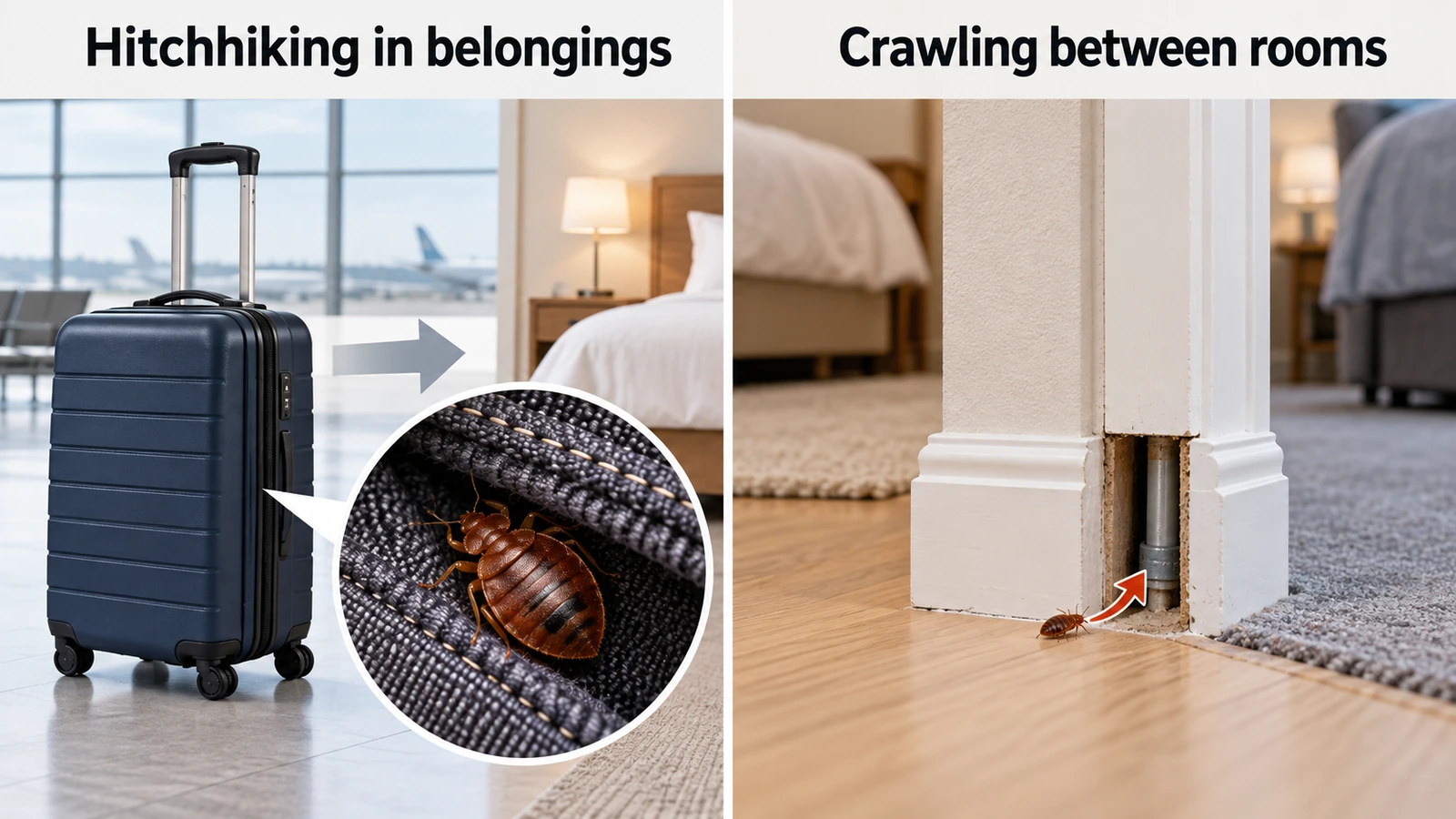
A suitcase set near an infested bed, a backpack left beside upholstered seating, or an overnight bag carried between homes can transport a hidden bed bug. The possibility is not limited to hotels or long-distance trips. It also applies to visits and other places where personal items spend time near an existing infestation.
The practical clue is where the bag went after returning home. That location gives you somewhere specific to examine, rather than assuming every room was exposed. For the full explanation of movement between places, see how bed bugs spread through belongings and homes.
Used furniture and other incoming items
A secondhand couch, bed frame, mattress, or box of belongings may carry insects already hiding in seams, joints, or folds. An item can look clean on the surface and still contain a sheltered bed bug. If the first sightings followed a move or furniture delivery, that item is worth checking, but timing alone cannot establish where the insect originated.
Connected apartments and shared buildings
Bed bugs cannot fly or jump, but they can crawl. In apartments, dorms, and other connected housing, they may move between affected and neighboring spaces through gaps around shared structures or along corridors. That route can matter even when the resident has not traveled and nothing new has been brought indoors.
The fact that a building has shared walls does not mean an insect came from a neighbor. A confirmed problem in a nearby unit, together with physical evidence in your own unit, provides a more useful reason to examine that possibility.
How an arrival becomes an infestation
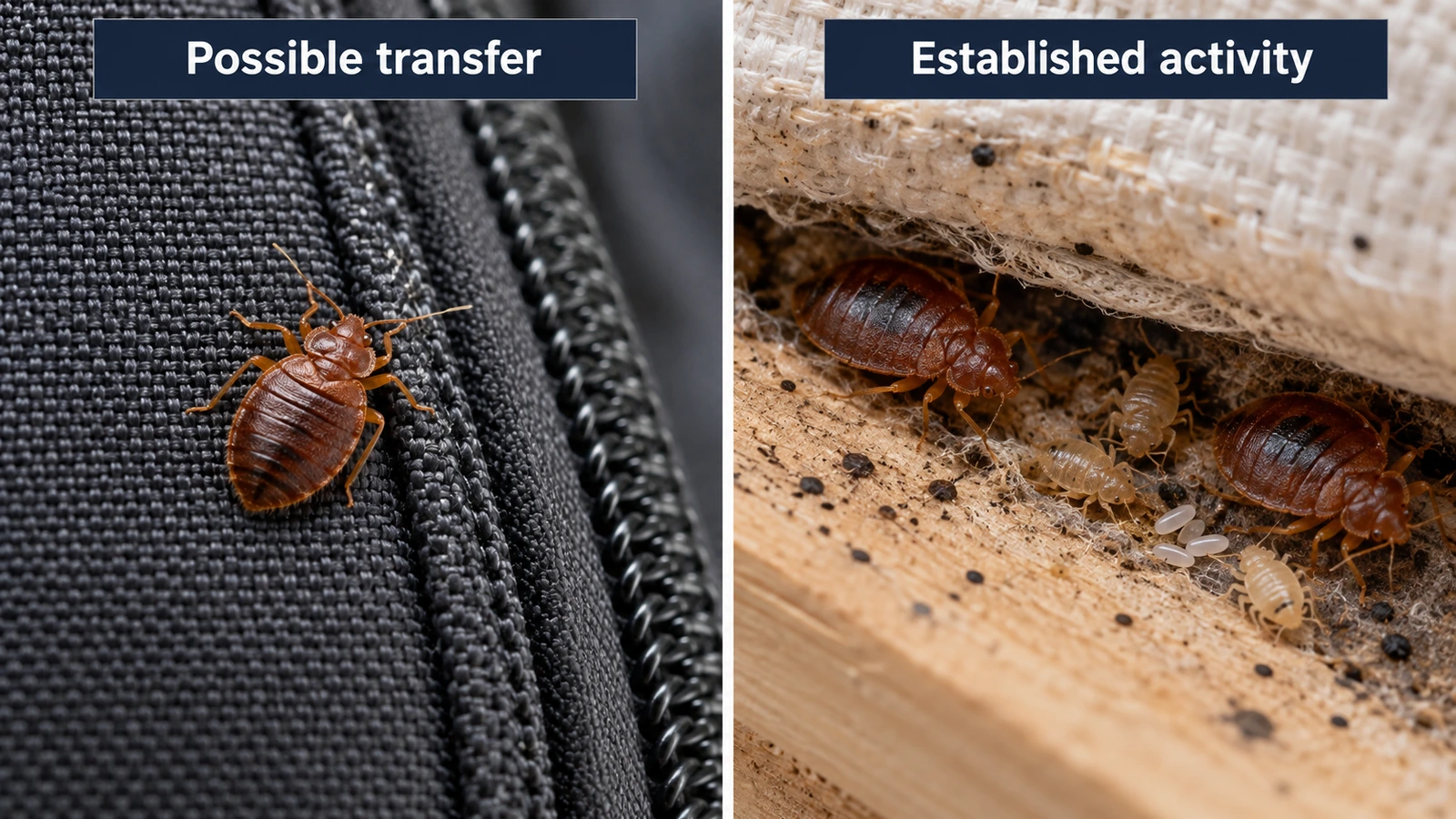
Finding one bed bug on a recently returned suitcase is an introduction worth investigating. It does not tell you whether others are present. An established infestation involves bugs surviving in the home, feeding, and reproducing. Some introductions are caught early; others can go unnoticed as insects shelter and new life stages appear.
Bed bugs usually settle into protected places near where people sleep or rest because a blood meal is accessible there. The first one you notice might have arrived much earlier. Neither the night a bite appeared nor the day you discovered a bug reliably identifies the original source.
A clean home can still get bed bugs
Cleanliness does not determine whether a bed bug reaches a home. A spotless bedroom can receive one in a bag or piece of furniture, while cluttered rooms do not spontaneously produce them. Reducing clutter may make inspection and control easier, but keeping a tidy house is not a barrier to every introduction.
Evidence of activity matters more than the story of arrival
A clearly identified live bed bug establishes its presence. Finding several bugs at different stages, eggs, shed skins, or grouped dark fecal spots in nearby hiding places may support concern about ongoing activity. Skin marks alone have many possible causes.
Sometimes the route remains unknown even when bed bugs are confirmed. That is not a reason to delay checking the areas where they may be living now.
Good to Know
A home that has been vacant for a while may still contain bed bugs because they can survive for months without feeding. If you found them soon after moving in, do not assume they necessarily arrived with your own belongings.
Where the suspected source tells you to look first
Use what changed recently to choose a sensible starting point. This does not establish blame or measure the size of an infestation; it simply makes the first inspection more focused.
- After travel or an overnight visit: Start with the bag’s seams and where it was placed after coming home, then consider the nearby sleeping or resting area.
- After bringing in furniture: Examine accessible seams and joints on the item and the nearby area where someone rests.
- In connected housing without an obvious new item: Note the exact finding location and examine the closest sleeping area; if bed bugs are confirmed, ask building management about a coordinated assessment of connected units.
Keep a clear photo or captured specimen if you can do so safely. An identifiable insect and physical traces are more useful than trying to reconstruct every visitor or trip. If you need a repeatable routine for bringing items home, the bed bug prevention guide covers that separate task.
Avoid carrying suspected infested furniture or loose bedding through other rooms while trying to work out the source. When physical evidence points to an active problem, identification and a proportionate plan matter more than proving exactly how the first insect arrived.
Explore this topic further: