How-To
How to make a DIY fruit fly trap
Build a simple fruit fly trap with vinegar and everyday kitchen supplies. Learn how to set it up, choose a spot, check the catch and avoid the mistakes that keep flies coming back.
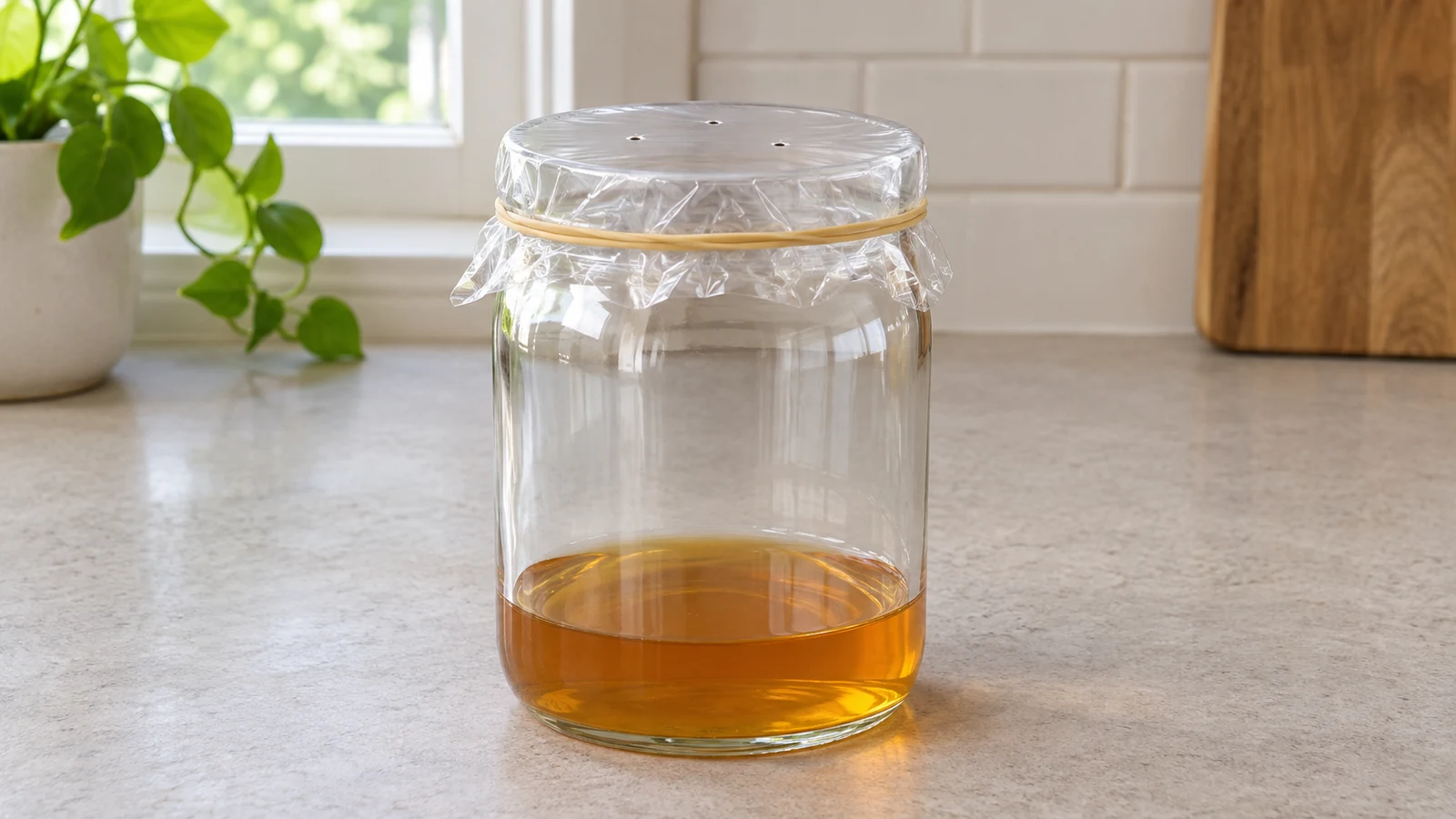
A few fruit flies circling your kitchen can turn into a daily nuisance. You probably already have what you need to catch them: a small jar, apple cider vinegar, dish soap and plastic wrap.
The trick is to combine a bait that attracts the flies with a way to keep them from escaping. You can then use the trap to catch adults while dealing with whatever is drawing them into the kitchen.
- Time Required: A short setup session, followed by daily checks.
- Difficulty: Easy, with ordinary household supplies.
- Equipment: Small jar, apple cider vinegar, liquid dish soap, plastic wrap, rubber band and toothpick.
- Estimated Cost: No additional purchase if you have the supplies at home.
Prepare your trap and choose the right bait
Make sure you’re targeting fruit flies. Common household fruit flies are small, often tan or brown, and typically gather around ripe produce, leftover drinks and fermenting food. Dark, slender flies hovering around houseplants or fuzzy flies resting near a drain may need a different approach. If the insects don’t fit this description, compare gnats and fruit flies before making the trap.
Choose a clean, stable jar with enough room above the liquid for flies to enter. A clear jar makes it easier to inspect the catch without opening it.
Apple cider vinegar is a good starting bait because its fermentation odor attracts fruit flies. You don’t need to add sugar, honey or a long list of ingredients to make the basic trap work. If you don’t have cider vinegar, fruit juice or a small piece of overripe fruit can also serve as an attractant in a funnel trap.
Before You Start
Keep vinegar away from bleach and other household cleaning chemicals. Use ordinary liquid dish soap, not dishwasher detergent or a disinfectant. The bait is for catching insects, not cleaning your sink or countertops.
Make the trap step by step
The covered jar design uses the scent of vinegar to draw flies through small openings. A little dish soap reduces the liquid’s surface tension, making it harder for flies that land on the bait to stay afloat.
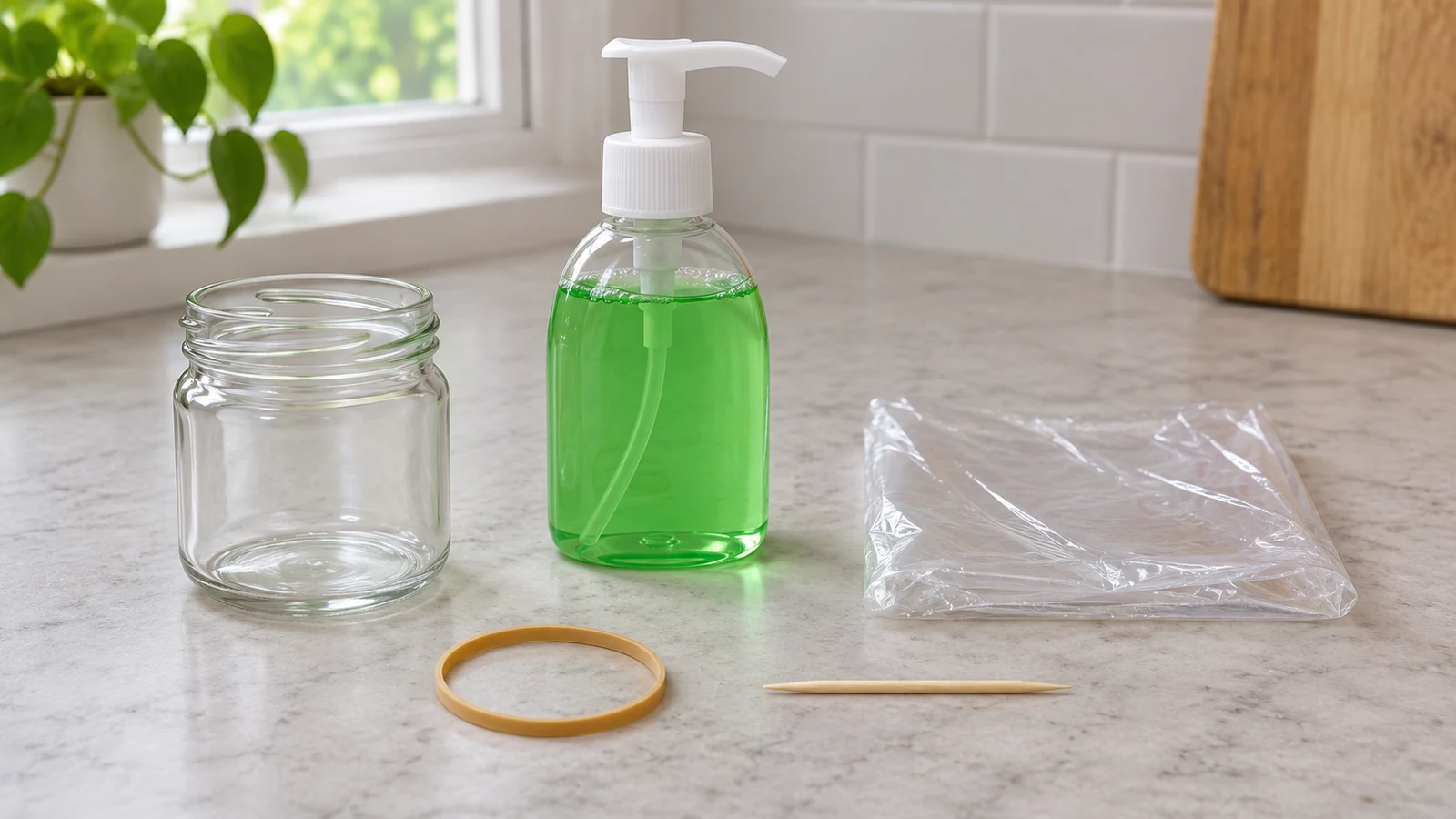
1. Add the vinegar and dish soap
Pour about an inch of apple cider vinegar into the bottom of the jar. Add one drop of liquid dish soap and gently swirl the jar to distribute it. Avoid creating a thick layer of foam on the surface.
Leave plenty of empty space above the bait. The jar doesn’t need to be filled to the rim, and a higher liquid level makes it easier to spill.
2. Cover the jar and make entry holes
Stretch plastic wrap tightly over the opening and secure it with a rubber band. Use a toothpick to make a few small holes in the plastic, large enough for a fruit fly to pass through. Keep the holes small rather than tearing wide slits.
The holes let the bait’s odor escape and give the flies a way in. A tight cover with small openings makes it harder for them to find their way back out.
If you don’t have plastic wrap, roll a sheet of paper into a cone with a narrow opening less than 1/4 inch wide. Insert the cone point-down into the jar, keeping its tip above the bait. Tape around the rim to close any gaps between the cone and the jar. Use the same liquid bait, or substitute a small piece of overripe fruit if you plan to empty the trap daily.
3. Put the trap where flies are active
Set the finished trap on a stable surface close to the area where the flies gather, such as beside a recycling bin or near the end of a counter by a sink. Keep it away from uncovered food and food preparation surfaces, and where children or pets cannot reach it.
If flies cluster in two separate locations, you can place a second trap in the other area rather than concentrating both traps in the same spot.
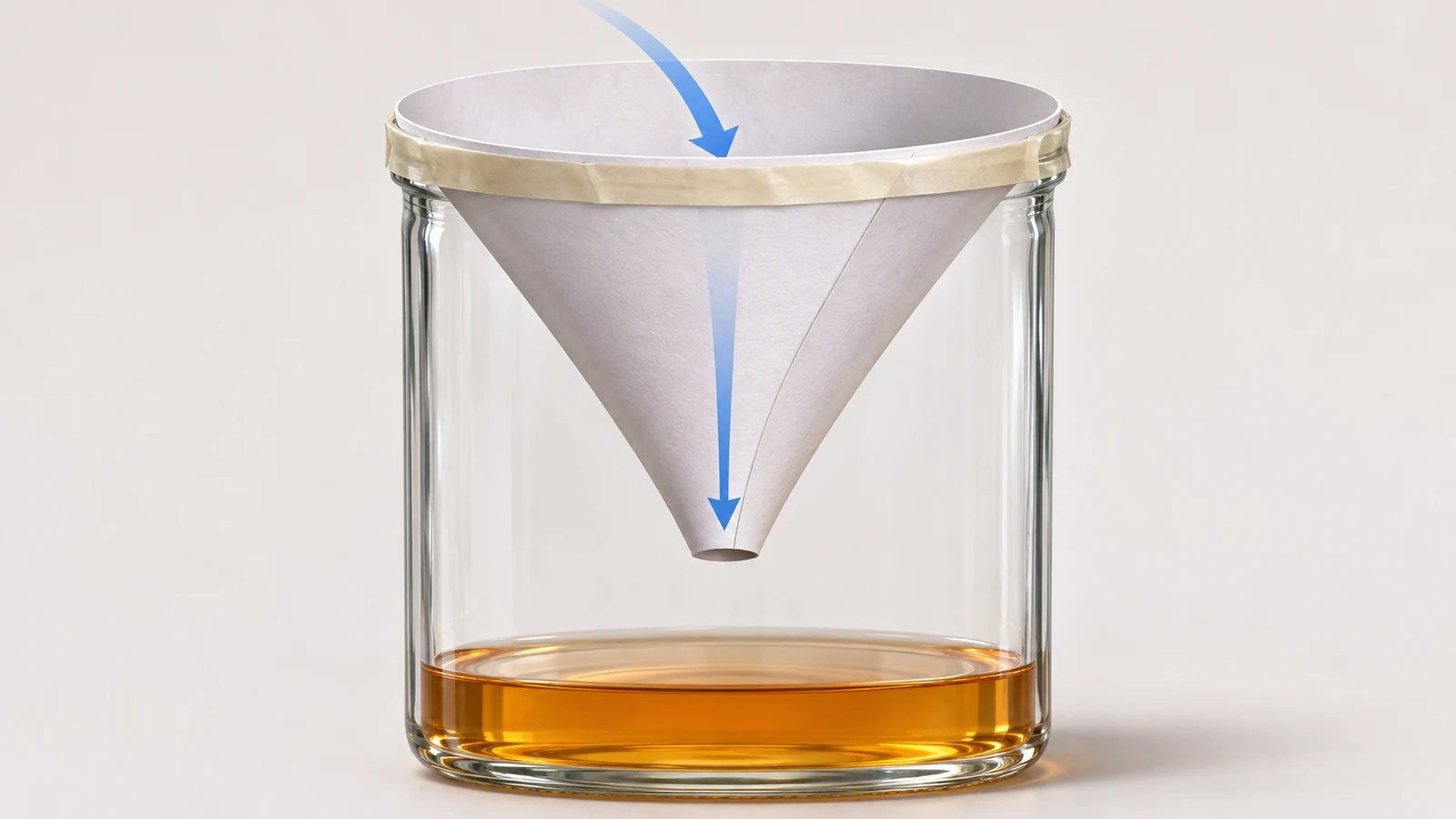
What to watch for while the trap is in use
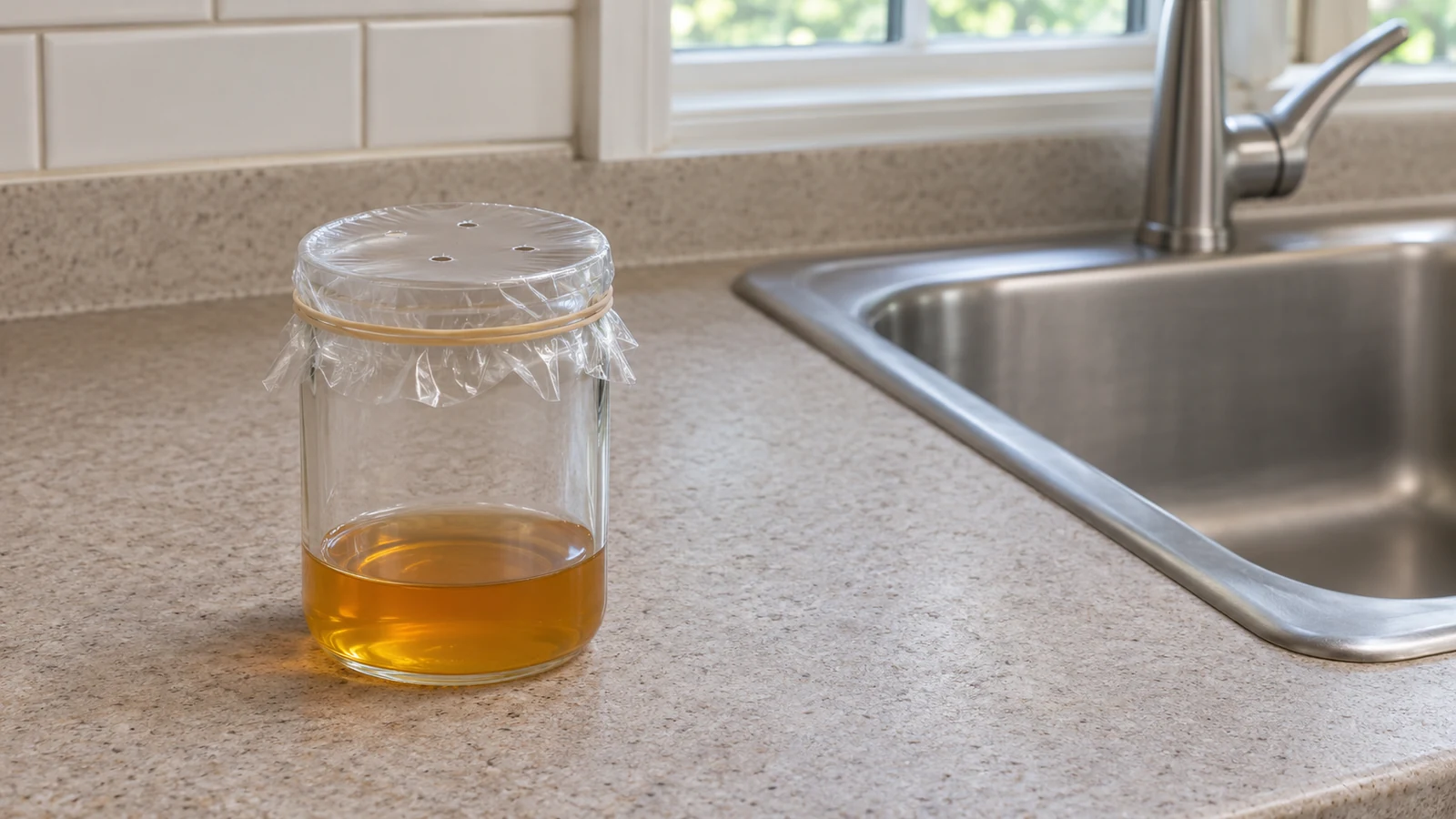
A trap beside the sink can easily get splashed or knocked over. Even a small amount of water entering through the cover can dilute the bait, so choose a dry spot nearby instead of balancing the jar on the sink’s edge.
Don’t pour in more dish soap just because flies are sitting around the lid. The soap’s job is to change how the liquid behaves, not to attract insects. If you see a thick layer of suds, make a fresh mixture using a single drop.
Remove competing attractants, particularly open drinks and spoiled produce. Otherwise, flies may spend more time around those materials than near your trap.
Check whether the trap is working
Look through the jar at the liquid and the inside walls. Adult fruit flies floating in the bait show that the trap is catching insects. A group sitting on the outside of the cover only shows that flies have found the attractant.
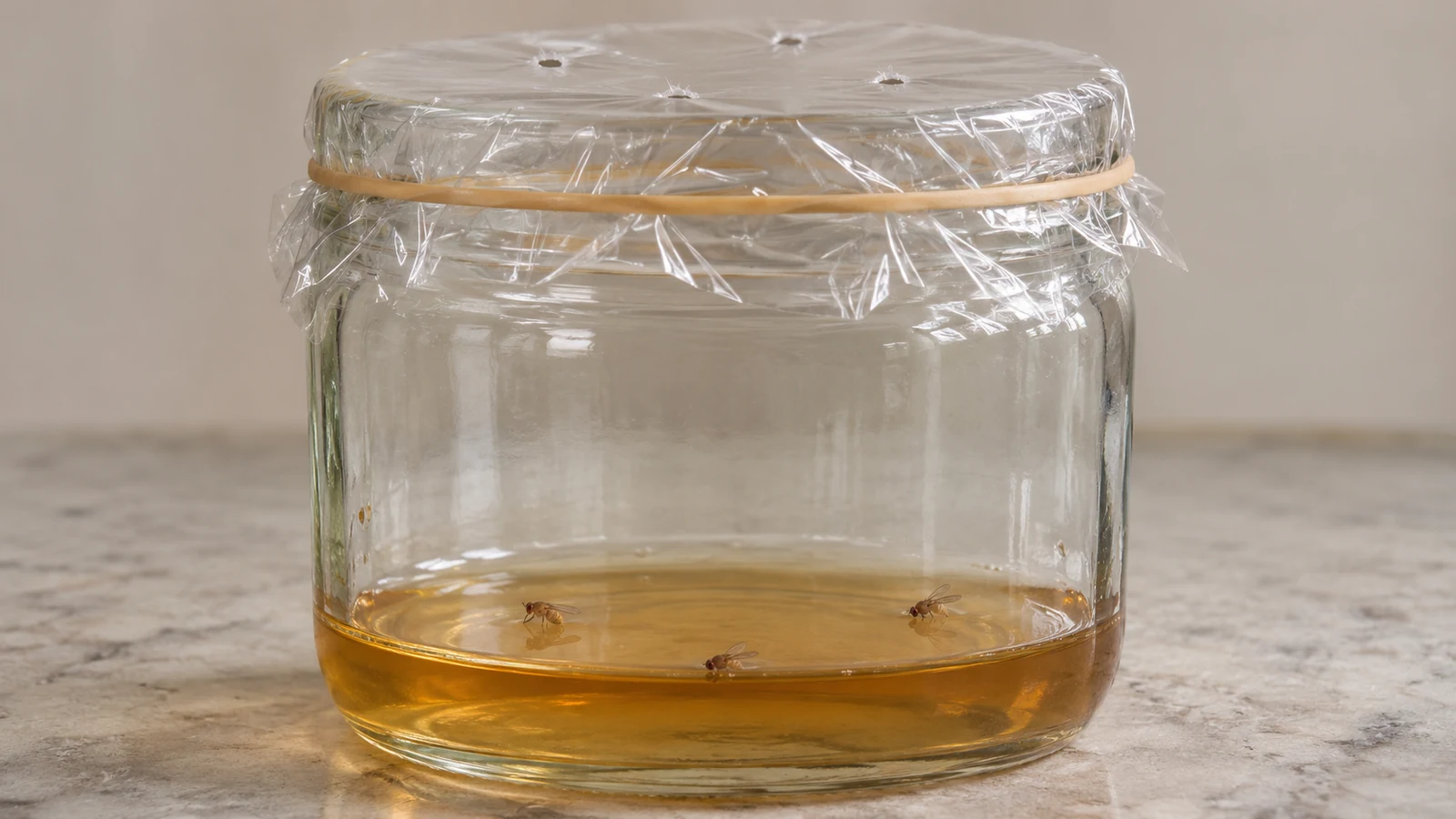
Check the trap daily. Look at the kitchen as well as the jar: are fewer flies appearing around the places where they usually gather? Keep the trap in roughly the same location when comparing catches from one check to the next.
Don’t judge success by how full the jar becomes. The trap targets adults, while eggs and larvae may be developing in fermenting material elsewhere. A trap can catch flies every day without bringing the infestation under control.
If your homemade trap isn’t catching flies
If flies gather around the lid but don’t enter, examine the holes and make sure they aren’t too narrow for the insects to pass through. Check that the plastic hasn’t sagged into the bait. With a paper cone, look for a blocked tip or gaps around the jar’s rim.
When the trap attracts very few flies, try moving it closer to the area of activity or replacing stale bait. If fresh vinegar doesn’t attract the insects, don’t keep changing recipes indefinitely. Take another look at the type of fly and what it gathers around.
If the trap catches plenty of fruit flies but new ones keep appearing, look for an overlooked breeding source rather than building larger traps. The problem is unlikely to disappear simply by increasing the amount of vinegar.
If you need a different trap design because of spills, space or maintenance, our fruit fly trap comparison explains the available options.
Empty and maintain the trap
Inspect the bait each day and replace it every few days, or sooner if it has become dirty, diluted or dried out. If you’re using pieces of fruit, discard them daily so the lure doesn’t become another place for flies to develop.
Empty the used bait, rinse the jar and rebuild the trap with fresh ingredients. Replace damaged plastic wrap or a soggy paper cone. If live flies remain inside a funnel trap, close the opening before carrying it outdoors and releasing them.
Once you’ve addressed the breeding source and activity has stopped, remove the trap and wash the container rather than leaving old bait sitting in the kitchen.
Explore this topic further:
How to get rid of fruit flies by finding their breeding source