Explanation
How long do house flies live?
The lifespan of a house fly depends on more than its age. Learn how temperature, food, and the four stages of development influence its survival and why a household fly problem can outlast any individual adult.
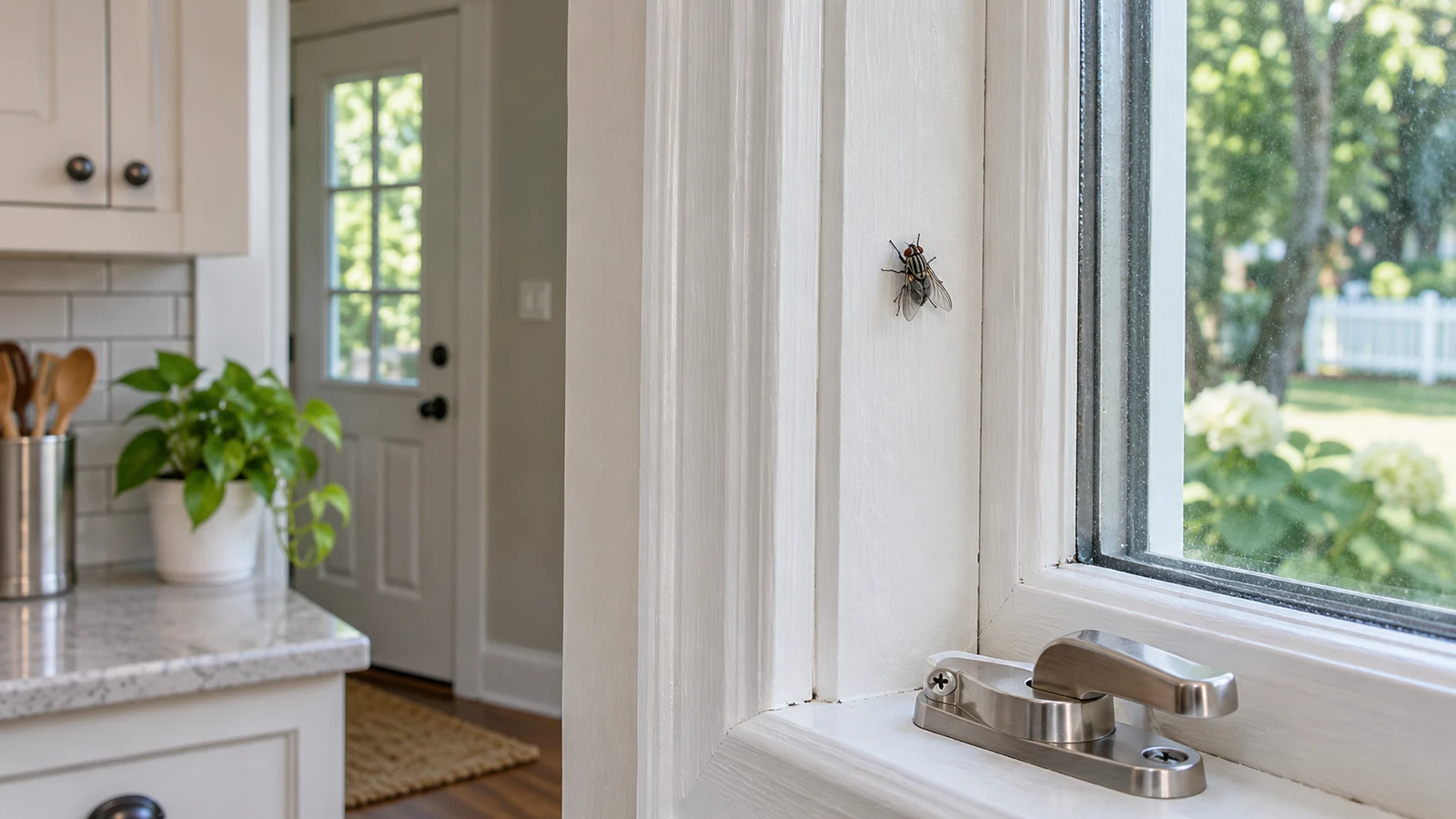
You clear the flies from the kitchen before going to bed, only to find more on the windowsill the next morning. Are the same flies surviving somewhere out of sight, or are new ones appearing?
The lifespan of an adult house fly is only part of the answer. To understand why flies linger around a home, it helps to know how long they spend developing before they can fly and what allows new generations to appear.
Quick Answer
An adult house fly generally lives about 15 to 25 days, although its lifespan varies with food and environmental conditions. In favorable warm conditions, development from egg to adult can take as little as seven days. New adults can emerge while older flies are still alive.
The house fly life cycle: from egg to adult
The common house fly (Musca domestica) goes through four distinct stages: egg, larva, pupa, and adult. The adult lifespan begins when the winged fly emerges from its pupal case, not when the egg is laid.
The stages before adulthood are usually associated with a breeding site such as moist garbage or animal waste. You may never notice them, even when several generations of flies are developing nearby.
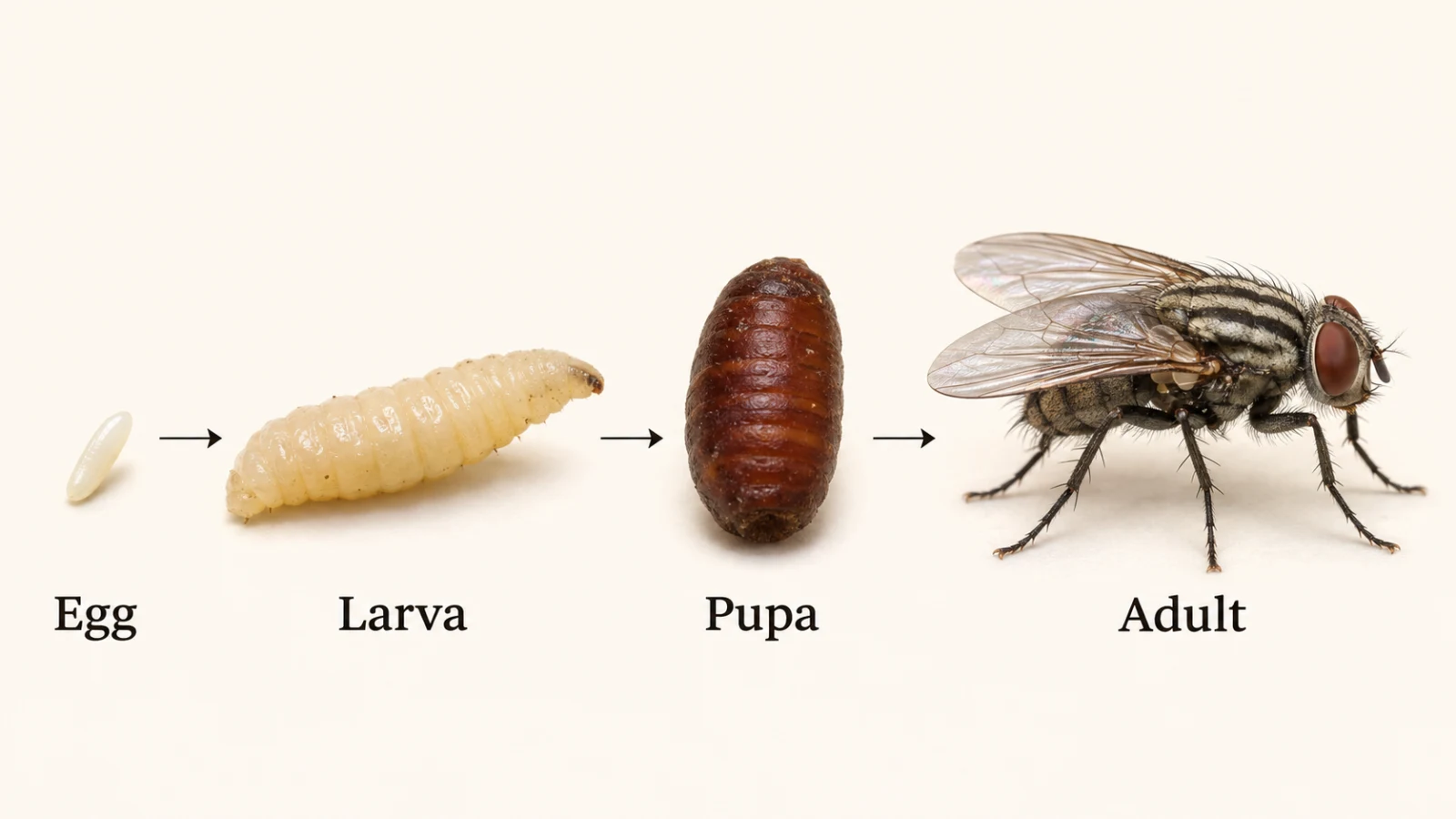
Egg
A female house fly deposits eggs in material that provides food and moisture for the developing larvae. In warm, favorable conditions, the eggs can hatch within a day.
Larva
The newly hatched larvae, commonly called maggots, feed and grow in the organic material. Under favorable conditions, this stage can take several days, but it lasts longer when temperatures or food quality are less suitable.
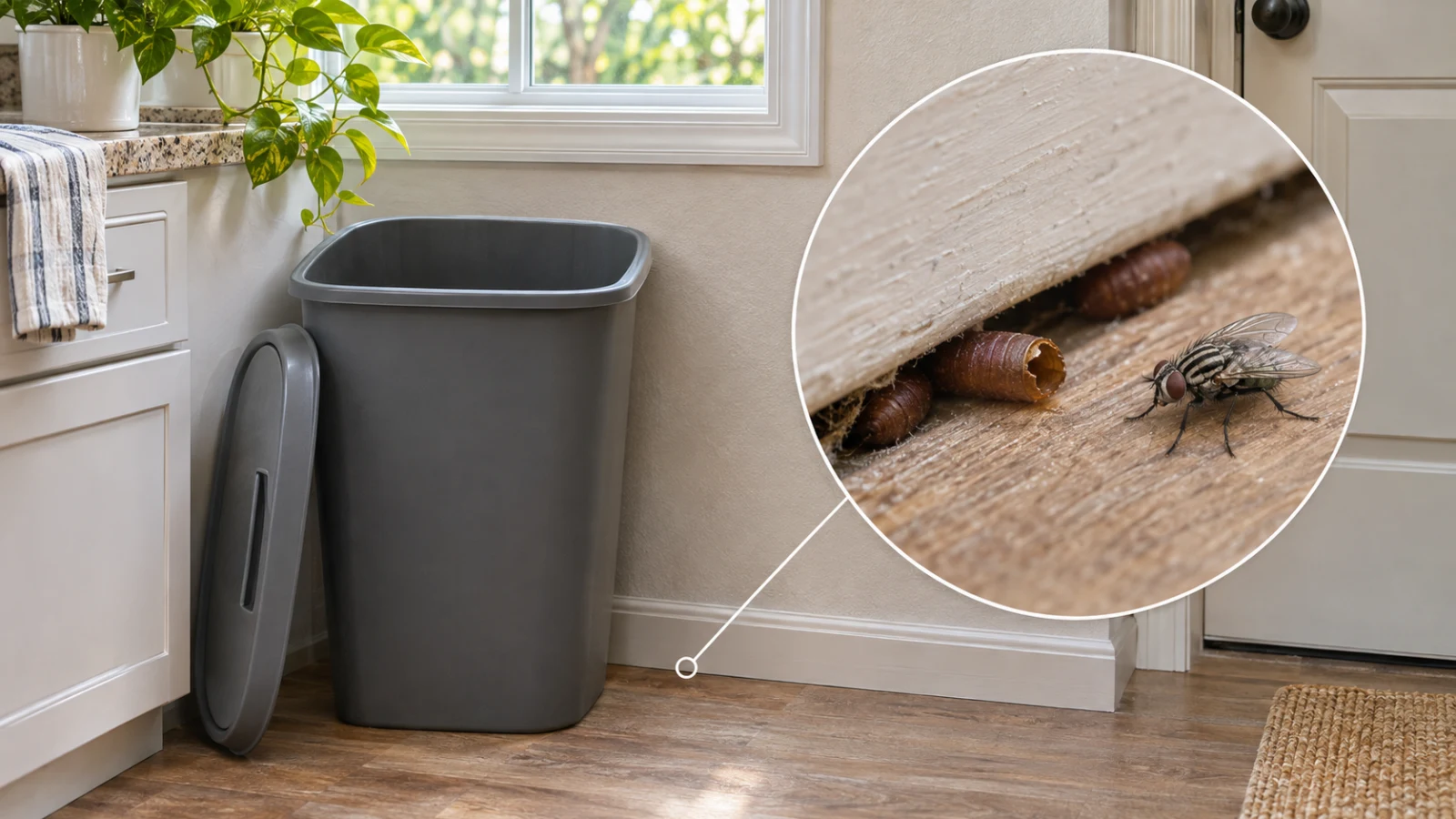
Once they are mature, the larvae often move away from the wet breeding material toward a relatively dry, sheltered spot.
Pupa
The larva forms a firm, brown protective case called a puparium. Inside it, the insect transforms into an adult. This stage typically lasts several days in warm conditions and can take substantially longer when it is cooler.
The new adult emerges from the case, expands its wings, and becomes capable of flight once its wings have hardened.
Adult
Adult house flies feed, mate, and, in the case of females, lay eggs. A female can produce several batches during her adult life, so one generation does not need to die before the next begins developing.
What affects how long house flies live?
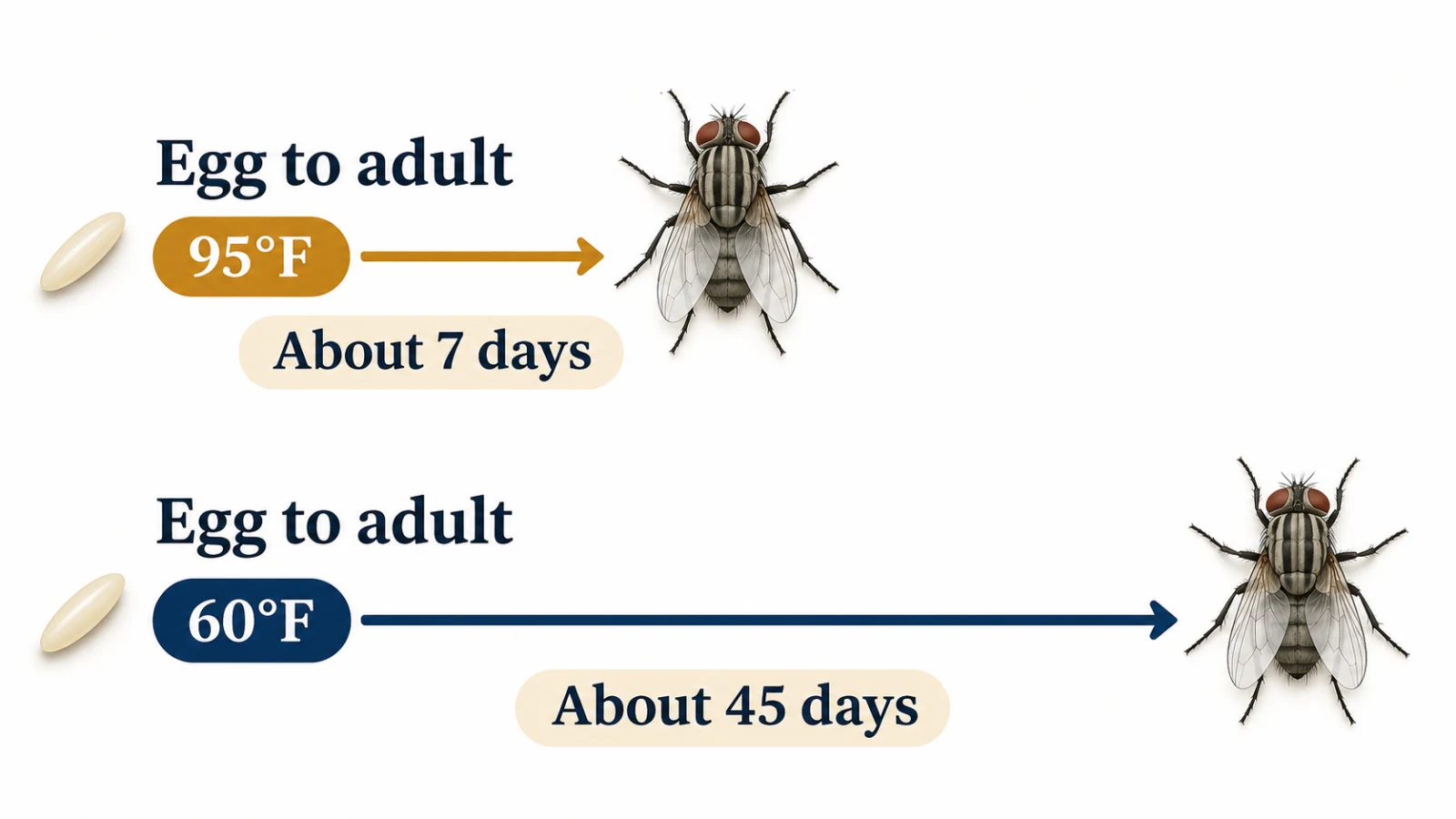
Temperature influences both development and adult survival, but in different ways. Warm conditions generally accelerate the development of immature house flies. Higher temperatures can also shorten an adult fly’s lifespan.
For example, development from egg to adult has been reported to take about seven days at 95°F and around 45 days at 60°F. These are approximate developmental times under particular conditions, not a countdown based on the temperature of your kitchen.
Food and moisture
Adult house flies need access to food and water. Sugary liquids and other suitable food sources can support their survival. An adult trapped in a room with little accessible nourishment may die much sooner than one that can feed regularly.
The larvae have different needs. They require suitable moist organic material in which to grow. A kitchen can provide food for adult flies without providing a place for their larvae to develop.
Why published lifespan estimates differ
Some adult female house flies have survived for up to six weeks under favorable laboratory conditions. Studies of wild house flies often find much shorter lifespans.
A fly entering your home may also be several days old already. Its remaining lifespan depends on its age, the conditions it encounters, and whether it can continue finding food and water. There is no reliable way to determine that remaining time simply by looking at the fly.
Why house flies keep appearing indoors
When house flies are still showing up after several days, three processes may be contributing to the activity.
Adults that are already present. A fly that spent the night resting out of sight may become active again the following day. Seeing an adult each morning does not necessarily mean a new fly has emerged overnight.
Adults emerging from immature stages. Imagine that flies laid eggs in a garbage can before you took the trash out. Some mature larvae may already have moved into dry crevices nearby to pupate. Removing the garbage stops that material from supporting further larval growth, but adults can still emerge from pupal cases left behind.
New flies entering from outdoors. House flies frequently develop outside buildings and enter through doors, windows, or other openings. A nearby garbage container or accumulation of organic waste can supply new adults even when your kitchen is clean.
The useful distinction is whether fly activity gradually declines after a breeding or entry source is addressed, or whether fresh flies keep appearing at a similar rate. In the latter case, look beyond the adults you can see. Our guide to how to get rid of house flies explains how to address the source.
What to Watch For
Flies gathering at a sunny window may have emerged elsewhere in the home or entered through another opening. Their resting place is not necessarily their breeding site or point of entry.
Explore this topic further: