Identification
House fly identification: what to look for and where to check
Learn to recognize the common house fly by its size, markings and body shape, distinguish it from similar insects, and find clues to where it is breeding.
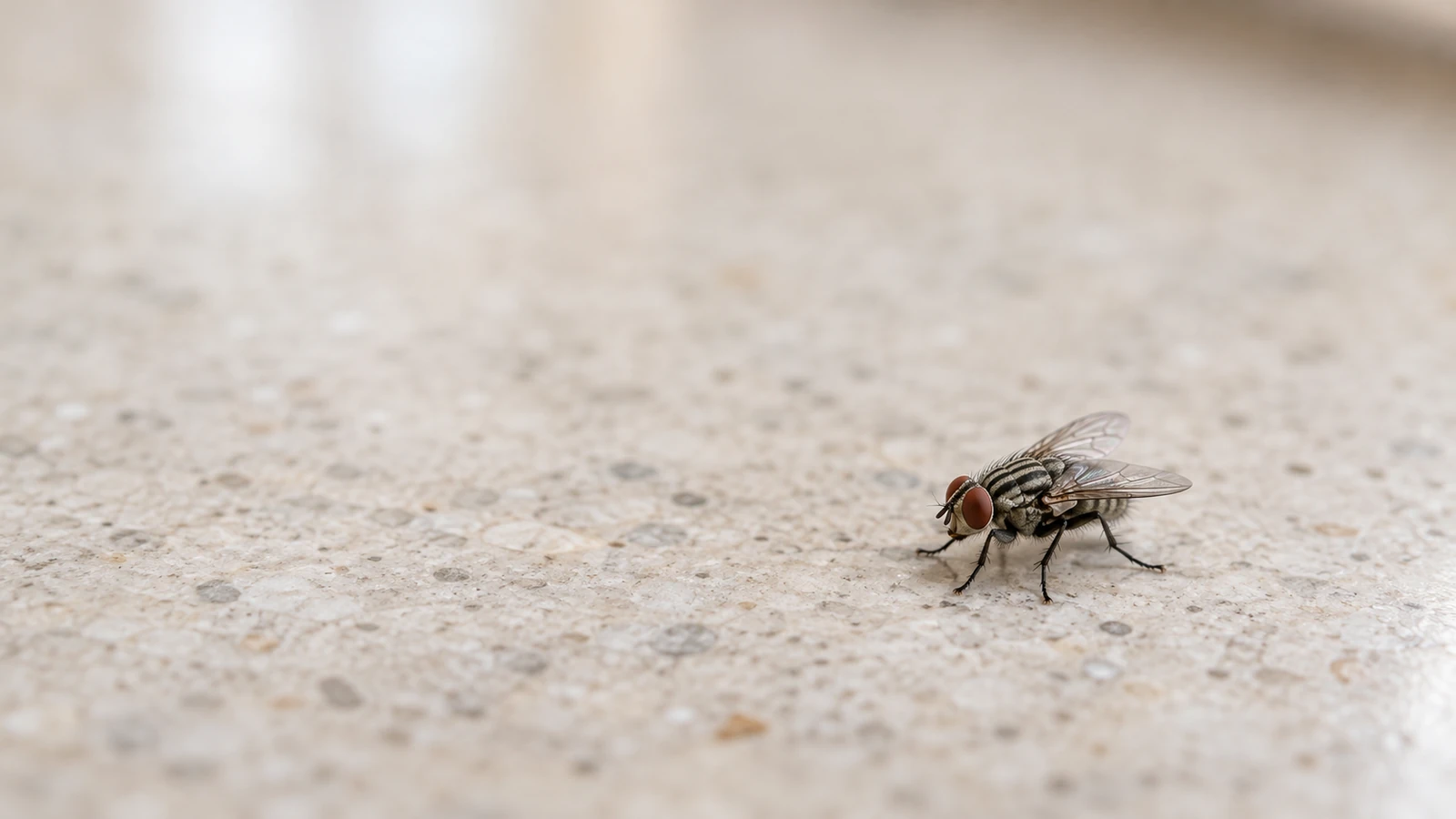
A gray fly buzzing against the kitchen window is a familiar sight. Finding several more the next morning, even though you emptied the trash and closed the windows, is a different matter. Before deciding where to clean or what to treat, take a closer look at the flies themselves.
The common house fly can breed in waste around your home or fly in from an outdoor source. Knowing which insect you’re dealing with helps you narrow down where to look.
What does a house fly look like?
The common house fly (Musca domestica) is a compact, dull gray insect with an adult body length of roughly 1/4 inch (6 mm), although individuals vary in size. Its most useful visible feature is the pattern of four dark stripes running along the thorax, the part of the body immediately behind the head.
Look at a resting fly from above. It has large reddish-brown eyes, clear wings and a bristly body. Its abdomen may have pale gray or yellowish areas on the sides. A sharp bend in one of the main wing veins is an additional identifying feature if you can see the wing clearly.

Identification in 30 Seconds
- About 1/4 inch long, excluding the wings.
- Gray thorax with four lengthwise dark stripes.
- Broad body rather than the slender shape of a gnat.
- Sponging mouthparts; common house flies do not bite.
Use a ruler alongside the insect or a specimen photographed next to a familiar object to judge its size. A close-up without a scale can make a tiny fruit fly look surprisingly large.
Where to look for house fly breeding sites
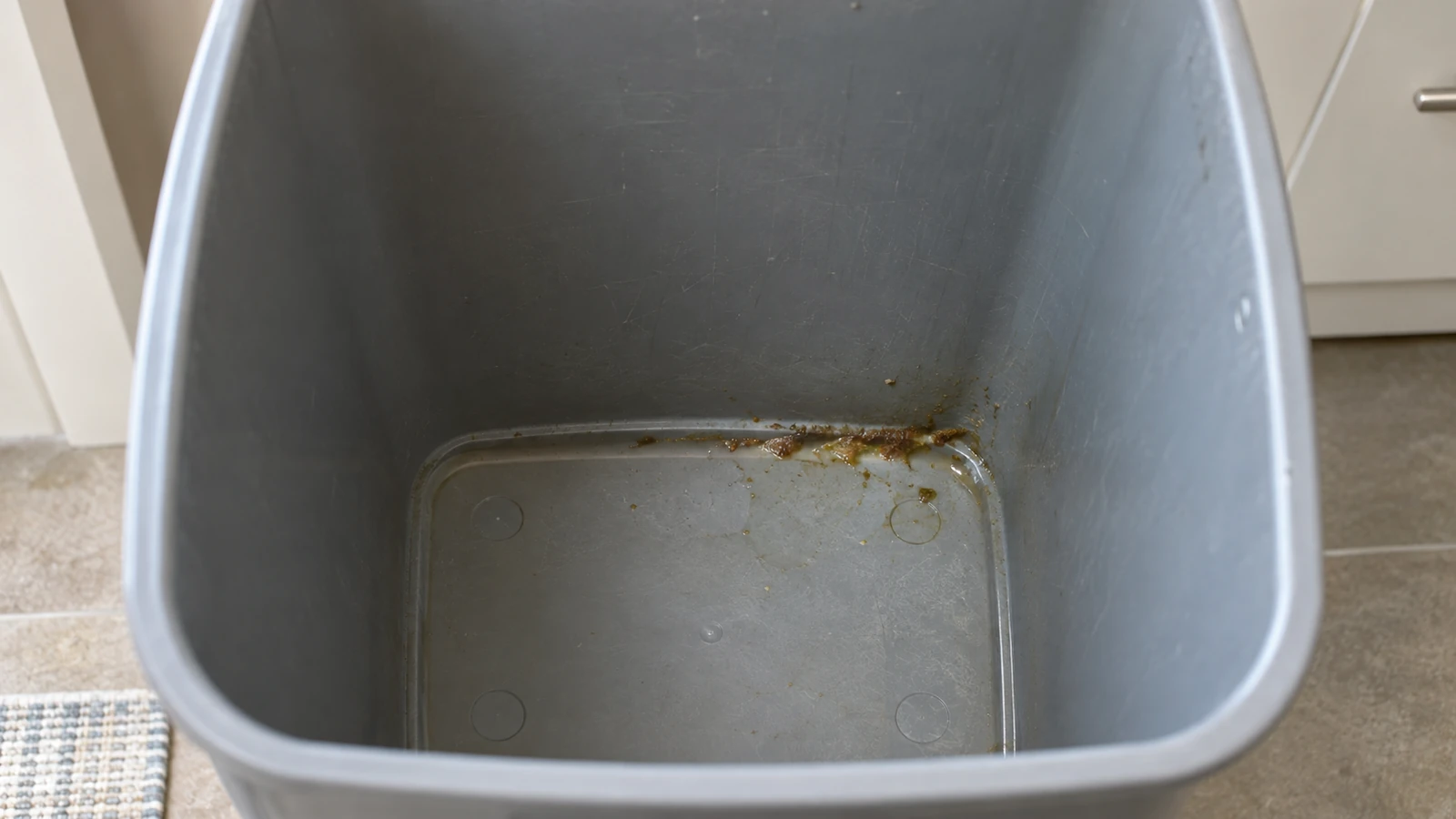
Start with damp, decaying organic material. House fly larvae feed on this material as they grow, so an outdoor garbage can containing food residue or a patch of animal waste can support breeding. Indoors, check the bottom of the kitchen trash can, including the space beneath the liner.
A trash bag can leak without leaving an obvious mess on the surrounding floor. Pay attention to the underside of the lid, the bottom of the bin and the narrow space between the bin and the wall.
If you find cream-colored, legless maggots feeding in wet waste, inspect the drier area around it as well. Mature fly larvae can crawl away from their food before pupating. Small brown, barrel-shaped pupal cases may remain beneath a bin, along the baseboard or in a nearby crevice after the original waste has been removed.
If the indoor checks reveal nothing, look outside near doors and windows. Inspect outdoor trash cans, shared dumpsters, pet waste and moist piles of decaying yard debris. Check window screens and the gaps around frequently used doors. An indoor fly problem can begin entirely outside the building.
Identification Mistakes
- Calling every dark indoor fly a house fly.
- Looking only at the window where adult flies collect.
- Assuming an empty trash can is free of breeding material.
Key Clue
A cluster of maggots in decomposing waste, together with adult flies that match the house fly’s markings, gives you a strong lead on the breeding source.
What to Watch For
Other flies also produce pale maggots and brown pupal cases. Keep a representative adult specimen if you need to distinguish between similar species.
House flies or another kind of indoor fly?
A house fly is noticeably larger and stockier than the tiny flies that often gather around fruit, sinks and houseplants. Both the insect’s appearance and the material it is associated with matter.
If the insects hover over ripe bananas or recycling containers, check for fruit flies before assuming you have a house fly problem. Flies that rest on bathroom walls with fuzzy, triangular wings call for a drain fly inspection instead. If they rise from the soil when you water a plant, look for fungus gnats.
Some larger flies are harder to tell apart. A shiny metallic green or blue body points toward certain blow flies rather than the common house fly. A slow-moving, somewhat larger gray fly appearing around sunny windows during a warm spell in fall or winter may be a cluster fly. A fly with a stiff, forward-pointing mouthpart that actually bites could be a stable fly.
Use the following differences to narrow down the likely type of fly and choose the next place to inspect.
| Type of fly | What to look for | Likely breeding material |
|---|---|---|
| House fly | Gray body, four dark thorax stripes, about 1/4 inch | Damp garbage, animal waste, decaying organic matter |
| Fruit fly | Small, rounded, tan or brown body; often red eyes | Fermenting produce, beverage residue |
| Drain fly | Small, fuzzy body and broad, mothlike wings | Organic buildup in drains |
| Fungus gnat | Tiny, slender, dark body with long legs and antennae | Moist potting mix |

What repeated sightings can tell you
One or two house flies after a door has been left open are usually a minor nuisance. If several flies appear indoors every day, especially with the doors and windows shut, it is worth finding out whether they are emerging inside or entering through a less obvious opening.
Notice where new flies first appear, not just where you eventually catch them. House flies and other indoor flies often collect at bright windows, which may be some distance from the source.
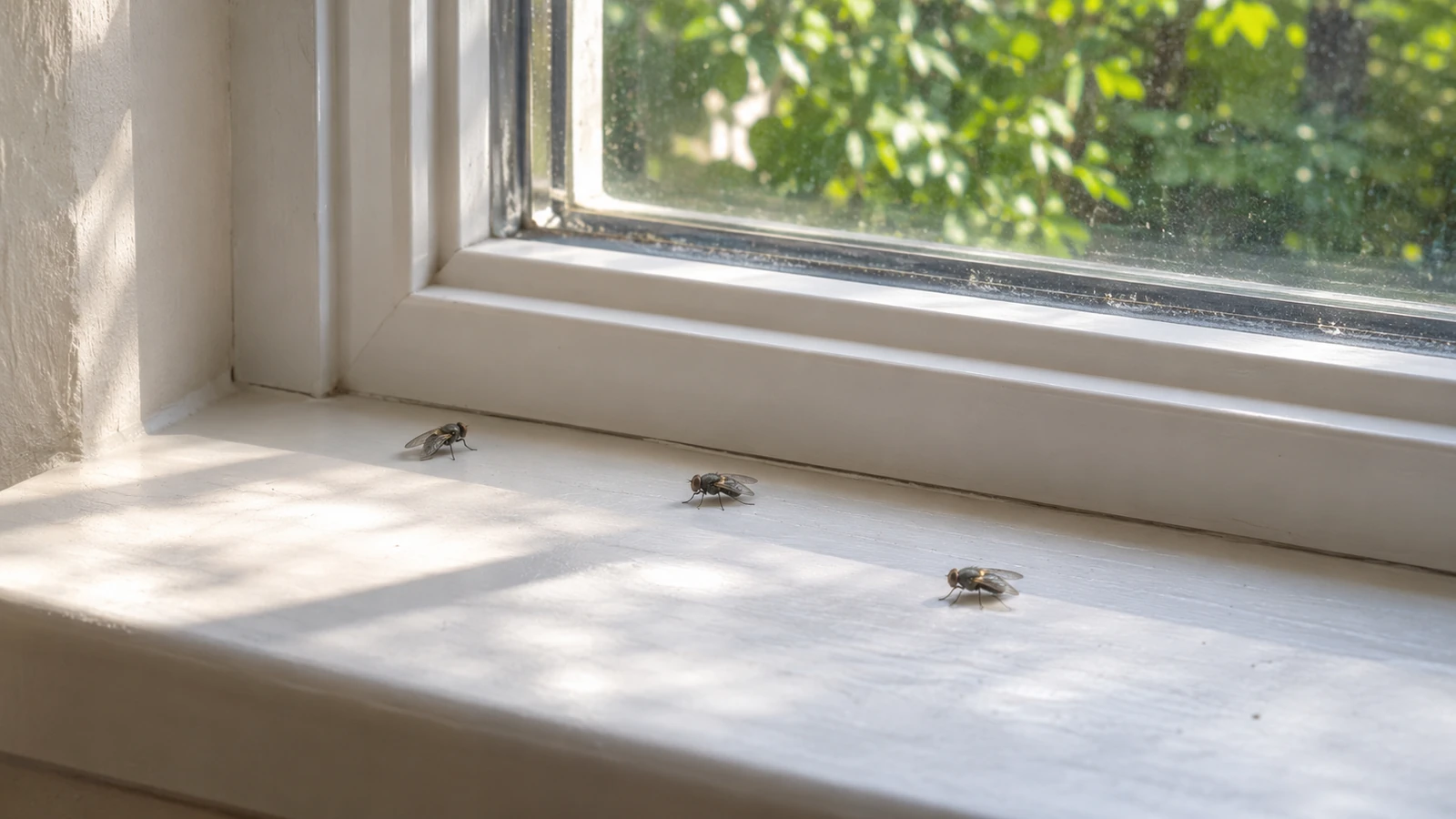
After checking a suspected breeding site, pay attention to whether new adults keep appearing. Flies can still emerge from pupae that were already present when you removed the waste. If the number gradually falls and new activity stops, you may have dealt with the original source.
If the numbers remain steady or increase, broaden the inspection. In an apartment, the problem may originate in a shared trash area or another accessible part of the building. A sudden surge of large flies accompanied by an unexplained odor also warrants checking for a dead animal or another concealed source of decaying material.
Learn more: