Comparison
How do you repel moths from clothes and other fabrics?
Cedar, lavender, mothballs and traps work in very different ways. Compare their real benefits, limitations and safety requirements to choose the right protection for your fabrics.

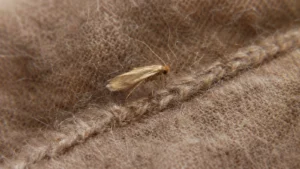
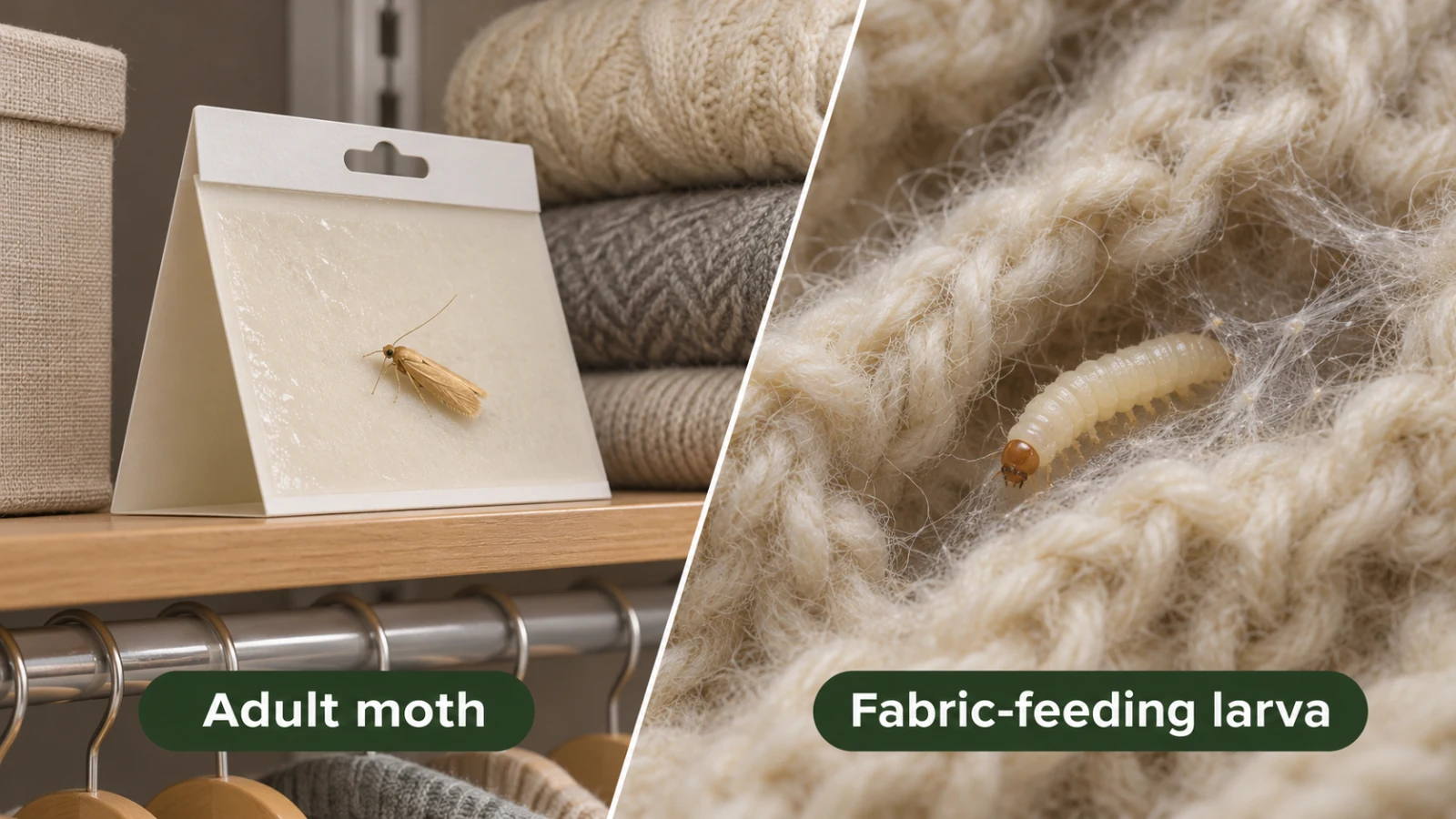
You open a closet, find a hole in a favorite sweater and start wondering whether cedar blocks or lavender sachets would have saved it. The difficulty is that the moths you see flying around aren’t the ones eating your clothes. It’s the larvae that feed on wool, cashmere and other susceptible materials.
Before buying anything, decide whether you’re protecting clean textiles or dealing with insects that are already feeding on them. The two situations call for different solutions. If the moths are coming from stored food instead, check for pantry moths: the products and methods compared here are for clothes moths.
What makes one option more effective than another?
The biggest difference is whether a product prevents insects from reaching the fabric, changes their behavior or kills them. A well-sealed container provides a physical barrier. Scented products depend on airborne compounds whose concentration varies with the material, its age and the surrounding space.
A loose-fitting lid on a plastic tote may leave gaps that moths can get through. Look for a secure closure rather than assuming that any box with a lid will protect your woolens.
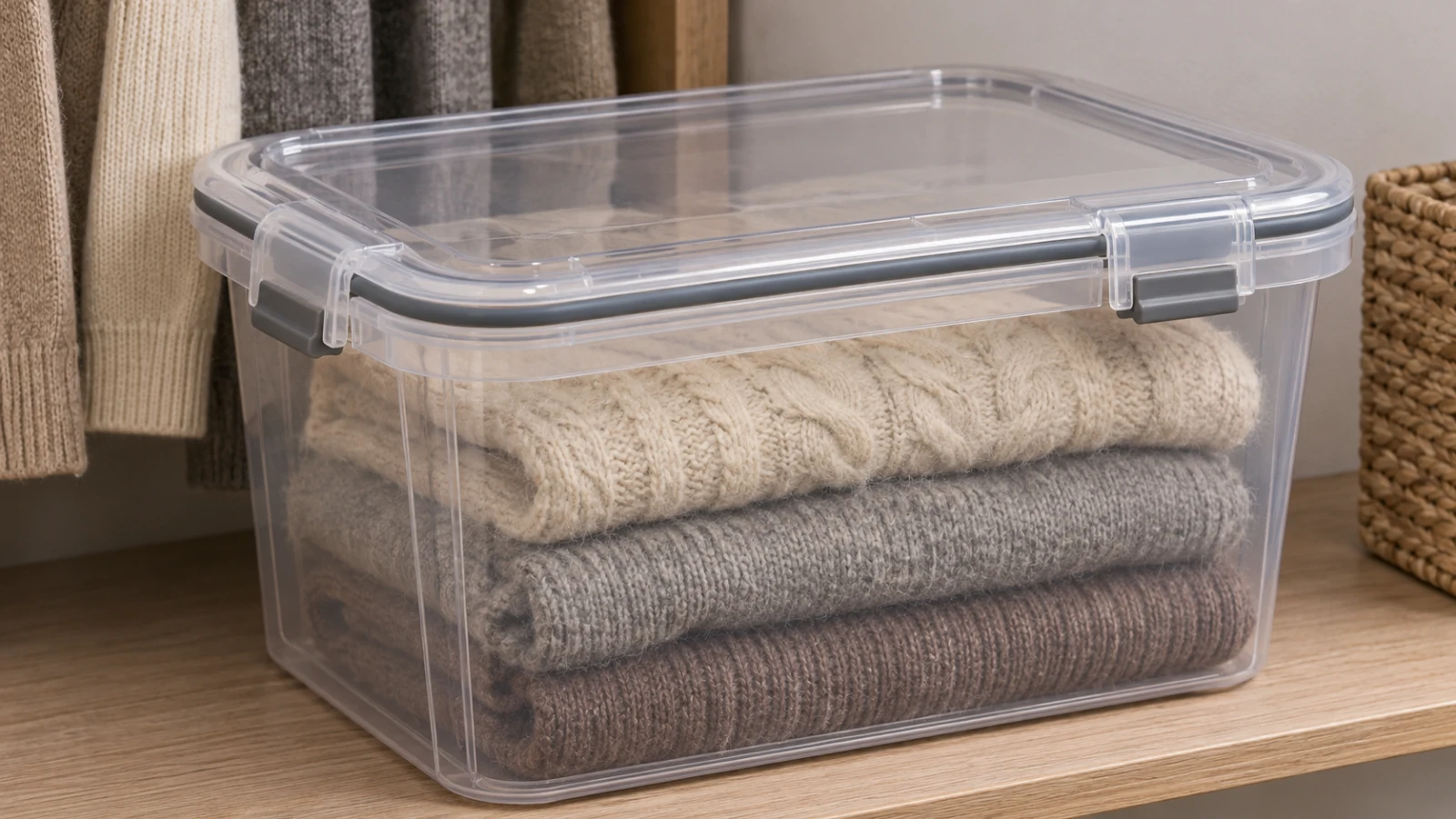
Also consider where the textiles are kept. A sweater worn regularly in an accessible closet presents a different storage problem from a cashmere collection left untouched for the summer. For the latter, an effective barrier is far more important than the convenience of a scented hanger.
Finally, distinguish protection from treatment. A product that discourages adult moths from entering a drawer may do little to stop larvae that have already hatched inside it.
Here is how the main options compare for household textiles.
| Option | Main function | Best use | Main limitation |
|---|---|---|---|
| Cedar blocks or lining | Releases aromatic oils | Optional addition to storage | Limited effect; oils dissipate |
| Lavender or herbal sachets | Releases fragrance | Scenting drawers and closets | Weak evidence of reliable moth protection |
| Mothballs or crystals | Kills moths through pesticide vapor | Label-approved airtight storage | Toxic exposure if misused |
| Sealed storage | Excludes insects | Clean, moth-free textiles | Can trap an existing infestation inside |
| Clothes moth pheromone traps | Captures adult males | Monitoring moth activity | Leaves eggs and larvae unaffected |
The trade-offs behind the comparison
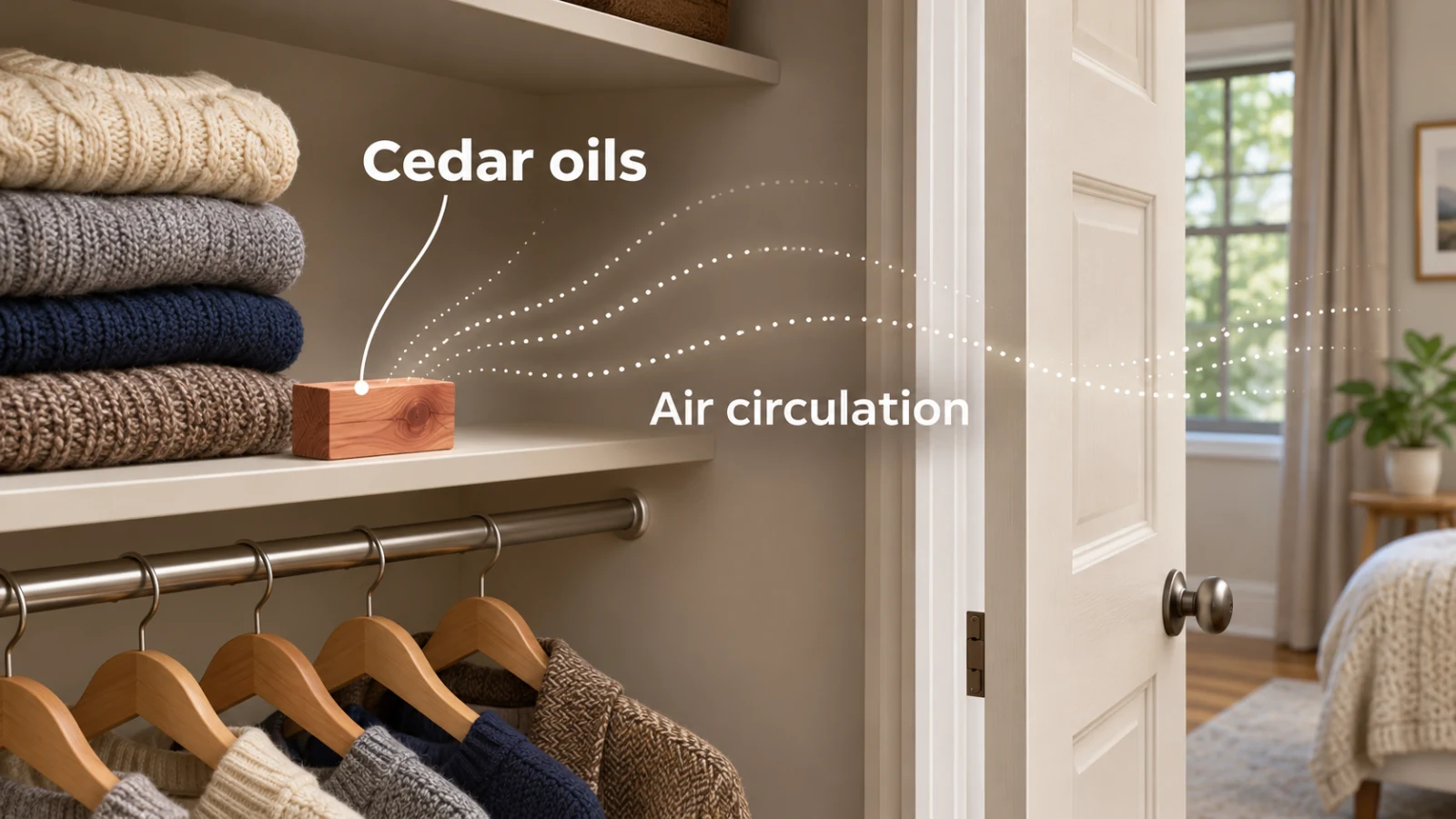
Cedar has some genuine insect-control properties, but that does not make a handful of cedar rings an effective shield for an entire closet. Its oils gradually dissipate, and a ventilated closet cannot maintain the same concentration as an enclosed space. Even fresh cedar oil has limited effect on larger clothes moth larvae.
Lightly sanding an unfinished cedar block can expose fresh aromatic wood. That may restore its scent, but there is no dependable household threshold at which the smell guarantees protection. Avoid applying cedar oil directly to clothes, where it can leave stains.
Lavender is pleasant and convenient, but there is little evidence that ordinary sachets or homemade scented sprays protect textiles reliably over time. Laboratory evidence of activity from some plant oils is not the same as protection from a commercial sachet hanging beside a wool coat.
Mothballs have stronger insecticidal action, but their safety requirements make them unsuitable for everyday use in an open closet or drawer. In the United States, follow the exact pesticide label, including its permitted storage space, container material, amount, duration and precautions. An ordinary closet with a door is not airtight. Keep these products away from children, pets and food, and do not combine pesticide products on your own.
A cedar- or lavender-scented mothball can still contain a conventional pesticide. Read the active ingredients rather than choosing by fragrance. If you prefer to avoid pesticide odors on your clothes, physical protection is usually the more practical choice.
The seal matters most
For clean woolens and seasonal textiles, a secure storage seal provides protection that cedar and lavender alone cannot reliably deliver.
What to Watch For
A mothball odor outside a sealed container means pesticide vapor has escaped into the surrounding air. Do not use mothballs as an open-closet fragrance.
Which option should you choose?
For everyday clothes storage, cedar or lavender can be an optional addition if you enjoy the scent. Prioritize a sealed container for valuable wool, cashmere, yarn or other susceptible textiles that will sit undisturbed for long periods. Make sure they are clean, dry and free of infestation before putting them away. Our guide to preventing wool moth damage covers the broader storage routine.
If you regularly see small moths near textiles, add monitoring rather than buying more fragrance products. A suitable pheromone trap can help reveal adult moth activity and whether it continues over time. The comparison of webbing moth traps explains how to choose an appropriate trap.
Reserve mothballs for situations where you have a label-approved airtight storage space, can comply with every safety instruction and have a genuine reason to use a pesticide. For most uninfested household textiles, clean storage behind a reliable barrier avoids that complication.
When the problem is already inside your clothes
Finding larvae, silken webbing or new feeding damage changes the decision entirely. You need to deal with the affected textiles and the source of the infestation, not simply keep additional adult moths away. If you are unsure which insect is responsible, start by identifying clothes moths before choosing a treatment.
Use the cleaning or treatment method appropriate to the material and its care instructions. Keep affected items separate from clean ones while you address the infestation. Putting cedar blocks in an already infested box or sealing an untreated sweater inside it will not solve the underlying problem.
Explore this topic further: