How-To
Bed bugs in your apartment: first steps for renters
Think you found bed bugs in a rented apartment? Learn what to document, how to limit spread, what to ask your landlord, and how to check local renter protections without guessing who must pay.

Finding a suspicious insect near your bed is unsettling, especially when you rent and other apartments share walls, floors, or utility spaces. Your first move should be to preserve what you found and alert the right person, not to empty the bedroom or start spraying.
You can take useful steps before anyone determines who is responsible for treatment. The immediate priorities are physical evidence, careful handling of belongings, written communication, and a plan that fits your building and local rules.
- Difficulty: Basic observation and reporting; inspection and treatment may require building coordination.
- Equipment: Flashlight, a small sealed container or bag for a specimen, a way to take photos, and access to your lease and written messages.
Get ready without disturbing the evidence
Keep the room usable and the suspected area as undisturbed as you reasonably can until you have documented it. You are trying to give an inspector something concrete to examine while reducing the chance of carrying bugs elsewhere.
Have the following ready:
- A clear photo of the insect or sign, preferably with a reference for size, and a note of exactly where it appeared.
- A safely contained specimen if one is available. A close-up photo alone may not always be enough for identification.
- Your property manager’s contact information and the relevant sections of your lease, building rules, or tenant portal.
Before You Start
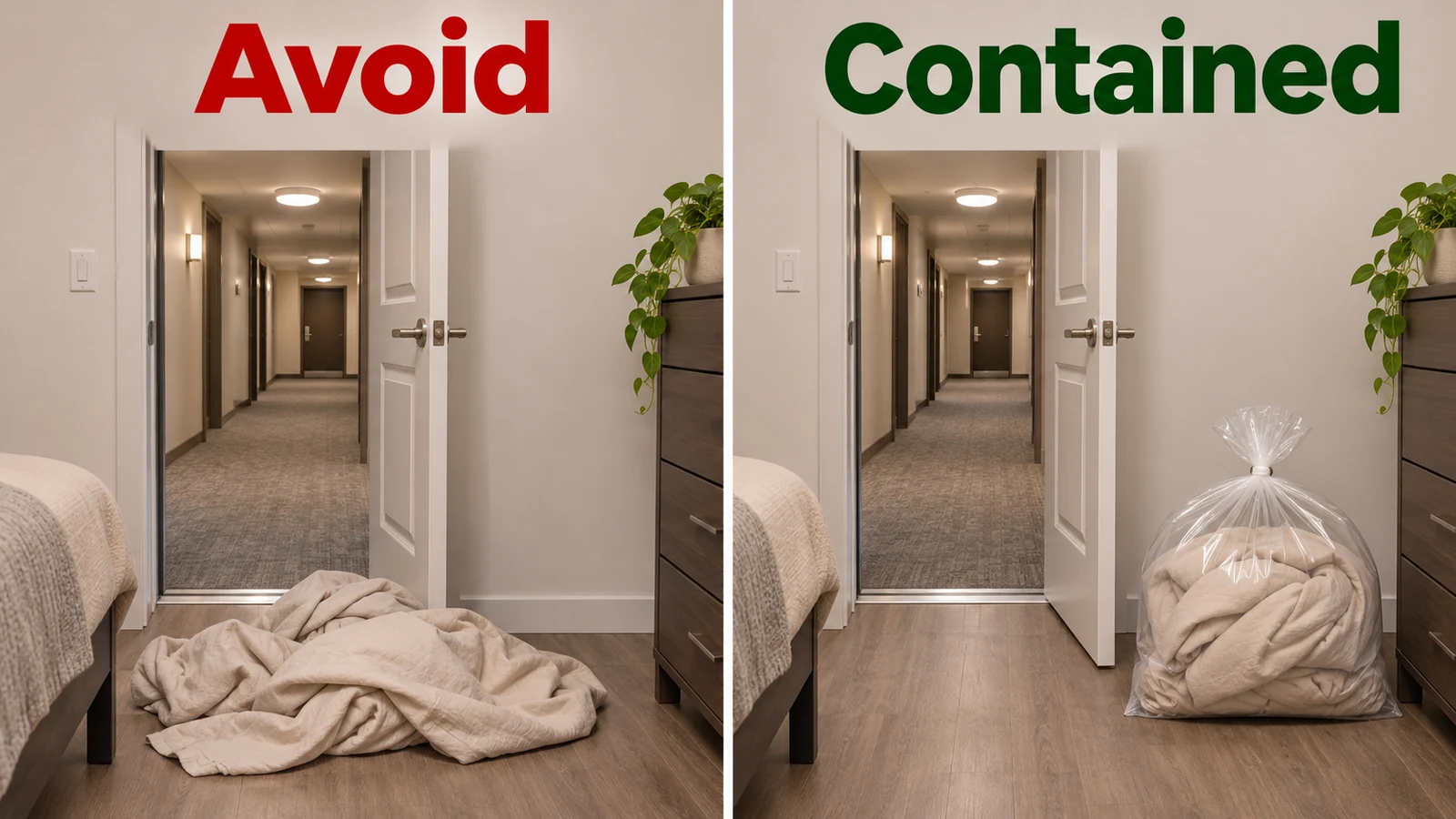
Do not carry loose bedding or furniture into shared hallways, another apartment, or your car to “get it away” from the problem. Avoid bug bombs, rubbing alcohol sprays, and attempts to heat the room with household heaters. These can create hazards, miss hidden insects, or complicate a coordinated treatment.
What to do after spotting possible bed bugs
A physical specimen, shed skin, or characteristic spotting is more useful than a bite alone. Bed bug bites vary from person to person and can resemble other skin reactions, so keep your first report accurate about what you actually observed.
The steps below are for the apartment response: recording, containing, reporting, and coordinating. They do not replace a full inspection or a treatment protocol.
Step 1: Record what you found
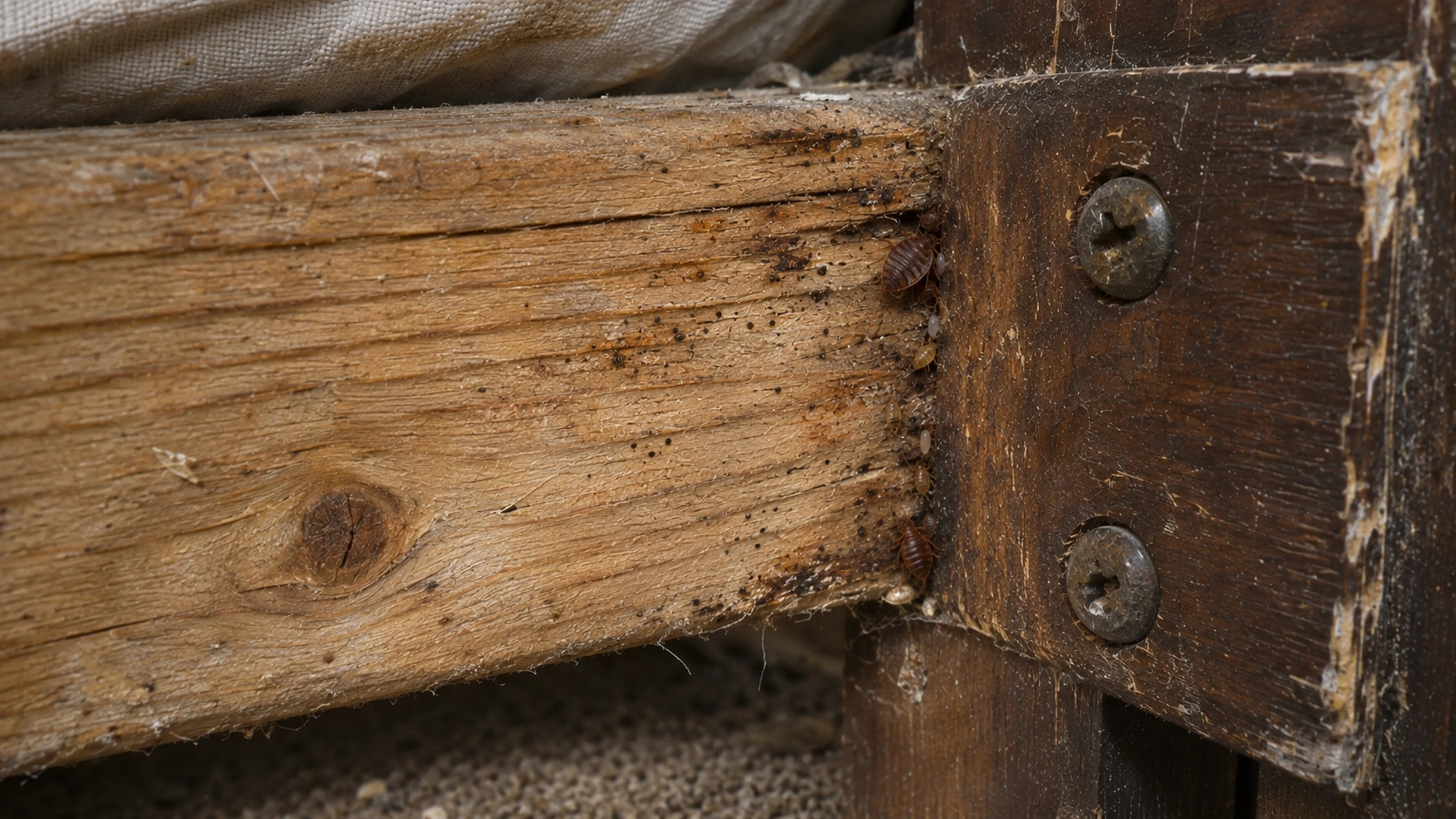
Photograph the insect or mark before cleaning the area, noting the date, room, and precise location, such as a mattress seam or bed-frame joint. If you can collect an insect without spreading it, put it in a tightly closed, clear container for identification. Avoid crushing the only specimen if that would make identification difficult.
Look for supporting physical signs near the finding without dismantling the whole room. If identification remains uncertain, use the guide to signs of bed bugs to decide what deserves a closer check.
Step 2: Keep potentially affected belongings contained
Leave furniture in its usual room while you arrange inspection. If clothing or bedding must be moved for laundering or another necessary reason, seal it where it is before transport, then keep cleaned items separate from untreated ones. Ask management or the pest professional what should be moved and what should stay accessible.
You do not need to throw out a mattress or bag every possession on the strength of one sighting.
Step 3: Report the concern in writing
Contact the landlord, property manager, or designated maintenance channel promptly, even when the identification is still preliminary. State that bed bugs are suspected, describe the physical evidence, attach photos if available, and ask for confirmation of the next inspection step. Use the building’s required reporting channel if one applies, and keep a copy of what you sent.
If you speak by phone or in person, follow up with a short written summary of the date, what was discussed, and any action promised. This makes it easier to resolve confusion over access, preparation, and follow-up.
Step 4: Ask how inspection will be coordinated
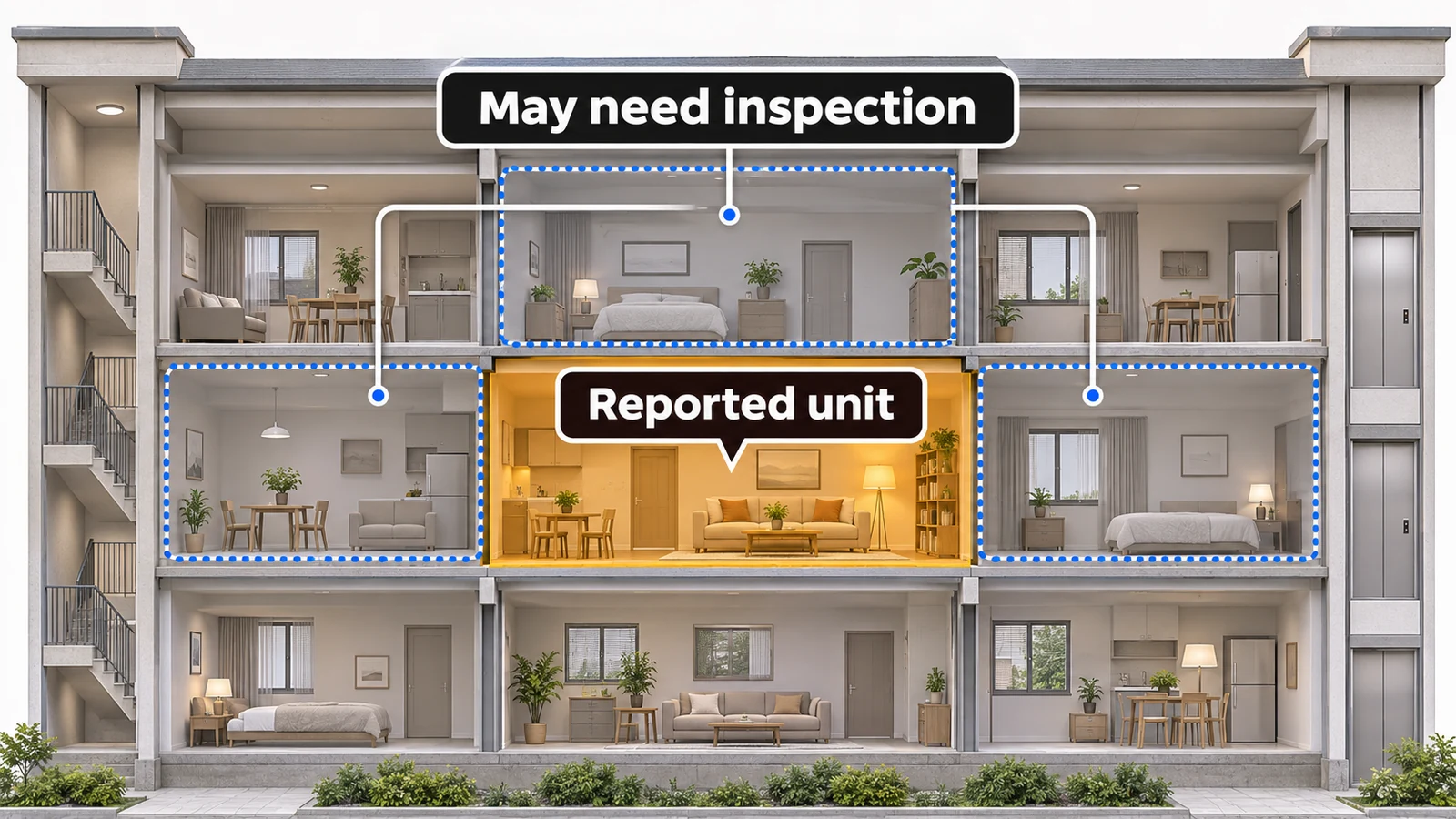
Request a practical answer to three questions: Who will identify the specimen or inspect the unit? When and how will access be arranged? Will the assessment consider connected or nearby units if the evidence calls for it?
Bed bugs can move between apartments, and treatment limited to one room may miss a building-related source. Inspection beyond your unit is a decision for management and the relevant professionals under the building’s circumstances and local requirements, not something you should organize by entering neighbors’ homes. For more about the inspection itself, see what a professional bed bug inspection involves.
Step 5: Check your rights and any proposed charges locally
There is no single nationwide answer to “My apartment has bed bugs, what are my rights?” Rules about inspection, notification, pest removal, access, disclosure, timelines, and who pays can differ by state, city, housing program, lease, and circumstances.
Check your state and city or county housing rules, any applicable health department guidance, and the lease. Ask management to explain in writing which rule or lease provision supports a requested charge, inspection procedure, or preparation requirement. A lease clause is relevant, but its enforceability is a separate local-law question.
A landlord’s claim that a tenant “brought in the bugs,” or a tenant’s belief that the landlord always pays, is not by itself a reliable legal conclusion. Before withholding rent, paying for an outside exterminator with the expectation of reimbursement, refusing lawful access, or breaking a lease, obtain advice from a local tenant-rights organization or qualified legal professional.
Step 6: Prepare for the agreed inspection or treatment
Once the inspector or treatment provider gives you specific instructions, confirm what needs laundering, bagging, moving, or leaving in place. Ask which rooms will be inspected, whether residents or pets must leave, how to handle sensitive belongings, and what follow-up is planned.
Keep the written instructions and appointment confirmations. For treatment methods themselves, use the practical bed bug treatment plan rather than improvising a second program alongside a building-wide response.
What not to do while you wait
Trying to make the apartment look spotless before an inspection can remove useful clues. Photograph the evidence first, and ask before moving large furnishings or applying products. Ordinary cleaning and necessary laundry can still be managed carefully.
Focus on three common mistakes:
- Relocating to the couch or another room: Moving your sleeping location and belongings can complicate finding and containing the activity.
- Leaving discarded furniture in a shared area: An untreated item can carry bugs to another household. Check the building’s disposal instructions before taking anything out.
- Applying sprays or dusts without a coordinated plan: Use only products labeled for bed bugs and the intended surface, following all directions. Do not use a fogger as your sole treatment.
How to tell whether the response is progressing
A useful response gives you more than a vague promise to “spray.” You should be able to identify what was examined, whether bed bugs were confirmed, what action is planned, and how additional findings will be handled.
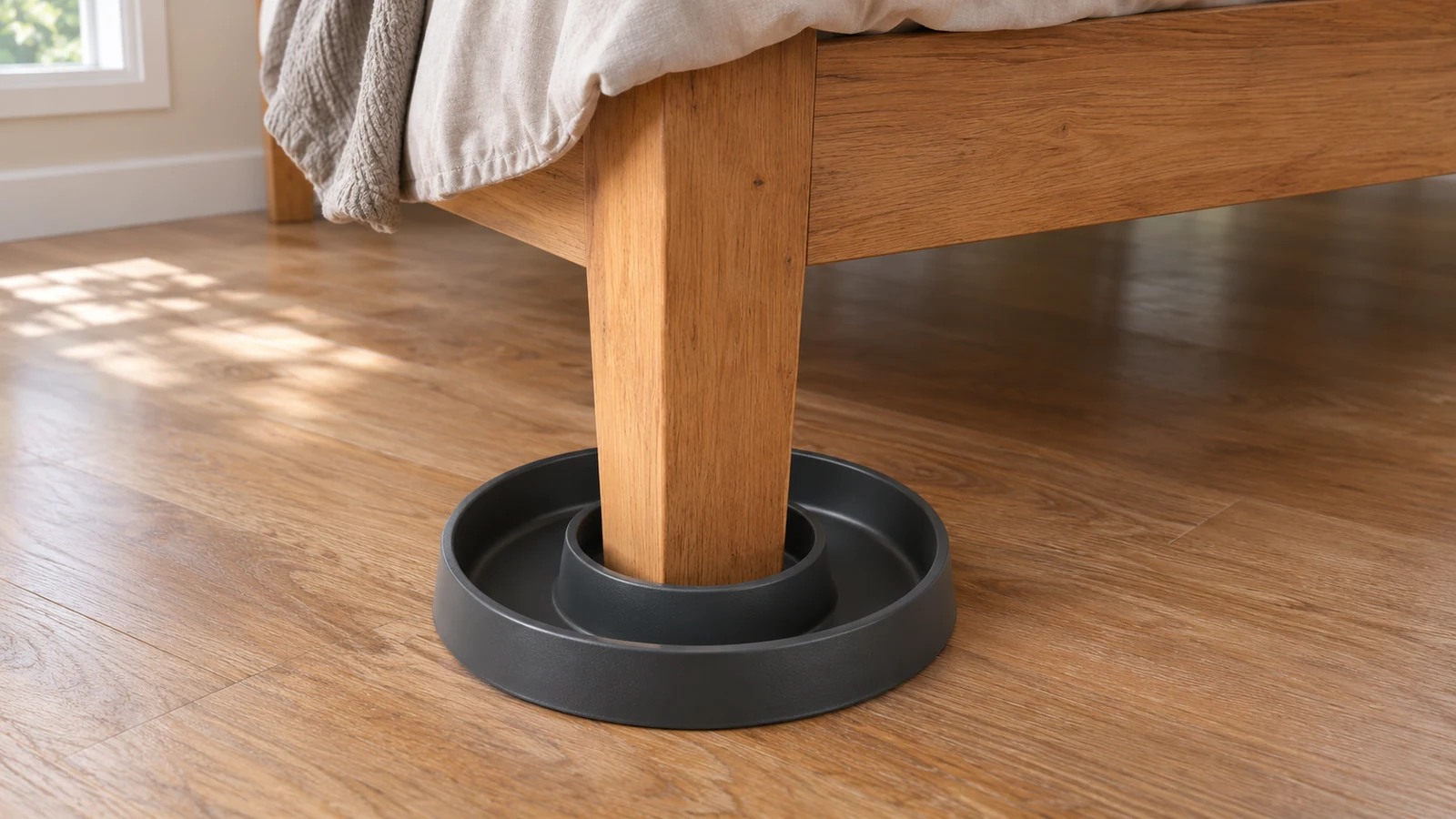
After inspection or treatment, watch for new physical evidence and keep its location and date. A period without bites is not a dependable way to judge success. If bed bugs are still found, report that evidence rather than assuming one treatment failed or succeeded based on a single day.
Expected Result
The practical result of these first steps is a documented report, preserved evidence, and an agreed next action, such as identification, inspection, or a treatment and follow-up plan. Elimination may take additional visits and cannot be promised from the first response alone.
If the landlord does not respond or the plan stalls
Send a written follow-up referring to your original report, attach any new evidence, and ask for a specific reply about inspection and access. If the response remains inadequate, find the city or county housing-code or health authority that handles rental pest complaints in your area; not every agency has the same enforcement powers.
If management demands payment, denies an inspection despite credible evidence, or disputes who is responsible, keep copies of the messages and seek jurisdiction-specific tenant assistance before taking a step that could affect your rent or lease.
When Should You Call a Professional?
A qualified bed bug inspector is especially useful when physical evidence is inconclusive, activity continues, or several units may be involved. In a rental building, ask management how that assessment will be arranged before booking services yourself. A single unexplained skin mark is usually a reason to look for evidence, not an automatic reason to pay for treatment.
Follow up without losing the paper trail
Keep a simple record of new sightings, dates of inspections, instructions received, treatments performed, and any planned recheck. If another insect appears after a visit, provide a fresh photo and exact location rather than relying on a general statement that the bugs are back.
If the issue is being handled across apartments, continue using the agreed communication channel. Report only what you know about your own unit; the building team is responsible for managing access and information about other residences.
Explore this topic further: