Identification
Carpet moths: signs to check in rugs and carpeting
Use the rug’s fibers, hidden damage, larval traces and look-alikes to investigate suspected carpet moths and decide which next check matters.

You move a sofa and discover a thinned patch in a wool rug. Perhaps a small tan moth flies nearby. Before treating the room, find out whether the loss of fibers is connected to an insect, where it started, and whether anything is still feeding.
“Carpet moth” is a loose household name. Some textile-feeding moths damage rugs, and there is also a specifically named carpet or tapestry moth that is uncommon in U.S. homes. The more familiar webbing and casemaking clothes moths can feed on wool carpeting. Carpet beetles and ordinary wear are other possibilities.
Signs that point to moth feeding in a rug
Start with the material. Clothes moth larvae feed mainly on animal-based fibers such as wool, fur and hair. A wool area rug or a wool-blend carpet is more susceptible than a carpet made entirely of synthetic fibers. Check the rug backing and pad as well; their materials may differ from the visible pile.
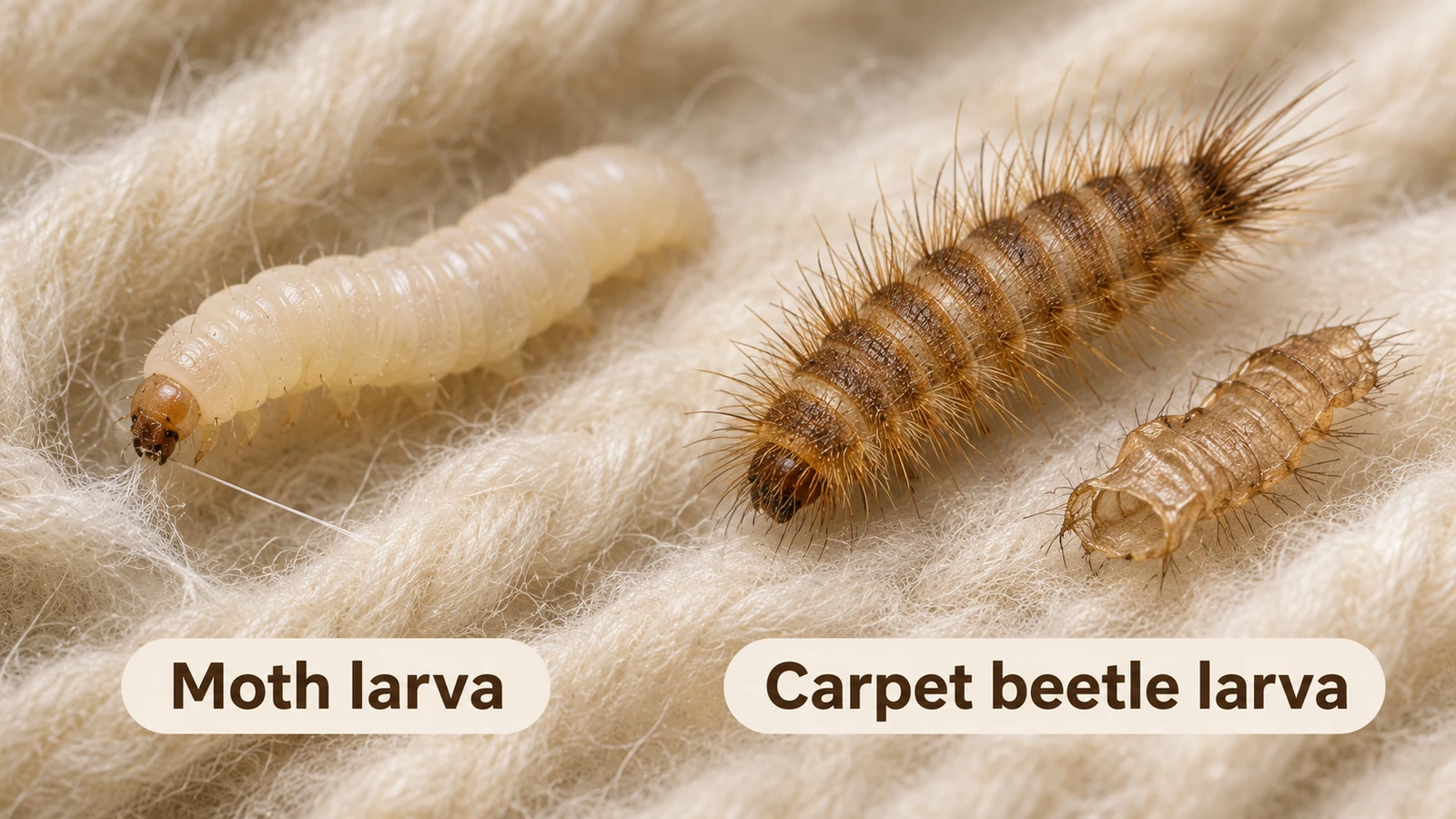
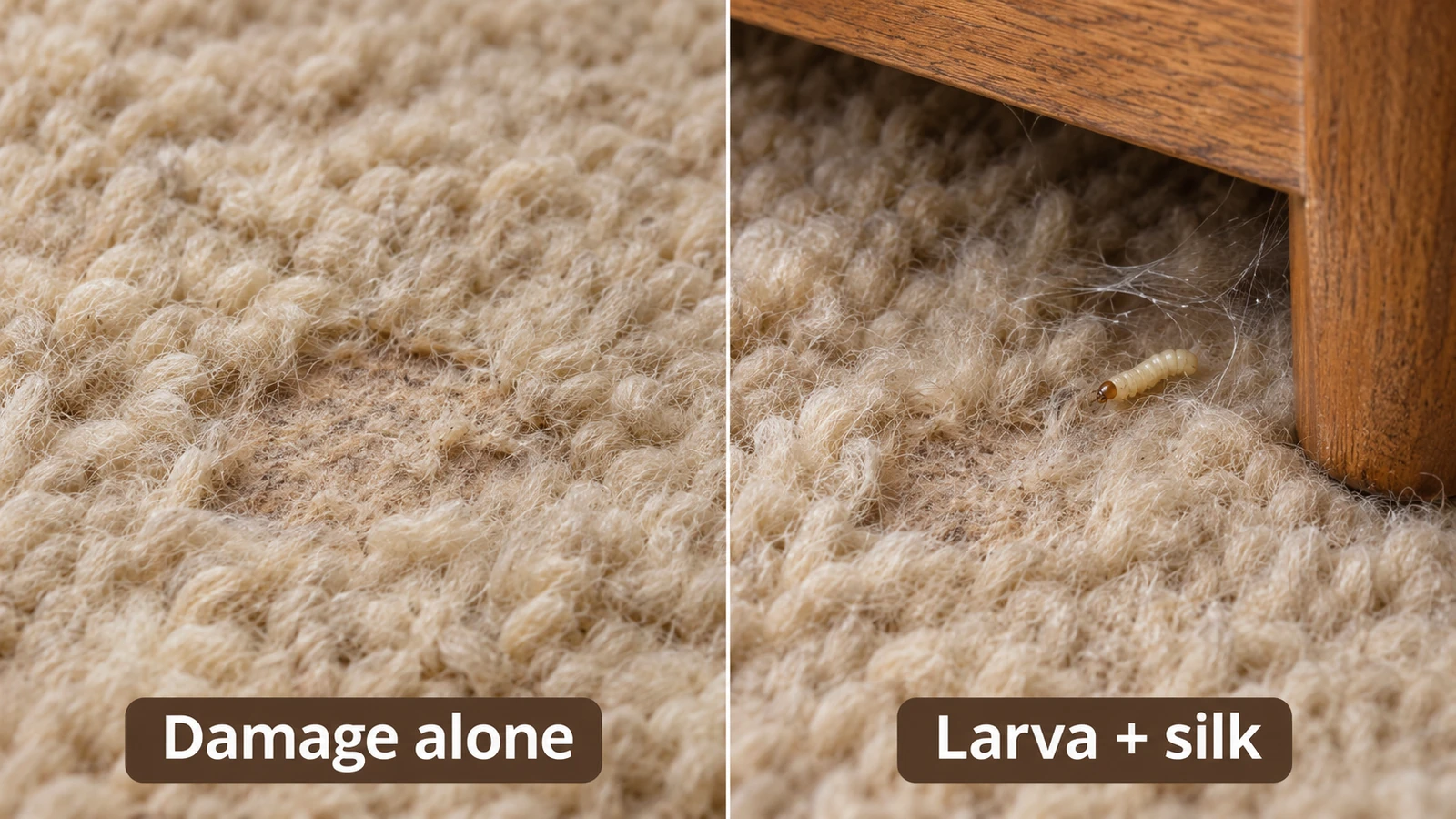
Look for irregular surface grazing, shortened tufts or small bare patches, especially in dark, undisturbed areas beneath furniture and along edges. Stronger evidence includes a pale larva with a brownish head, fine silk across the fibers, a silken feeding tube, or a small portable case covered with fibers. The larvae, rather than the adult moths, are responsible for feeding damage.

Identification in 30 Seconds
- Check whether the damaged pile, backing or pad contains wool or other animal fibers.
- Look closely for a pale caterpillar-like larva, fine silk or a fiber-covered case among the thinned fibers.
- Compare protected spots under heavy furniture and along rug edges with open, frequently walked-on areas.
- If you see a brown, bristly larva or a hairy cast skin, investigate carpet beetles instead.
Silk can hold bits of rug fiber and granular debris, making it easy to mistake for ordinary lint. A casemaking larva may carry a narrow case that takes on the rug’s color. These are worth inspecting carefully, but a dusty tuft by itself is weak evidence.
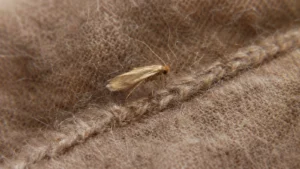
A small golden or tan moth nearby adds context only when you find matching textile-feeding evidence. An adult sighting cannot tell you which rug, if any, contains feeding larvae.
Where to inspect before cleaning
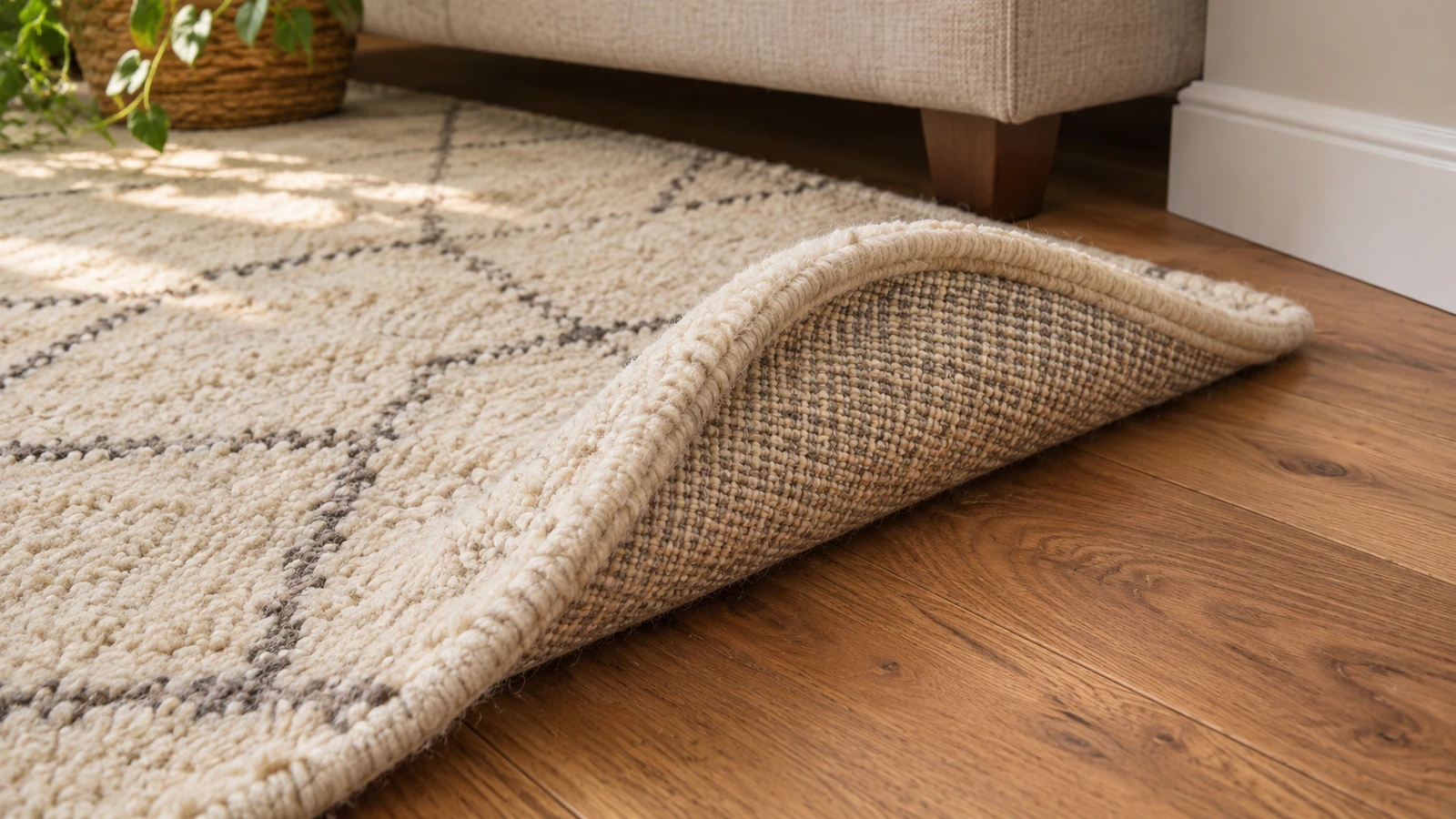
Examine the suspect area with a flashlight while the evidence is still in place. Photograph the thin patch and any insect or case you find. On a removable rug, gently raise an edge to look at the underside without pulling loose threads or stressing the binding.
Focus on places that stay sheltered: under sofas and beds, along baseboards, at the edges of wall-to-wall carpet, beneath rug pads, and beside stored or rarely moved wool items. Pet hair and lint in nearby crevices can also support fabric pests, even when the visible carpet is synthetic.
Work outward from the affected spot:
- Separate the pile gently and look for larvae, silk, cases or bristly shed skins at the boundary of the damage.
- Check the underside of a movable rug and its pad, then compare a nearby section that still looks intact.
- Look at adjacent wool blankets, upholstered furniture or stored textiles for matching evidence.
- If the carpet is fixed in place, inspect accessible edges rather than tearing up tack strips or padding.
If you can safely collect a specimen, keep it in a clear sealed container or take a sharp close-up photo. An identifiable larva is far more useful than an indistinct picture of a hole. Once you have documented the area, vacuum reachable dust and lint without damaging the textile.
Identification Mistakes
- Calling every worn or flattened carpet patch moth damage.
- Assuming one adult moth or a clump of dust identifies the source.
- Ignoring carpet beetles because the damaged item is a rug.
Key Clue
A live, pale moth larva or portable silken case found with silk and newly thinned wool in a sheltered area is much stronger evidence of moth feeding than a bare patch alone.
What to Watch For
Carpet beetle larvae are typically brown and bristly, and their shed skins can resemble tiny hairy shells. They may damage wool in similar places, so identify the larva before choosing a moth-specific response.
What the combination of clues means
Consider the fiber, the insect and the exact location together. Wool damage beside silk and a smooth, pale larva makes clothes moth activity likely. Bristly larvae or their cast skins point more strongly toward carpet beetles. A rubbed path where people walk or furniture shifts, with no insect traces, makes mechanical wear a better first explanation.
There is a difference between old damage and current activity. Holes remain after a pest is gone. Freshly observed larvae, new grazing around a previously documented patch, or activity in nearby wool items give you a reason to investigate further.
Use these patterns to choose your next check, not to identify an insect from the shape of a hole.
| What you find | Best interpretation | Next check |
|---|---|---|
| Thinned wool with silk and a pale larva | Moth feeding is likely | Inspect the rug underside and nearby animal-fiber items |
| Brown bristly larvae or hairy shed skins | Carpet beetles are more likely | Check sheltered edges and lint-rich spaces for matching larvae |
| Flattened or abraded pile in a traffic area, without pest traces | Wear is more plausible | Compare with sheltered sections and document any new loss |
| An adult moth but no textile evidence | The source is still unknown | Inspect nearby wool items before blaming the carpet |
How extensive is the problem?
One unexplained worn spot with no larvae or silk calls for careful observation, not automatic whole-room treatment. A live larva or clear silk near the damage deserves a wider check of that rug and neighboring animal-fiber materials. Similar active findings beneath several rugs or around upholstery suggest a more dispersed source.
Watch the same locations for newly appearing fiber loss or fresh insect evidence. A valuable, fragile or antique rug needs especially gentle handling; forceful vacuuming, soaking or improvised heat can harm the textile while leaving the diagnosis unresolved.
The important distinction is between a localized finding you can inspect and clean safely, and activity that continues in concealed or hard-to-reach material. A single specimen does not tell you the full extent of an infestation.