
How-To
Argentine Ant Control: Identify the Source and Stop Recurring Trails
A species-specific Argentine ant control plan: check the identification, follow active trails, choose labeled slow-acting bait, and monitor entry points before declaring success.

You wipe a line of tiny brown ants from the kitchen counter. An hour later, another line follows the same edge. The insects you removed were only the workers searching for food, and the nest may be somewhere outside the house.
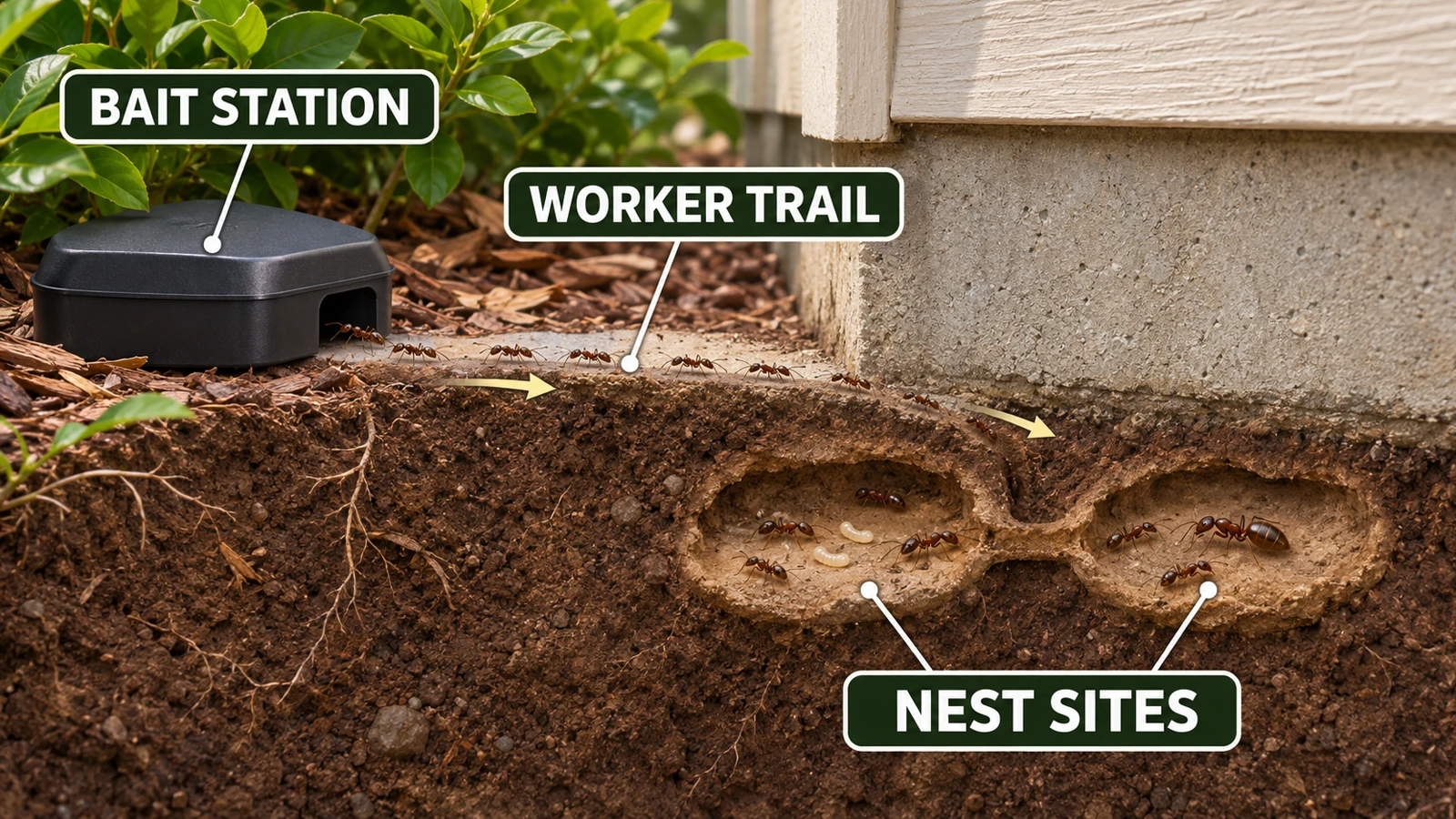
Argentine ants can use several connected nesting sites with multiple queens. Effective control starts with figuring out which ant is present, where its trails lead, and why workers are entering. The goal is to reduce that activity at its source and keep it from returning indoors.
- Time Required: Allow for repeated bait checks over the following days and, with persistent activity, several weeks.
- Difficulty: Moderate. Tracing trails and maintaining suitable bait are usually harder than removing visible ants.
- Equipment: Flashlight, hand lens, cleaning supplies, caulk, and protected ant bait stations labeled for the intended location.
Before You Treat: Identify the Ant and Trace Its Route
Argentine ant (Linepithema humile) workers are small, generally around 1/8 inch (3 mm), and fairly uniform in size and dull brown color. They often form organized, busy trails along foundations, sidewalks, branches, and baseboards. Under magnification, workers have one upright node at the narrow waist between the middle and rear body sections.
Those clues make an identification plausible, not certain. Odorous house ants look similar, but their waist node is less conspicuous, and their nesting patterns can differ. Compare the ant with our guide to common types of ants in the U.S. and, when the two seem alike, the page on odorous house ants. If identification is still unclear, a clear close-up or a specimen can help a local extension office or pest professional check it.
Before cleaning away the whole trail, follow workers in both directions if you can. Look for a gap where they enter the building and for activity under mulch, stones, planters, irrigation lines, or boards. Check shrubs for aphids or other insects that produce sweet honeydew. An ant trail crossing a patio may connect a food source to several outdoor refuges, not one large visible mound.
Before You Start
Use only ready-to-use bait or other products whose U.S. label permits the exact location and pest-control use. Keep bait inaccessible to children and pets, and away from food-preparation surfaces. Do not make an improvised pesticide mixture or apply a spray over an active bait station.
Control Argentine Ants at the Source
Argentine ants share food among workers and nestmates. A suitable slow-acting bait gives foragers time to carry its active ingredient away from the feeding site. Killing a visible row with contact spray removes workers but may leave queens and many nest sites active.
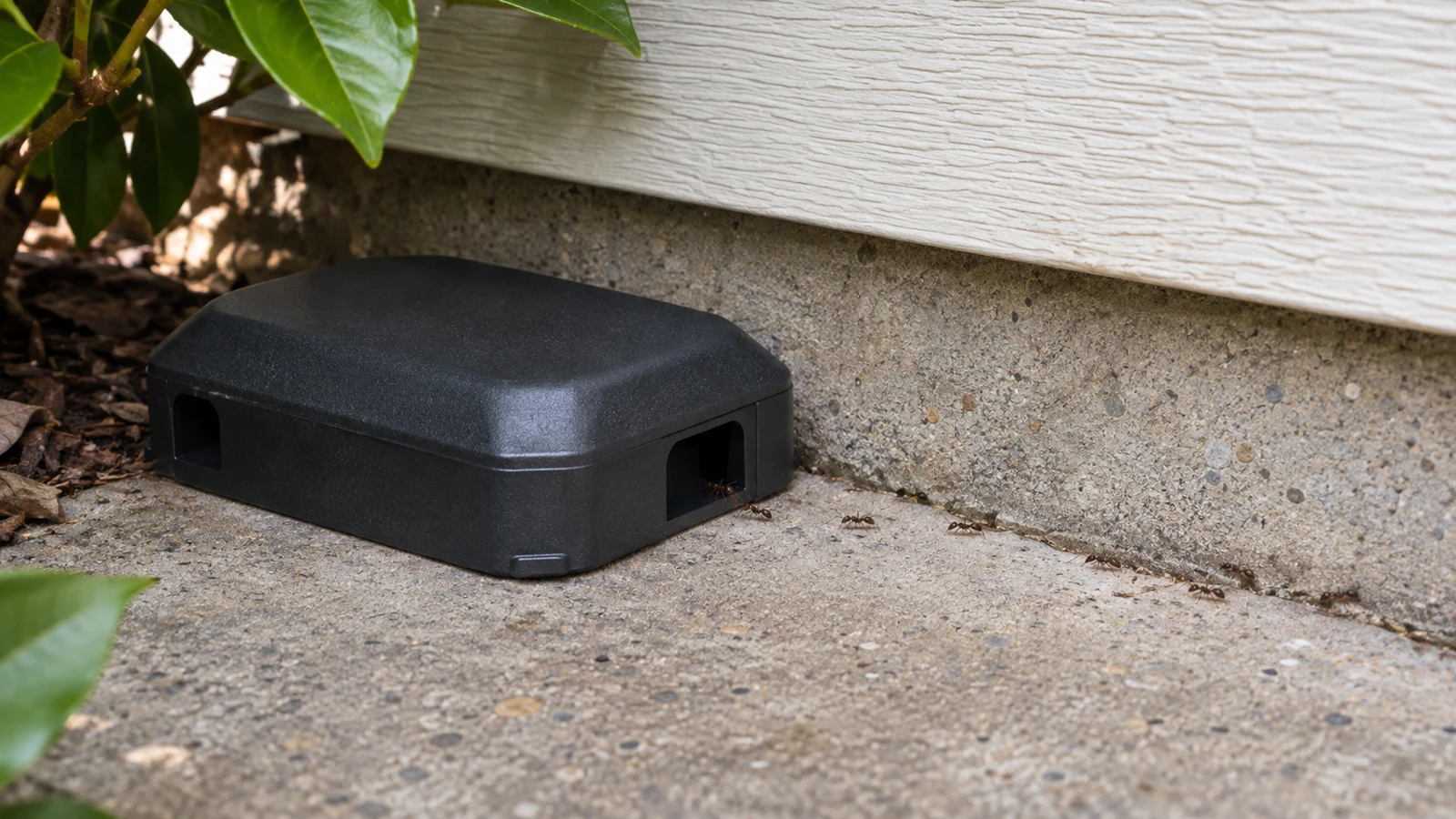
Work along the route ants already use. Outdoor placement near trails is usually preferable when a product is labeled for it, because placing attractive bait deep inside a home can draw more workers indoors. For a route that exists only inside, use a protected indoor-labeled station as directed.
Step 1: Remove competing food and moisture
Clean up sticky spills, food crumbs, and accessible pet food. Store pantry items in closed containers and address dripping fixtures or wet areas near the trail. Outdoors, check standing water, irrigated mulch, and shrubs supporting honeydew-producing insects.
Do not mistake cleaning for colony treatment. It removes alternatives that compete with bait and makes routes easier to follow. Leave a short active path to the chosen bait undisturbed while workers are feeding.
Step 2: Select bait the workers will actually take
For Argentine ants, sweet liquid bait in a protected station is often attractive. Food preferences can shift, so an ignored station may need a different labeled bait type or placement rather than a stronger homemade mixture. Bait intended for a different ant species, such as a fire ant granule, may be a poor match.
Check that the product label permits use at your chosen site, whether that is outdoors along a foundation or at a protected indoor location. Our guide to ant bait formats explains the differences among stations, gels, and granules without replacing the instructions on the specific package.
Step 3: Keep the bait available while ants feed
Position a labeled station close to an active foraging route, sheltered from weather where the label allows and beyond children’s and pets’ reach. Workers may gather around it at first. That activity shows they found it, not that the colony is already controlled.
Check the station regularly. Replace or replenish bait only as its label directs when it is empty, dried out, or no longer being accepted. Avoid spraying along the route or immediately around the station: contact treatments can disrupt foraging before the bait is carried back.
Step 4: Close the routes that lead indoors
As traffic declines, seal observed cracks around pipes, windows, and doors, while leaving required ventilation intact. Trim branches that touch siding and pull heavy mulch or leaf litter away from the foundation where practical.
If workers switch to another gap, trace that route instead of spraying every new line. Argentine ant colonies may have multiple connected nest sites, and changes in rain, soil moisture, or outdoor food can shift where ants travel.
Avoid These Mistakes While Baiting
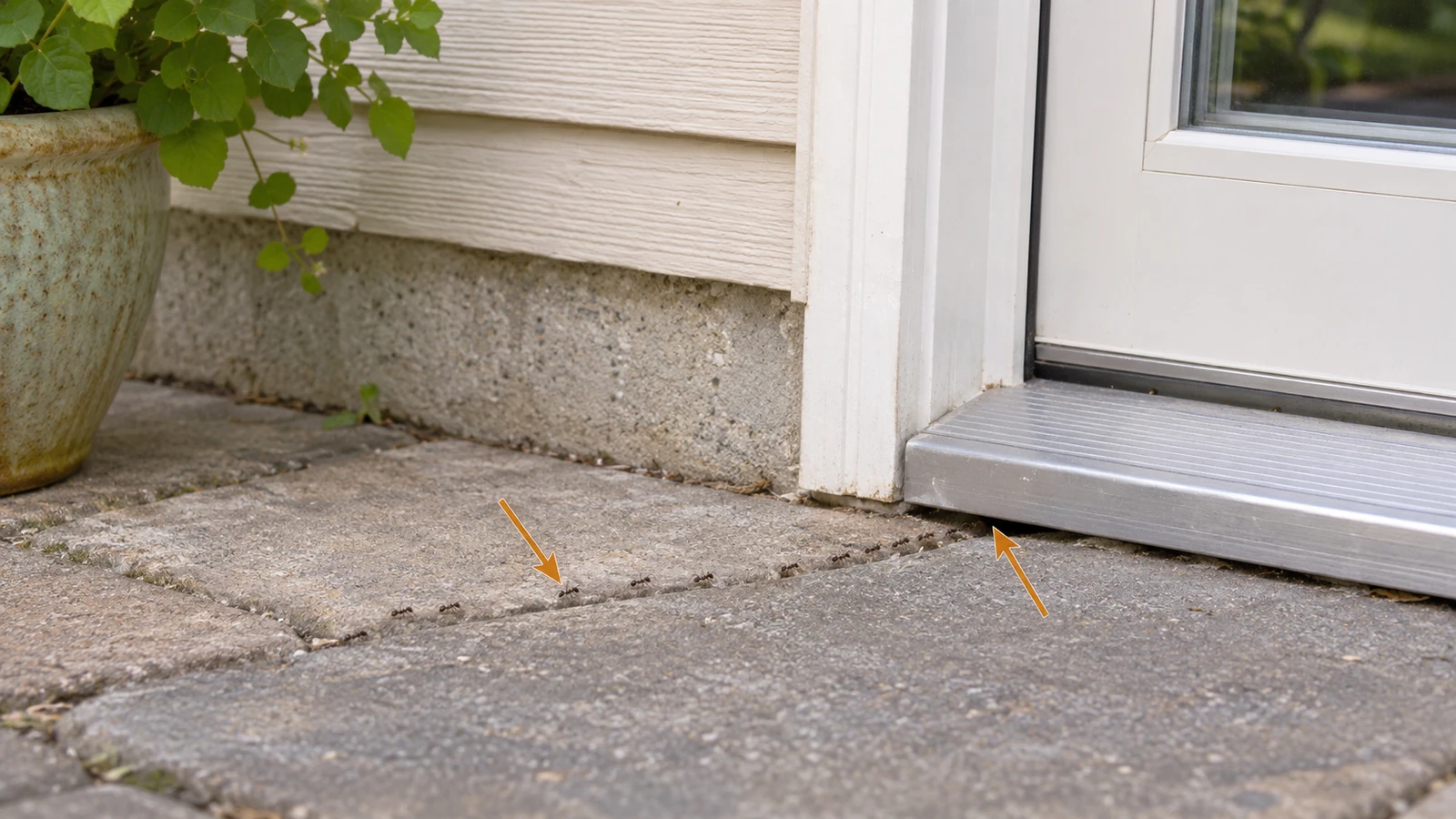
A leafy branch touching the house can act as a bridge, even after the entry point at ground level has been sealed. Ants may also keep feeding outside on aphid honeydew or food scraps while ignoring a bait station nearby.
Watch the conditions around the station rather than treating every visible ant as a failure. Workers arriving in numbers can be a normal early response to attractive bait. A dried-out or contaminated station, however, may stop drawing them and needs attention under its label.
The most common setback is switching tactics too quickly: spraying the ants at the bait, moving stations repeatedly, or assuming that one quiet day means the nest network is gone. Keep the route and bait under observation long enough to recognize the direction of change.
How to Check Whether Control Is Working
Revisit the same entry cracks and indoor trouble spots while ants would normally be foraging. Look for a sustained reduction in workers crossing into the home, not just fewer dead ants near a station. Compare the original route with nearby alternate paths.
Expect some variation in activity. A sudden crowd at the bait may occur before numbers fall; an empty station may mean the product was consumed, not that the colony disappeared. Check whether fresh trails are appearing elsewhere around the foundation.

When activity remains low across the areas that were previously active, keep the sanitation and exclusion measures in place. If new trails repeatedly replace old ones, treat that as evidence that the source or alternate access points need another look.
Expected Result
Workers enter through the usual gaps less often over repeated checks, and no new active route replaces them nearby. The goal is sustained relief indoors, not a single day without ants.
If the Argentine Ants Keep Coming Back
First check whether ants are taking the bait, whether an alternate food source is competing with it, and whether the station has dried out or is poorly placed. A change in feeding preference can make a previously attractive bait less useful. Select a different labeled option or move the station to a confirmed route before escalating to more pesticide.
If the same problem recurs after reasonable exclusion and baiting, consider whether trails originate from a neighboring yard, shared building wall, inaccessible void, or several outdoor nesting areas. These situations call for a wider assessment, not simply another round of killing foragers.
When Should You Call a Professional?
A qualified pest management professional is worth considering when heavy invasions persist despite properly used baits and exclusion, nests are inaccessible, or several apartments or connected properties share the problem. Ask how the service will identify the species, address exterior sources, and check results. One brief trail does not automatically require professional treatment.
A quick way to decide what to adjust is to match what you see with the most likely practical issue:
| What you see | What may be happening | What to check next |
|---|---|---|
| Workers walk past the bait | Food competition or an unattractive bait type | Remove accessible food and reassess a different labeled bait or placement |
| Many workers crowd the station | Workers are recruiting to an attractive food source | Keep the station protected and watch the trend at house entry points |
| A trail disappears, then returns elsewhere | Alternate routes or connected nest sites remain active | Follow the new path and address moisture or access gaps |
| Bait dries out or is emptied repeatedly | The feeding supply is no longer maintained | Replace or refill according to the label and check for continued uptake |
Keep Up the Follow-Up
After the main trails decline, maintain sealed openings, manage leaks, and keep branches and mulch from creating easy access. Pay particular attention when weather or irrigation changes, since nest sites and foraging routes can shift.
A large outdoor network may extend beyond one yard. Long-term success is keeping workers from repeatedly entering living spaces, not promising that every Argentine ant in the neighborhood has been eliminated. For broader clues about what attracts ants indoors, see our guide to ants in the house.
Explore this topic further:
Outdoor ant control: how to get rid of ants around the house


