How-To
How to get rid of gnats in the house by removing their source
A trap alone rarely ends a recurring gnat problem. Match the small flies to food waste, damp plant soil, drains, or another moisture source, then follow the right cleanup and monitoring steps.
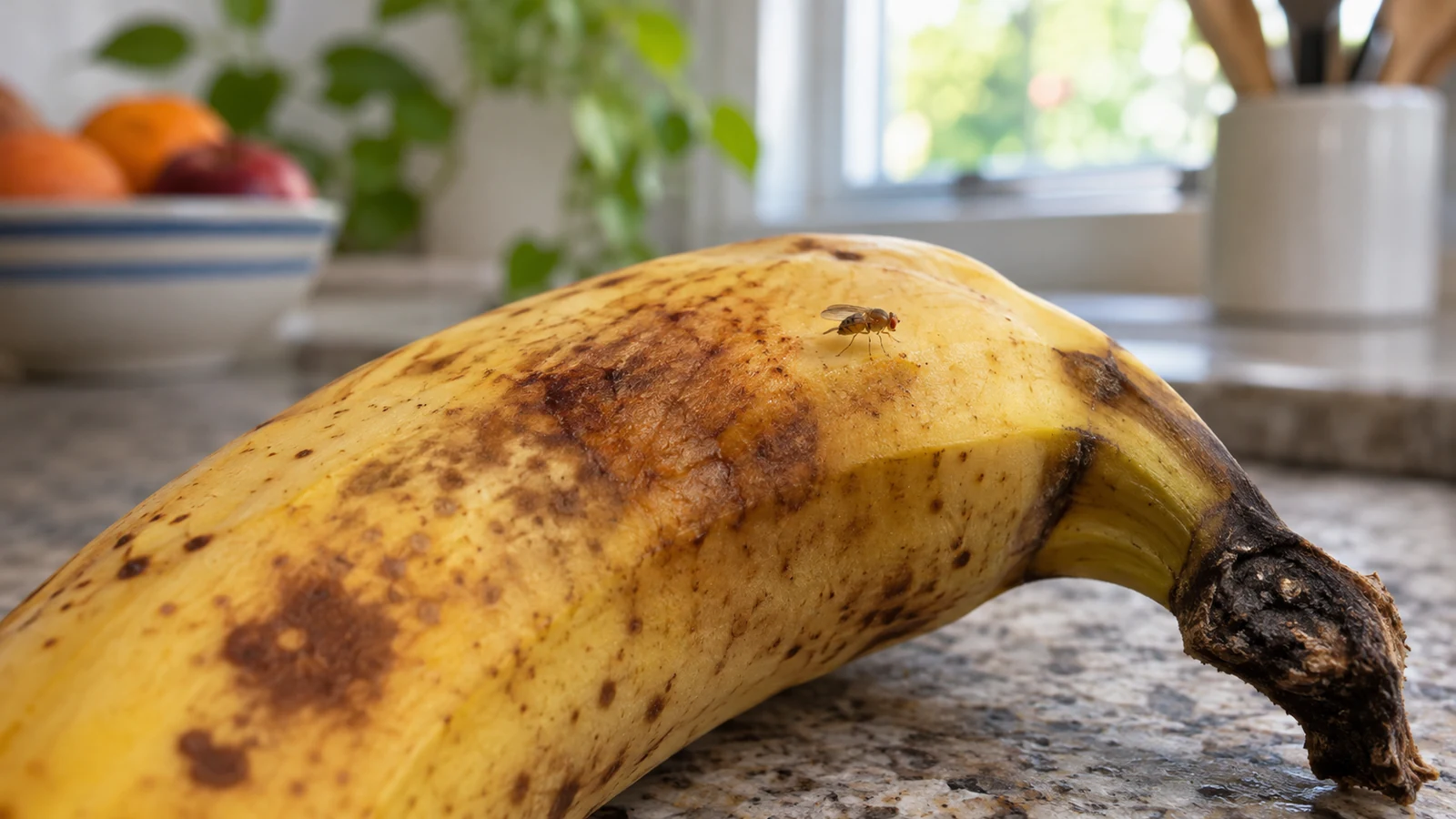
Tiny flies seem to vanish after you clean the kitchen, then reappear around the sink or window the next morning. The adults are easy to notice, but their breeding material may be tucked beneath a trash-can liner, inside a damp pot, or along a drain.
The fastest useful move is to find which source is producing them. “Gnat” is a loose household name for several small flies, and each needs a different correction.
- Time Required: One focused source check and cleanup, followed by brief checks over the next several days.
- Difficulty: Basic for accessible kitchen waste, houseplants, and drain openings; concealed moisture or plumbing problems may need help.
- Equipment: A flashlight, trash bag, cloth, suitable cleaning brush, and, if useful, a source-specific adult-fly trap or yellow sticky card.
Find the source before treating the room
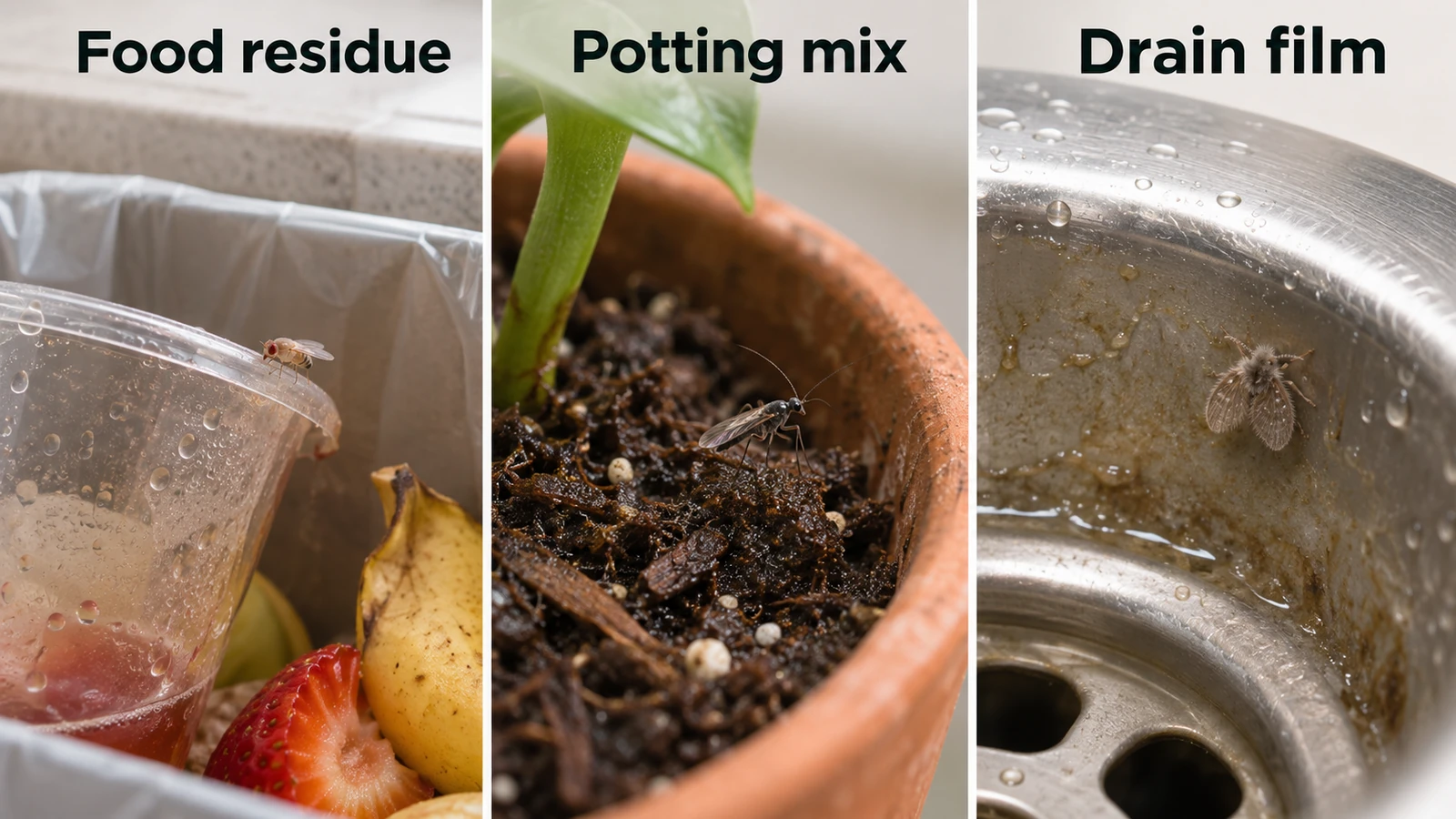
Watch where new flies repeatedly appear, not only where they settle near a bright window. Check their shape and the nearby material. Use these clues to choose an initial branch:
- Fruit or food waste: Small, often tan flies gathering around ripe produce, sticky drink residue, recycling, or a trash container suggest fermenting material.
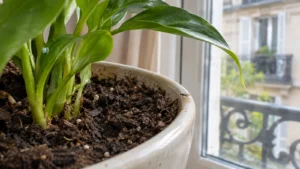
- Houseplants: Slender dark flies lifting from potting mix when a pot is moved or watered suggest fungus gnats in damp growing media.
- Drains and damp walls: Tiny, fuzzy, mothlike flies resting around a sink, shower, or floor drain point toward drain-associated breeding material.
- No clear match: Small flies that run before flying, an unexplained leak, a wet appliance tray, or damaged window screens warrant a different source check.
An insect by a sink is not automatically a drain fly. If two sources seem plausible, start with the one supported by both the insect’s appearance and repeated activity, then check the other if the problem continues.
Before You Start
Work only on household areas you can reach safely. Never mix bleach with other cleaners or pour insecticides into drains unless the specific product label permits that use. Keep traps and cleaning supplies away from children, pets, and exposed food.
Remove gnats by treating the source that fits
Choose the relevant branch below rather than treating every kitchen surface, plant pot, and drain. Fly larvae develop in suitable material, so catching airborne adults is usually a supporting measure, not the main fix.
Step 1: Remove fermenting kitchen residue
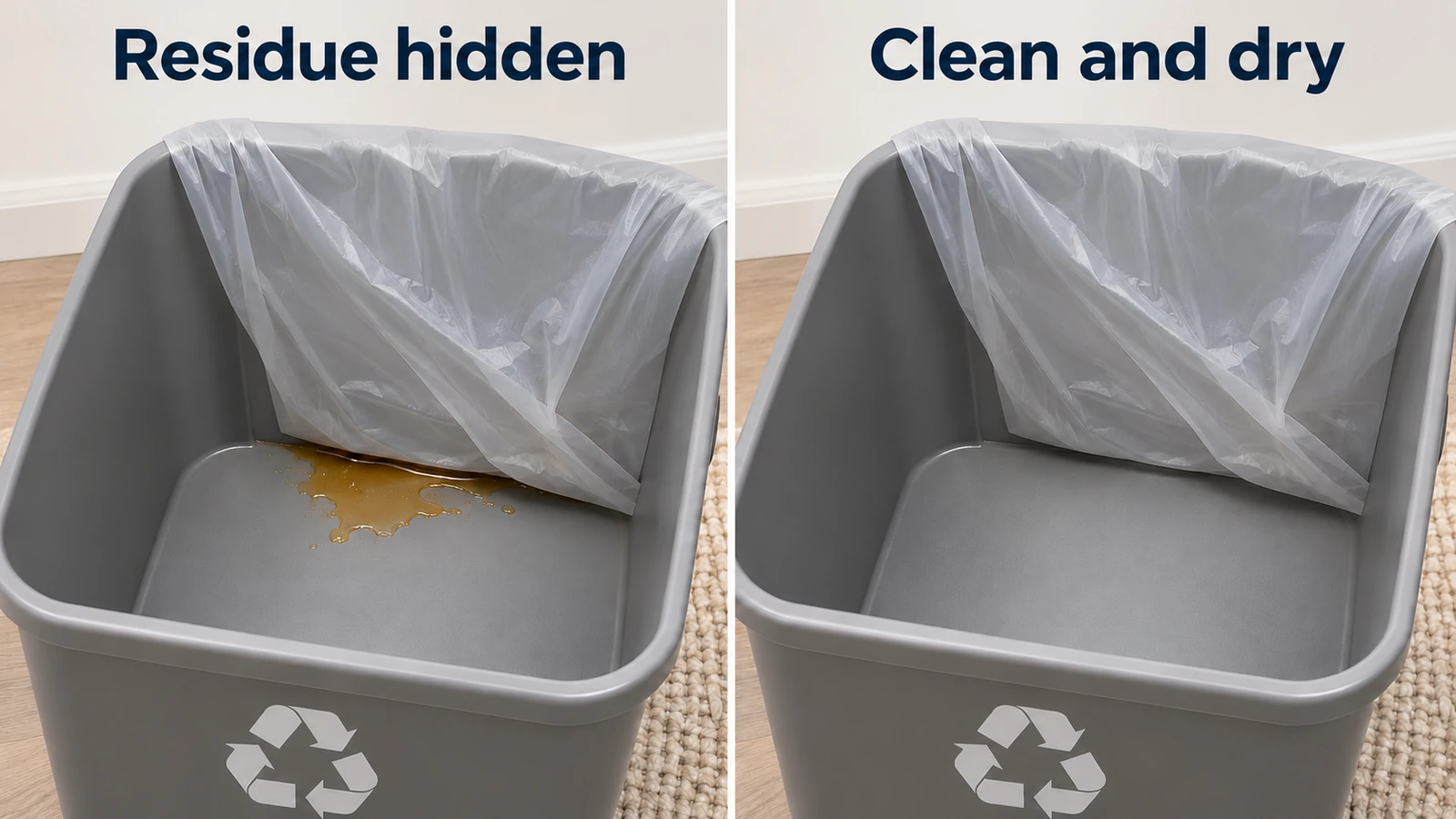
If the flies cluster around fruit, bottles, or food waste, discard spoiled material and empty the affected trash or recycling. Rinse bottles and cans that held sugary drinks, wipe sticky spills, and clean the underside of lids and the bottom of removable bin liners or containers.
A hidden pocket of liquid or decaying food can keep producing flies after the counter looks clean. Focus on the material that attracts them, rather than setting traps throughout the room before checking it.
Step 2: Reduce excess moisture in houseplant pots
When small dark flies lift from a particular pot, check how wet its growing mix stays and whether water collects in the saucer. Adjust watering to the plant’s needs and let the upper growing medium dry between waterings when the plant tolerates it. Clear away decaying leaves on the surface.
A yellow sticky card near the pot can catch adults and help you see whether activity continues. It will not remove larvae already living in the mix. For a closer source check, see our fungus gnat identification guide.
Step 3: Remove drain buildup only when the drain is implicated
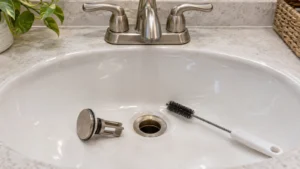
If fuzzy flies keep emerging near one accessible drain, inspect its removable cover, strainer, or stopper for wet organic film. Clean the accessible buildup with a suitable brush and rinse as appropriate for the fixture. Do not dismantle concealed plumbing or use chemical drain treatments at random.
Slime can remain attached inside a pipe even when water runs freely. For a confirmed drain source, the separate drain fly cleaning method explains the more detailed work.
Step 4: Catch remaining adults with the right monitoring tool
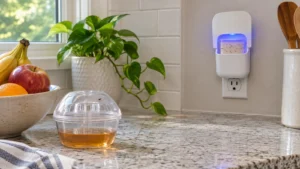
For flies attracted to fermenting food, a properly maintained fruit-fly bait trap can catch adults after the food source is removed. For suspected fungus gnats, a yellow sticky card beside the pot is more informative. Neither is a universal trap for every tiny fly.
Place the chosen trap near the source you are evaluating, follow its instructions, and inspect the catch. The fruit fly trap comparison covers that specialist choice when the kitchen source fits.
Avoid shortcuts that leave larvae behind
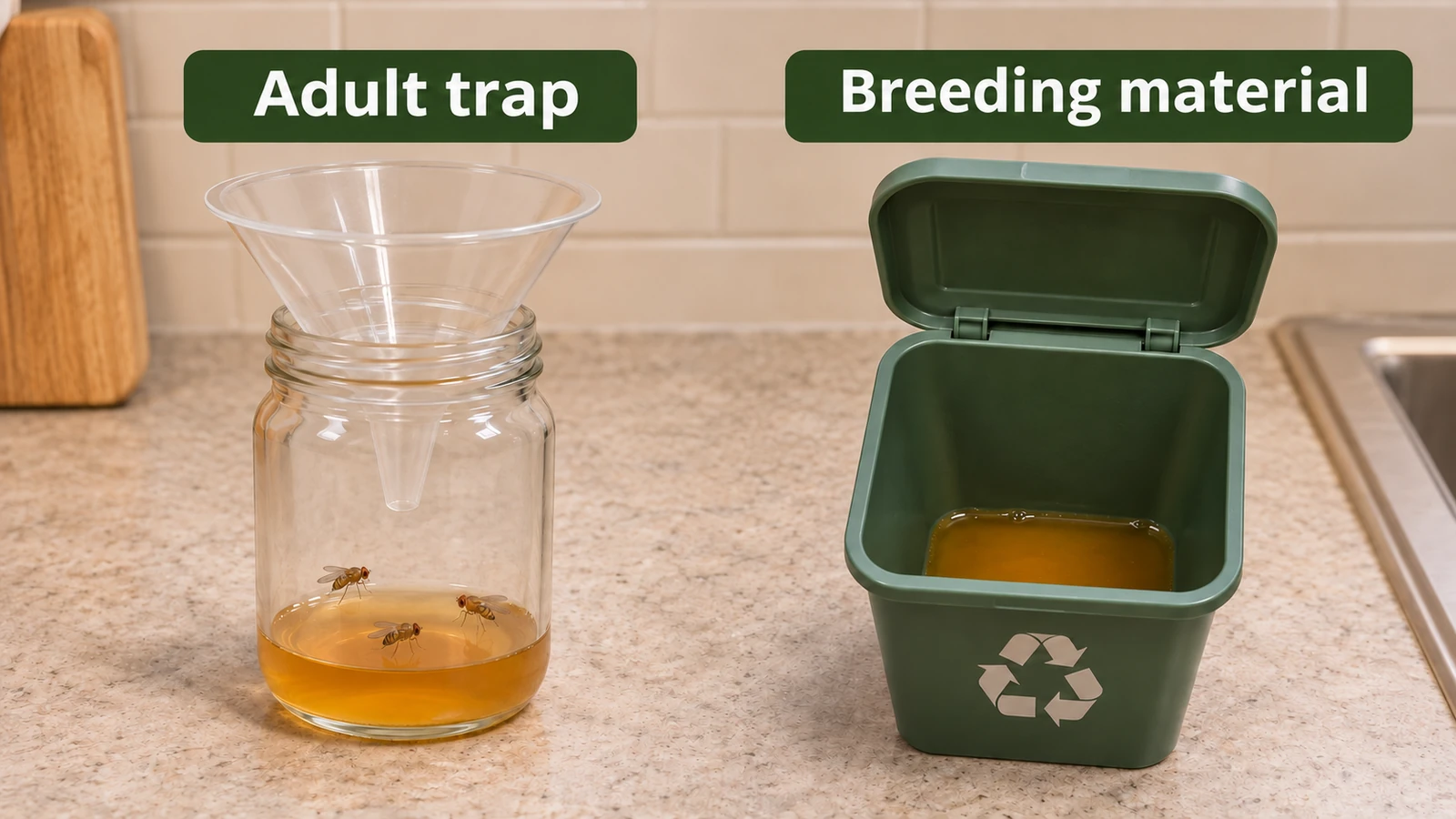
Vinegar-type traps can attract some fruit flies, but they are a poor substitute for correcting wet potting mix or drain film. A trap filling with insects while fresh adults keep appearing suggests the source needs another look.
Spraying adults across the room may give short-lived relief without removing the material where new flies develop. If a pesticide is genuinely needed, choose a product labeled for the identified pest and the specific U.S. indoor application site, and follow its current directions.
Do not use a pesticide on houseplant soil, food-contact surfaces, or inside plumbing merely because the label mentions “gnats” elsewhere. The intended pest, location, and method all matter.
Check whether new flies are still emerging
After you correct a likely source, revisit that same area over the following days. Watch for fresh flies appearing around the cleaned bin, potting mix, or drain rather than counting adults sitting at the window.
Keep any monitoring tool in a consistent location and check it as directed. A few adults that were already flying may remain temporarily; continuing emergence from the same site is the more useful reason to investigate again.
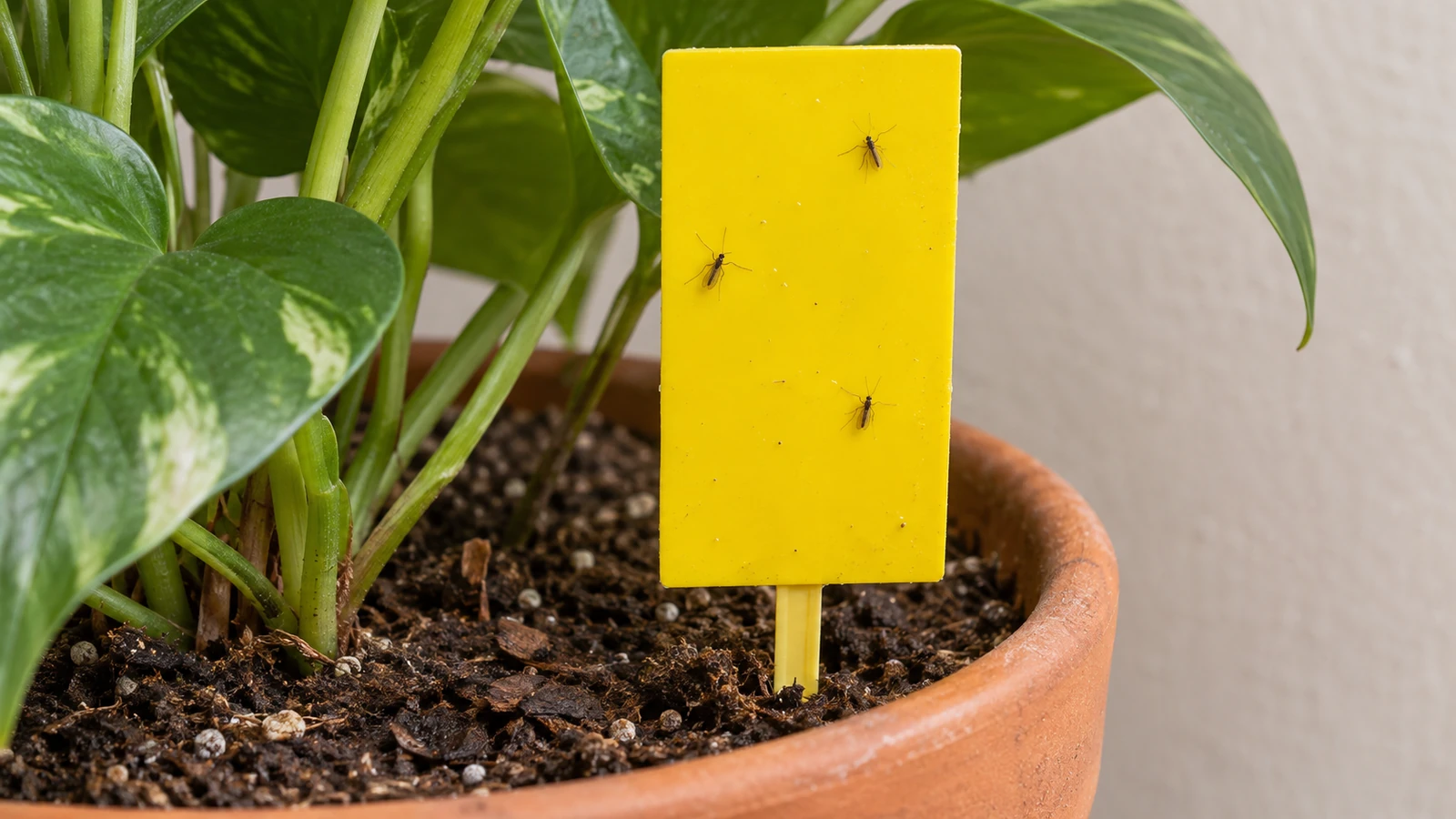
A successful source correction leads to declining new activity and, eventually, no recurring cluster. If captures continue at one spot, revisit that source before adding more traps or changing products.
If gnats keep returning
First check whether the original source was fully removed. Fermenting liquid beneath a recycling bag, another overwatered plant, or organic film in an inaccessible drain section can sustain new adults even after the visible area has been cleaned.
Also consider other moist organic material, including an appliance drip tray or a concealed leak, when the first branch does not match the flies. A clear close-up or an intact specimen may help distinguish the fly group before further treatment.
When Should You Call a Professional?
A few flies linked to accessible food waste or overwatered plants usually call for source correction, not a service visit. Seek a plumber or qualified pest-control professional when flies repeatedly emerge around damaged plumbing, persistent sewage odors, or inaccessible wet areas, or when repeated targeted checks cannot locate the source.
Use the recurring pattern to decide which source needs another look:
| What continues | Possible overlooked source | Best next check |
|---|---|---|
| Tiny flies return to the kitchen bin | Fermenting residue in containers, beneath a liner, or nearby | Inspect and clean the bin bottom, lid, recycling, and spilled drinks |
| Dark flies keep lifting from pots | Another damp pot or persistently wet growing mix | Check nearby pots, saucers, and soil moisture before watering again |
| Fuzzy flies keep resting beside a drain | Organic film deeper in accessible parts or a plumbing moisture problem | Recheck safe-to-reach film; investigate a suspected leak rather than adding chemicals |
| Small flies persist without a matching source | A different fly or an unnoticed wet breeding site | Recheck body shape, screens, and accessible damp debris; get identification help if needed |
Keep the corrected source from returning
Once you identify the breeding material, focus maintenance there: rinse residue from food containers before storage, avoid leaving damp waste in bins, let houseplant soil dry appropriately between waterings, and keep accessible drains free of organic buildup.
Continue brief source checks when new flies appear. You need a repeatable observation and an appropriate correction, not a fixed spraying schedule for every kind of gnat.
Explore this topic further: