Identification
Cicada killer wasp: identification, burrows, and sting risk
Identify a cicada killer wasp by its markings and ground-burrow behavior, compare yellowjackets and other lookalikes, and understand when to keep your distance.
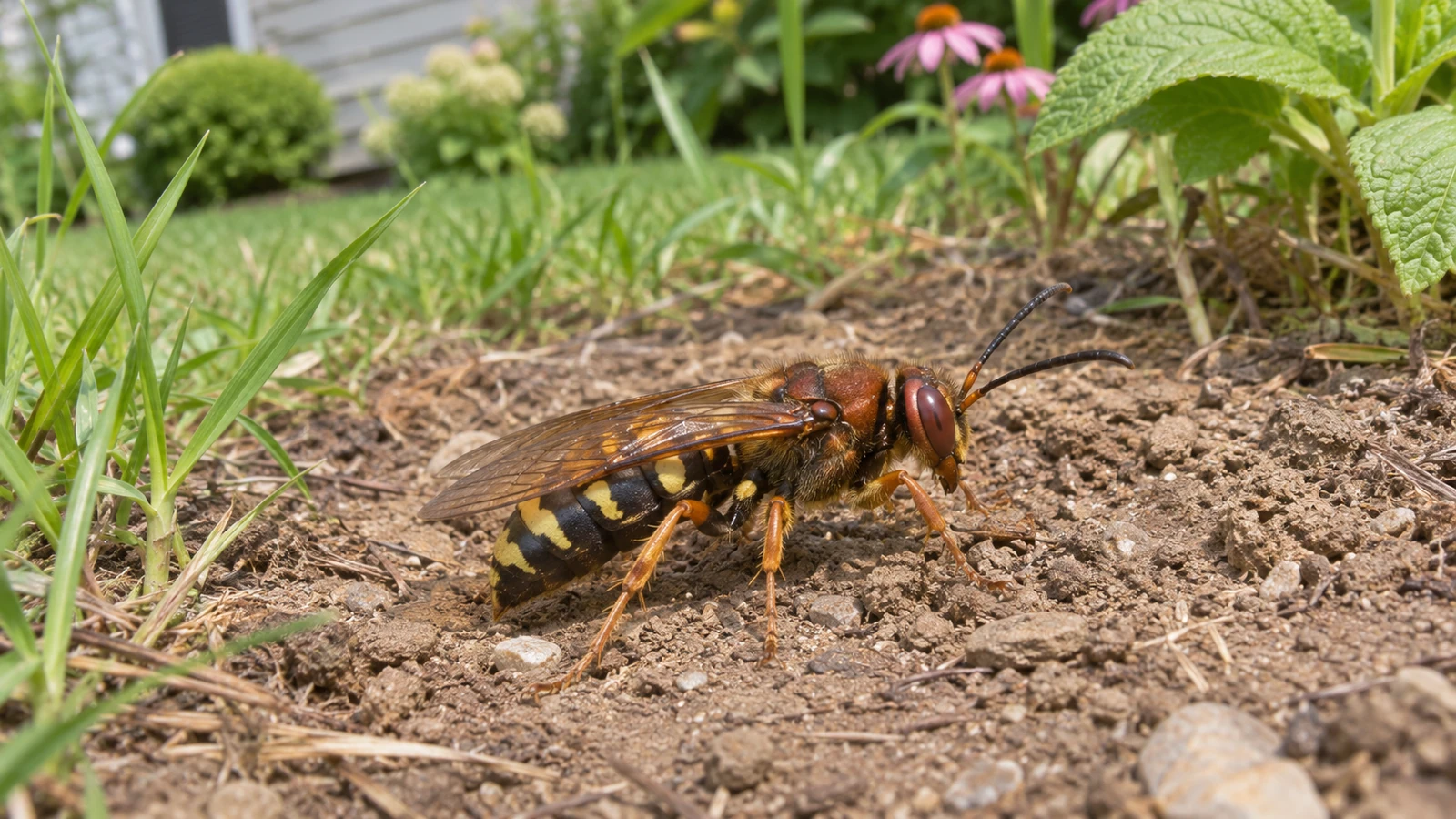
A large black-and-yellow wasp is circling a sunny patch of lawn, and a fresh mound of loose soil has appeared beside the walkway. It looks alarming, especially when a wasp flies straight toward you. Before calling it a yellowjacket nest, look at the insect and the pattern of activity from a safe distance.
Recognize a cicada killer by its appearance and behavior
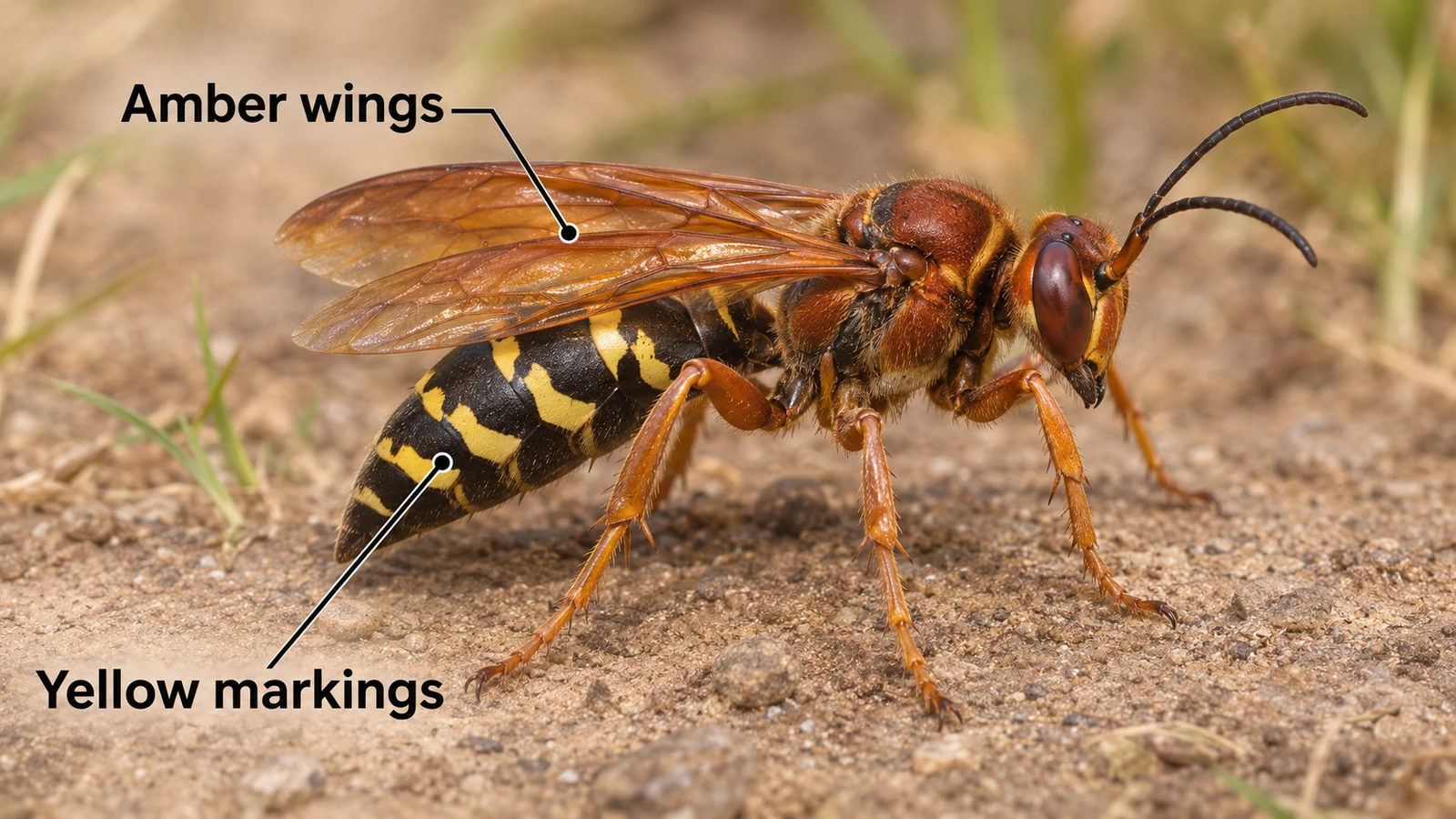
The eastern cicada killer (Sphecius speciosus) is a hefty wasp, often around 1 to 2 inches long. It has a dark abdomen marked with broken yellow bands, a rusty-brown head and thorax, and amber-colored wings. The size is striking, but the combination of markings and behavior is more useful than size alone.
Eastern cicada killers occur mainly east of the Rocky Mountains. Other Sphecius species, including western cicada killers, occur elsewhere in the United States. Their markings vary, so do not expect every cicada killer nationwide to look exactly like the eastern species.
Identification in 30 Seconds
- A large, robust wasp with a dark body and yellow abdominal markings.
- Repeated activity near individual holes in sunny, exposed or lightly vegetated soil.
- A female carrying a cicada toward a ground burrow, when that behavior is actually observed.
Seeing the wasp carrying a cicada is unusually informative because these solitary hunters stock their burrows with paralyzed cicadas for their developing young. Adults themselves feed on nectar and other plant sugars. A wasp hovering around your head may instead be a territorial male patrolling the nesting area.
An oversized yellow-and-black wasp photographed without a clear view of its markings may still need identification. Do not decide the species from a loud buzz, a single hole, or the impression that it is a “giant yellowjacket.”
Check the nesting clues without approaching the hole
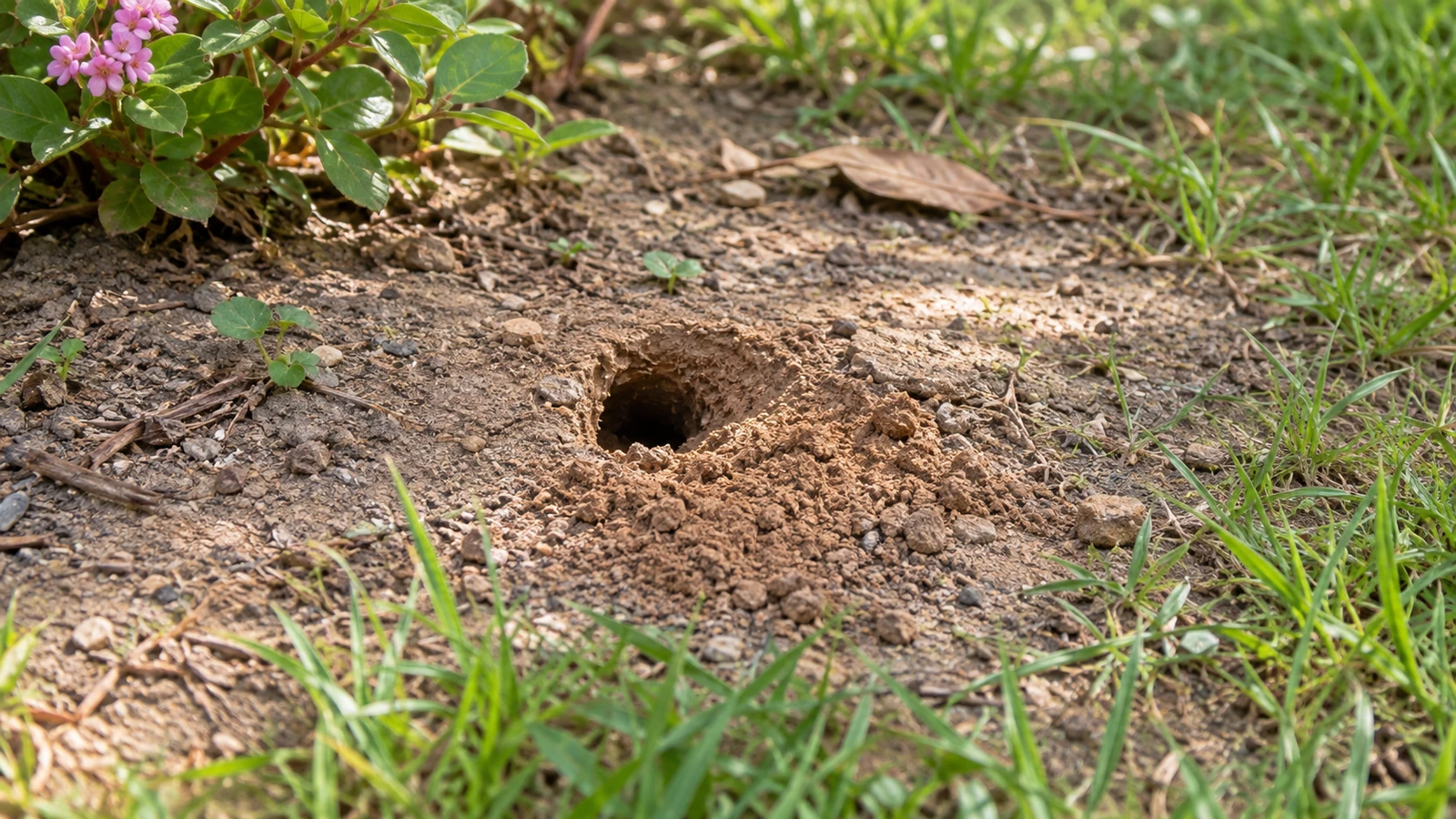
Female cicada killers excavate ground burrows, commonly in sunny, well-drained, loose soil. Entrances may have a conspicuous fan or pile of freshly displaced soil. They can occur along walkways, in thin lawns, or in garden beds. Several females may choose the same favorable patch, but each maintains her own nesting burrow rather than sharing a social colony.
Watch from well outside the flight path. An individual female may enter a hole, leave to hunt, and return carrying a cicada. Male wasps can patrol nearby without using the burrow themselves. These observations help connect an insect to a nesting site without probing, plugging, or opening anything.
The distinction matters because yellowjackets also nest underground. At a social yellowjacket nest, numerous workers can use the same entrance repeatedly. An area with many separate cicada killer burrows can look busy, but that is different from a colony of yellowjackets moving through one opening. If the pattern suggests a different nest type, consult wasp nest types and locations rather than assuming the hole belongs to a cicada killer.
Identification Mistakes
- Calling every large black-and-yellow wasp a hornet or yellowjacket based on size alone.
- Treating a mound of loose soil as proof of a cicada killer before seeing the insect associated with it.
Key Clue
A matching large wasp repeatedly using its own ground burrow, especially while carrying a cicada, is stronger evidence than either the insect or the hole viewed separately.
What to Watch For
A female can sting if trapped, stepped on, or handled. Territorial males may fly toward people but cannot sting. Avoid testing that distinction by approaching or disturbing the nesting area.
Distinguish similar wasps by the whole pattern
The main lookalikes differ in both appearance and nesting behavior. Yellowjackets are generally smaller, more compact social wasps, and many workers may share a ground-nest entrance. European hornets are large social wasps with a more extensively yellow abdomen and a paper nest usually concealed in a cavity. Other solitary digger wasps may use sandy soil, so a burrow by itself is not species identification.
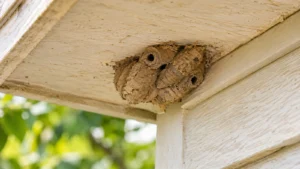
Mud daubers offer another useful contrast: their recognizable mud cells are built onto surfaces such as walls or sheltered structures, rather than being the excavated ground burrows described here. For that separate structure, see mud dauber nests.
Use the comparison only as a first interpretation of what you can see safely.
| What you observe | What it may suggest | What remains uncertain |
|---|---|---|
| Large dark wasp with yellow bands near separate soil holes | Cicada killer or another solitary ground-nesting wasp | Exact species without clear body details |
| One large wasp returning with a cicada | Strong evidence of cicada killer nesting behavior | Which regional Sphecius species is present |
| Many smaller yellow-and-black wasps repeatedly entering one opening | Social yellowjacket activity | Exact species and nest extent |
| Papery structure or attached mud cells | Another type of wasp nest | Insect identity until the structure is matched to its builder |

Judge the activity and the practical risk
Cicada killer sightings around U.S. yards are mostly a warm-season event. In many eastern areas adults are especially noticeable in midsummer, when cicadas are available. Exact timing varies with geography and weather, and a former burrow location alone says little about current activity.
A few wasps over an out-of-the-way patch of bare soil usually call for observation and leaving the area undisturbed. Even a cluster of individual burrows is not automatically a defensive social nest. The practical concern changes if the activity is beside a busy entrance, children’s play space, or an area where someone might step barefoot near an active female.

Reassess if you see numerous smaller workers using one shared opening, cannot identify the insect from a safe view, or have a history of severe reactions to stings. Those circumstances call for greater distance and more cautious evaluation than an isolated cicada killer sighting.