
Identification
Ant eggs or larvae? How to identify ant brood indoors
Identify pale ant brood by shape, scale, and worker behavior, then learn when eggs, larvae, or pupae near a baseboard warrant a closer nest check.
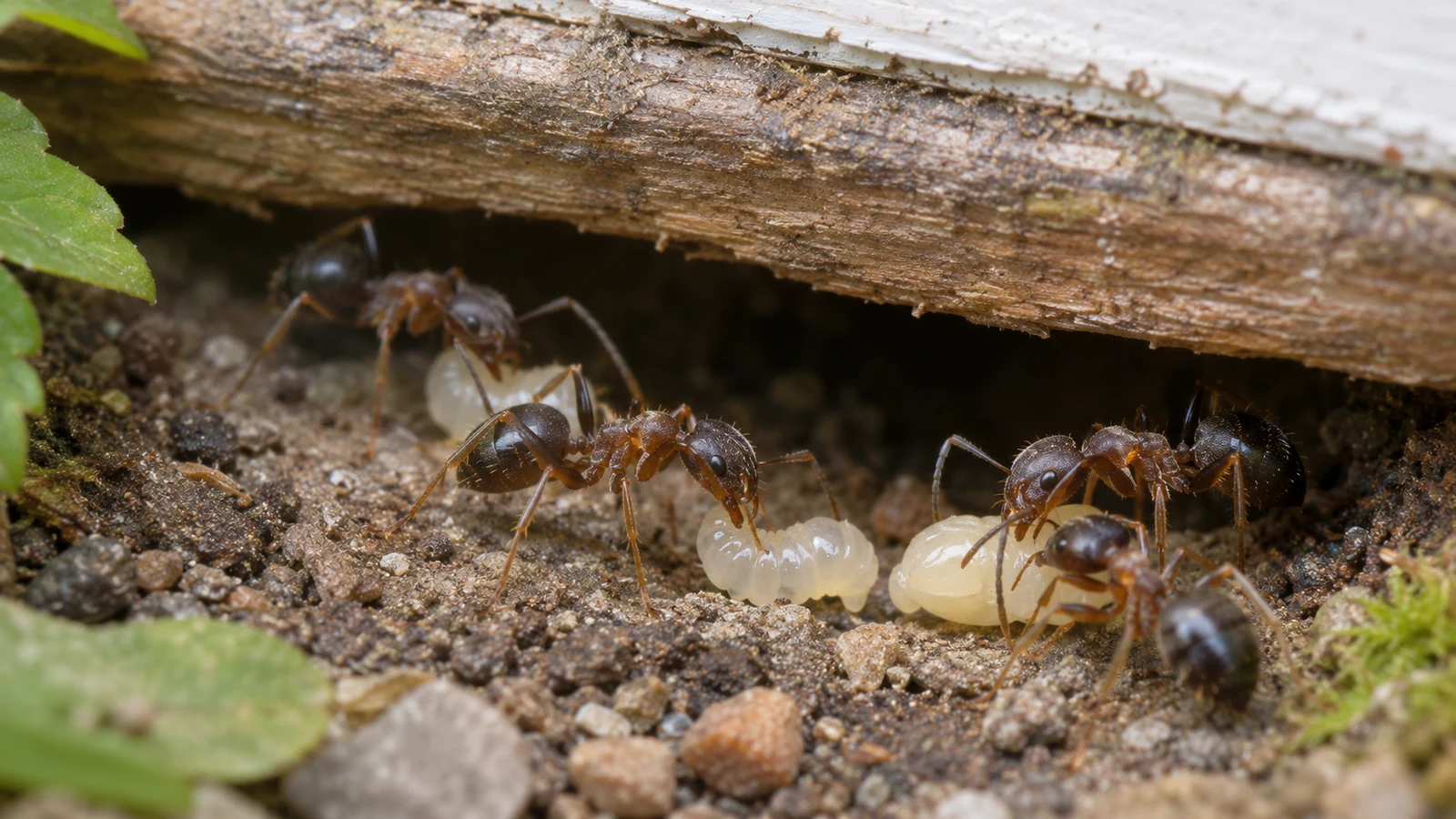
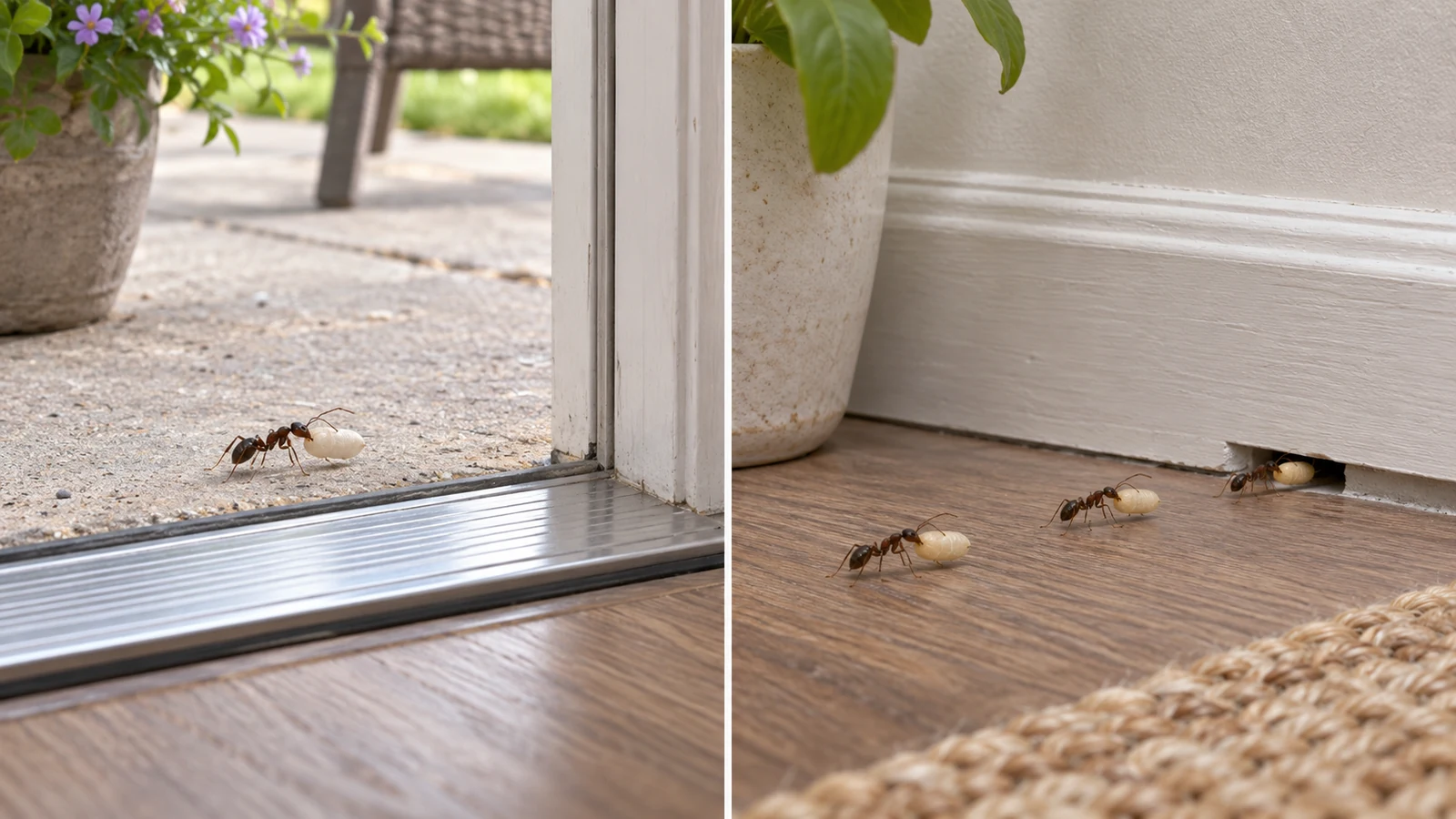
An ant disappears beneath a baseboard carrying something pale that looks like a grain of rice. Soon another worker emerges with a similar object. It is easy to assume you have found ant eggs, but the larger white pieces that ants carry are often pupae or their protective cocoons.
The best clues are the object’s shape and size, the ants handling it, and where the activity is happening. Those observations can help you distinguish developing ants from other material and work out whether a nest deserves a closer look.
What do ant eggs, larvae, and pupae look like?
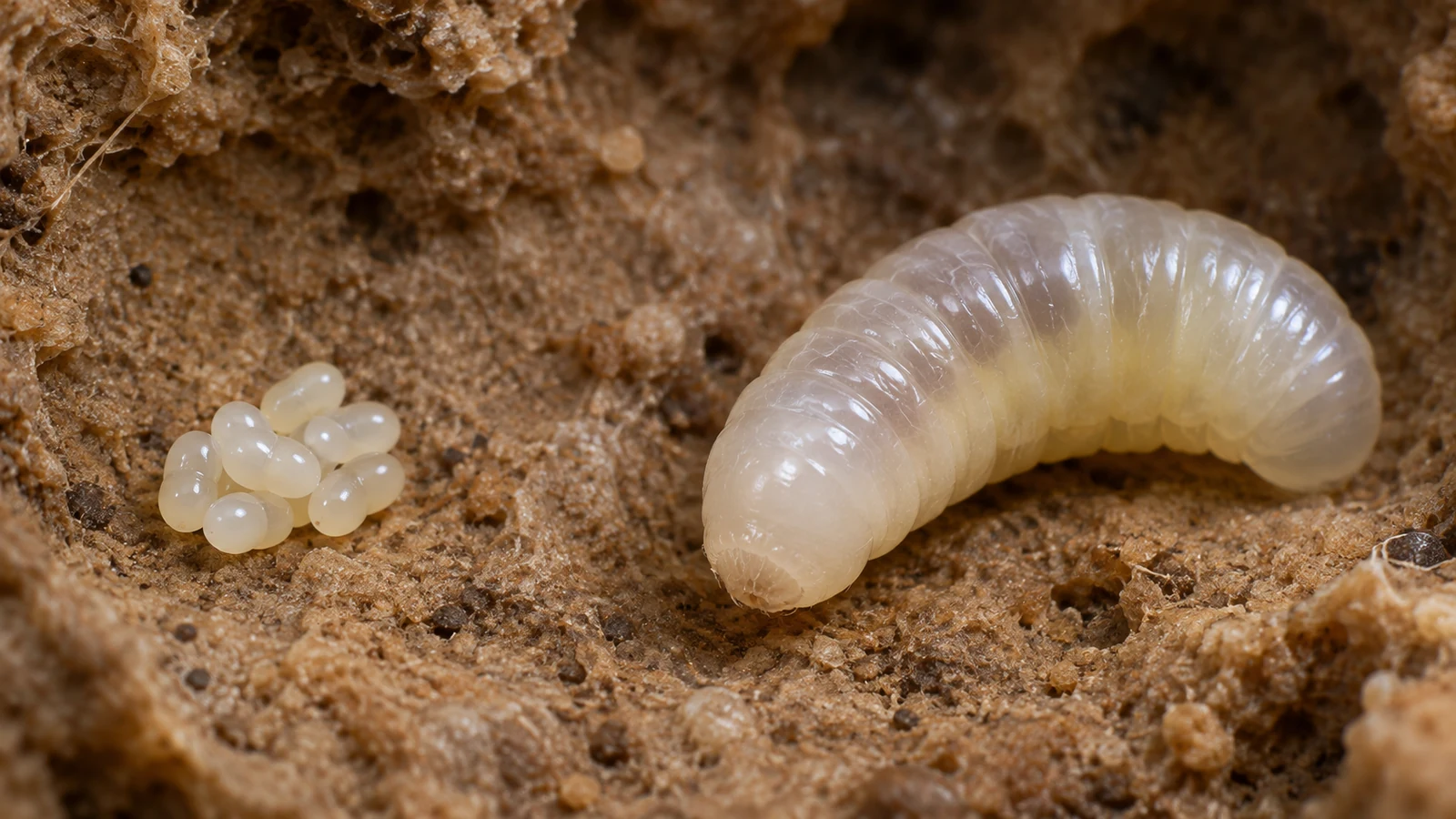
Ants develop through four stages: egg, larva, pupa, and adult. True ant eggs are very small, usually pale and oval, with a smooth surface. They are much smaller than the familiar rice-shaped objects people often notice workers carrying. Eggs may be grouped together and are usually tended within a protected nest space.
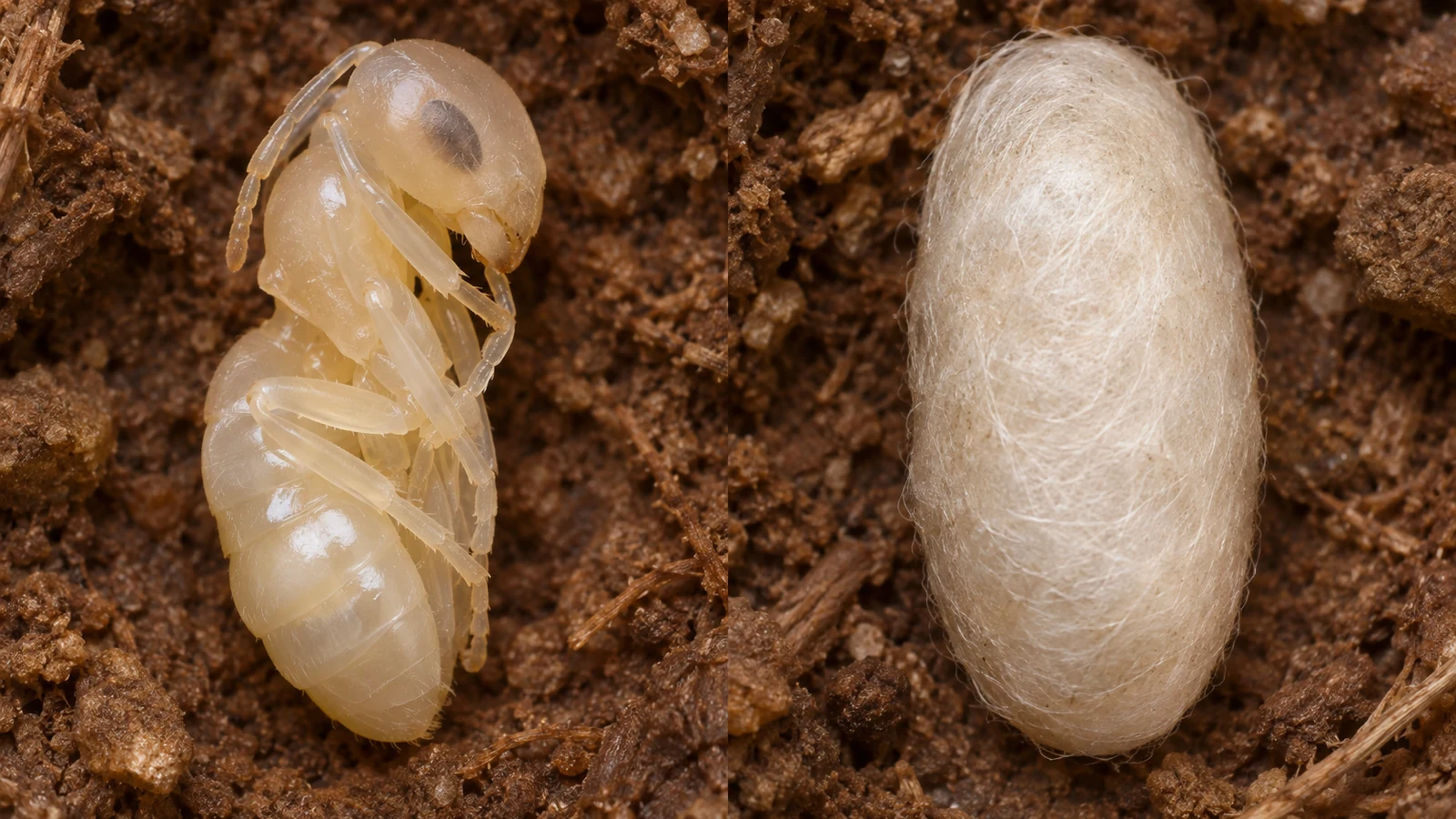
Ant larvae are soft, pale, legless grubs, often slightly curved and visibly different from smooth eggs. They depend on adults for food and care. Pupae are the next stage: an uncovered pupa can show folded legs and antennae and an emerging ant-shaped body. In some species, the pupa is hidden inside a pale silk cocoon that resembles a tiny grain of rice. Other ants produce pupae without cocoons.
Identification in 30 Seconds
- Tiny, smooth, pale ovals much smaller than a worker: possible ant eggs.
- Soft, curved, legless, cream-colored grubs: likely ant larvae when tended by ants.
- Pale ant-shaped bodies with folded appendages: exposed pupae.
- Larger ivory or tan rice-like capsules carried by workers: often pupal cocoons, not unusually large eggs.
Use a nearby worker for a rough visual comparison rather than assigning one standard size to every ant species. A white object photographed alone does not reveal which species produced it, and a cocoon can conceal the pupa’s identifying features.
How to check the white objects safely
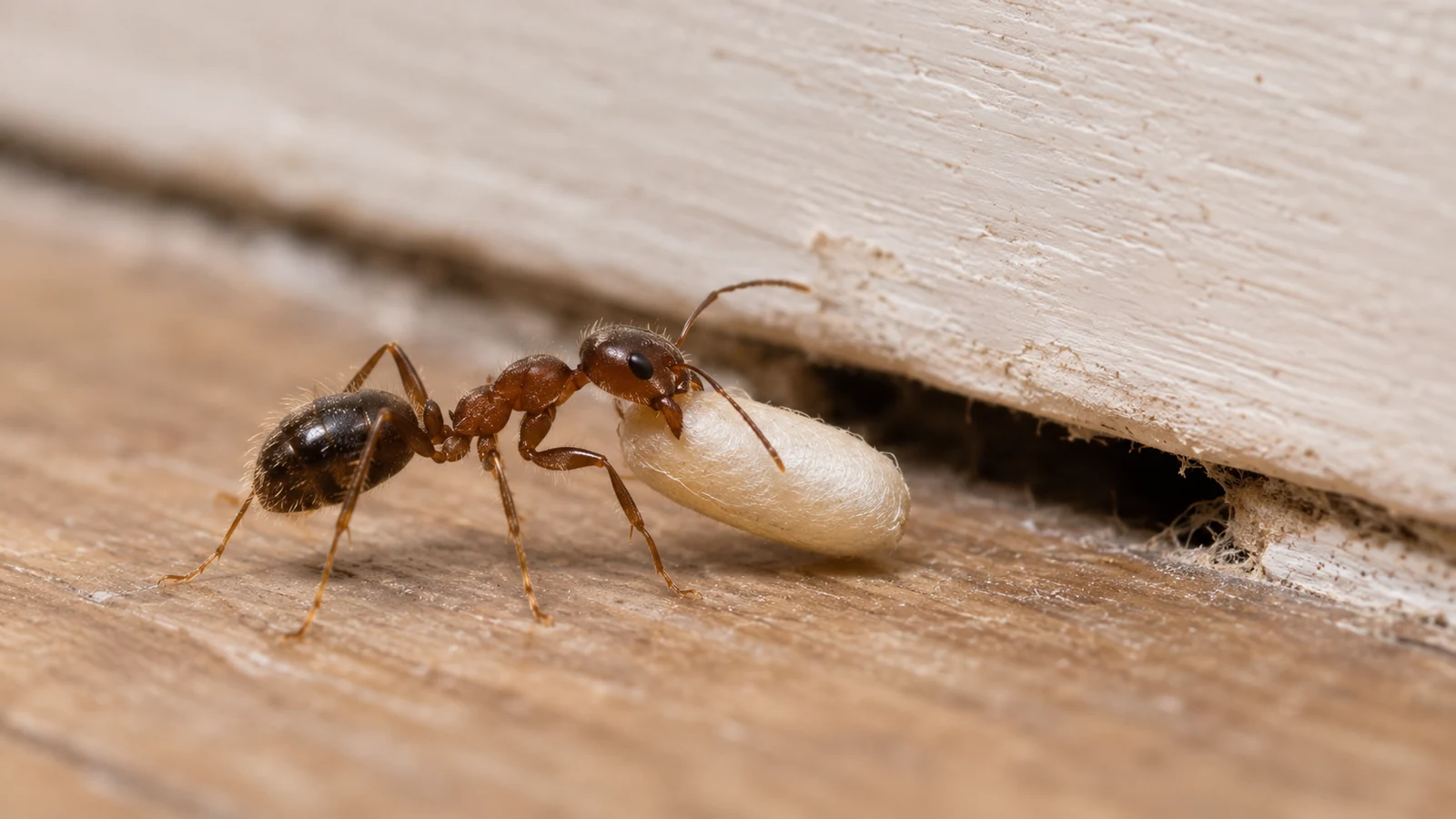
Watch what the adult ants do before moving anything. Workers may cluster around brood, pick individual pieces up in their jaws, or carry them between protected openings. Distinguish this from ants transporting crumbs or other food. If the workers are clearly tending or relocating pale young, ant brood becomes a stronger explanation.
Photograph the objects and at least one worker together, ideally in even light. Note whether the pieces are smooth ovals, curved grubs, exposed ant-shaped pupae, or enclosed capsules. Record the exact place: under a windowsill, beside a foundation crack, behind a baseboard, or beneath an object just outside the door.
Avoid tearing open walls, prying electrical fittings, or spraying into an inaccessible gap to get a better look. From a safe distance, check whether the ants return to the same entrance or simply pass through from an outdoor nest. Several observations along the same route are more useful than one blurred close-up.
Identification Mistakes
- Calling every white, rice-shaped capsule an egg.
- Guessing the ant species from brood color or size alone.
- Assuming a worker carrying brood proves a queen lives in that wall.
Key Clue
An identifiable worker repeatedly tending or transporting pale, developing young is stronger evidence of ant brood than a loose pile of white objects. The route it follows helps you decide where to inspect.
What to Watch For
Not every ant pupa has a silk cocoon. A visible ant-shaped pupa and a smooth enclosed cocoon can both be normal, depending on the species. Do not reject an ant identification just because a reference image shows the other form.
What finding ant brood around the house can mean
Workers carrying white pieces along a route
Workers protect and relocate developing ants, including when a nest is disturbed or a colony shifts to another sheltered location. A worker moving a rice-like cocoon near a doorway could be coming from a nest under the patio, in soil beside the foundation, or in a protected building gap. Watch which way the workers travel rather than assuming the destination is a permanent indoor nest.
Brood clustered inside a protected gap
A group of eggs, larvae, or pupae being tended repeatedly inside a baseboard gap, cabinet void, or other sheltered opening suggests brood care is occurring there or very nearby. Some household ants nest inside buildings, while others forage indoors from soil nests beneath slabs or outside walls. The opening alone does not tell you how extensive the colony is.
Pale pieces with no ants nearby
If white grains or wormlike shapes are scattered across a countertop, inside stored food, or on a windowsill without recognizable adult ants, examine the material before calling it ant brood. Other insect larvae, food fragments, and household debris can be pale. If the associated adults may not be ants, identification must start with those insects rather than the white pieces.
The combination of shape, worker behavior, and location gives a better next step than color alone.
| What you observe | Most useful interpretation | Next check |
|---|---|---|
| Tiny smooth ovals tended in a protected cluster | Possible eggs | Compare size with a worker and look for other brood stages |
| Curved, legless grubs being tended by ants | Likely larvae | Note the protected site and the adults caring for them |
| Ivory rice-like capsules carried by workers | Possible pupal cocoons | Follow the repeated transport route without disturbing it |
| Pale ant-shaped forms with folded limbs | Exposed pupae | Identify the adult ants nearby |
| White fragments with no ants or recognizable body parts | Ant brood not established | Check for another insect or ordinary debris |
Does finding ant brood mean there is a nest indoors?
Brood normally stays in protected nest areas or is moved between them by workers. Finding workers with brood is therefore more informative about a nearby rearing site than spotting a few ants searching a kitchen for food. Still, an ant coming through a gap may be carrying young from an outdoor nest, not necessarily from within the wall.
Repeated transport into the same sheltered indoor opening, several brood stages being tended together, or sustained activity behind a fixture makes a nearby nest or satellite site more plausible. The quantity of visible brood cannot reliably tell you colony size, whether the queen is there, or when the next adults will emerge. Development from egg to adult varies with species and nest conditions, often spanning weeks to months.
Good to Know
Carpenter-ant satellite nests may contain mature larvae and pupae even without the queen or eggs. Their presence in a wall void or insulation is a reason to investigate the location, not proof that the surrounding wood has been damaged. If you also find coarse wood debris, suspicious galleries, or moisture-damaged wood, consult the carpenter ant damage guide for the separate structural check.
Learn more:

