
Identification
Pantry moths: How to identify an infestation and find its source
Spot the signs of pantry moths in stored dry foods, check the overlooked places they hide, and follow the evidence back to the package causing the problem.

Finding a small moth on a kitchen wall tells you very little about where it came from. The real evidence is usually in stored dry food, sometimes in a package you haven’t opened in months.
Start with the food and the nearby cabinet surfaces. A careful inspection can help you distinguish an isolated moth from an active pantry infestation without throwing out everything in the cupboard.
Signs of pantry moths in food and cabinets
Adult pantry moths are small, narrow-winged insects that may rest on cabinet doors or fly around the kitchen. One common species, the Indian meal moth, often has grayish inner forewings and coppery-brown outer sections. That wing pattern is a useful clue, although not every food-infesting moth looks the same.
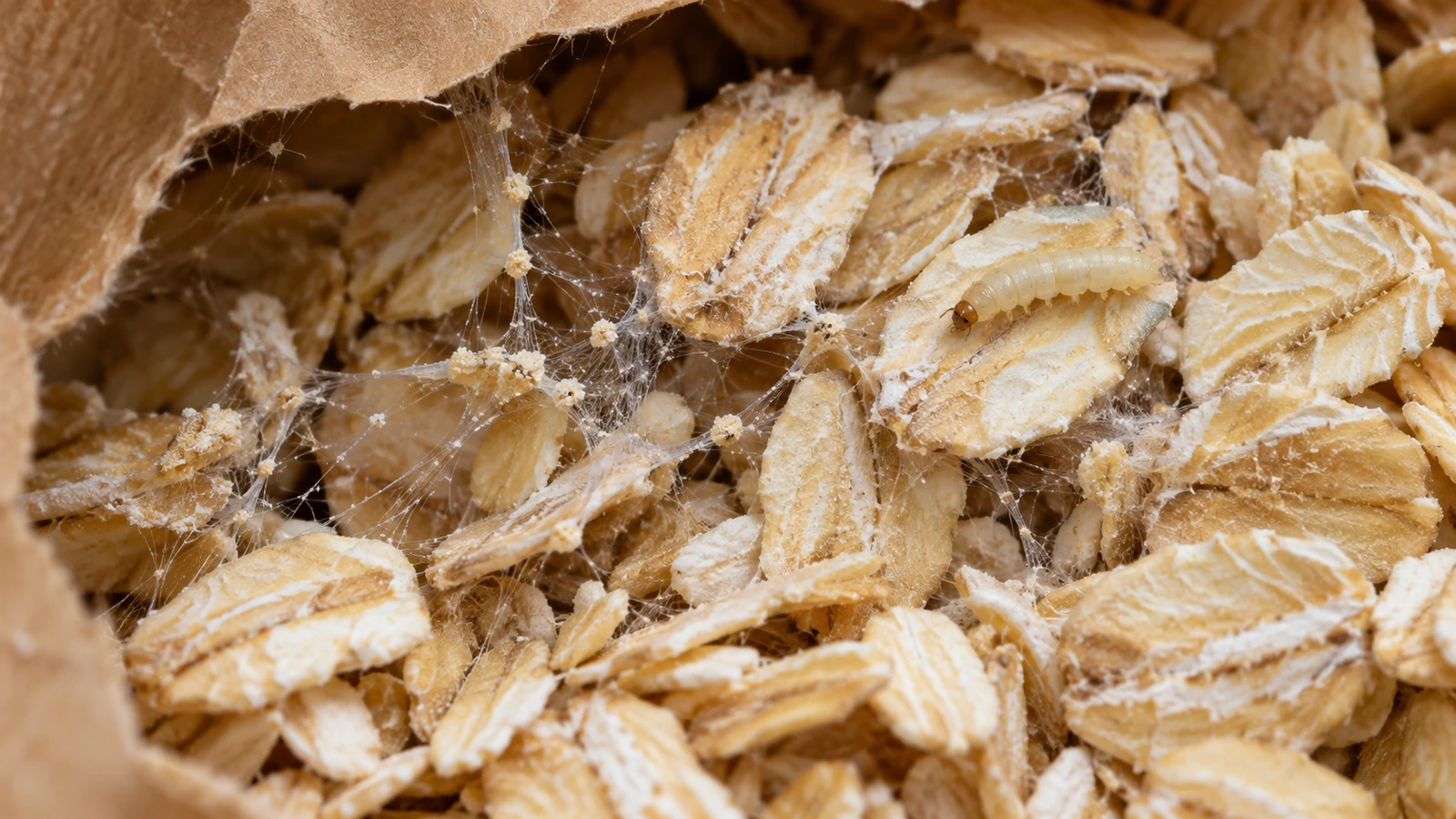
The larvae do the feeding. Look for fine silk threads that make grains or crumbs stick together, pale caterpillars in dry food, and silken cocoons tucked into package folds or cabinet joints.
Identification in 30 Seconds
- Small moths appear repeatedly around stored foods or kitchen cabinets.
- Fine, silky webbing holds food particles or grains together.
- Pale caterpillars are visible inside dry-food packages or crawling nearby.
- Silken cocoons appear along shelf edges, cabinet corners, or ceiling joints.
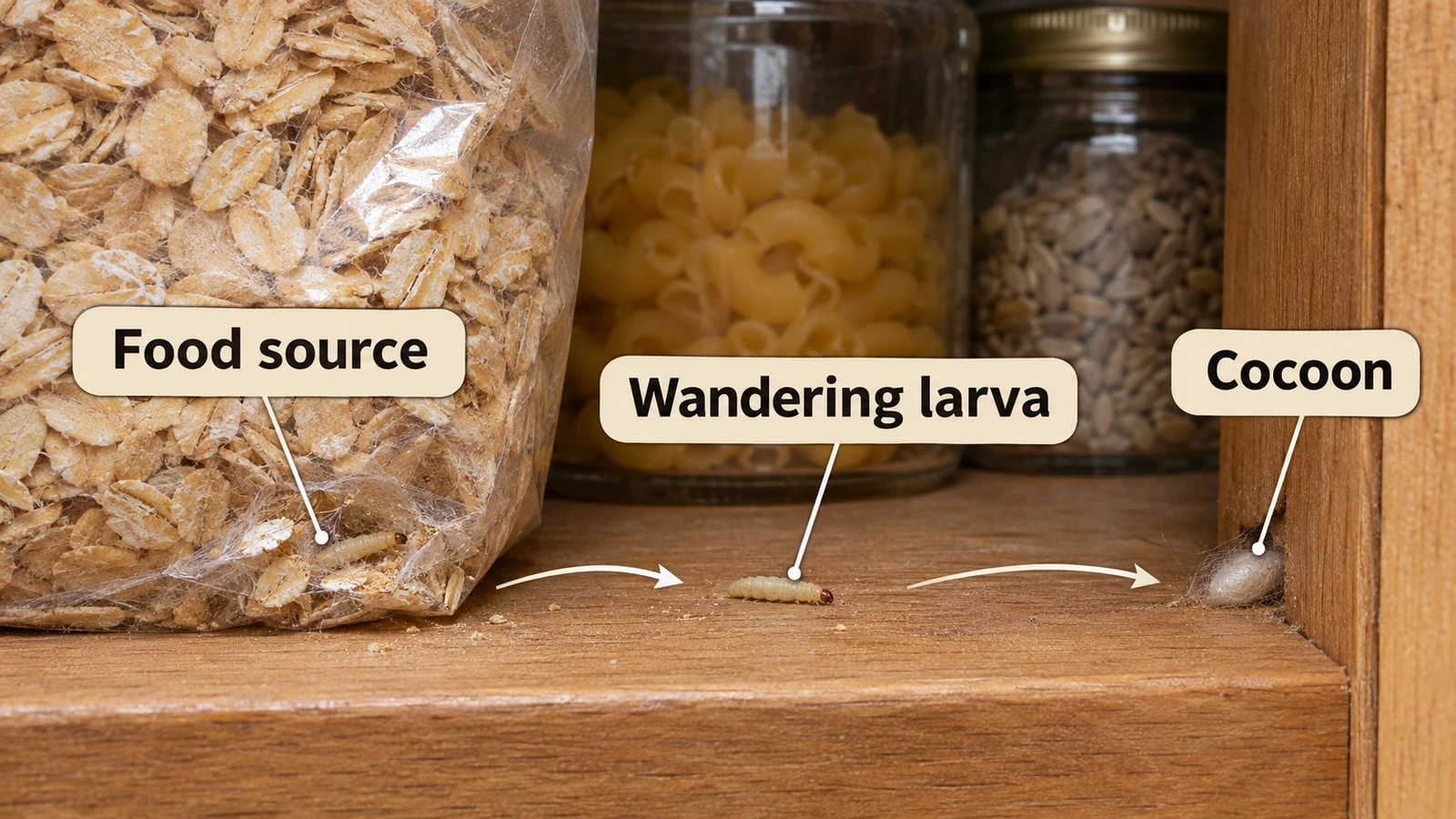
Webbing and feeding larvae inside a food package are more convincing than a moth on a wall. Pantry moth eggs are tiny and easy to miss, so looking for eggs is not the best place to start. Some pantry moth larvae also leave their food before pupating, which explains why a caterpillar may appear surprisingly far from the pantry.
Where to inspect for the infested food

Begin with the cabinet where you’ve noticed the most activity, but don’t assume the moth was feeding wherever it happened to land. Remove packages in small groups so you can keep track of which shelf they came from.
Check package seams and the surface of the contents under a bright light. If a product looks suspicious, tip a little onto a light-colored tray. Fine webbing, moving larvae, or grains stuck together can be easier to recognize when the food is spread out.
Packages that have been open for months deserve attention, but unopened paper boxes and thin flexible pouches are not automatically protected. Pantry pests can get through damaged packaging or enter through small folds and seams.
Work through these areas:
- Stored dry foods: Check cereal, oats, flour, rice, pasta, crackers, nuts, dried fruit, spices, baking mixes, and similar products. Examine both the contents and the packaging.
- Pet and other stored supplies: Inspect dry pet food, treats, birdseed, garden seeds, and dried plant arrangements, even when they’re stored outside the kitchen.
- Cabinet details: Look along back corners, shelf-pin holes, cracks, the undersides of shelves, and folds in shelf liners. These are places where cocoons can be hidden.
- Nearby storage areas: Check adjacent rooms, high wall and ceiling edges, and other places where mature larvae may have wandered before pupating.
Identification Mistakes
- Identifying a pantry infestation from wing color alone without checking stored food.
- Assuming a trap catch identifies the cabinet containing the source.
- Throwing away every sealed can or jar without distinguishing protected food from potentially infested dry goods.
Key Clue
Silky webbing mixed through dry food, especially when feeding larvae are present, strongly points to an infested package. Isolate that item and inspect the products stored beside it.
What to Watch For
A cocoon on a wall or ceiling may have come from food elsewhere. Follow that clue back through the stored goods rather than treating the surface where you found it as the source.
What the evidence tells you
A pantry moth infestation is most convincing when adult moths are accompanied by webbed food or larvae inside a product. Finding that combination in one package gives you an identifiable source. Nearby packages still need checking, but their condition should guide what you discard.
If you see a few adult moths without finding food evidence, start with inspection rather than assuming every shelf is infested. Adults can wander from where their larvae developed, and some may remain after infested material has been removed.
Pantry moth traps use attractants designed for particular moths, commonly sex pheromones that capture adult males. A catch establishes that the targeted moths are active, but it doesn’t locate the exact food source or remove feeding larvae. An empty trap cannot rule out infestation either, particularly if the lure is unsuitable for the moth present.
Pantry moths vs. clothes moths
Pantry moth larvae develop in stored foods. Clothes moth larvae are associated with materials such as wool and other animal-based fibers, often in dark, undisturbed storage areas. If the evidence is fabric damage and larvae around clothing rather than contaminated food, investigate clothes moths instead.
Use the combination and location of your findings to decide what to check next:
| What you found | What it suggests | Your next check |
|---|---|---|
| One adult moth near the kitchen, with no food evidence | A pantry moth is possible, but the source is unverified | Inspect susceptible dry goods and identify the moth before discarding food |
| Silk webbing and live larvae inside a food package | Strong evidence of an active source | Isolate the package and examine nearby dry goods |
| A larva or cocoon on a wall or ceiling, with no food source found | A mature larva may have moved away from its feeding site | Search other cupboards, pet supplies, and stored dry foods |
| Adult moths caught in a pheromone trap | Targeted adult moths are active; the source remains uncertain | Look for food evidence rather than relying on the trap’s position |
| Holes in wool and moth activity around a closet | A fabric pest is more likely | Inspect vulnerable textiles instead of assuming a pantry infestation |
How much of the pantry is affected?
One infested bag doesn’t automatically mean the whole pantry is lost. If a thorough inspection reveals one affected package and no further signs in the surrounding dry goods, the problem may be localized.
Finding webbing or live larvae in several packages suggests a wider infestation. So does discovering fresh feeding evidence after the first affected item has been removed. At that point, extend the inspection to stored foods elsewhere in the home.

Don’t judge the extent of an infestation by the number of moths caught in one trap. Lure type and placement affect the catch, while food contamination tells you which materials actually need attention. Keep track of which packages and storage areas showed evidence so you know where to look again.