Explanation
Where do cockroaches come from and how do they get inside?
A cockroach can arrive in a box, enter from outdoors, or move through a connected building. Learn how the species and sighting location help you understand where it came from and what to check next.
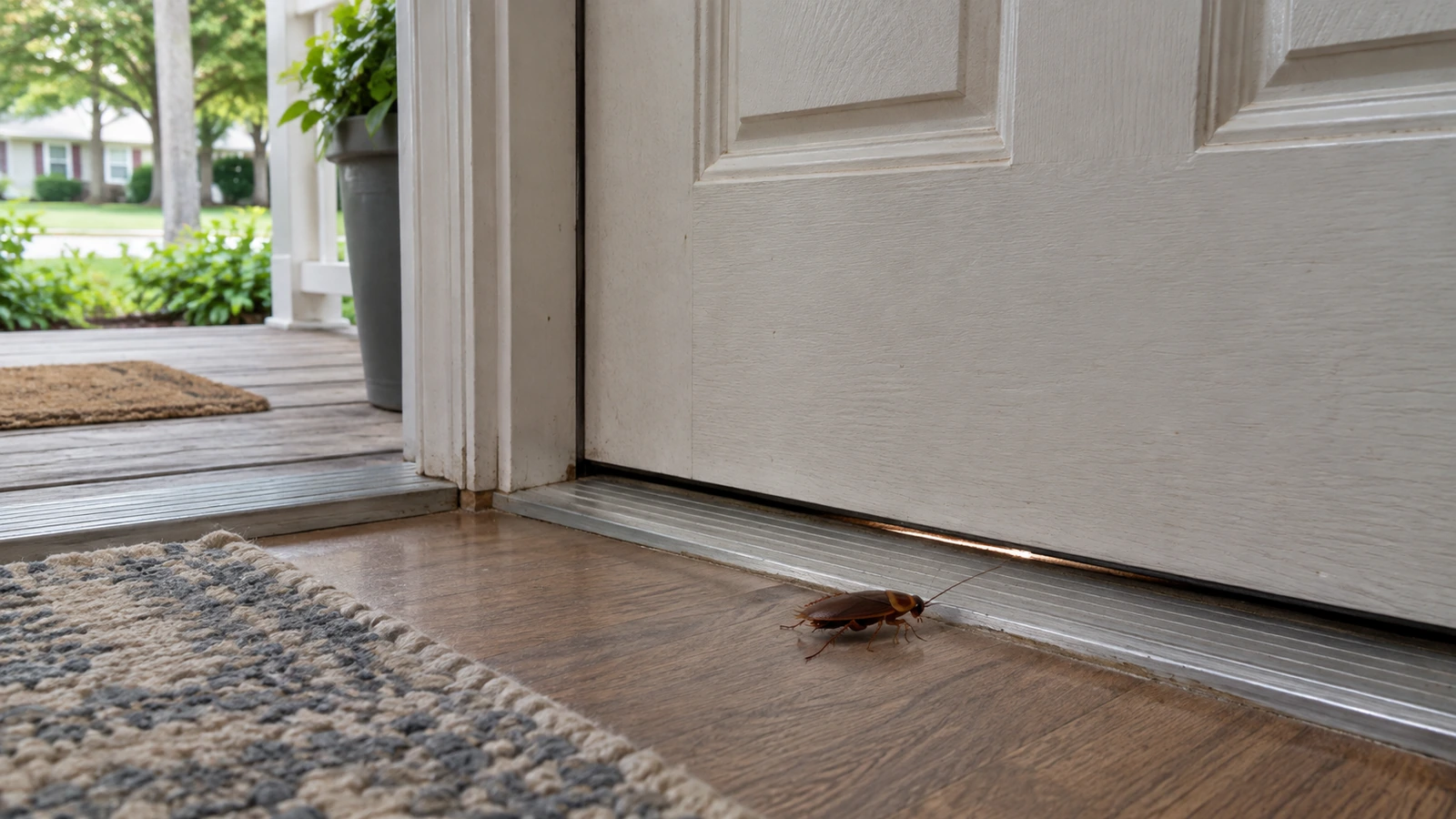
Finding a cockroach under the kitchen sink raises an obvious question: how did it get there when the doors and windows were closed? The answer may be somewhere inside the building, not outside it.
A roach carried in with a used appliance, one slipping under a patio door, and one moving from a neighboring apartment can look like the same problem at first. Understanding the difference helps you decide where to look next.
Quick Answer
Cockroaches reach homes in three main ways: they hitchhike in on belongings, enter from outdoor hiding places through gaps, or move between connected units. Some species live and breed indoors, while others usually originate outside. The most useful clues are the likely species, where it appeared, and whether sightings continue.
Three Ways Cockroaches Get Into Homes
Think of where a cockroach came from as two separate questions: where was it living before it reached your home, and how did it cross the boundary? A home can receive a roach without already having a breeding population.
The possible routes are similar in houses and apartments, but their importance changes with the building and the species involved. Start with the explanation that fits your circumstances.
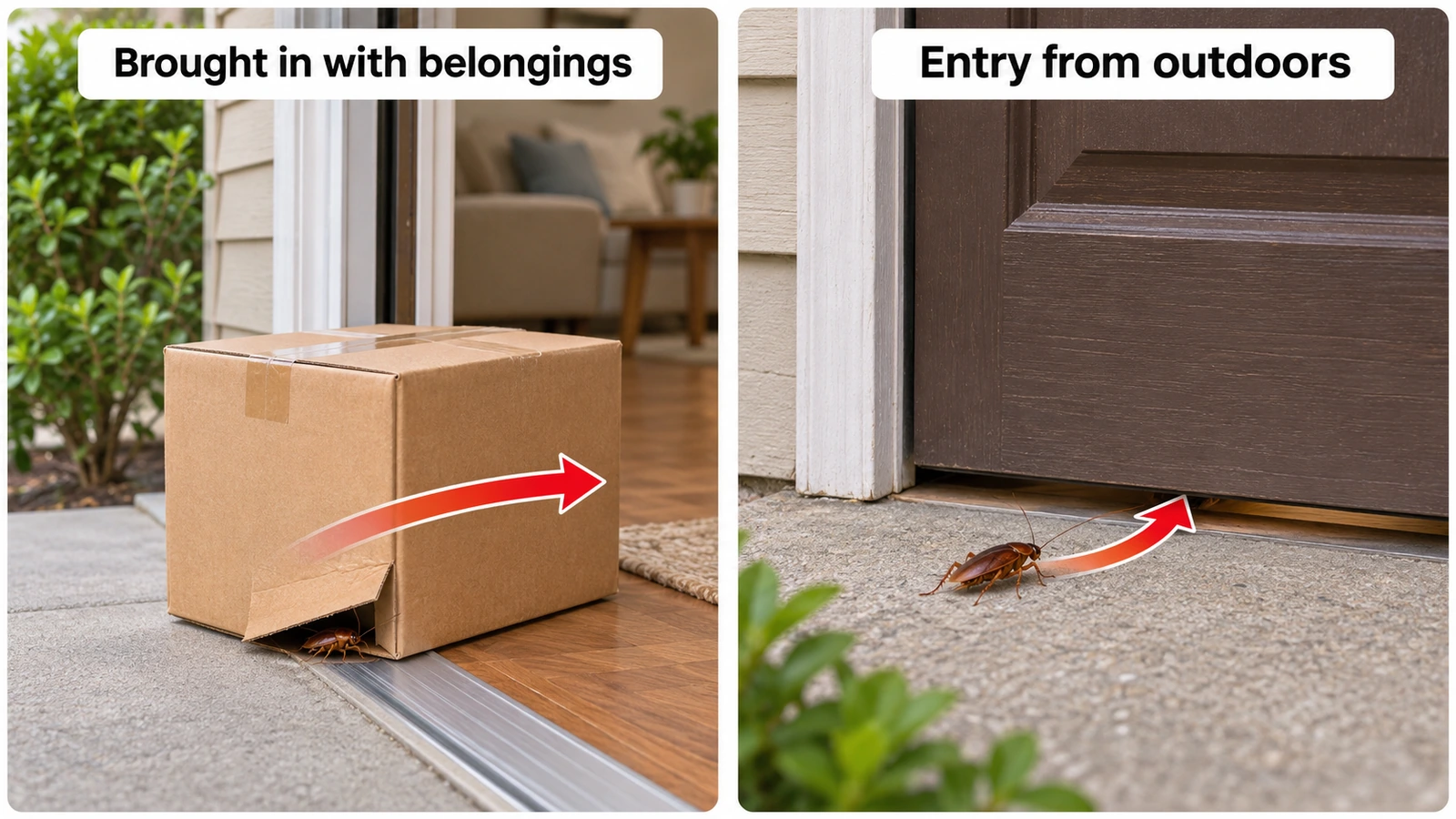
1. They hitchhike in on boxes, furniture, and appliances
Cockroaches do not always enter under their own power. They can travel inside corrugated cardboard, bags, stored belongings, furniture, and appliances. An insect or egg case concealed in an item may reach a kitchen without ever crossing an exterior wall on its own.
German cockroaches are particularly relevant to this route because they live and reproduce inside buildings. A used microwave, a refrigerator moved from another apartment, or boxes stored in an infested area can provide transportation.
The important detail is where the item came from and how it was stored. An ordinary delivery is not automatically infested, but belongings from a location with known cockroach activity deserve more attention.
2. They enter from outdoors through openings
Other cockroaches spend much of their time in yards, landscaping, underground utility areas, sewers, or sheltered spaces around buildings. They may enter a house through:
- Gaps beneath exterior doors or around door frames.
- Damaged window screens and poorly sealed windows.
- Cracks around foundations or exterior walls.
- Openings where pipes, cables, and other utilities pass through the structure.
Some species can also fly toward lights near doors and windows. Others crawl along the foundation until they encounter an opening.
An outdoor cockroach may enter briefly and die indoors, or it may reach a suitable basement, crawl space, or utility area. Whether it can establish itself depends on the species and conditions.
3. They spread from another part of the building
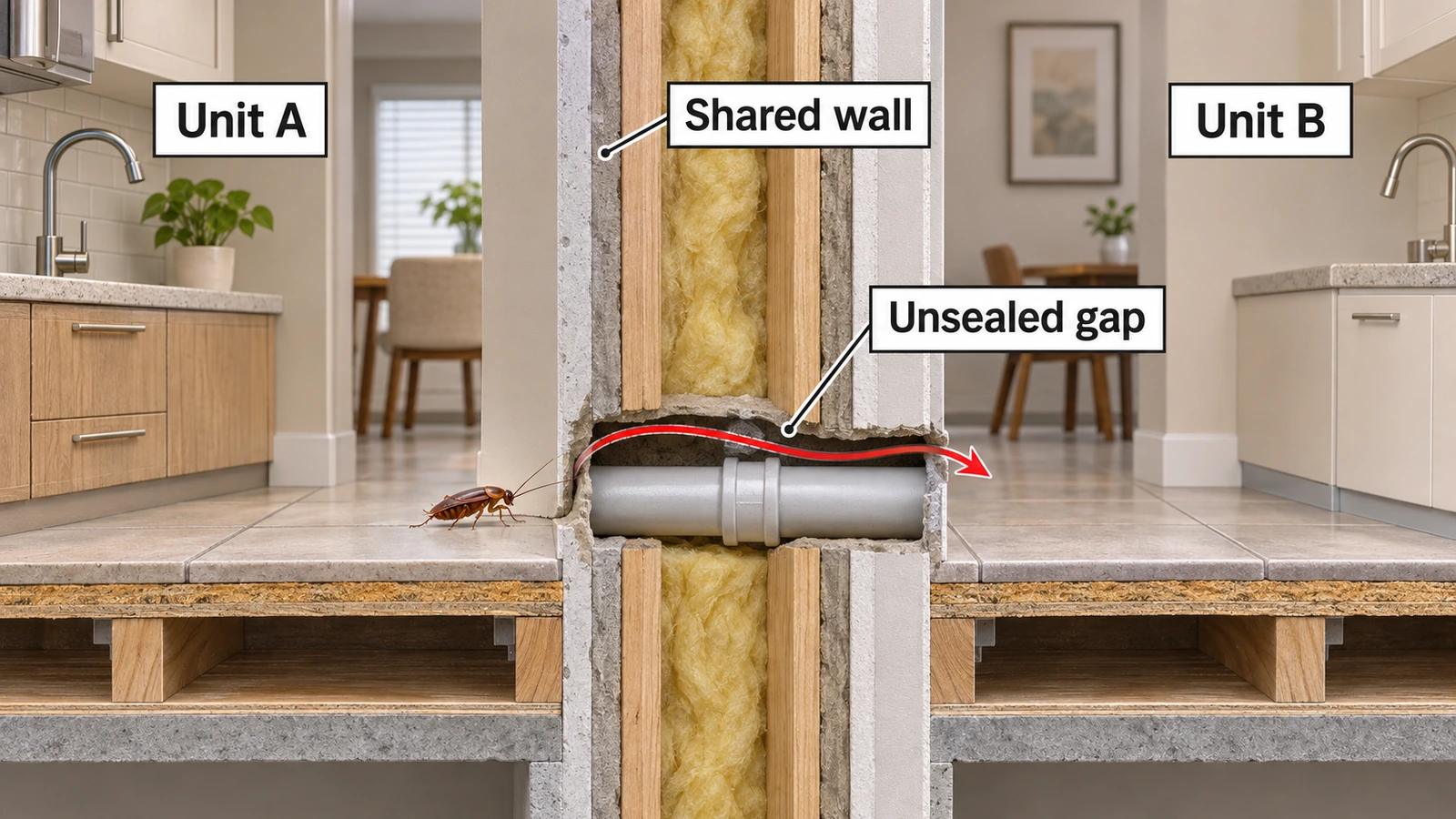
In apartments, duplexes, and other connected homes, the source may be beyond your own unit.
Cockroaches can move through gaps alongside plumbing and electrical lines, openings in shared walls, utility spaces, and hallways. They do not need to travel through the inside of a water pipe to follow the plumbing route.
German cockroaches are a particular concern in multifamily housing because established indoor populations can spread to adjoining spaces. Roaches appearing in a kitchen may therefore have originated elsewhere in the building, even when the kitchen itself is well maintained.
This possibility becomes more relevant when sightings occur near shared walls, utility penetrations, or entrances connected to common areas.
Where Different Cockroach Species Usually Come From
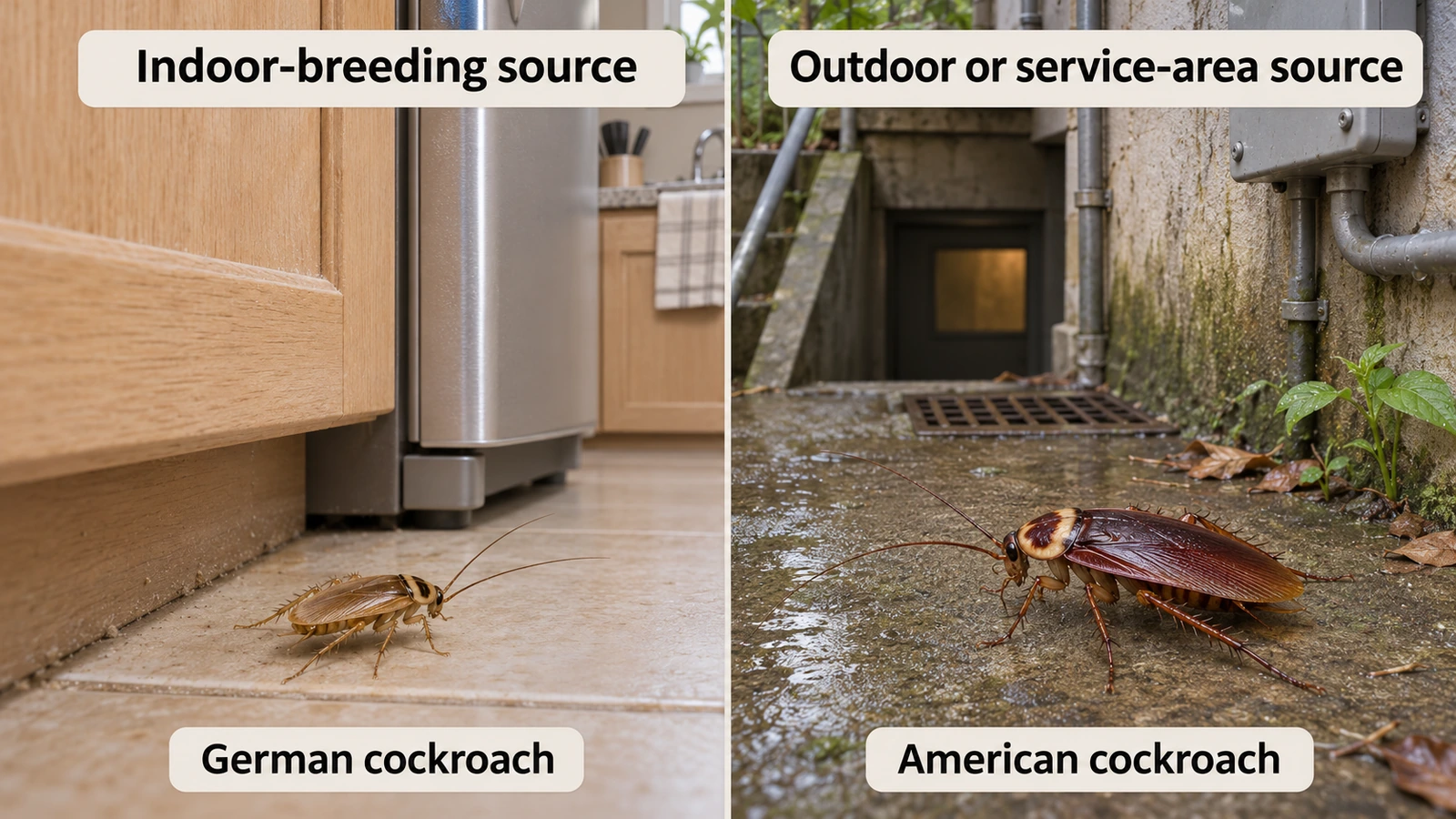
The species matters because not every cockroach found indoors is naturally an indoor pest. German and brown-banded cockroaches are strongly associated with indoor living, while several larger species frequently originate in outdoor or building-service environments.
Location and behavior provide useful clues, but size and color alone cannot reliably identify every cockroach. Regional species may look similar while having very different habits.
German cockroaches: usually an indoor source
German cockroaches are widespread in U.S. homes, apartments, restaurants, and other buildings. They typically live and reproduce in protected spaces near kitchens, bathrooms, and appliances.
If they appear in a home, the original introduction may have involved belongings or movement from another infested indoor area. Once established, they can reproduce locally.
Repeated sightings of small roaches around kitchen equipment, particularly when insects of different sizes are present, make an existing indoor population worth investigating.
The name “German cockroach” is not a clue that the insect recently arrived from Germany.
American and Oriental cockroaches: damp structures and exterior routes
American cockroaches are often associated with sewers, utility tunnels, basements, crawl spaces, and other sheltered environments. They can move into occupied rooms from these locations and may also maintain populations inside suitable buildings.
Oriental cockroaches favor cooler, damp places such as ground-level utility areas, garages, basements, and sheltered outdoor spaces. They commonly enter at or near ground level.
Both can appear in bathrooms or around plumbing. Their presence near a sink, however, should not automatically be interpreted as proof that they came through the drain opening.
Smokybrown, Asian, wood, and Turkestan cockroaches: regional differences
In the warm, humid Southeast, smokybrown cockroaches are often associated with outdoor vegetation and sheltered areas around buildings, although they can also occupy attics and other protected structural spaces.
Asian cockroaches, found in parts of the southeastern United States, live primarily outdoors and are strong fliers. They may approach porch lights and enter through nearby openings. They can resemble German cockroaches, making behavior and proper identification especially useful.
Wood cockroaches occur in wooded environments and may enter homes accidentally through doors, windows, or firewood. Many do poorly indoors and do not establish household populations.
In California and parts of the western and southwestern United States, Turkestan cockroaches are associated with outdoor habitats such as irrigation boxes, ground-level crevices, and drainage structures. They can wander indoors without establishing an indoor population.
These regional differences explain why the same kind of sighting can have different implications in a Florida home, a California house, or a wooded property in Pennsylvania.
Brown-banded cockroaches: an indoor source away from the kitchen
Brown-banded cockroaches also live and reproduce indoors, but they can occupy warmer, drier locations than those typically associated with German cockroaches.
They may be found around furniture, electronics, closets, elevated wall fixtures, and living spaces away from sinks.
A cockroach appearing in a bedroom or living room therefore does not necessarily suggest an outdoor entry point. It may belong to a species already established inside the structure.
For a closer comparison, see the types of cockroaches in the U.S. before judging the likely source.
Good to Know
A clean home can still get cockroaches. An insect can arrive in a box or migrate from another apartment regardless of housekeeping. Food, moisture, and shelter influence whether roaches survive and multiply after arrival, but they do not necessarily explain how the first one entered.
What the Location of a Cockroach Tells You
The place where you notice a roach is useful, but it is not always where the insect entered. What matters is the combination of location, likely species, and repeated activity.
A small roach near the refrigerator or kitchen cabinets
An indoor species may already be using spaces around the appliances or cabinetry. If sightings started after moving in or bringing home used equipment, transportation on belongings is another possibility.
Repeated activity in the same area is a reason to examine the signs of a cockroach infestation before assuming the insect was simply passing through.
A large roach near a patio door, garage, or basement
An outdoor-associated species is a reasonable possibility, especially when sightings occur close to the building perimeter.
A poorly fitted door sweep, damaged screen, or gap where utilities enter the wall may explain how it crossed inside. The surrounding outdoor habitat may provide additional context.
One large roach near an entrance calls for a different interpretation than persistent small-roach activity around kitchen appliances.
A cockroach in the bathtub or beside the sink
Bathrooms are often connected to wall cavities and utility spaces. A cockroach found near a fixture may have traveled along the outside of a pipe or through an opening where plumbing passes through the wall.
Some cockroaches also occupy drainage and sewer environments, but the position where you find one does not establish the exact route.
For example, an Oriental cockroach may end up trapped in a smooth-sided bathtub after entering by another route.
Repeated cockroaches in an apartment
If sightings continue near shared walls, building hallways, or plumbing penetrations, movement between connected spaces deserves consideration.
Record where and when the roaches appear and inform building management when a shared source is plausible. An investigation may need to consider adjoining units or service areas rather than only the room where an insect was found.
Once the evidence points to an established indoor population, the next question becomes how to get rid of cockroaches, not simply where they came from.
Frequently Asked Questions
Can cockroaches really come up through drains?
Yes, certain cockroaches can move through sewer or drainage environments, particularly where plumbing is damaged or a floor-drain trap has lost its water seal.
But many roaches seen around sinks and bathrooms arrive through nearby structural openings. Check the gaps around the pipes and the condition of the plumbing before concluding that the insect emerged from the fixture itself.
Why did a large cockroach suddenly appear after heavy rain?
Heavy rain can disturb outdoor habitats and contribute to movement into buildings, particularly for outdoor-associated species such as American cockroaches.
If a large roach appears near an exterior entrance after heavy rain, an outdoor source is plausible. The species and any continued activity will help determine whether the incident was temporary or whether the building has a more persistent problem.
Can cockroaches reach an upper-floor apartment?
Yes. A cockroach can arrive on belongings, travel through connected building spaces, or enter from a hallway. Some outdoor species can also fly toward elevated lights and openings.
Living several floors above ground does not eliminate the possibility of cockroach entry. The likely pathway depends on the species and the layout of the building.