
Comparison
Ant spray: indoor vs. outdoor uses and when it works
The right ant spray depends on where ants travel, whether you need contact or residual action, and what the product label allows. Compare indoor and outdoor uses, and learn when bait makes more sense.
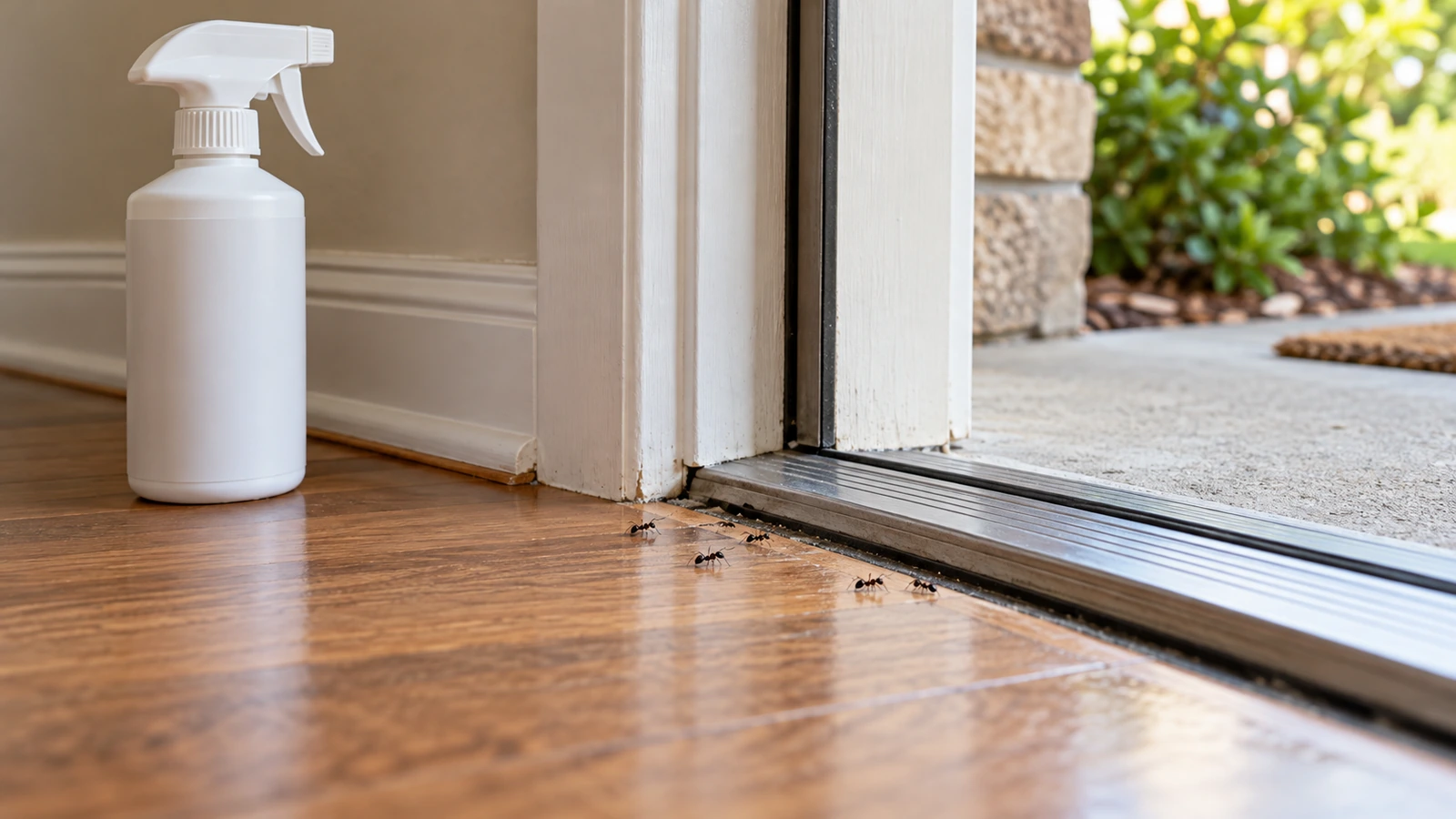
A line of ants disappears after you spray it, only for more ants to show up through another gap the next day. The spray may have done exactly what it promised: kill the insects it reached. But that is different from stopping the colony sending them into your home.
Choosing an ant spray starts with two questions. Where can this particular product be used, and are you trying to remove visible ants, protect an entry point, or deal with a recurring invasion?
If you are still working out why ants are appearing or where they enter, start with ants in the house before choosing a treatment.
What to Compare Before Buying Ant Spray
The front of an ant killer spray can emphasize quick kills, long-lasting protection, or indoor and outdoor use. The directions on the back establish where and how those claims apply.
Start with the actual location of the ants. A spray intended for outdoor foundation treatments may be unsuitable for the inside of a kitchen cabinet. A contact spray that works on exposed ants may offer little benefit when the insects are repeatedly emerging from a hidden nest.

Five label checks that matter
Before buying, compare these details:
- Target pest: Make sure ants are listed. For a specialized ant problem, check whether the specific species or treatment is covered.
- Permitted site: Look for the exact indoor or outdoor application area, such as spot treatment, cracks and crevices, foundation, lawn, or nest.
- Type of action: Distinguish contact killing from residual control. A fast kill does not automatically mean lasting protection, and a residual claim does not mean the colony will be eliminated.
- Surface and application restrictions: Check where treatment is permitted, which surfaces are excluded, and whether the product requires a particular application method or preparation.
- Exposure and environmental instructions: Read the directions for children, pets, ventilation, drying or reentry, weather conditions, and protection of water and non-target organisms.
The formulation also affects practicality. An aerosol may be convenient for a small, directed treatment, while a ready-to-use trigger sprayer may suit a different labeled surface application. Concentrates require careful measuring and preparation under their own instructions.
Neither the container size nor the application format establishes which treatment is more effective.
Ant Spray Types Compared
The useful comparison is between the job, the permitted application site, and the result you can reasonably expect.
| Spray approach | Where it may fit | Main advantage | Main limitation or label check |
|---|---|---|---|
| Direct-contact spray | Exposed ants at a labeled application site | Fast removal of visible workers | May have little effect on the colony; residual activity varies |
| Indoor residual spot or crack-and-crevice spray | A specific indoor route or gap where the label permits treatment | Can continue acting on ants crossing treated surfaces | Site restrictions, exposure, bait interference, and surface conditions |
| Outdoor residual perimeter spray | Labeled exterior entry points or foundation areas | Can temporarily reduce ants entering across a treated route | Does not reliably eliminate the colony; runoff, weather, and surface restrictions matter |
| Outdoor nest-targeted spray | An accessible nest or mound specifically covered by the product label | Treats a more localized source rather than only passing workers | Not suitable for every species, mound, lawn, or nesting location |
These are application approaches, not mutually exclusive product categories. A single product may fit more than one row, while another may be restricted to one type of treatment.
A spray that promises weeks of residual action also needs a closer look. The duration may be qualified by surface type, target insect, or other test conditions. Do not compare two advertised durations as if they guaranteed the same performance in every home or yard.
The Trade-Offs: Fast Results Versus Lasting Control

Spray is strongest when the problem you want to solve is accessible. If the ants are exposed and the location is approved for treatment, a suitable spray can kill them quickly.
The limitation is what happens beyond the treated area. Ant colonies can remain active in soil, wall voids, or other hidden nesting sites while new workers replace those killed on the surface.
Why a residual barrier is not the same as colony control
A residual ant spray can reduce crossings at an entry point. It does not automatically carry treatment into the nest.
When ants repeatedly enter through different openings, spraying each new line may produce short periods of relief without changing the underlying source. A barrier can also redirect activity rather than eliminate it.
Outdoor applications introduce another compromise. Wind can cause spray drift, while rain or irrigation can move residues away from treated surfaces. Broad treatments on pavement near drains can create unnecessary contamination risks. A targeted application is preferable when a labeled treatment is genuinely needed.
When bait is the better alternative
Ant bait works differently. Foraging workers collect an attractive, slow-acting insecticide bait and may carry it back into the colony, allowing treatment to reach ants that a surface spray cannot.
That makes bait particularly useful when ants keep returning and the nest is hidden or inaccessible. Bait is slower than contact spray, but its objective is different.
Spraying ants on or near a bait station can prevent them from feeding and interfere with bait performance. The same problem occurs when a repellent spray disrupts the route workers need to reach the bait.
If colony control is your priority, compare ant bait options before buying another spray.
Species can also change the decision. Some ants, including pharaoh ants, can establish additional nests through colony budding when disturbed by certain insecticide treatments. A generic spray approach is particularly unsuitable when that behavior may be involved.
When a targeted spray earns its place
An identifiable entry point, a manageable area, and a label that expressly permits treatment make a spray easier to justify. You can address the exposed activity without treating unrelated rooms or surfaces.
What to Watch For
An outdoor-use claim does not authorize spraying nearby sidewalks, driveways, drains, or vegetation. The exact treatment area, weather restrictions, and runoff precautions still govern where the product can be applied.

Which Ant Spray Should You Choose?
Match the spray to the problem you actually have
Different situations call for different decisions:
- A few ants on the kitchen counter: Start by removing the ants, cleaning the trail, and checking the source. A pesticide spray may add little value when the activity is isolated and manageable without one.
- Ants entering through a known exterior gap: A targeted outdoor residual treatment may help if the label permits that location. Correcting the entry route is still important.
- Ants repeatedly appearing from behind baseboards or cabinets: If the nest is inaccessible, bait may be more useful than repeatedly spraying the workers. A specifically labeled indoor spot treatment can have a limited role when immediate control is needed.
- Ants crossing a patio or garage entrance: Look at the actual application site, not just the words “outdoor ant spray.” A product labeled for one exterior surface may exclude another. Consider runoff and nearby sensitive areas before treating.
- Ant activity around an outdoor mound: Do not assume a general-purpose household spray is appropriate for mound treatment. The product must permit the species, site, and method involved. Fire ant problems can require a different, species-specific approach.
- Confirmed carpenter ants associated with possible wood nesting: Treating passing workers is unlikely to resolve a hidden colony. Follow a dedicated carpenter ant control approach rather than relying on a general ant spray.
The clearest reason to choose a spray is a specific, label-permitted treatment that addresses a defined part of the problem. If you cannot identify that role, buying a stronger spray is unlikely to be the best starting point.
Combine Targeted Control With Entry-Point Exclusion
A limited, properly labeled spray can reduce exposed ant traffic while you address a known entry route. It serves a short-term control function without requiring broad treatment of the surrounding area.
Sealing accessible gaps and removing nearby food or water attractants addresses the conditions that allow ants to keep entering. If the colony remains active and workers find other routes, reassess the method rather than expanding the spray treatment automatically.
Mistakes That Make Ant Spray Less Useful
A spray can be applied correctly to visible ants and still be the wrong choice for the overall problem. Avoid these common mistakes:
- Choosing the longest advertised residual duration without reading the conditions. A claim tested on certain surfaces or insects is not a guarantee of identical protection elsewhere.
- Treating wherever ants walk rather than where the label permits. Ant activity on a food-contact surface, near electrical equipment, or beside a pet bowl does not make that location suitable for spraying.
- Assuming the spray has become ineffective when ants return. The colony may never have been reached, the ants may be entering from another route, or the original treatment may no longer affect the area. Check what changed before applying more product.
More pesticide is not necessarily more control. Use only the amounts, locations, and reapplication intervals authorized by the label.
Frequently Asked Questions
Do plant-based ant sprays work?
Some plant-oil formulations can kill exposed ants on contact. Their residual activity is often limited compared with products designed for longer-lasting surface treatment, although performance varies by formulation.
Do not assume that a botanical or “natural” claim makes a spray suitable for every indoor surface or harmless to pets. Check its ingredients, directions, and precautions.
Is an indoor and outdoor ant spray safe to use around pets once it dries?
Drying is an important exposure precaution, but it is not the only requirement. The product must first be suitable for the exact application site and used according to its label.
Remove pets and their bowls, bedding, and toys from the treatment area before applying. Keep them away until the spray has dried and any longer label-specified reentry period has passed. Follow any ventilation or additional precautions on the product.
Explore this topic further:


