
Guide
Acrobat ants: identification, nests, and control at home
Small ants near a window or wood trim may be acrobat ants. Learn the body features to check, what nesting clues mean, and how to control the source without treating blindly.
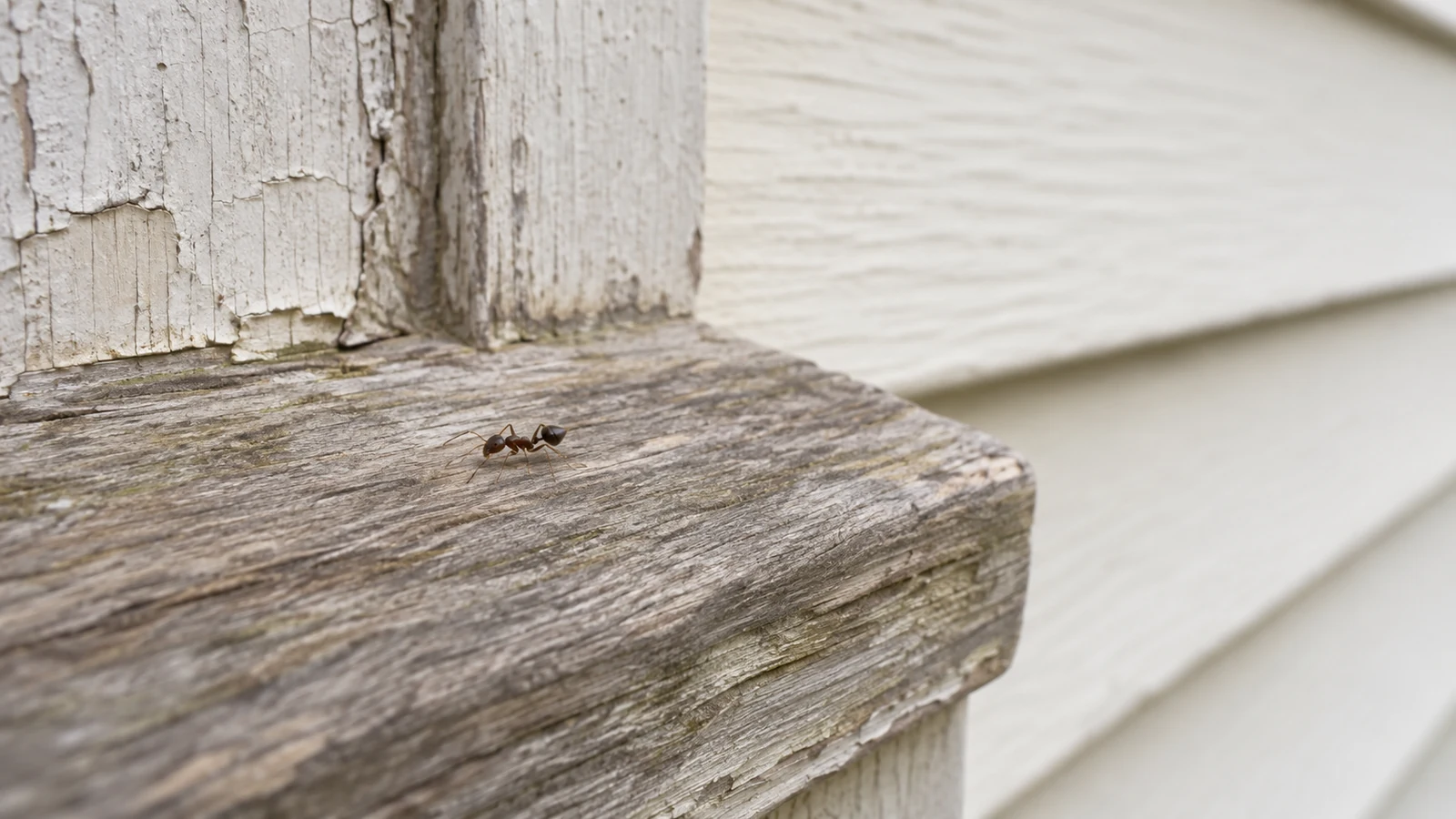
A trail of tiny ants along a window frame can look like a carpenter ant problem, especially if the wood is damp. But the ants might be foraging from a tree outside rather than living in the frame. The distinction changes what you should inspect and how you should respond.
Acrobat ants belong to the genus Crematogaster. They are common in many parts of the United States, and several species share the same recognizable body shape. Start with the insect and its route, then look at the conditions around the suspected nest.
What acrobat ants are and why they enter homes
These small ants normally live outdoors, where they use dead wood, tree cavities, and sheltered spaces. Workers hunt or scavenge for insects and collect sugary honeydew from aphids and similar plant-feeding insects. Food or shelter can also draw their foragers into a house.
An ant coming through a window gap may have a colony in a nearby branch, stump, or decaying piece of wood. Another colony may occupy an existing cavity in damaged trim or insulation. This is why the appearance of a worker indoors and the location of its nest are separate questions. For the wider household context, see why ants come into the house.
Key Takeaways
- The heart-shaped abdomen, particularly from above, is a stronger identification clue than color alone.
- A trail inside can lead back to an outdoor nest or to a cavity in the structure.
- Moist or softened wood warrants a moisture check; a few ants on wood do not establish that the wood is damaged.
- Lasting control means dealing with the colony’s access, resources, or nest, not only the workers you can see.
How to recognize an acrobat ant
Generic ant shown for scale only; this image does not confirm an acrobat-ant identification.
Most workers are roughly 1/16 to 1/8 inch long, although size and coloring vary among species. They can be yellowish brown, reddish brown, or nearly black. From above, the end of the body has a distinctly pointed, heart-like outline.
When disturbed, a worker can lift that rear section, called the gaster, above its body. You do not need to provoke an ant to test this behavior. A clear close-up of an undisturbed worker is more useful than a blurry photo of an ant running along a wall.
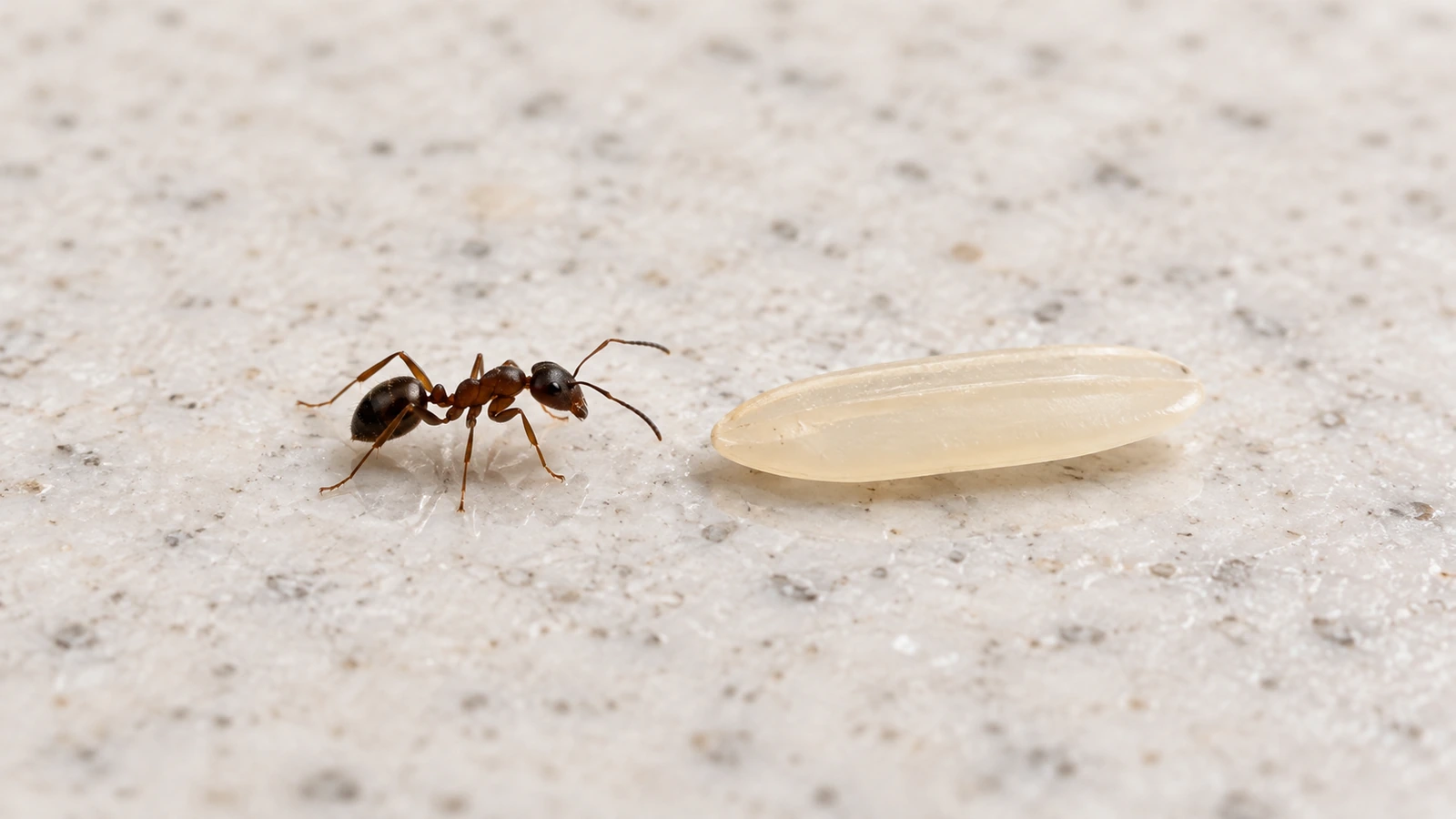
Generic ant shown for scale only; this image does not confirm an acrobat-ant identification.
Acrobat ants versus other small ants
Under magnification, acrobat ants have two narrow waist segments. Carpenter ants generally have one waist segment and a different body profile; many are noticeably larger. Other small ants can also have two waist segments, so node count alone is not enough. The pointed gaster, overall shape, and nesting context make the identification more convincing.
Avoid assigning a precise Crematogaster species from color or a single photo. The name acrobat ant covers several species across the U.S., not one uniformly colored insect.
Where acrobat ants build nests
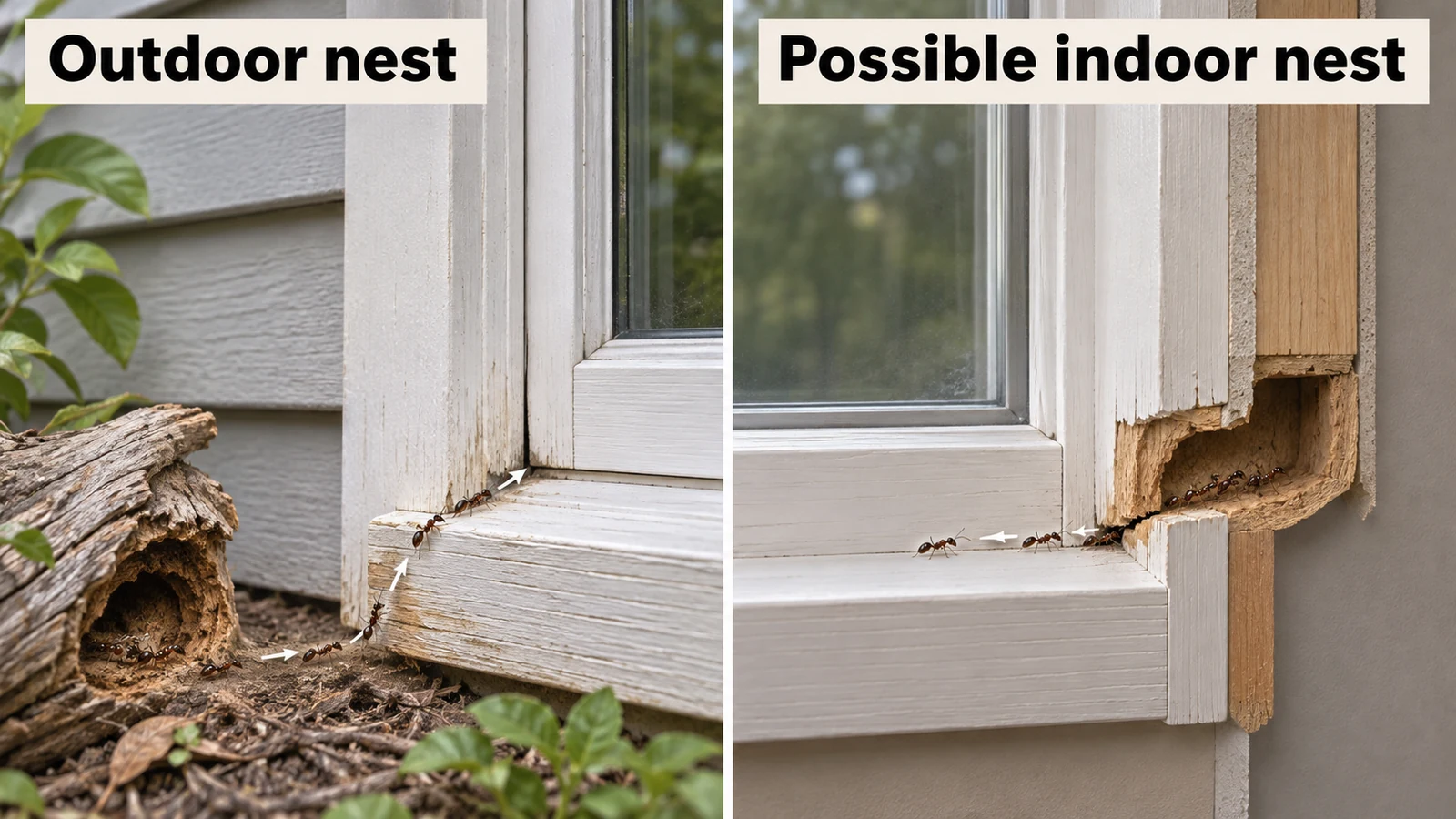
Outdoors, look for activity around old branches, softened stumps, fallen wood, tree cavities, and sometimes sheltered spaces under rocks. Trails can travel over siding, fences, shrubs, or branches that meet a building. Workers may visit plants where aphids provide honeydew even when the colony is elsewhere.
Indoors, possible nesting sites include voids around windows and doors, wall cavities, insulation, and wood already softened by moisture. Ants can occupy old galleries made by other insects. A recurring trail at a windowsill deserves an exterior check as well as a look at the frame itself.
Does finding them in wood mean structural damage?
Acrobat ants generally use cavities or deteriorated materials and may clear out or enlarge spaces in them. They are not usually responsible for the kind of major structural excavation associated with carpenter ants or termites. Soft trim, a roof leak, or debris at a gap should still be investigated because the underlying moisture problem may need repair.
A small pile of material near a window could be displaced insulation, nest debris, or wood particles. Its appearance alone cannot tell you which ant produced it.
How to assess activity around a house
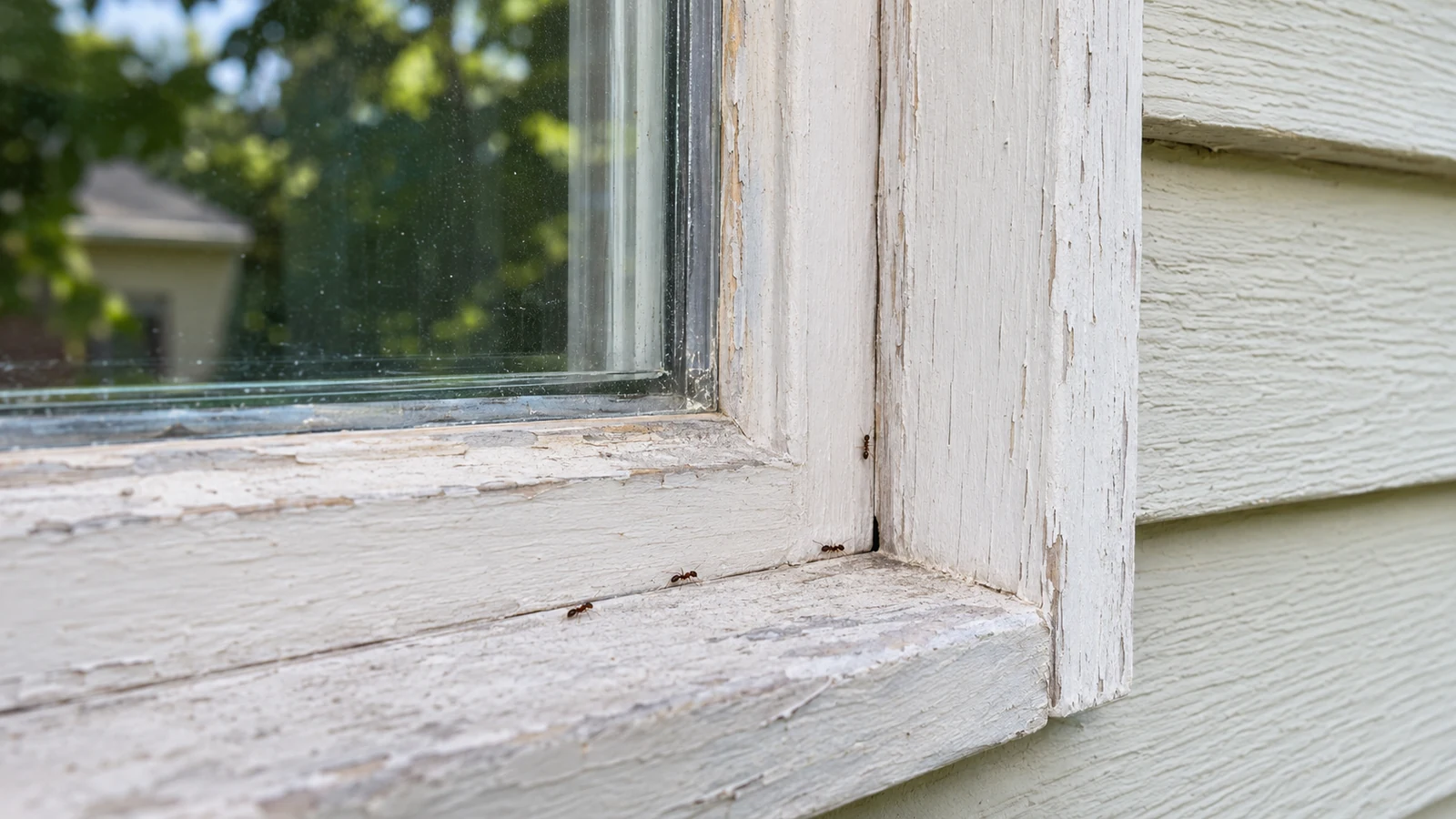
First, watch where workers travel. Do they come from a tree or exterior gap and head toward a food source? Or do they repeatedly appear from one section of trim, a wall opening, or the edge of insulation? Record the location before wiping away the trail.
Check accessible areas around window frames, door trim, roof drainage, and nearby wood for water staining or softness. If the wood is sound and activity is occasional, outdoor foraging is a reasonable explanation to investigate first. Repeated emergence from the same damaged area makes a nearby void more important to inspect.
Look for the source without opening a wall
Follow visible trails toward the outside, noting branches in contact with the building, decaying wood close to the foundation, and moist exterior joints. Inside, inspect only accessible trim and gaps. Do not remove electrical covers or cut into concealed spaces to chase ants.
If you see persistent debris, weakened trim, or signs that another wood-nesting insect might be involved, the issue deserves more than species guessing. Our guide to carpenter ant damage explains that separate concern without treating the two ants as interchangeable.
Practical Tip
Observe a trail before cleaning it. Note whether workers are moving toward a tree, a siding seam, or one window gap; that direction is more useful than the number on the countertop.
Watch For
Ants repeatedly emerging from wet trim, persistent loose material, or activity near damaged insulation merit closer inspection. Do not disturb wiring or concealed cavities yourself.
What works to control acrobat ants
The best approach depends on whether workers are entering from outdoors or nesting in the building. Remove accessible food residues, address leaks, and locate the route before deciding on a pesticide. Spraying a line of foragers may reduce what you see without reaching the colony.
For an accessible outdoor nest in loose, decayed material, correcting or removing the nesting material when safe and appropriate can address the source. A hidden nest in a wall or structural cavity is different: opening the wall or applying insecticidal dust into voids is not a routine homeowner task.

Choosing a targeted control method
Ant bait can be useful when it is labeled for the target ants and the intended indoor or outdoor location. Workers must actually accept the bait and carry it back; food preferences and results can vary. Follow the label for placement and for keeping children and pets away. Avoid applying repellent sprays around bait placements, which can interfere with feeding.
If a nest is inaccessible or ant traffic appears to come from inside a wall, a qualified pest professional may be needed to identify the source and choose a treatment permitted for that site. The ants-in-walls guide covers the broader hidden-route question. A few occasional outdoor foragers, by themselves, do not justify opening walls or paying for extensive treatment.
Essential Steps
- Identify the worker using the gaster shape and other visible features.
- Trace activity to an outdoor route or a likely sheltered cavity.
- Correct water intrusion, decayed material, and accessible attractants where found.
- Use only an appropriate labeled control if necessary, then monitor whether the route remains active.
How to prevent acrobat ants from returning
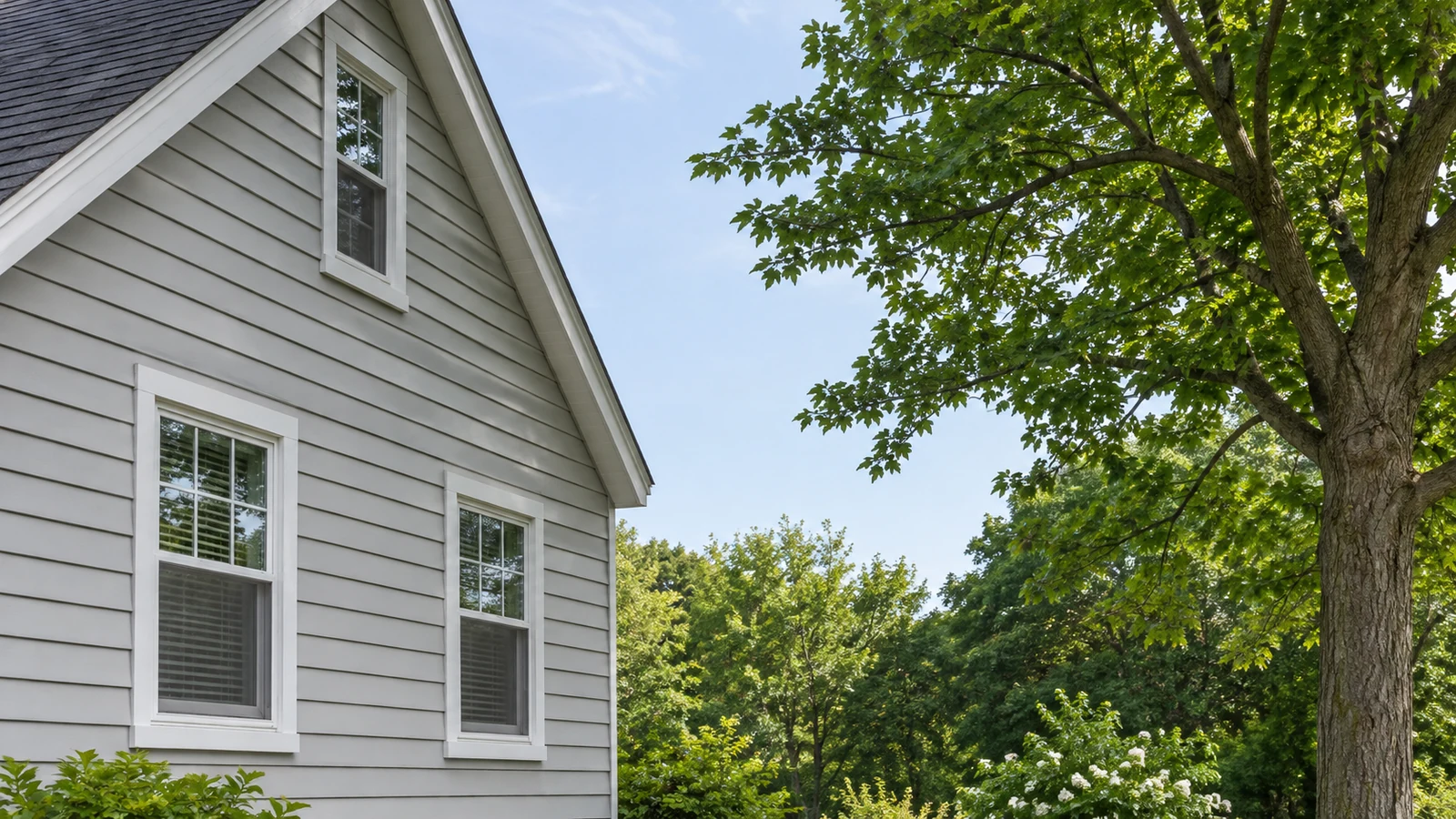
Keep gutters, flashing, and window seals in good repair so wood around the building can dry. Replace wood that is already rotten when repair is appropriate, and keep loose firewood and decaying timber away from exterior walls.
Trim vegetation that provides direct contact with siding or the roof, and close accessible entry gaps once you understand the active route and any treatment requirements. Reduce accessible food indoors while checking the outdoor activity that may be sustaining foragers.
If workers appear again at the same frame, compare the location with your earlier observations and recheck for moisture. Recurrence at one damp opening is more useful information than an isolated ant elsewhere in the house.
Good to Know
Acrobat ants can bite when handled, and some release an odor when disturbed. Their raised-abdomen posture is a defensive behavior, not proof of a nearby nest or damaged wood.
Explore this topic further:
Types of ants in the U.S.: how to identify common household species


