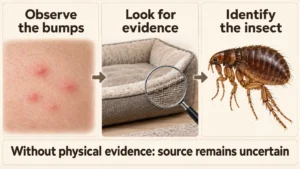
Identification
What do bed bug bites look like? Symptoms, timing, and clues
Bed bug bites can look different from one person to another and may appear days after exposure. Learn which skin reactions are possible, how to check your surroundings, and when the symptoms warrant medical attention.
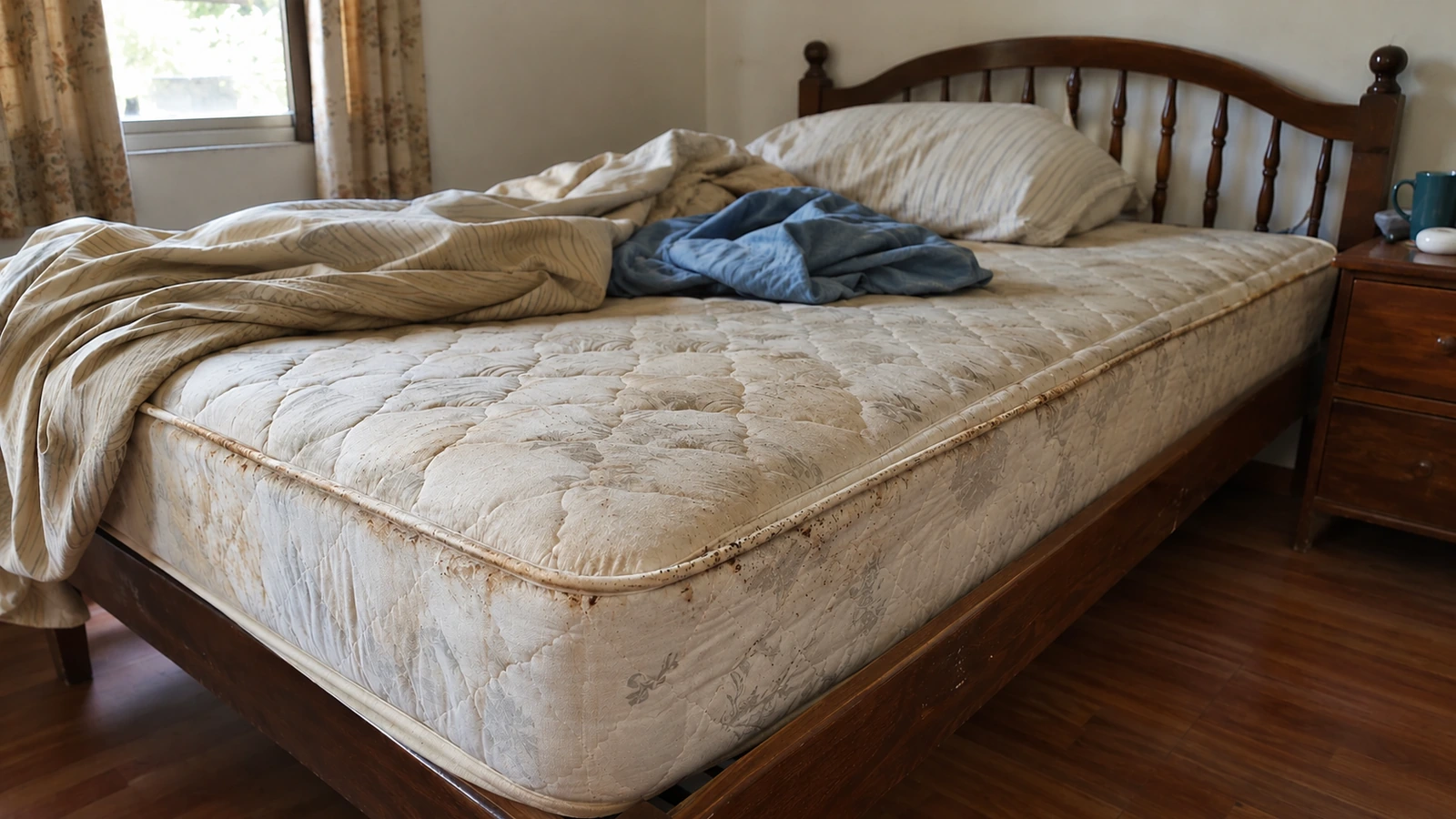
You wake up with a few itchy bumps on your arm, but the person sleeping beside you has none. It is easy to assume that the marks came from something in the bed. Before you start treating your bedroom, separate what you can see on your skin from what you can actually find around the bed.
What bed bug bites can look like
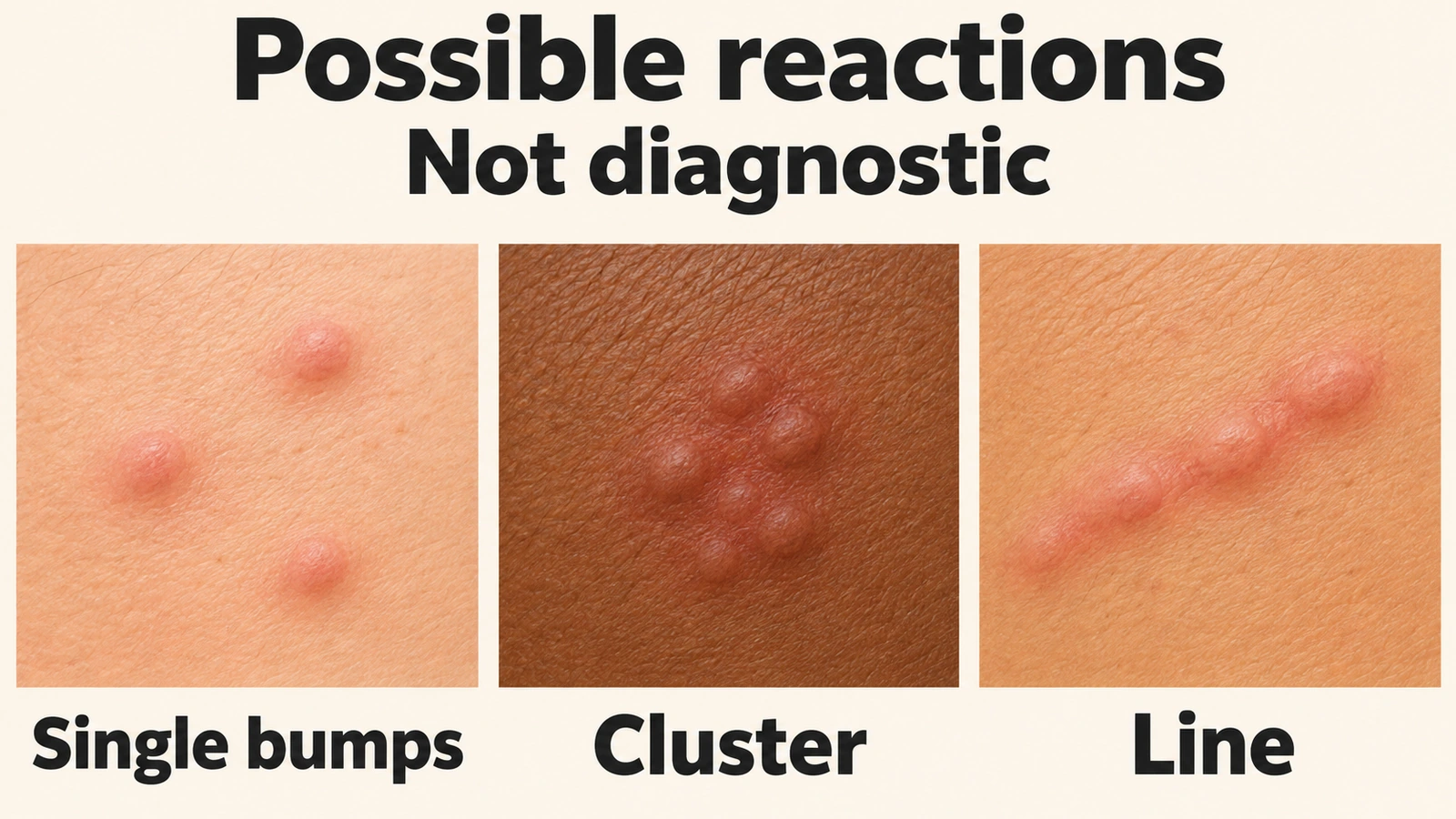
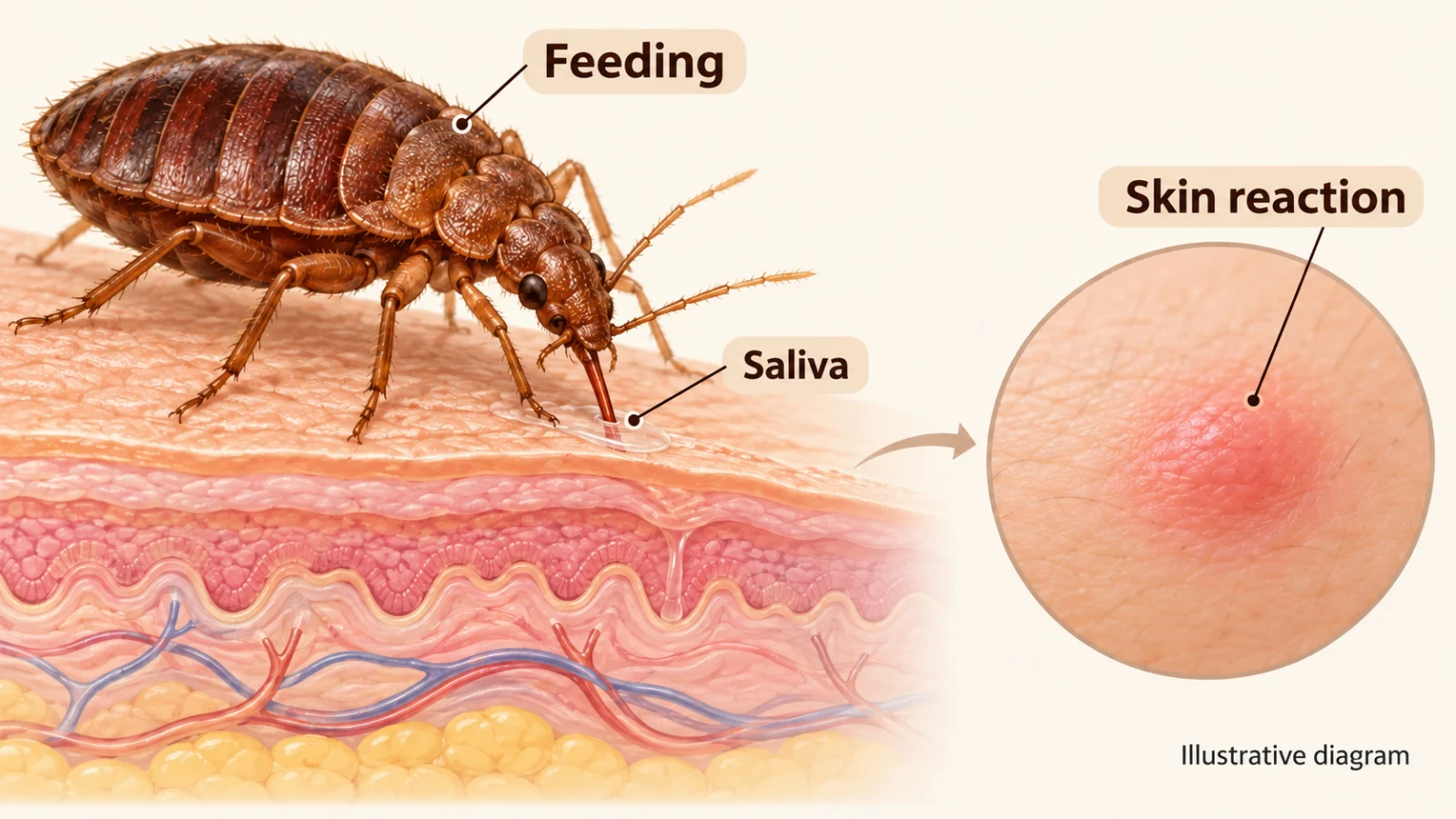
Bed bug bites can cause small raised bumps or larger, itchy welts. Some have a darker spot in the center, while others look like ordinary areas of swelling. On lighter skin, the affected area may look pink or red. On darker skin, it may appear brown, reddish, or purple, and the change in color can be less noticeable.
The illustrations show examples of possible skin reactions, not a way to identify the insect responsible.
Identification in 30 Seconds
- Itchy bumps or welts may occur singly, in groups, or in a line.
- Exposed areas such as the arms, neck, face, and hands are common bite locations.
- People exposed to the same bed bugs may react differently, including having no visible marks.
- Look for physical evidence near sleeping areas before concluding that bed bugs are present.
Itching is a reaction to the insect’s saliva. Some people develop very little swelling, while others experience pronounced welts or blisters. The familiar pattern of three bites in a row is only one possible arrangement. There is no characteristic number or spacing that identifies bed bugs.
Where to look for evidence of bed bugs
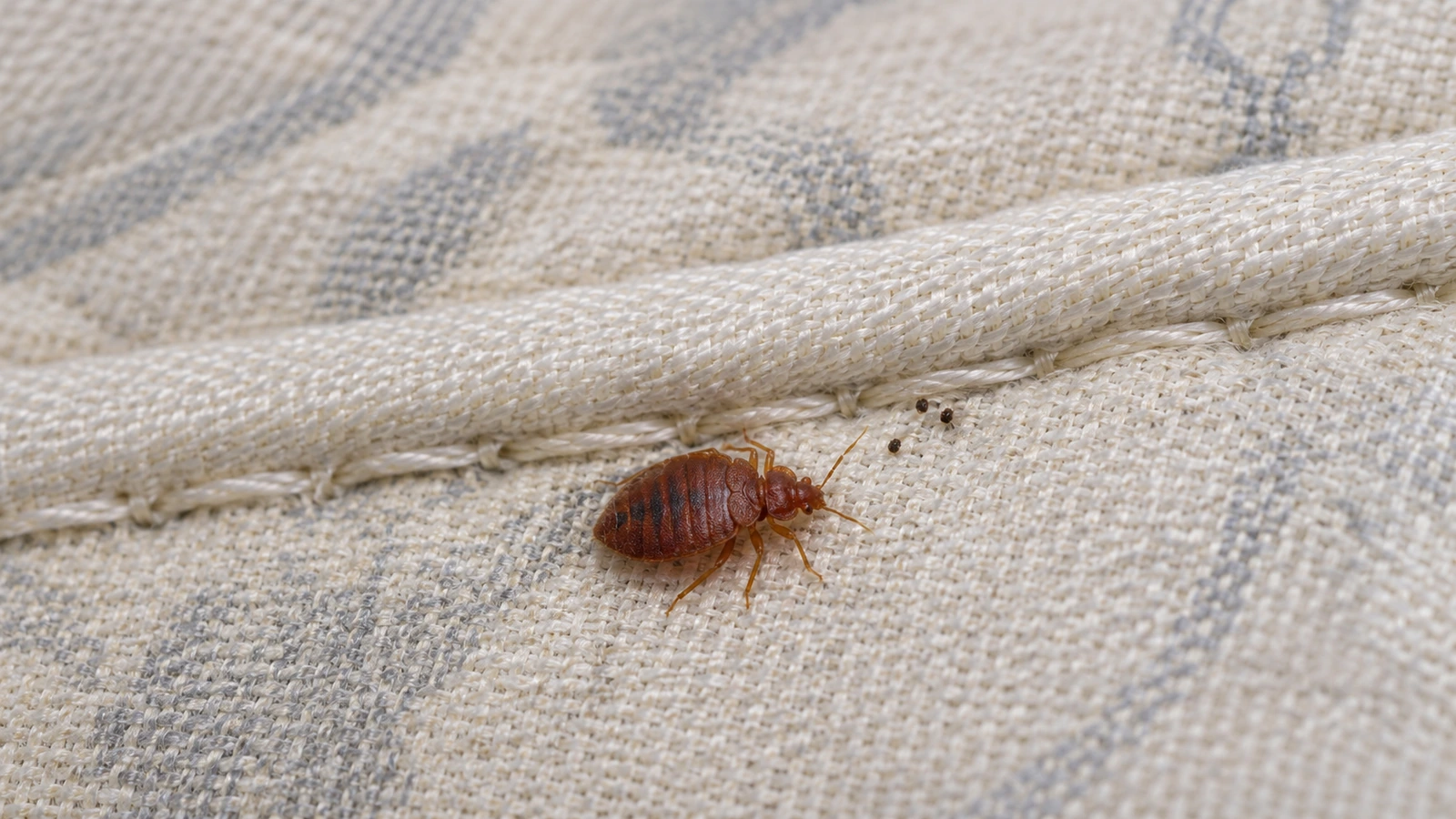
Start with the area where you sleep. Check the mattress seams, piping, box spring, and accessible joints of the bed frame. You are looking for live insects, dark fecal spots, pale shed skins, or tiny eggs in sheltered areas.
A rusty mark on a sheet can have several explanations. Pay more attention to clusters of dark spots and insect remains in the seams than to an isolated stain on the bedding.
If you find a suspect insect, compare it with pictures showing what bed bugs look like at different life stages. For a more complete inspection, see the signs to check first when looking for bed bugs.
Identification Mistakes
- Assuming three marks in a row must be bed bug bites.
- Comparing skin photos online as if matching the shape could identify the pest.
Key Clue
A live insect correctly identified as a bed bug in a sleeping area establishes its presence there. Skin marks alone cannot provide that evidence.
What to Watch For
Small infestations can be hard to detect during a single inspection. A quick look at clean sheets is not enough to rule them out.
What the timing and pattern of bites can tell you
When do bed bug bites appear?
You may not feel a bed bug feeding. Skin reactions commonly become noticeable a day or several days later, and in some people they can take up to 14 days to appear. With repeated exposure, reactions may develop sooner.
This matters if you have recently stayed in a hotel or slept somewhere else. Finding new welts after returning home does not tell you exactly where the exposure occurred. Record when you noticed the marks and where you recently slept, without assuming the two events happened at the same time.
Many mild reactions resolve within a week or two, although recovery varies. Old and newly noticeable marks can overlap, so their appearance is not a reliable way to count new bites.
What if only one person in the household has marks?
Two people can sleep in the same bed and have different skin responses. The person without visible welts may still have been bitten. Check the shared sleeping area rather than assuming that bed bugs are feeding on only one occupant.
What else could explain itchy bumps?
Mosquitoes, fleas, and other biting arthropods can cause similar marks. Hives, eczema, and other skin conditions can also resemble insect bites. Consider recent outdoor exposure, pets, and changes in products that come into contact with your skin.
If flea exposure seems plausible, see flea bites vs. bed bug bites for the relevant differences and environmental clues.
How serious are the bites?
Bed bugs are not known to transmit diseases to people. The main concerns associated with bites are discomfort, disrupted sleep, allergic reactions, and the possibility of a skin infection after scratching.
The intensity of itching and the number of welts reflect a person’s skin response and exposure, not the size of an infestation. A strong reaction can occur even when very few insects are found.
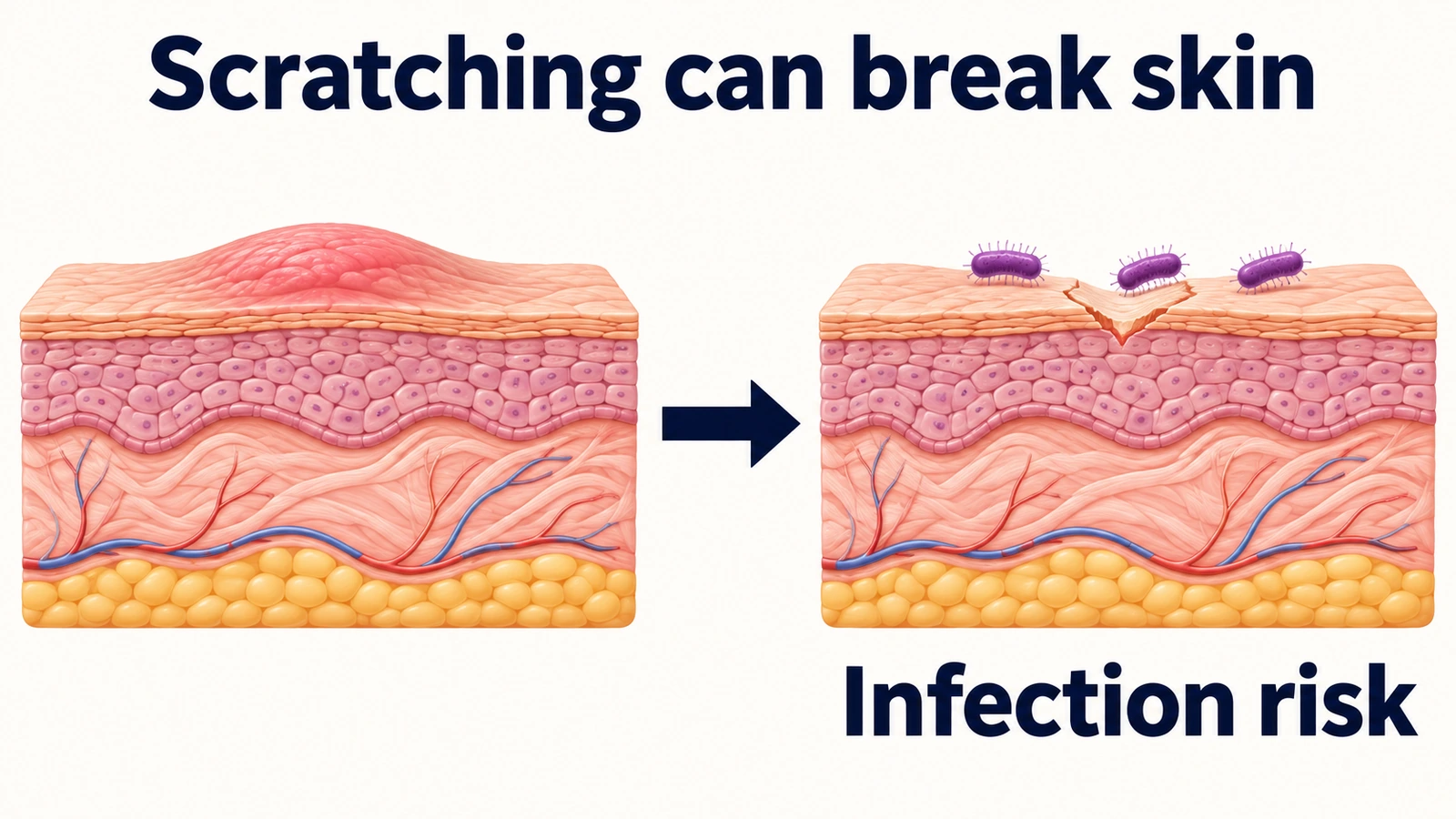
Seek medical care promptly if you develop extensive blistering, marked swelling, increasing tenderness, spreading redness, drainage such as pus, or fever. Consult a healthcare provider if unexplained skin symptoms persist or keep recurring. Call 911 for signs of a severe allergic reaction, such as difficulty breathing, swelling of the tongue or throat, or fainting.