How-To
Ants in the lawn: when to act and how to control them
Not every ant nest calls for lawn treatment. Learn how to assess a problem patch, protect your grass, choose targeted control when needed, and monitor results.

You notice little piles of soil in the grass, or ants moving through the same patch every time you mow. It is tempting to spread an ant killer over the lawn, but the first useful step is to see what the insects are actually doing.
Many lawn ants help aerate soil and prey on other insects. Problems are more specific: soil piles that interfere with mowing, grass covered by repeated excavation, or aggressive ants where people use the yard. The approach below helps you decide what needs attention without treating healthy turf unnecessarily.
- Difficulty: Basic for observation and lawn care; targeted control depends on the ant and the site.
- Equipment: A camera for close photos, a small marker for the affected patch, and a light garden rake if surface soil needs attention.
Check the lawn before deciding to treat
Walk the lawn and focus on the places where activity keeps showing up. Are workers just crossing the grass, carrying food, or entering a specific opening in the soil? Is a mound covering grass blades or catching the mower? Look at the turf immediately beside it, not just the ants.
Ants rarely eat lawn grass. Repeated excavation can pile soil over small areas, interfere with mowing, and sometimes leave nearby grass struggling. A broad brown patch with little ant activity may instead have another cause, such as drought, poor drainage, or a different turf pest.
If most activity is along the foundation, garden beds, or patio rather than within the turf, the broader outdoor ant control guide is a better fit. For an isolated patch of lawn, keep your initial inspection local.
Before You Start
If ants swarm defensively or sting near a mound, keep children and pets away and avoid disturbing the nest. Some stinging species occur only in certain U.S. regions; mound shape, ant color, and size alone are not enough for reliable identification.
How to handle ants in the lawn, step by step
Start with the affected patch and choose the least disruptive response that actually solves the problem. Treating every visible worker does little to address a nest and can unnecessarily expose the rest of the yard.
Step 1: Find the active area
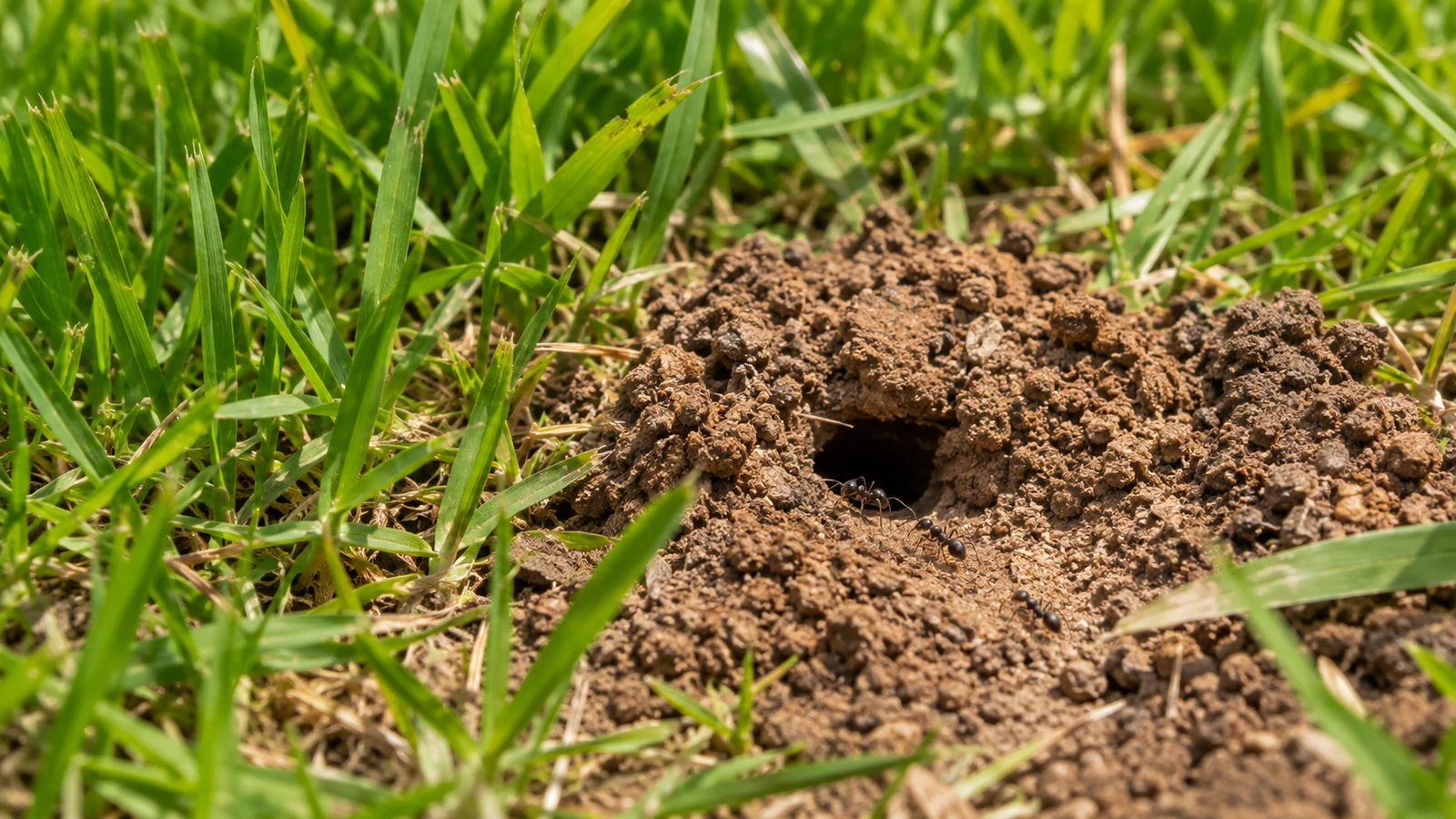
Watch from a comfortable distance before mowing or watering. Look for workers entering a soil opening, fresh loose earth appearing in the same spot, or traffic connecting the lawn to a border or walkway. A photo of the workers and the surrounding patch helps you compare later activity.
Mark the problem area discreetly so you can return to the same place. Do not dig into an unfamiliar mound to see what is inside. If ants are only passing through, the colony may be elsewhere.
Step 2: Decide whether the activity needs control
Leave ordinary foraging alone when the grass is healthy, the mound is minor, and there is no sting risk or practical nuisance. Ants are part of a functioning lawn ecosystem, and removing one harmless colony may simply leave space for others.
Action makes more sense where soil repeatedly covers grass, mower blades strike raised mounds, or ants pose a credible safety problem in a regularly used area. The decision is about the effect on this patch of turf, not how many ants you can count at one moment.
Step 3: Start with turf care where it is safe
For a small, non-stinging mound that only leaves loose surface soil, gently redistribute the excess soil with a light rake when the area is safe to approach. This improves the surface for mowing but may need repeating if the ants continue excavating.
Keep the surrounding turf dense with mowing, watering, and overseeding suited to your grass and local climate. Thin, stressed areas can make small soil piles more visible. Do not flood a mound in the hope of driving the colony out; excess water can harm the lawn without reliably solving the ant problem.
Step 4: Treat a confirmed problem spot only when justified
If the same lawn site continues to interfere with use or involves ants that need control, choose a treatment whose current U.S. label specifically permits that ant and lawn application. A labeled mound treatment may fit one localized nest; an ant bait may be appropriate when the relevant workers are actively foraging. These approaches have different directions and timelines.
Read the label for where to place the material, whether turf must be dry, any watering or rain restrictions, and when children or pets may reenter. Use only the stated amount and the permitted application method. If you need to compare outdoor ant-control products, that is a separate product-selection decision, not a reason to spread a general-purpose insecticide across the whole yard.
For suspected fire ants, confirm the identity and use a fire-ant treatment guide suited to the situation rather than improvising around an active mound.

Protect the turf and avoid treatment mistakes

A patch treatment should solve a defined problem without creating a new one. Keep lawn chemicals away from nearby flowering plants, drains, and water, and pay attention to wind, runoff, and any restrictions on the particular label.
Baits and contact treatments are not interchangeable. Some baits need dry conditions and active foragers; some granules require watering after application. The label for the exact formulation decides, so an instruction remembered from another product can be wrong.
Avoid these common mistakes:
- Pouring boiling water, bleach, gasoline, or other household chemicals onto the mound. These can injure turf, create exposure hazards, and still leave the colony active.
- Applying a whole-lawn treatment to a single harmless mound or repeatedly spraying visible workers without checking the source.
- Disturbing an aggressive nest, or mowing directly over a raised mound before the area is safe.
- Reapplying a product because ants remain visible immediately afterward, without allowing for its labeled action time and retreatment instructions.
Check whether the lawn is improving
Return to the same marked spot during normal lawn care. Compare fresh soil deposits, how well grass blades remain uncovered, whether the mound still obstructs mowing, and whether ants continue to create a safety concern.
A flatter surface after raking alone does not establish that a colony is gone. Likewise, a slow-acting bait can take longer to affect nest activity than a contact treatment. Judge any pesticide result against its actual label, not an invented deadline.
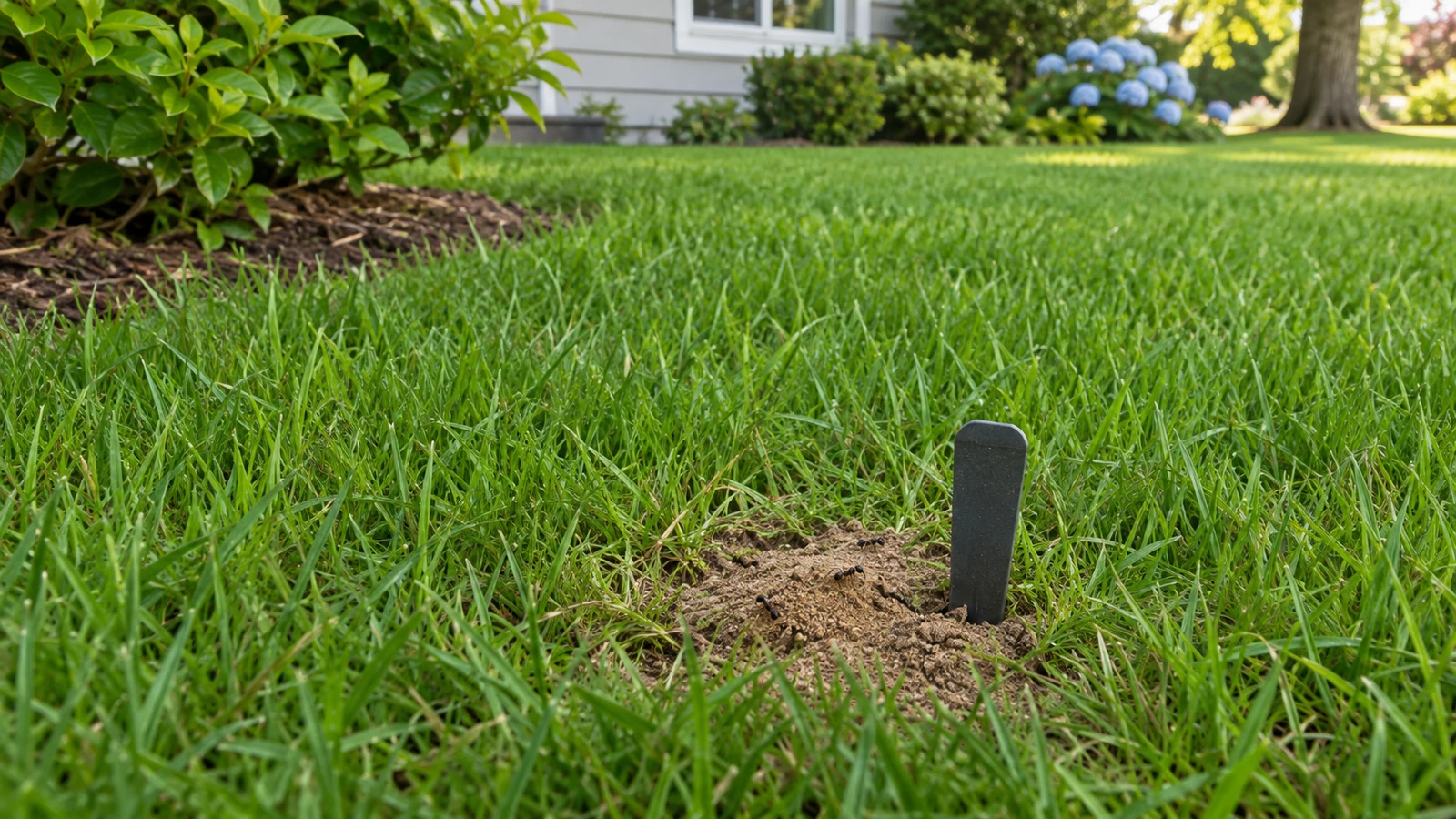
If workers are still crossing the grass but the turf is unaffected and the nuisance has ended, further treatment may be unnecessary. The goal is a usable, healthy lawn, not a yard with zero ants.
Expected Result
The affected patch can be mowed and used without recurring raised soil or unacceptable sting risk, while harmless ant activity elsewhere may continue.
If the mound returns or the grass keeps thinning
Fresh soil at the same spot may mean the nest remains active, or that ants are excavating again. Check the original location and the nearby turf before repeating any intervention. A new mound some distance away does not automatically mean the previous treatment failed.
If grass continues to yellow or thin with little ant activity, investigate lawn health separately. Increasing insecticide applications will not repair drought stress, drainage problems, or another turf condition.
When Should You Call a Professional?
Consider help when stinging ants repeatedly threaten a play area, widespread mound activity is difficult to manage safely, or you cannot identify an aggressive species well enough to select an appropriate response. For one minor, non-stinging mound in otherwise healthy grass, professional treatment is usually unnecessary.
Keep monitoring the problem area
Check the original patch during routine mowing and after conditions that have previously brought fresh mounds to the surface. Compare the same location rather than chasing every new ant trail in the yard. If you used a pesticide, follow its labeled retreatment limits and keep people and pets out for the required interval.
Maintain suitable turf coverage and address compacted or thin spots as ordinary lawn-care issues. If repeated mounds are the main concern, the separate article on ant hills explains what those structures can indicate and when mound-specific control is appropriate.
Explore this topic further: