
Identification
Drain fly larvae: What they look like and where they breed
Recognize drain fly larvae in moist drain buildup, check likely breeding sites and separate them from similar small worms before choosing the next step.
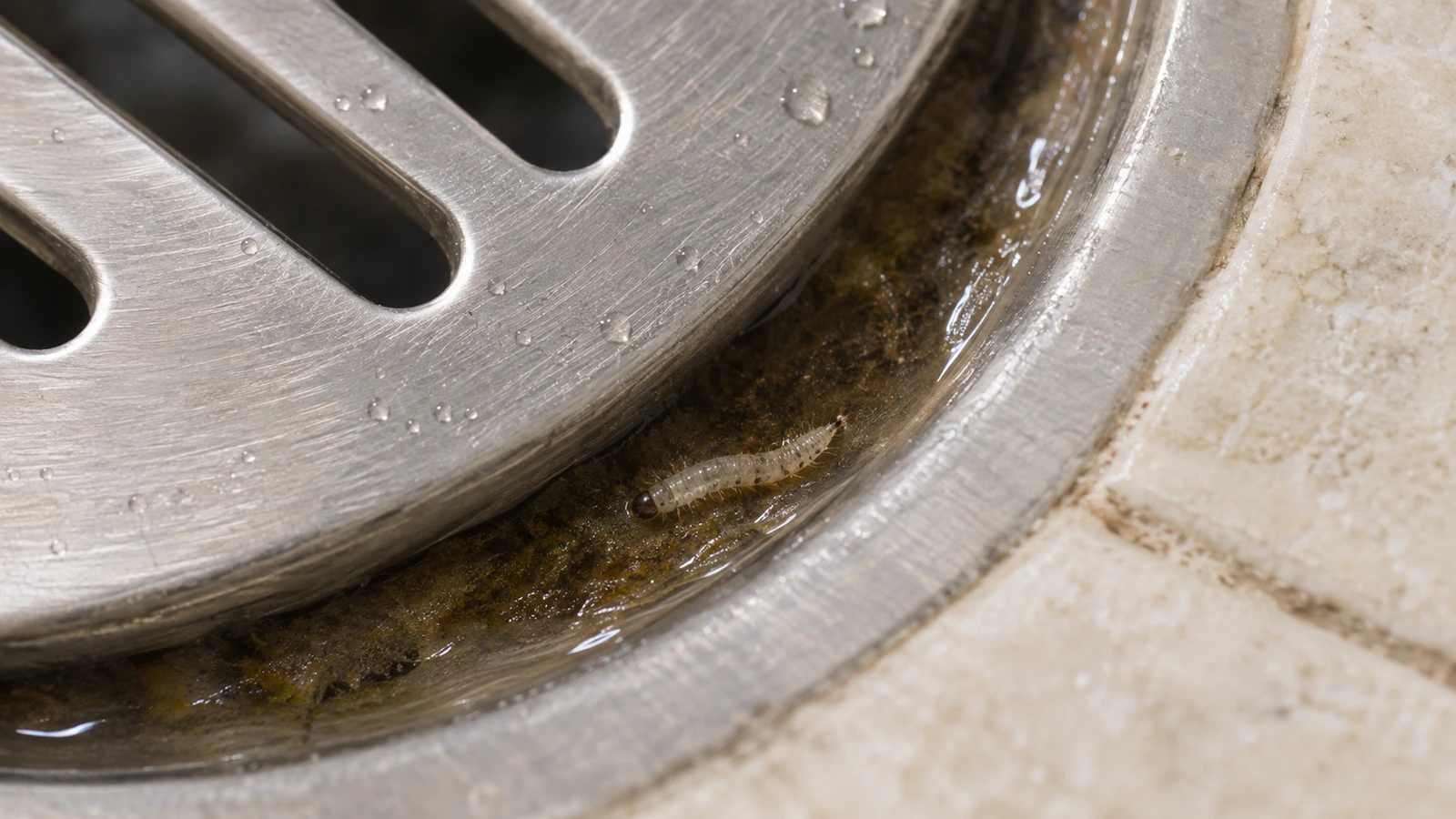
You have just wiped down the sink when you notice a thin, dark, wormlike creature moving near the drain opening. The basin looks clean, so it is tempting to assume the insect came from the water. A better first question is whether it came from the damp buildup just inside the drain.
Drain fly larvae develop in moist organic film rather than in a clean stream of water. Their appearance and the material around them can help you recognize a likely breeding site before you decide whether the problem calls for drain cleaning or a different inspection.
What drain fly larvae look like
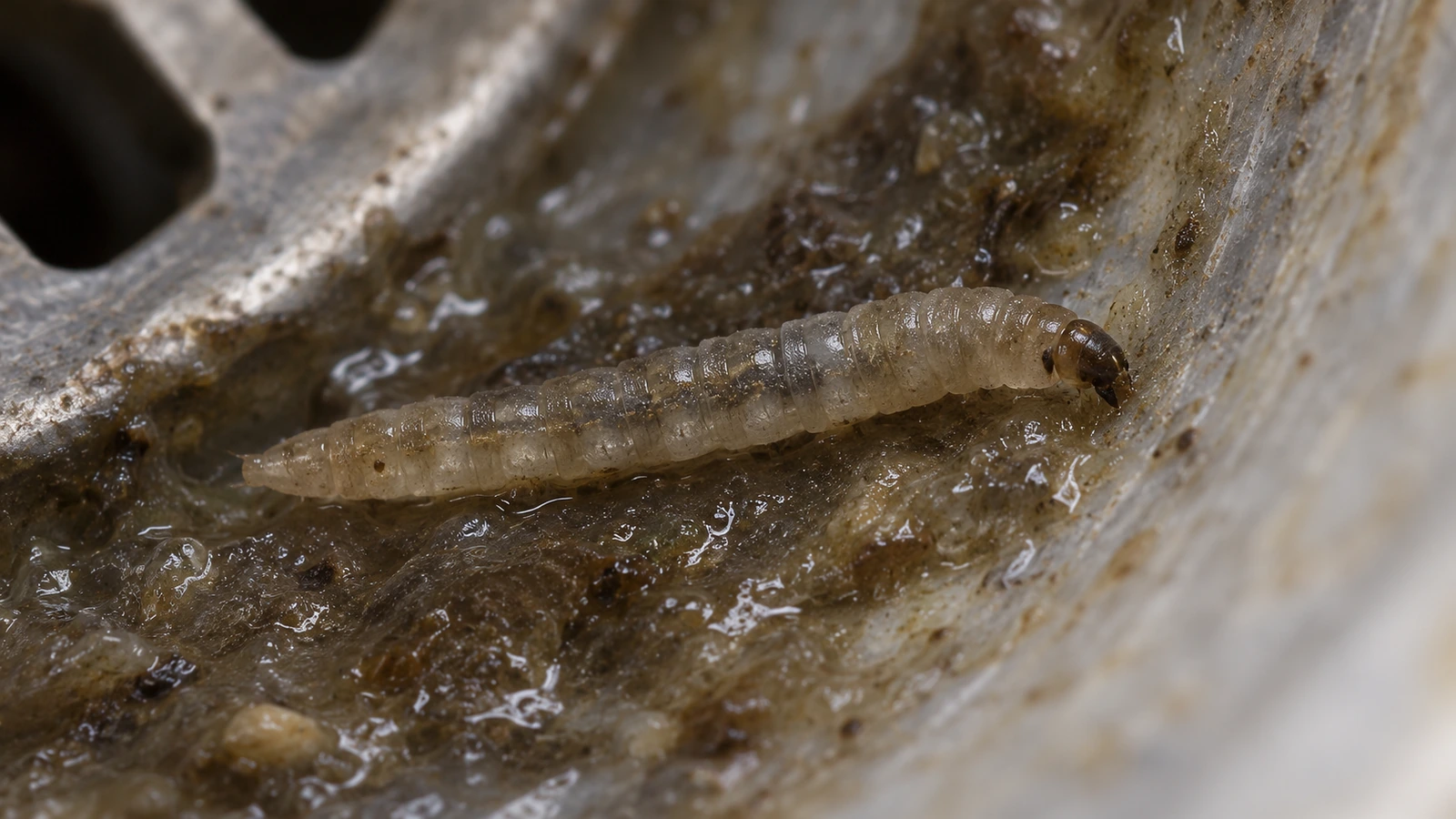
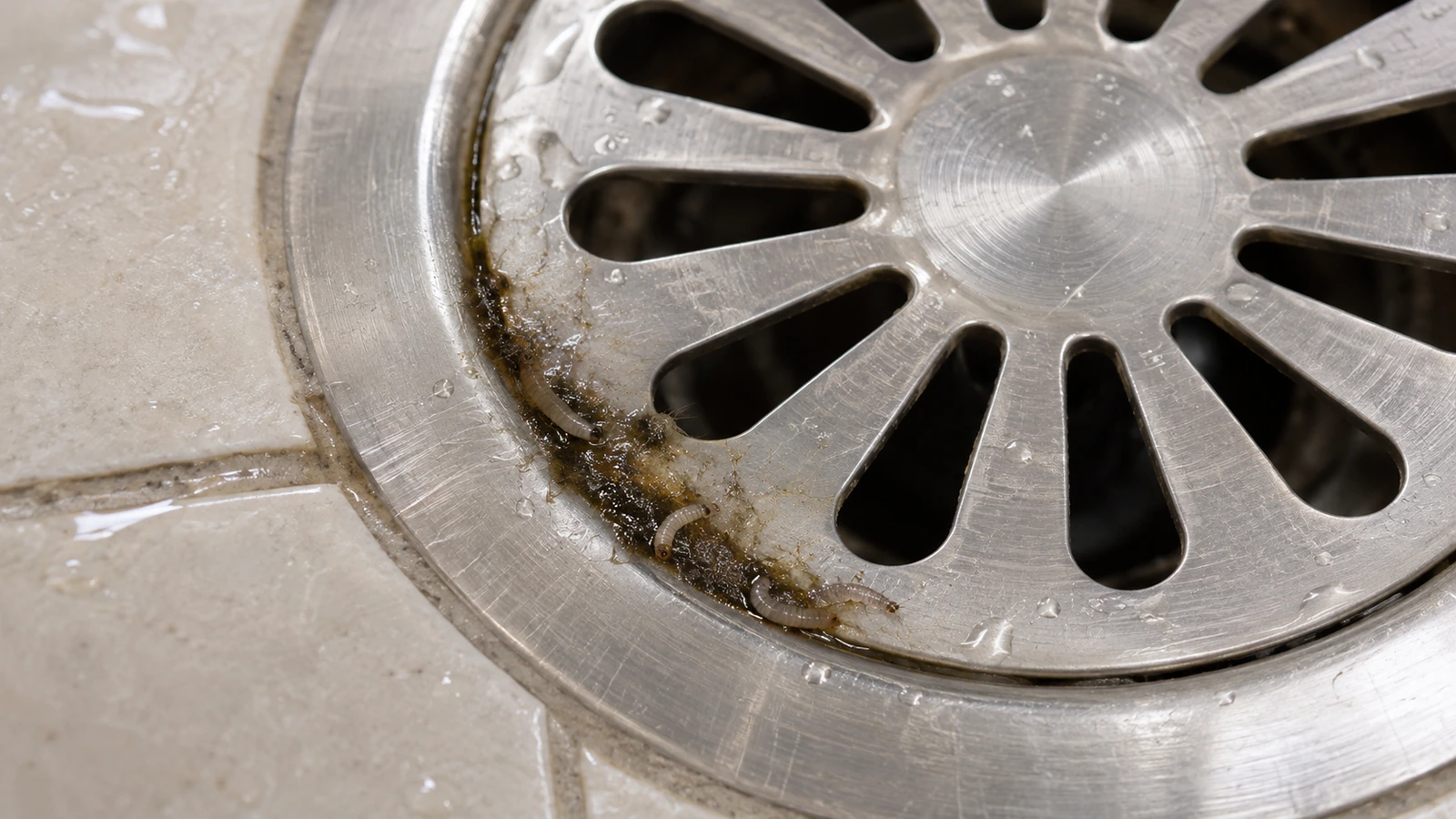
Drain fly larvae are slender, legless and visibly segmented. Depending on the species and stage, they may look gray, tan or brown, often with darker ends. Mature larvae can reach roughly 3/8 inch (about 10 mm). Unlike the fuzzy adult moth flies, the larvae look like tiny worms.
At one end is a distinct head; at the other is a small breathing tube that allows the larva to get air while living in wet material. These details can be hard to see without magnification. Finding a likely larva in dark, slippery organic film is usually more informative than judging its color in a sink.
Identification in 30 Seconds
- Look for a small, legless, segmented larva, often grayish with darker ends.
- Check whether it came from slimy material attached to the drain wall or another persistently damp surface.
- Use a bright light or magnifier to look for a distinct head and a narrow breathing tube at the opposite end.
- Treat repeated larvae in the same film, especially with fuzzy adult drain flies nearby, as stronger evidence of local breeding.
A larva washed into the basin may continue wriggling in a shallow puddle. That movement can reveal a hidden problem, but the puddle itself may not be where the insect developed. Look for the residue it came from.
Where drain fly larvae breed in a home
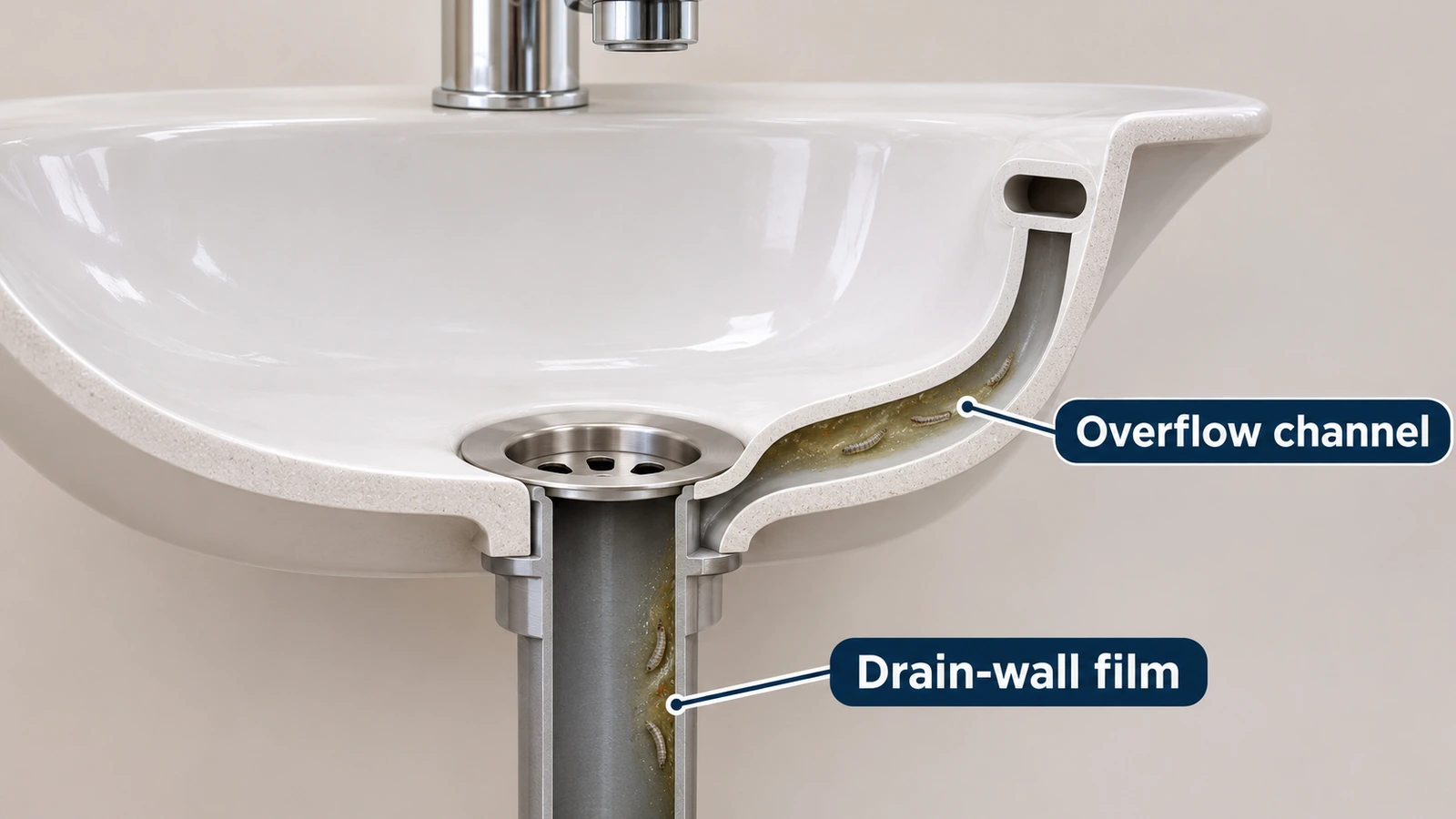
Inside a sink or shower drain, hair, soap residue, grease and other debris can help form a moist film of organic matter and microorganisms. Drain fly larvae feed within that film. Water can keep flowing through the fixture while deposits remain on the pipe wall, under a stopper or inside a sink overflow channel.
Begin where you actually found larvae or where the same type of small fly repeatedly appears. Sink openings, removable stoppers, shower drain covers and little-used floor drains are practical starting points. Overflow passages matter because the visible sink bowl can be spotless while the concealed channel remains wet.
For a focused inspection, check:
- The accessible opening: Shine a flashlight along the drain wall and underside of a removable stopper or cover. Look for a slick, dark coating rather than just loose hairs.
- The organic film: If it is safe to access, examine a small amount of residue from an exposed surface on a light-colored disposable surface. Look closely for movement and larval body shape.
- The overflow or nearby fixture: Check a sink overflow opening or adjacent shower and floor drain when the first opening gives no answer. Do not force plumbing parts apart.
- Other persistently damp spots: If the drains are unconvincing, look for wet organic debris near a leak, neglected condensate pan or similar moisture source.
If a chemical drain cleaner was recently used, do not scrape or handle the residue until the product’s safety instructions permit it. Never mix drain cleaners or pour pesticides into plumbing as an identification test.
Identification Mistakes
- Calling every tiny worm in sink water a drain fly larva.
- Assuming a clean-looking basin means the hidden drain walls are clean.
- Choosing a chemical treatment before locating the material where larvae are developing.
Key Clue
A segmented larva found within damp drain film, especially alongside repeated sightings of fuzzy adult drain flies, strongly points to a breeding source at that location.
What to Watch For
The first drain you notice may be only where larvae washed out or adults gathered. Check nearby overflow passages and other wet sources before assigning the whole problem to that opening.
How to separate drain fly larvae from lookalikes
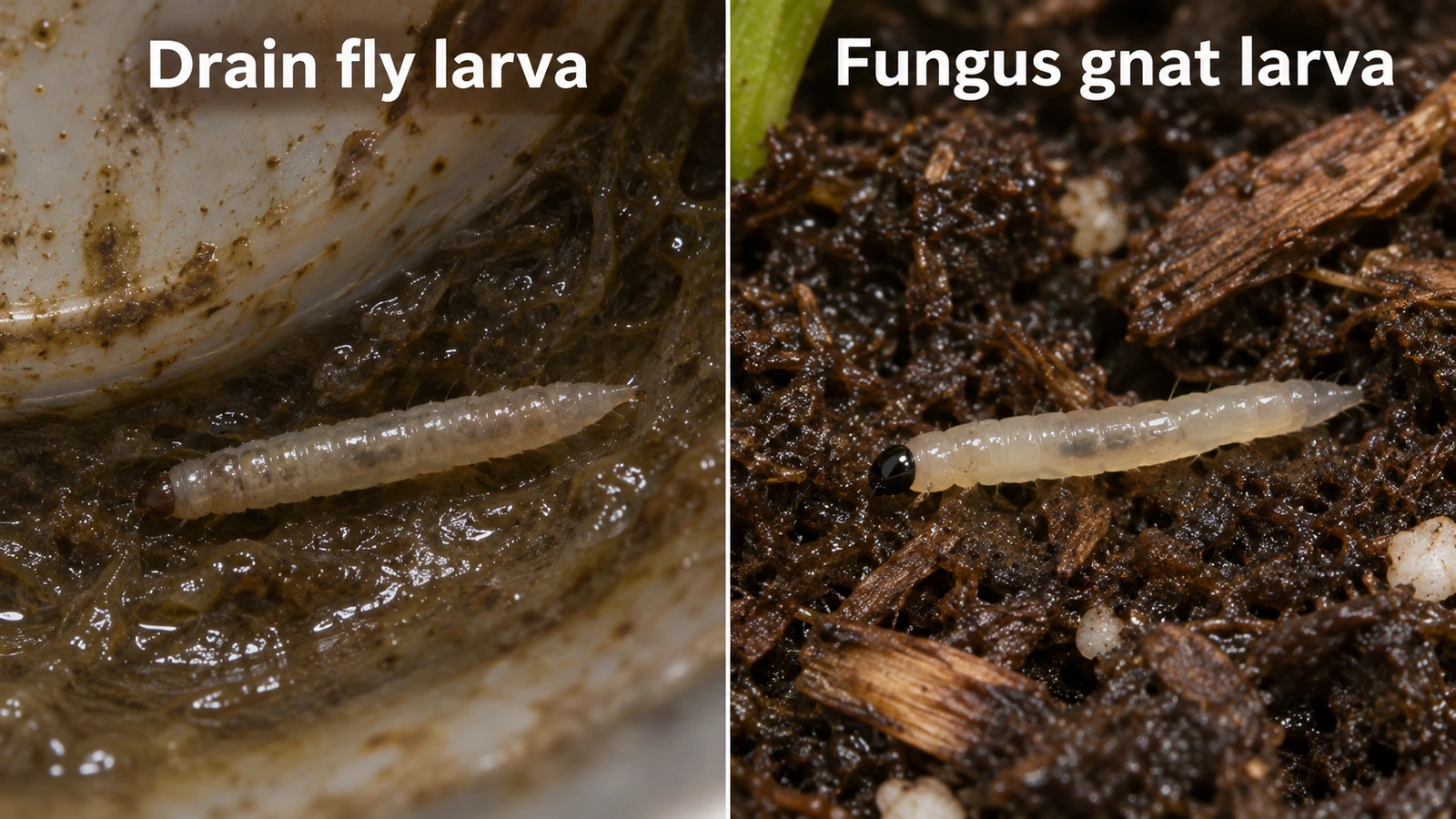
The location matters as much as the insect. Fungus gnat larvae are typically pale or translucent, with a shiny black head, and are most often found in damp potting mix. Some small gnats can also use wet drain deposits, so the source and the specimen should be considered together. If the evidence is concentrated in houseplants, start with fungus gnat identification and breeding clues.
Larvae wriggling freely in standing water may belong to mosquitoes or other aquatic insects. Pale, thicker maggots associated with rotting garbage suggest a different fly group. Color alone is a poor way to choose among them, particularly in a blurry photograph.
If the specimen is unclear, photograph it beside the surface where you found it and, when practical, save one in a closed clear container. A local Extension office or pest identification service can help with a close examination when the source matters but the features remain ambiguous.
Compare the actual location and evidence:
| Observation | Best interpretation | Next useful check |
|---|---|---|
| Slender segmented larvae within wet film on a drain wall | Drain fly breeding is plausible | Examine that opening and nearby connected wet surfaces |
| Pale larvae with obvious dark heads in potting mix | Fungus gnats are more likely | Check the pot and soil rather than assuming the sink is responsible |
| Wrigglers moving mainly in collected standing water | Other aquatic larvae are possible | Identify the water source and inspect the larvae more closely |
| Fuzzy adult flies nearby but no larvae found | Drain-associated breeding site remains possible | Check other openings, overflow passages and wet debris |
How much evidence points to an active breeding site?
One larva that appears after rinsing a sink is a reason to inspect, not a measure of how extensive the problem is. Finding several live larvae embedded in the same drain film is stronger evidence that this material supports development. Fuzzy adults repeatedly emerging from that fixture strengthen the case further.
A few larvae at one accessible opening suggest a localized source worth addressing first. If you find similar evidence at separate fixtures, inspect each site on its own. Do not assume the entire plumbing system is affected just because adults are visible in several rooms.
If adult flies persist around a damp wall, toilet base or floor while accessible drains show little evidence, a concealed wet organic source or plumbing leak becomes more relevant. Persistent moisture, sewage odor, backups or an inaccessible suspected source justify a plumbing assessment rather than opening walls or dismantling pipes yourself.