Identification
Pantry moth vs clothes moth: How to tell them apart
A small moth in your home can point to stored food or vulnerable textiles. Compare adults and feeding traces to choose the right inspection route.

A small moth appears in the kitchen, and another turns up near a closet. It is tempting to identify them by the room, but an adult can move away from the place where its young developed.
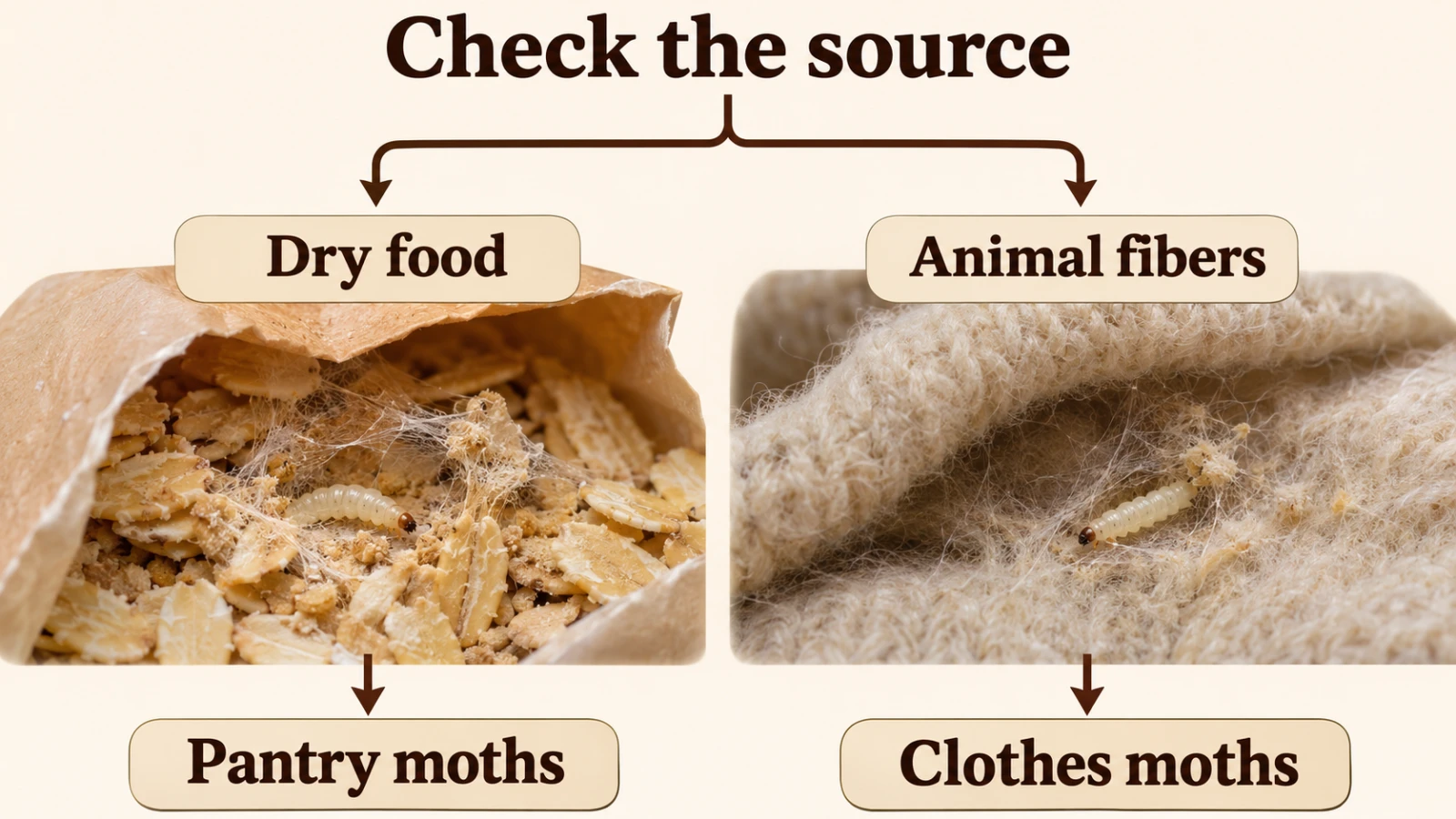
The better starting point is the material the larvae have been feeding on. Pantry moths develop in stored food; clothes moths damage susceptible animal-fiber textiles. A few focused checks can tell you which route to follow.
Compare the adults, then look for feeding evidence
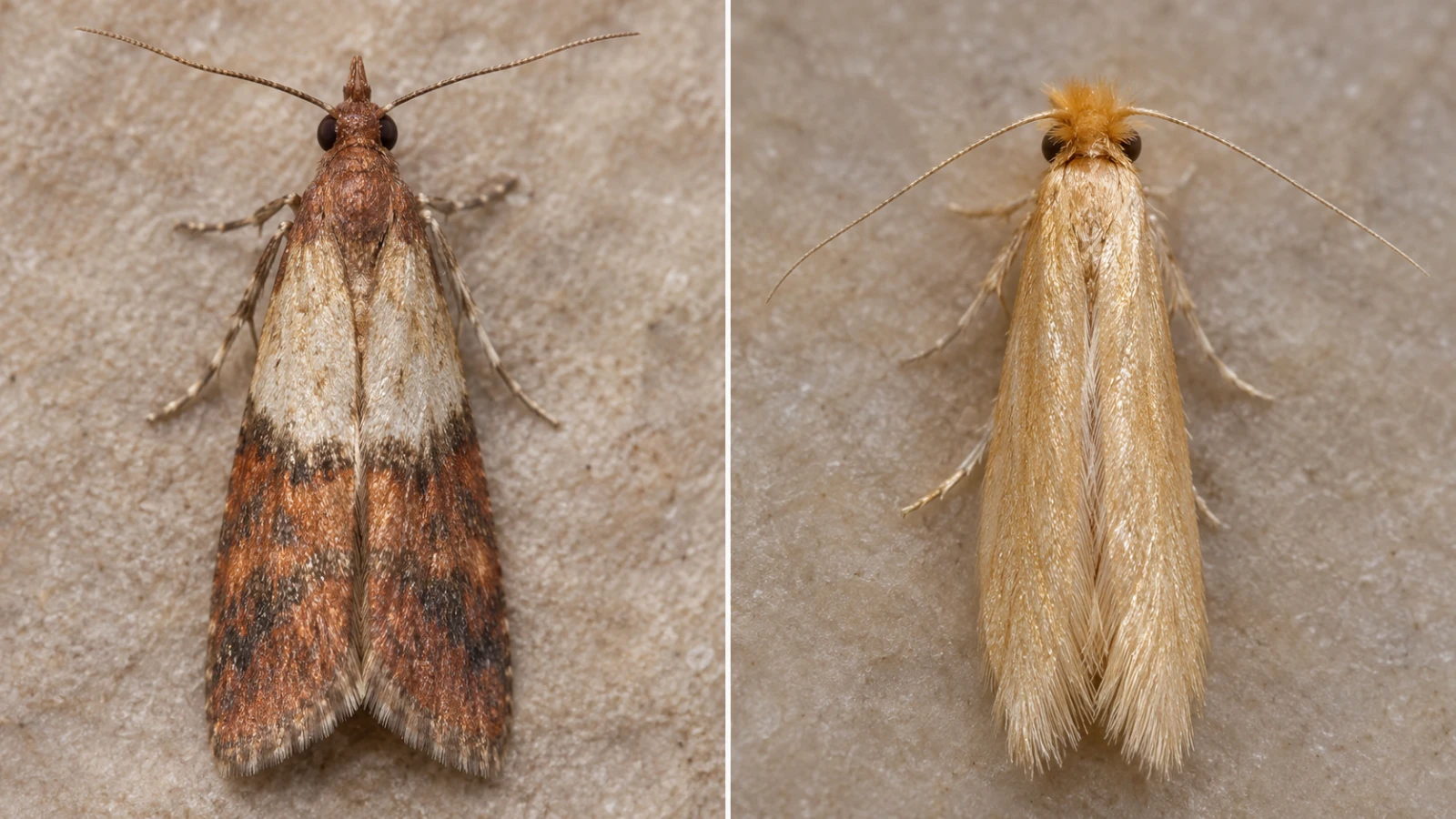
One common pantry moth, the Indianmeal moth, has forewings that are pale gray near the body and coppery brown toward the tips. The webbing clothes moth is usually golden-buff, with narrow, fringed wings and a tuft of reddish-gold hairs on its head.
These are useful reference appearances, not a description of every indoor moth. Casemaking clothes moths can look browner and have faint dark spots. Poor lighting or rubbed-off wing scales can also hide useful markings.
Identification in 30 Seconds
- Silk binding cereal, nuts, flour, or dry pet food together? Follow the pantry moth track.
- Larvae or feeding silk on wool, fur, felt, or other animal fibers? Follow the clothes moth track.
- Only a flying adult with no feeding traces? Compare its wings, then check the most plausible source rather than guessing from the room.
Both groups can have pale caterpillar-like larvae. Their color alone is a weak shortcut; the material around a feeding larva tells you more.
Check food packages and fabric where larvae feed

For the pantry track, begin with dry goods that have been open or undisturbed for a while. Look inside packages and around folds for fine silk holding food particles together, feeding larvae, or cocoons. Remember birdseed and dry pet food stored outside the kitchen.
For the textile track, inspect wool sweaters, cashmere, rugs, felt, fur, and other animal-derived materials. Look beneath folds and along edges for larvae, silken feeding patches or tubes, and localized thinning or holes connected to that activity.
A moth seen on a wall is less informative than a larva found on its food. Mature pantry moth larvae can leave a package and crawl to a wall or ceiling before pupating, so the nearest room or surface may point you in the wrong direction.
Identification Mistakes
- Calling every small tan moth a clothes moth.
- Assuming a caterpillar on the ceiling must have come from the nearest fabric.
- Treating a hole in clothing as proof of an active moth infestation.
Key Clue
Find feeding evidence on the material itself: silk and larvae in stored food favor pantry moths; larvae, silk, or portable cases linked to damaged animal fibers favor clothes moths.
What to Watch For
Other household pests can damage fabrics or stored food. If the insect and its feeding material do not match either pattern, keep the specimen or a clear photo before choosing a control method.
Put the clues together
A two-toned adult together with webbed dry goods makes pantry moths the stronger explanation. A small golden moth near stored wool, plus larvae and fresh fiber damage, makes clothes moths more likely. The combination matters more than the adult photo by itself.
When the source is unclear, note where new moths appear and look for fresh feeding traces in the most likely storage area. There is little value in emptying every cupboard and closet on the strength of one sighting.
Use these common situations to decide what to inspect next:
| What you found | What it suggests | Your next check |
|---|---|---|
| Silk and pale larvae inside cereal or nuts | Strong pantry moth evidence | Inspect adjacent dry-food packages and their seams. |
| Golden moth near wool, with a larva and fresh thinning | Strong clothes moth evidence | Examine hidden folds and nearby animal-fiber items. |
| Pale caterpillar moving along a ceiling | The feeding source is still unknown; pantry larvae may wander | Look for infested dry food before blaming clothing. |
| Holes in a sweater, but no larvae or silk | The damage may be old or have another cause | Check seams and the underside for active textile feeding signs. |
| Moths in both the kitchen and bedroom | Flight location alone cannot link the sightings to one source | Match each insect to feeding evidence before concluding. |
Judge whether there is an active source
A single adult indoors calls for a targeted inspection, not automatic treatment. Repeated sightings paired with fresh silk and larvae inside a food package are stronger evidence of an active pantry source. On susceptible textiles, feeding larvae or silk beside fresh fiber loss give you a clearer basis for action.
If neither area shows active evidence, keep any photos or specimens and watch for a new, more informative sign. The number of adults flying around does not tell you how many food packages or garments are affected.

If you independently find convincing evidence in both food and textiles, you may be dealing with two problems. Assess each source on its own rather than forcing every moth into one identification.