Explanation
Where do termites nest? Hidden colonies around a home
Learn how termite colonies occupy hidden spaces, what the queen does, and why finding one patch of activity leaves questions about the rest of the colony.
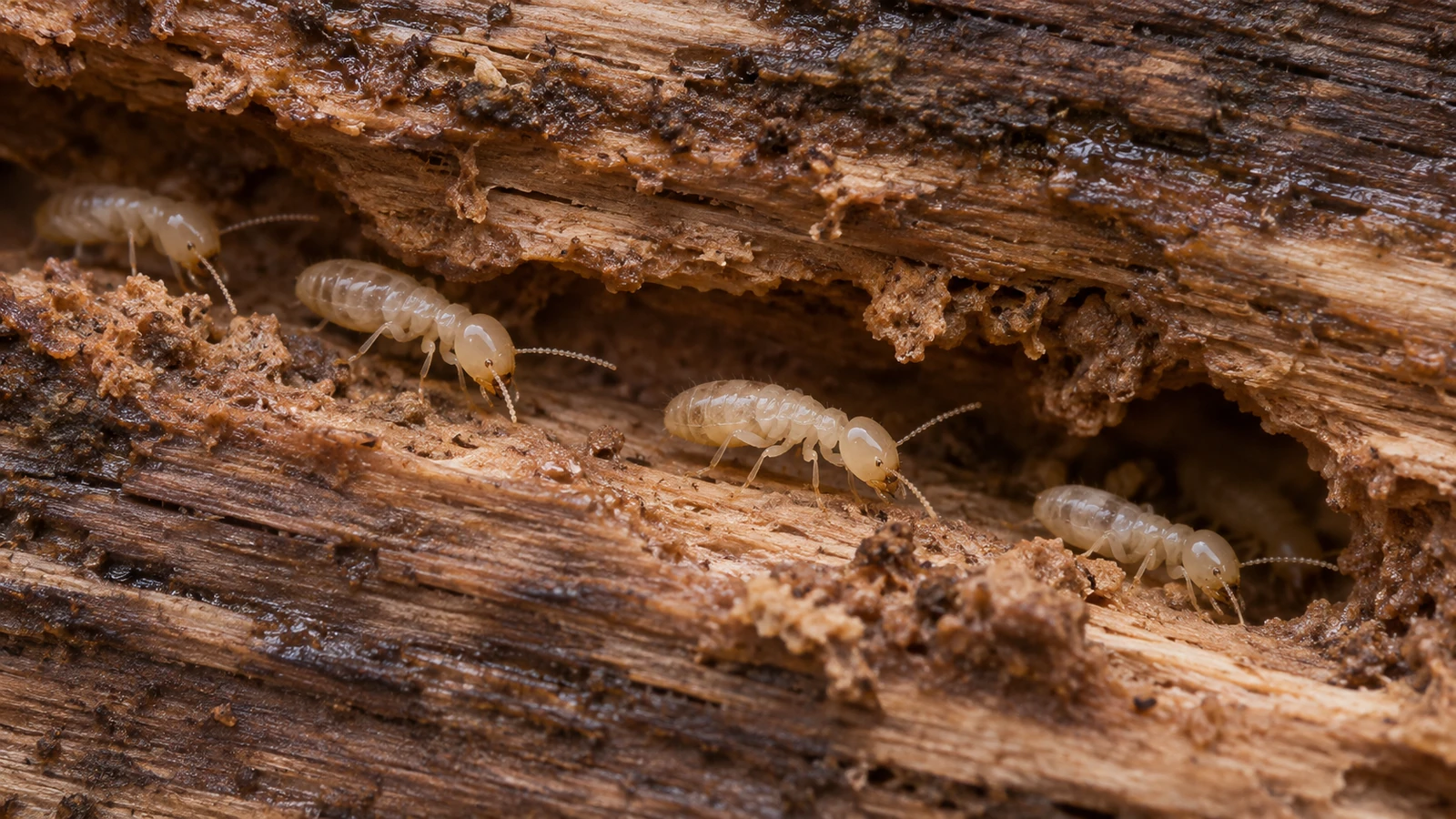
You find termites in an old stump beside the house, or in a piece of wood during a repair. The immediate question is where the rest of them are. Searching for one hidden chamber can seem like the obvious next step.
Quick Answer
Around U.S. homes, a termite nest can be in soil, inside wood, or in an aboveground space with enough moisture, depending on the group. A colony may occupy several connected sites, so visible activity often reveals only part of it.
How termite colonies use hidden spaces
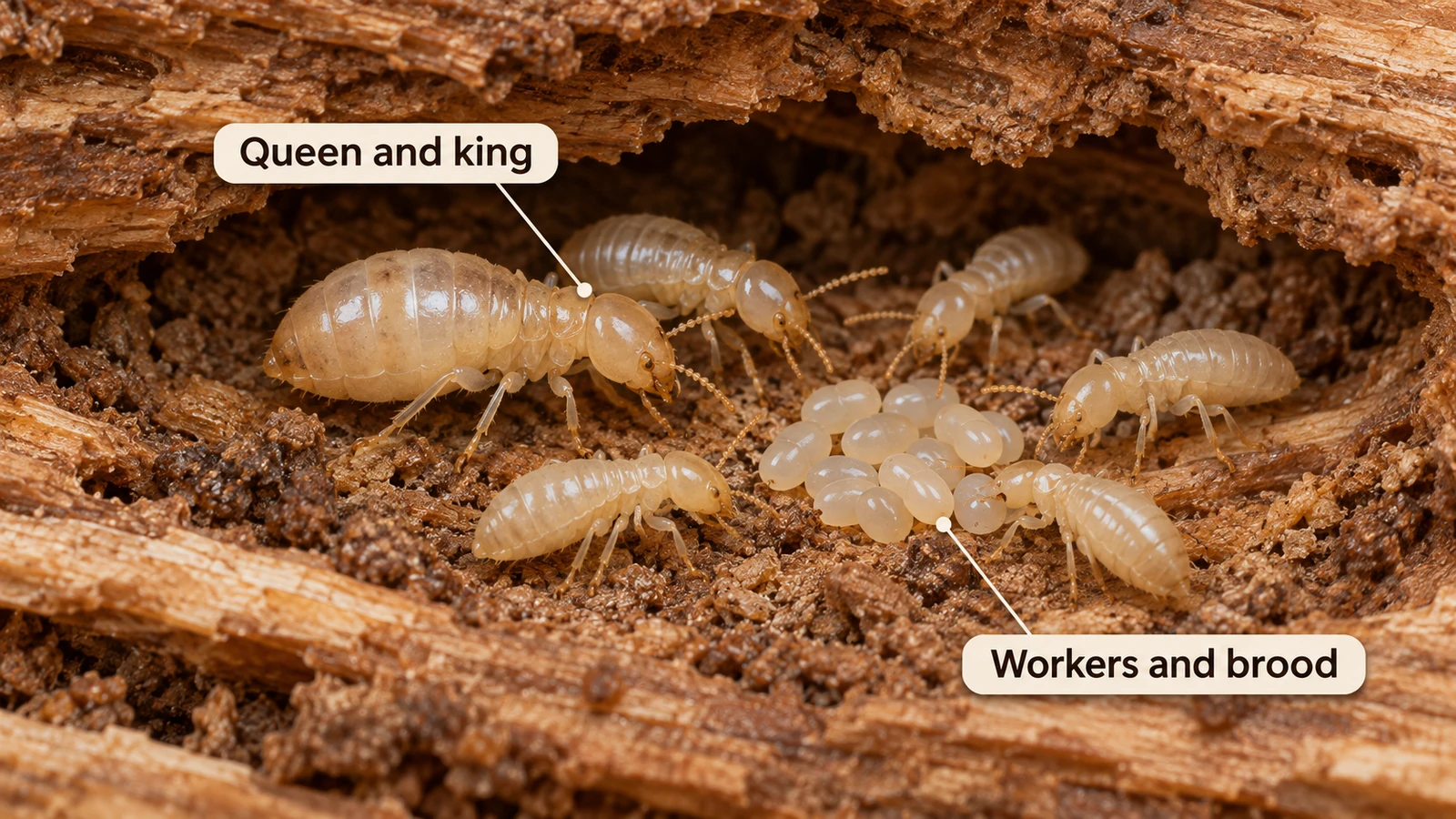
A colony is the social group: termites that share resources and care for young. Nesting sites are places used for reproduction and brood care. The colony can also occupy feeding sites and passages that connect them.
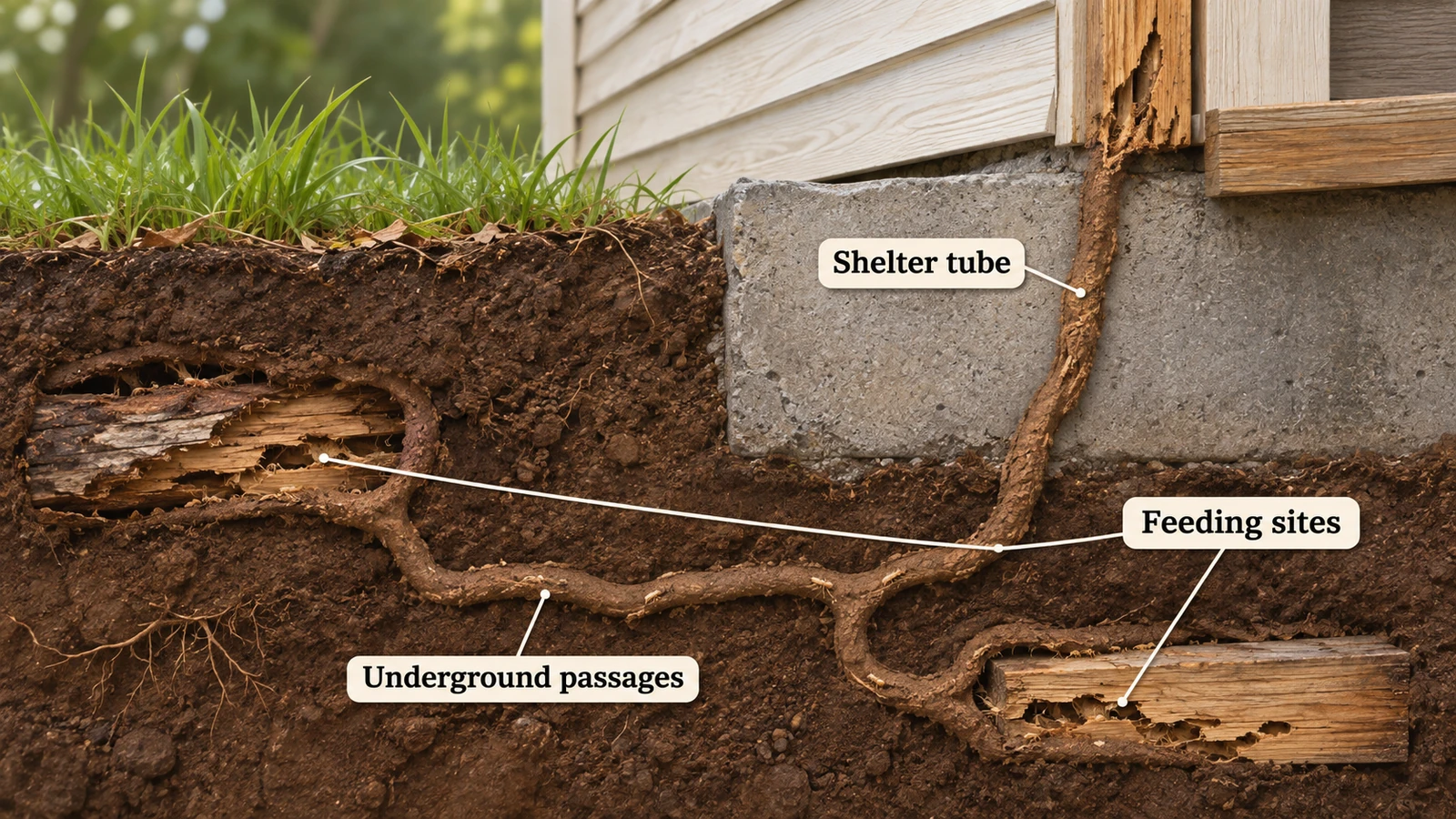
Native subterranean termites, including species of Reticulitermes, commonly use a network of sites in soil and wood. Dead roots, buried wood, stumps, and structural timber can provide food or occupied space. Protected passages connect the places the termites use.
Feeding sites and travel routes
A shelter tube is a protected travel route. It helps termites cross exposed surfaces while limiting drying and contact with enemies. Galleries are the passages they excavate within wood as they feed. A tube on a foundation and a hollowed board therefore show different parts of the colony’s activity.
In established Reticulitermes colonies, eggs and young may be tended at several sites, and activity can shift between them. Reproductive termites can move within that network too. A visible route is therefore an incomplete picture of where the colony lives, rather than a reliable trail to one permanent nesting chamber.
What the termite queen does
The termite queen lays eggs. The king remains with the colony and mates with her over time. Workers take on food gathering, tunnel maintenance, and care of the young and other colony members; soldiers specialize in defense. Reproduction depends on that wider colony support.
Established subterranean colonies can also contain additional reproductives that contribute to egg production. A colony with these reproductives may survive the loss of its original queen.
These are social roles. For the physical features that distinguish the different forms, see what termites look like.
Why nesting sites differ by termite group
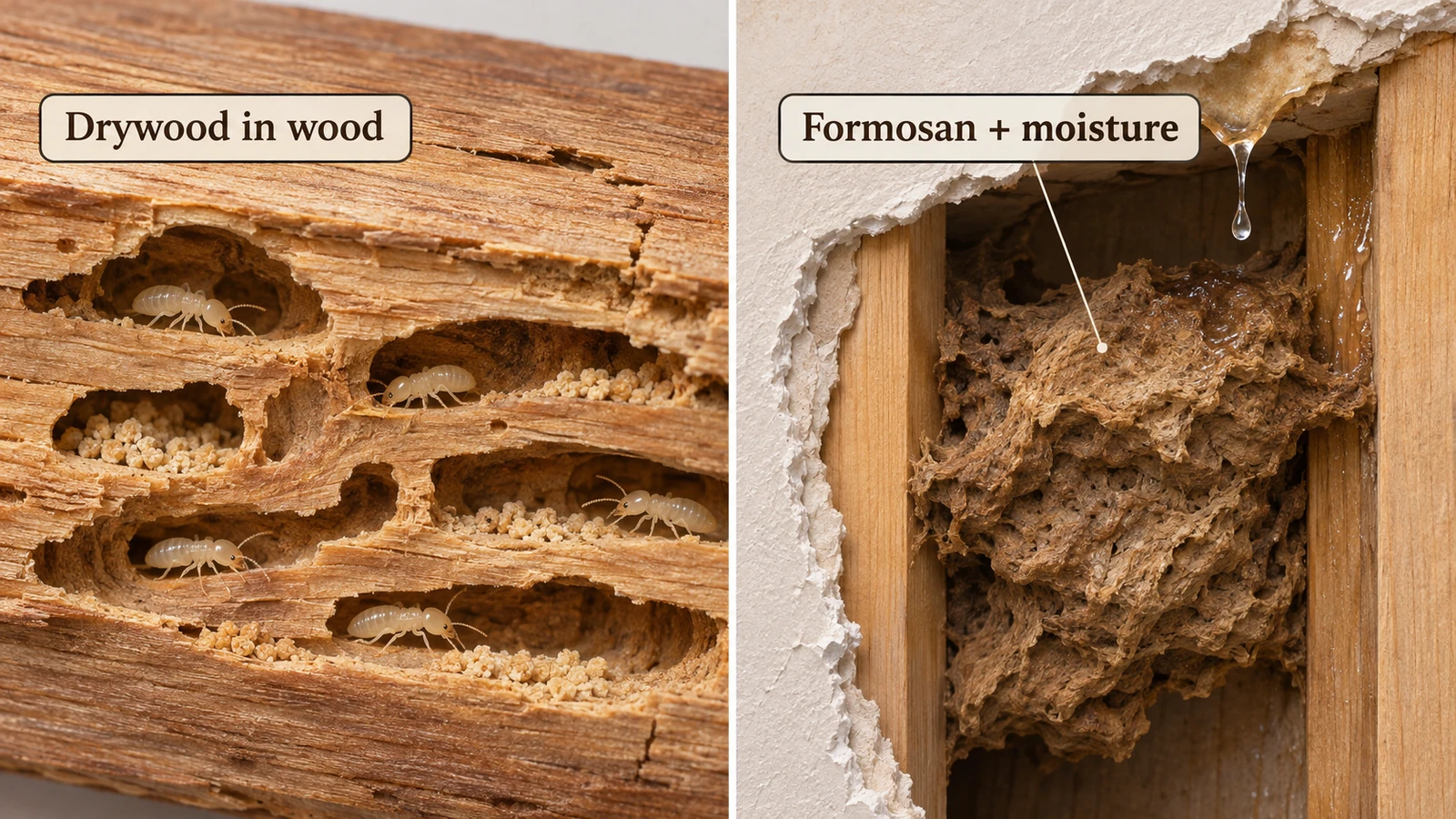
Drywood termites live within wood without needing a connection to soil. Their occupied galleries can be inside structural lumber, furniture, or other suitable wood aboveground. The piece of wood serves as both habitat and food, with much of the activity concealed beneath its surface.
Where Formosan subterranean termites occur, an aboveground nest can develop in a structural void if sufficient moisture is available. These termites build nest material called carton from cellulose and fecal material. A moisture-supported aerial nest can persist even when its connection to the soil is lost.
Moisture and local species matter
Dampwood termites occupy wood with high moisture content. Species along the Pacific Coast provide a familiar example, living in wet wood in cool, humid settings. Damp soil is one possible moisture source; leaks and other sources of persistent wetness can also support this habitat.
An aboveground location can therefore fit more than one termite group. The condition of the wood, available moisture, and the species found in the region all matter.
One building can involve more than one colony
Several points of activity may belong to one connected subterranean colony. A building can also be occupied by separate colonies, and hidden drywood infestations can be difficult to distinguish from one another. The number of visible locations alone leaves the number of colonies unresolved.
What a finding means for your home
Finding termites in an outdoor stump establishes activity in that wood. Determining whether the house’s structural wood is occupied requires a separate assessment.
If the uncertainty concerns a mark, tube, or other clue around the building, use signs of termites in your house to understand that evidence. Identifying the clue comes before drawing conclusions about the colony behind it.
Useful information for an inspector includes where the evidence appeared and what was visible from a safe, accessible spot. A photograph can preserve that context while the tubes and wood stay undisturbed. Leave excavation, wall openings, and other invasive work out of a homeowner search.
Suspected termite activity in the building warrants a professional inspection even when the colony’s full extent is unknown. The useful outcome is an assessment of identified activity, affected areas, and access limits.
Explore this topic further: