
Identification
Black bed bugs or red bed bugs? How to tell what you found
Compare dark, almost black insects, reddish-brown adults, and bright red nymphs using body shape, feeding clues, and targeted checks before deciding you found bed bugs.
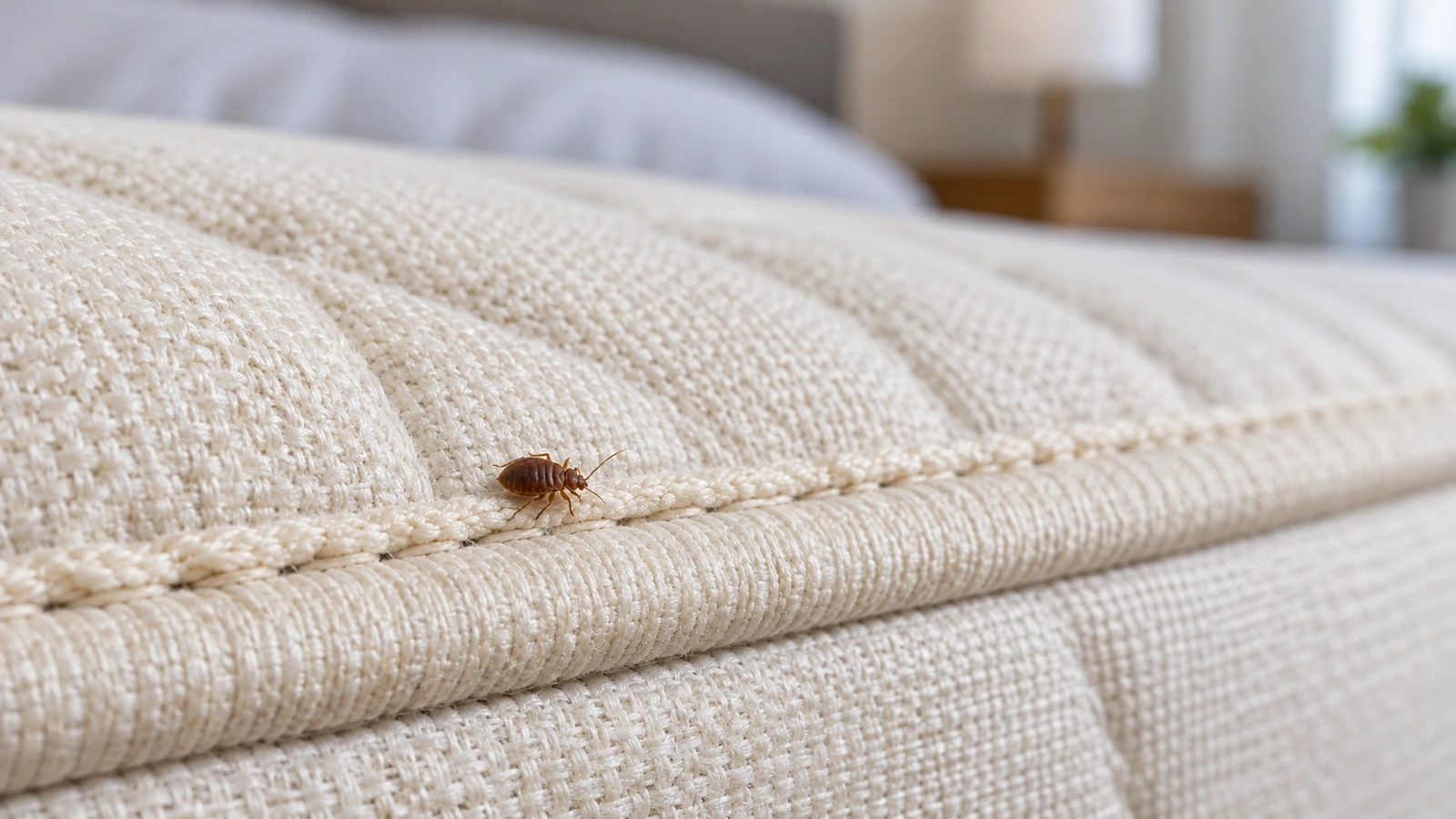
A tiny insect on a pillow looks almost black until you move it into better light. Another bug near the bed is a startling red. Those colors can raise the same suspicion, but the shade in a photo is only part of the identification.
First establish whether you have an insect, what its body looks like, and whether it is an adult or a nymph. Those clues tell you much more than trying to match “black bed bug” or “red bed bug” to a single image.
What colors can bed bugs actually be?
An unfed adult bed bug is normally brown to reddish brown, broadly oval, and very flat. Adults are roughly 3/16 to 1/4 inch (5 to 7 mm) long, with six legs, antennae, and visible abdominal segments. In a dim room, dark reddish-brown adults can look nearly black. A uniformly jet-black, glossy insect is less typical.
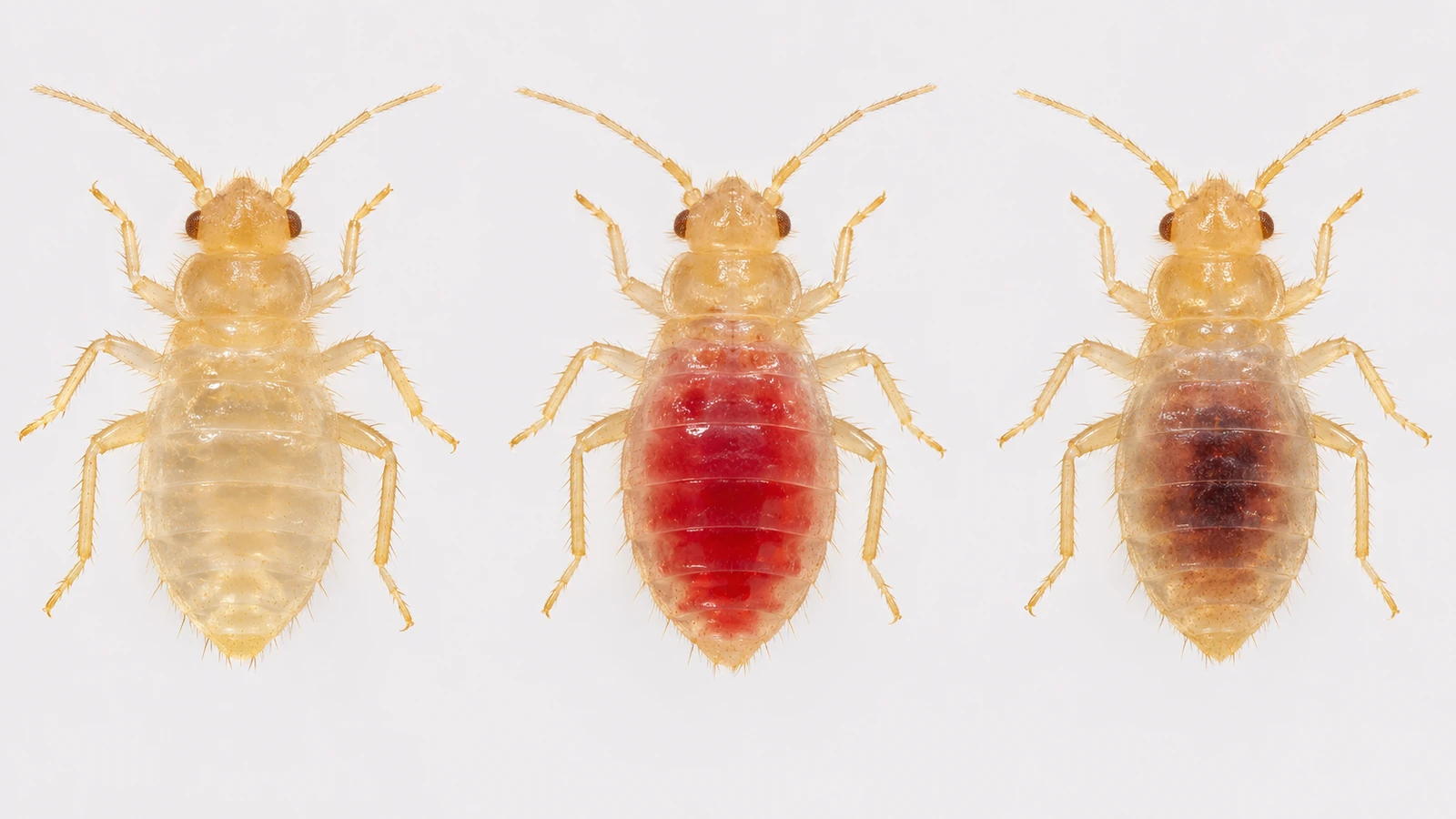
Feeding changes both the outline and the color. A recently fed adult becomes longer, fuller, and redder or purplish red. Newly hatched nymphs, by contrast, are tiny and nearly clear or pale yellow before feeding. Blood can show vividly red through a nymph’s translucent abdomen soon after a meal.

Identification in 30 Seconds
- Flat, oval, brown to reddish brown, around apple-seed size: possible unfed adult.
- Longer, swollen, and red to burgundy: possible recently fed adult.
- Very small, pale or translucent, then bright red after feeding: possible nymph.
- Glossy black with hard wing covers or a central seam: look more closely at beetles and other insects.
Bed bugs have no functional wings and cannot fly or jump. The abdomen’s color can change without the insect becoming a different species. A dark object without legs, antennae, or a recognizable body belongs in a different check: is it a stain, debris, a shed skin, or an insect?
Check the body before trusting the color
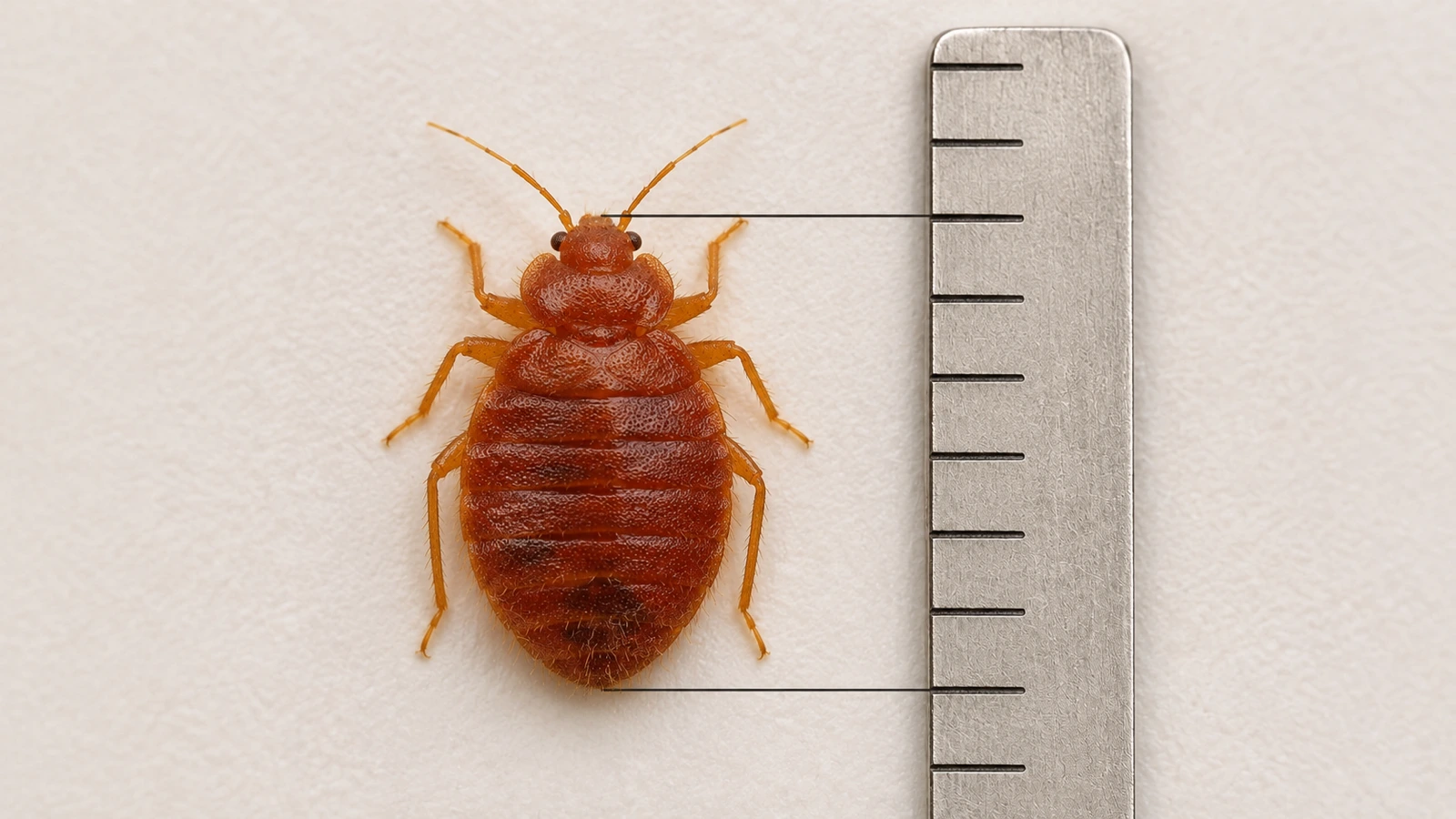
If you have an intact insect, photograph it from directly above on a plain, light background. Capture the whole outline, legs, antennae, and abdominal segments, not just an extreme close-up of a dark patch. If possible, include a small ruler beside it for scale. Do not count the antennae when judging body length.
Use normal, even lighting and compare more than one angle. Shadows can make mahogany look black, while a phone flash can make a reddish body look unusually bright. If the specimen is moving, contain it in a small clear, securely closed container so it can be examined without crushing it.
Then note the setting. A specimen in a mattress seam, headboard joint, or nearby upholstered furniture warrants a closer local inspection. Check the same protected seams for other insects, pale shed skins, tiny whitish eggs, or dark, ink-like spots. Each kind of evidence answers a different question; a dark mark on fabric is not a tiny moving bed bug.
Identification Mistakes
- Calling a black speck on bedding a “black bed bug” before finding a body.
- Treating a red smear from a crushed insect as a reliable species identification.
- Matching a translucent nymph against adult-only photographs.
Key Clue
A flattened, segmented oval body with six legs and no hard wing covers is much more informative than color alone. Pair that morphology with a clear specimen and its exact hiding place.
What to Watch For
A dried or damaged insect can lose its normal shape, and a blurry photograph can hide the features needed for identification. Preserve the specimen when possible instead of forcing a confident answer from a dark silhouette.
What black, red, or pale appearances suggest
A dark brown or almost black insect
A mature bed bug can appear dark mahogany, particularly after feeding or in shadow. Look for a broad, segmented abdomen and a soft-looking body rather than a hard, polished shell. If the insect is rounded and shiny, or you can see two firm wing covers meeting down the back, a beetle becomes a stronger possibility.
Carpet beetles, spider beetles, and a few other household insects are often mistaken for dark bed bugs. A tick can also look like a dark, swollen speck, but an adult tick has eight legs and no antennae. For the detailed comparison rather than a color guess, use the bugs that look like bed bugs guide.
A bright red or burgundy insect
A newly fed nymph may look strikingly red because the blood meal is visible through its pale body. An adult with a fresh meal is generally more elongated and swollen, with a deeper reddish-brown or purplish-red appearance. That change in shape is as important as the shade.
Compare the insect’s life stage before using a reference photograph. The bed bug pictures by life stage guide shows the broader appearance differences without turning each color into a separate type of bed bug.
A pale bug with a dark center
A small nymph may look nearly transparent except for a darker area inside its abdomen. That patch can be the remains of a digested blood meal showing through its body, rather than a black outer shell. Look for its six legs and bed-bug-shaped outline before drawing a conclusion from the central spot.
Black dots with no visible insect
Tiny dark marks along a mattress seam or bed-frame joint are often what prompts a search for “black bed bugs.” Bed bug fecal spots can resemble ink absorbed into fabric or wood, but loose debris and other stains can look dark too. Examine the surrounding seam for physical evidence rather than treating each spot as a separate bug.
Here is a quick way to match the appearance to a useful next check.
| What you see | What it could mean | Check next |
|---|---|---|
| Flat, reddish-brown oval with visible segments | Typical unfed adult appearance | Legs, antennae, body length, and winglessness |
| Longer, swollen, dark red or burgundy body | Recently fed adult | Overall shape and the same adult features |
| Tiny, translucent body with bright red abdomen | Recently fed nymph | Small size, six legs, and nymph outline |
| Pale nymph with a dark central patch | Blood remains visible in the abdomen | Body structure, not the dark patch alone |
| Uniformly glossy black, hard-shelled body | Beetle or another look-alike is plausible | Wing covers, body outline, and antennae |
| Stationary black marks with no body parts | Possible staining or debris | Nearby seams for insects, skins, and eggs |
Does a dark or red bug mean you have bed bugs?
If the specimen matches a bed bug, the sensible next move is to inspect where it was found and where people sleep or rest nearby. One insect gives you a reason to check, but the color of that insect cannot tell you how many others are present.
Look for combinations of evidence in mattress piping, box-spring edges, bed-frame cracks, and headboard joints. A live specimen together with matching shed skins, eggs, or clustered dark fecal spots supports a more serious concern than an isolated, unidentified speck. Keep the inspection focused rather than moving furniture or bedding throughout the home.

If physical signs recur, or several sleeping areas show activity, a qualified pest professional can identify the specimen and assess the source. If an intact sample turns out to be a beetle or another look-alike, the next action should match that insect instead of beginning bed bug treatment.
Learn more:


