Identification
Flies in the house? Find the source first
Flies by a window, sink, or houseplant can come from very different sources. Compare their appearance and check likely breeding materials before choosing a treatment.

You keep finding flies on the kitchen window, then notice more around the sink. Swatting the adults brings short-lived relief, but it does not tell you whether they came through a door or developed somewhere inside.
Before reaching for a spray, look at the insects and where they repeatedly appear. A damp plant pot, fermenting food waste, drain buildup, and an open window point to different next steps.
Which kind of fly are you seeing?
Start with shape and movement rather than calling every small flying insect a gnat. That word covers several unrelated flies. Two insects found in the same kitchen can have very different breeding sites.
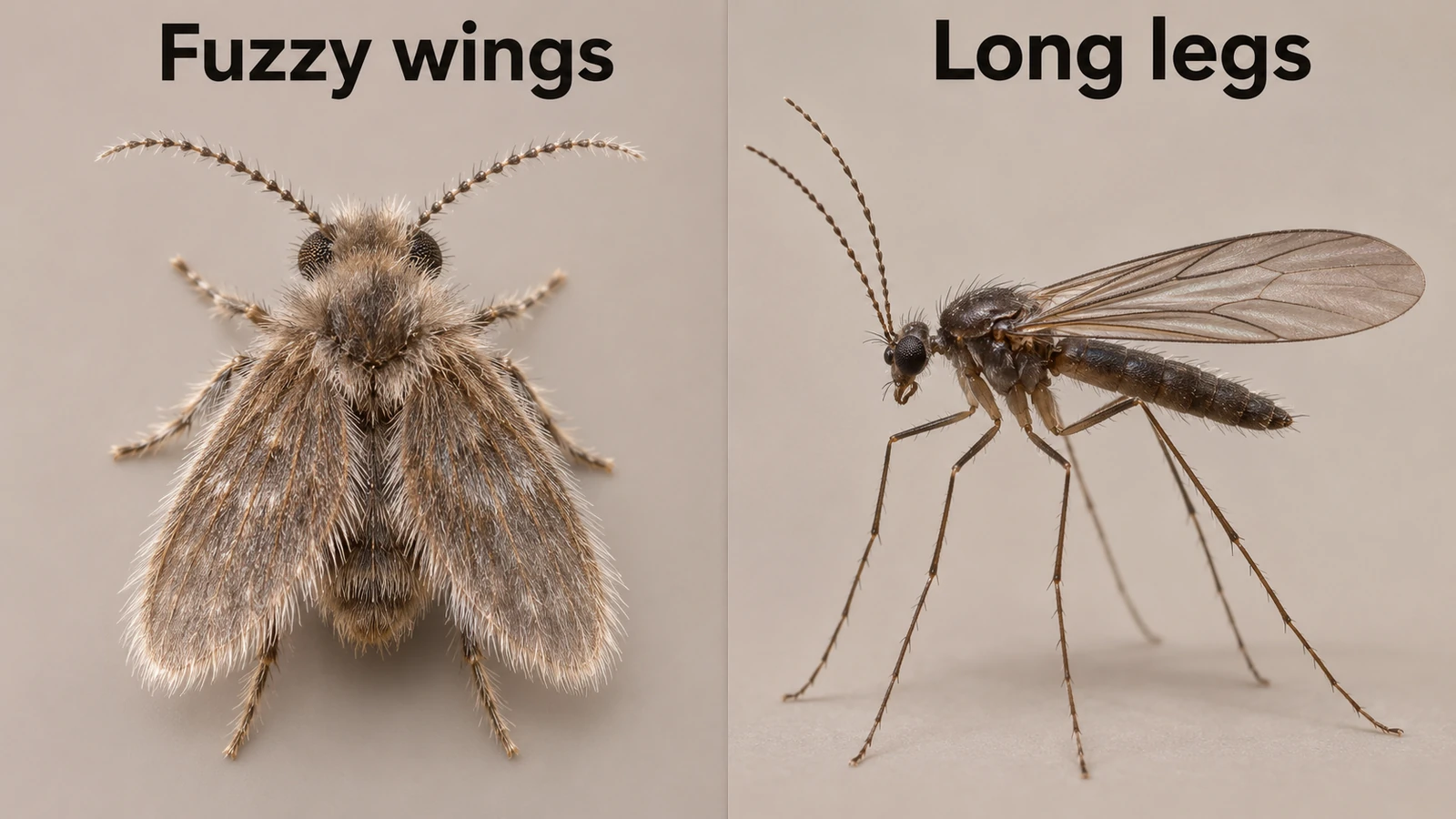
Look for a compact body, fuzzy wings, long slender legs, or a habit of running before taking flight. Larger, sturdier flies belong on a different branch of the investigation. Where you see them helps narrow the possibilities, but appearance and behavior are important too.
Identification in 30 Seconds
- Fruit flies: Small, compact flies, often tan or brown, gathering around fermenting produce, spilled drinks, or recycling.
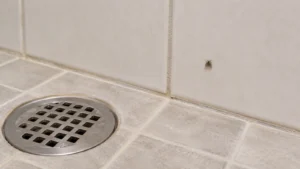
- Drain flies: Tiny, fuzzy, mothlike flies that often rest on bathroom walls near sinks or showers.
- Fungus gnats: Slender, dark, mosquito-like flies with long legs, often hovering over damp potting mix.
- Phorid or scuttle flies: Small, often humpbacked flies that run across surfaces in quick bursts before flying.
- House flies and other larger flies: More robust flies often noticed near windows, doors, or household waste.
These are starting clues, not five labels you can assign from location alone. Fruit flies commonly develop in fermenting material; drain flies often develop in organic film inside drains; fungus gnats favor moist growing media. Phorid flies can breed in damp, decaying material, sometimes in hidden places near plumbing. A larger house fly may simply have entered from outdoors.
Names such as “drain gnats” or “sewer gnats” are especially imprecise. A little fly by a sink is not necessarily a fuzzy drain fly. Watch its shape and movement before assuming the drain is the source.
Where should you check for the source?
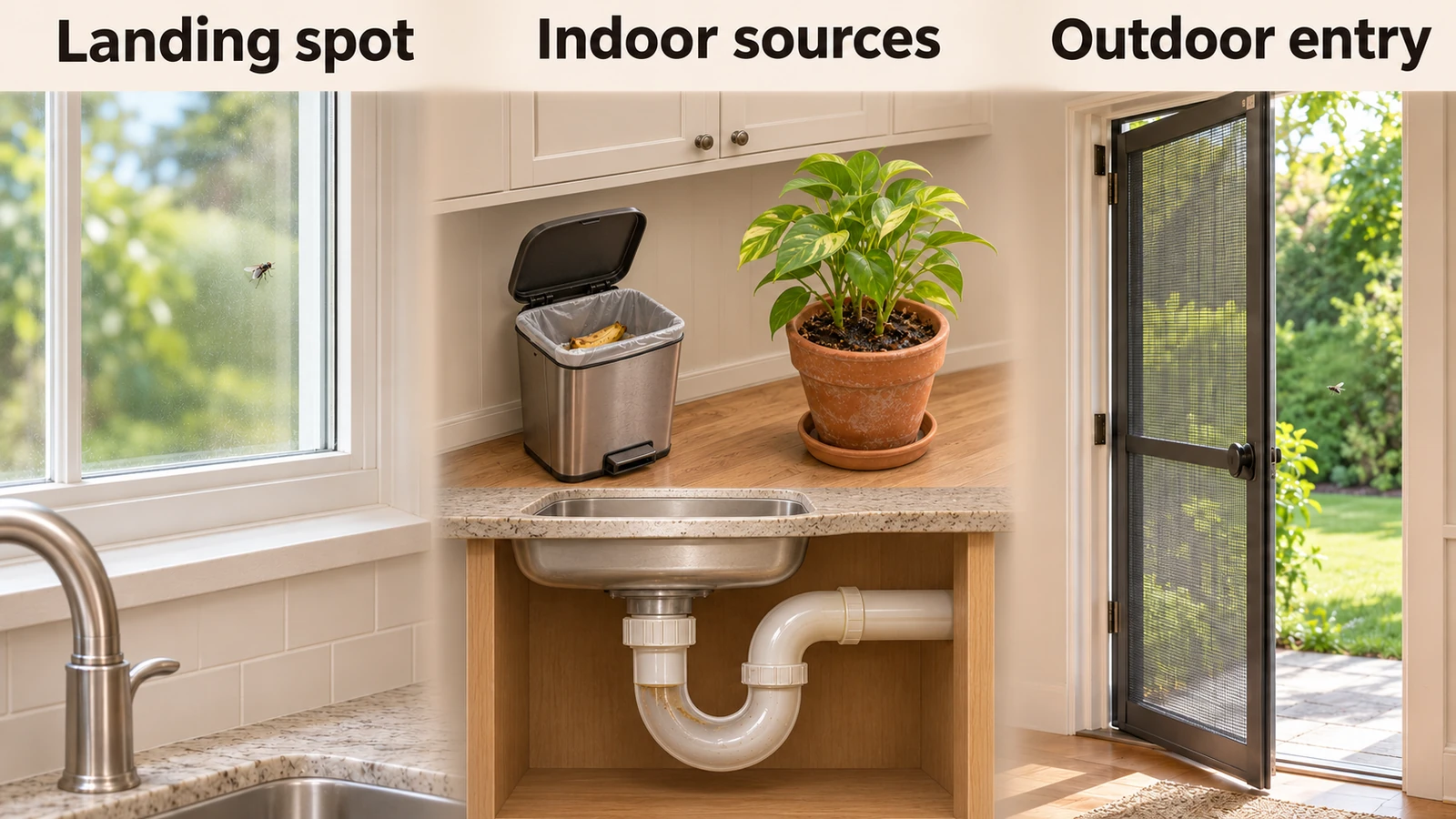
Watch the flies for a moment before cleaning the area. Do they seem to appear repeatedly from a pot, a bin, or the space near a drain? Or are they merely resting on a bright window? An adult’s favorite landing spot may be some distance from where its larvae developed.
Check the most plausible source first rather than tearing apart the whole room. Fly larvae usually need suitable moist material, but that material differs by insect. The first inspection should be about finding a credible source, not applying a treatment everywhere.
Start with the places that fit your observations:
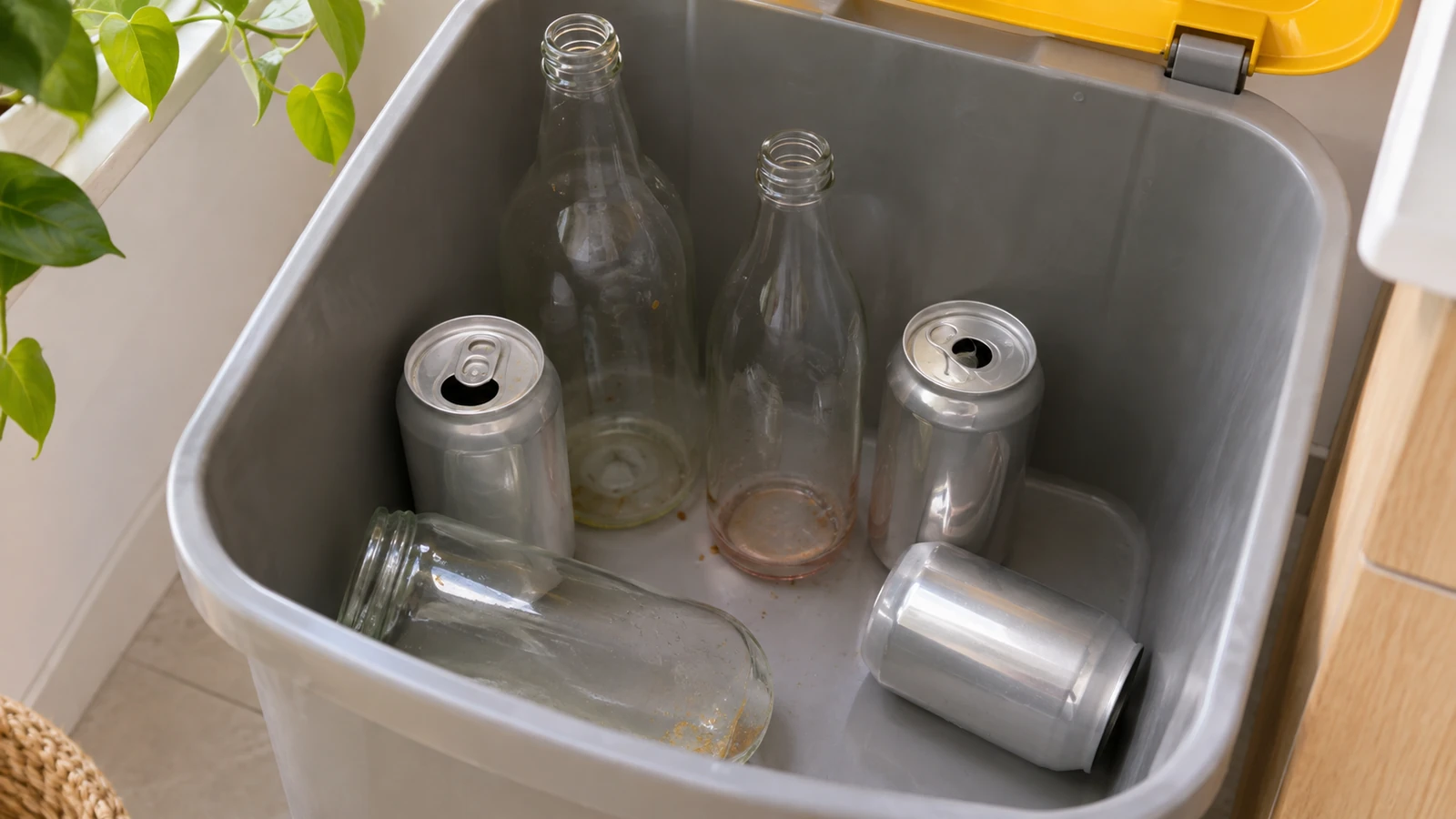
- Produce and recycling: Look for overripe fruit, forgotten vegetables, sticky liquid in bottles, and damp residue at the bottom of a trash or recycling bin.
- Sink or shower: Check whether fuzzy flies repeatedly rest near the opening and whether there is visible organic buildup or persistent wetness. For a focused check, use the drain fly identification guide.
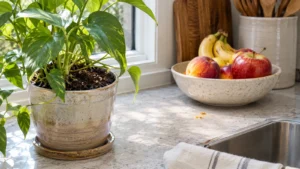
- Houseplants: Notice flies moving over the soil and whether the potting mix remains wet for long periods.
- Hidden damp debris: Look for accessible leaks, wet waste beneath an appliance, or decaying material near a damaged drain. Quick-running phorid flies make this branch worth considering.
- Doors and windows: Check screens, door openings, and nearby outdoor waste when larger flies are appearing without a matching indoor breeding site.
An adult fly hovering at the sink is not enough to locate its larvae. What makes a source more convincing is repeated emergence from the same area or actual immature insects in suitable material. Avoid pouring random drain chemicals or spraying an entire room while the source is still uncertain.
Identification Mistakes
- Treating “gnat” as a precise species name.
- Assuming the window where flies gather is where they breed.
- Pouring chemicals into a drain without checking whether the insects are drain flies.
Key Clue
A fly type that matches the material where new adults repeatedly emerge gives you a stronger lead than one insect resting on a wall or window.
What to Watch For
Phorid flies may look like ordinary tiny gnats near a sink, but their running behavior and humpbacked shape suggest a different investigation. Persistent activity with a leak or damp odor may point to concealed decaying material.
What do your observations actually mean?
A breeding source indoors is plausible
Repeated small flies near fermenting waste, drain film, or wet potting mix give you a practical place to investigate, especially if you can observe adults emerging or larvae in the material. The insect still needs to match the source you suspect.
Entry from outside may be the bigger issue
A few larger flies arriving after doors have been open, then collecting at a bright window, may be coming from outdoors. Screens, openings, and nearby waste become more relevant than indoor drain treatment. Some smaller flies also move toward light, so a window cluster alone is not a diagnosis.
Several clues conflict
If a trap catches small dark flies but no suspected source fits, collect an intact specimen or take a sharp close-up against a plain background. A local Cooperative Extension office or qualified pest professional may help identify it. Do not force the evidence to fit the first “gnat” search result.
How much activity have you actually found?
A few adult flies tell you that insects are present, not automatically that they are breeding in the home. Repeated adults of the same type near a plausible source, especially with evidence of emergence or larvae, make an indoor source more likely.
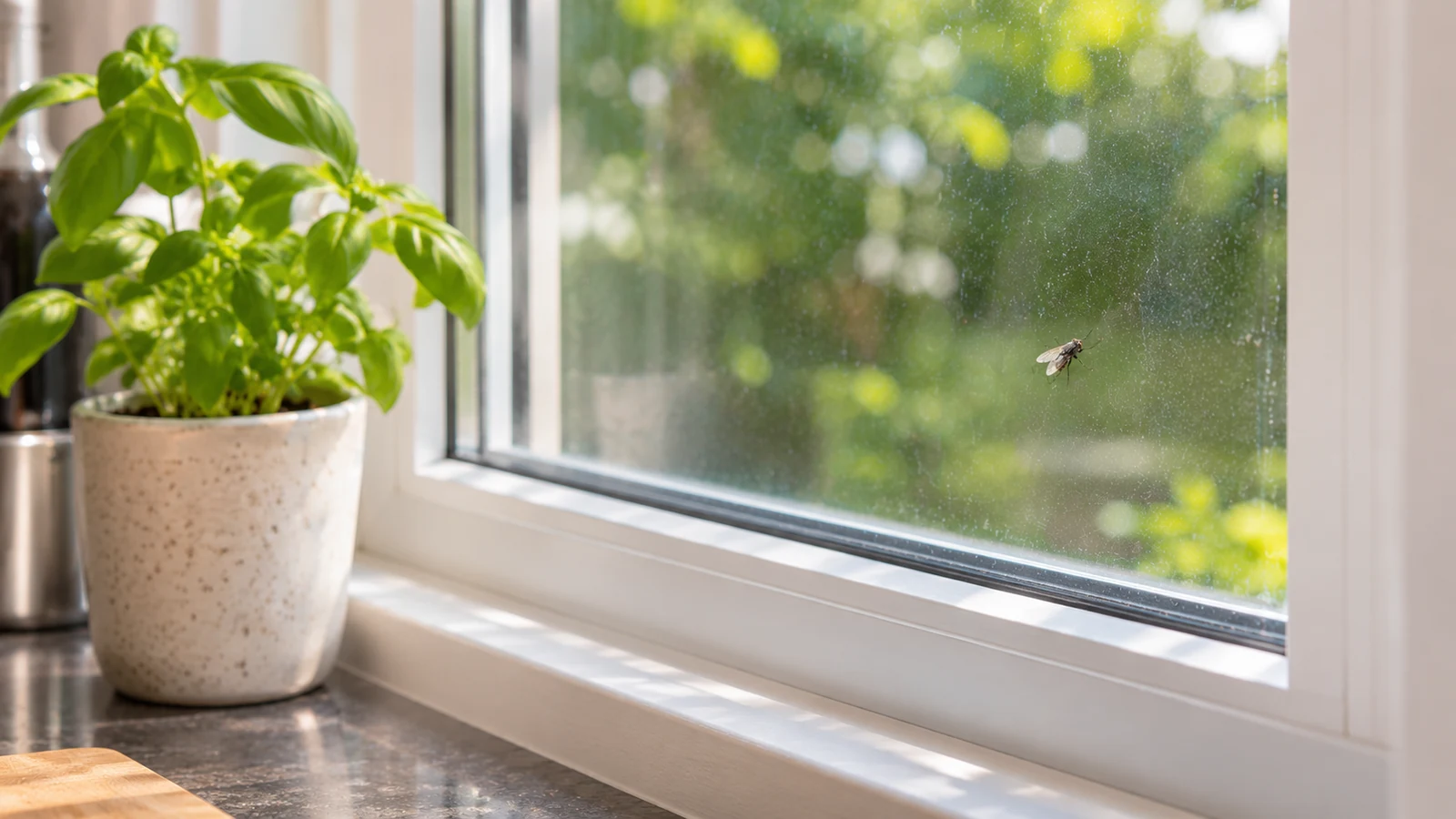
A fly caught near a window or on a monitoring card shows where that adult was caught. It cannot by itself pinpoint a breeding site. Compare that observation with the condition of nearby organic material, plant soil, and possible entry points.
Recurring flies emerging from inaccessible wet spaces, especially alongside plumbing defects or persistent odors, deserve further investigation. A plumber or pest-control professional can be appropriate when the suspected source cannot be reached or safely assessed.