Identification
Drain flies: How to identify them and find the source
Recognize fuzzy drain flies, check which drain or damp area is producing them, and distinguish a breeding source from look-alikes and plumbing problems.
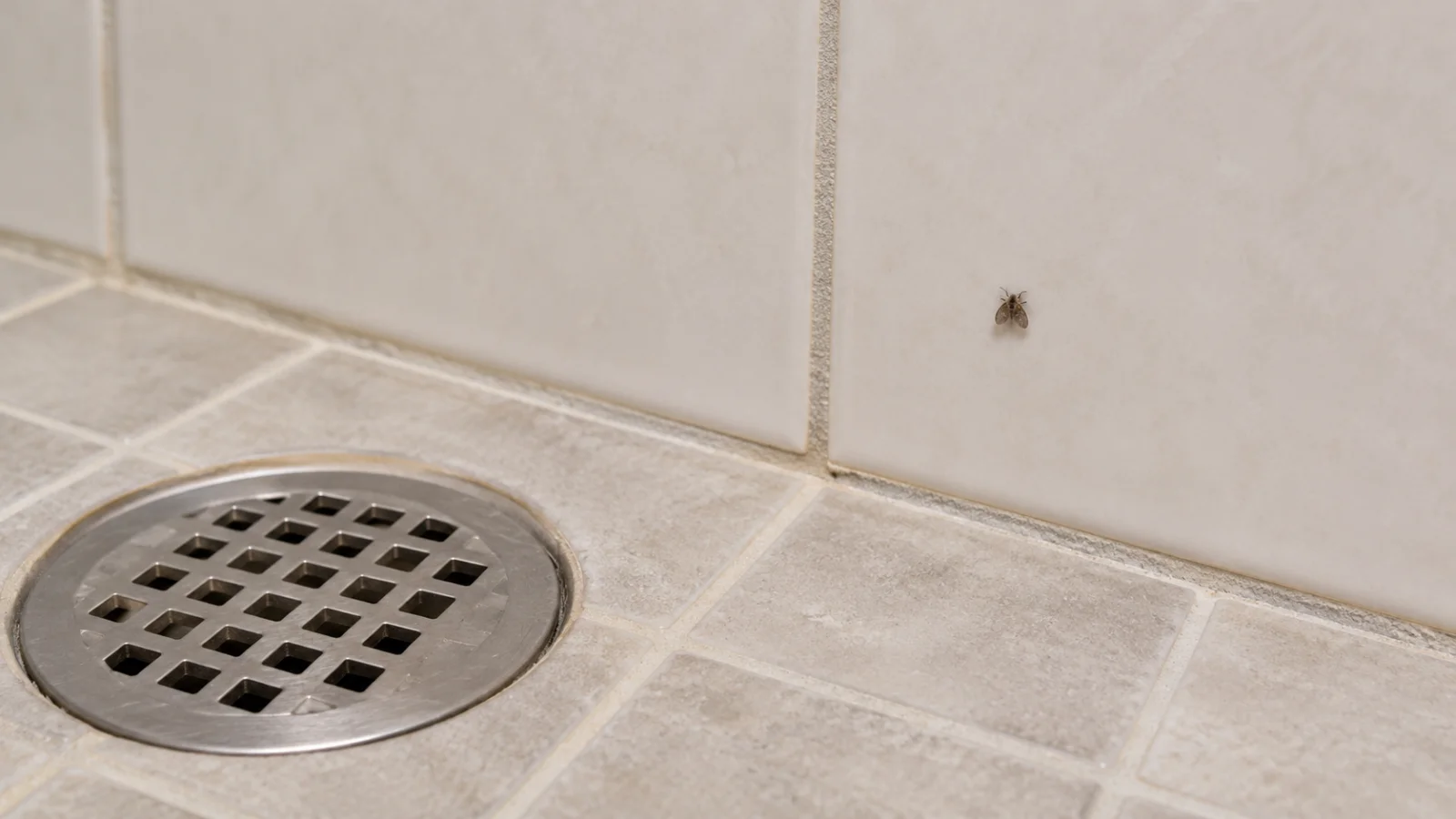
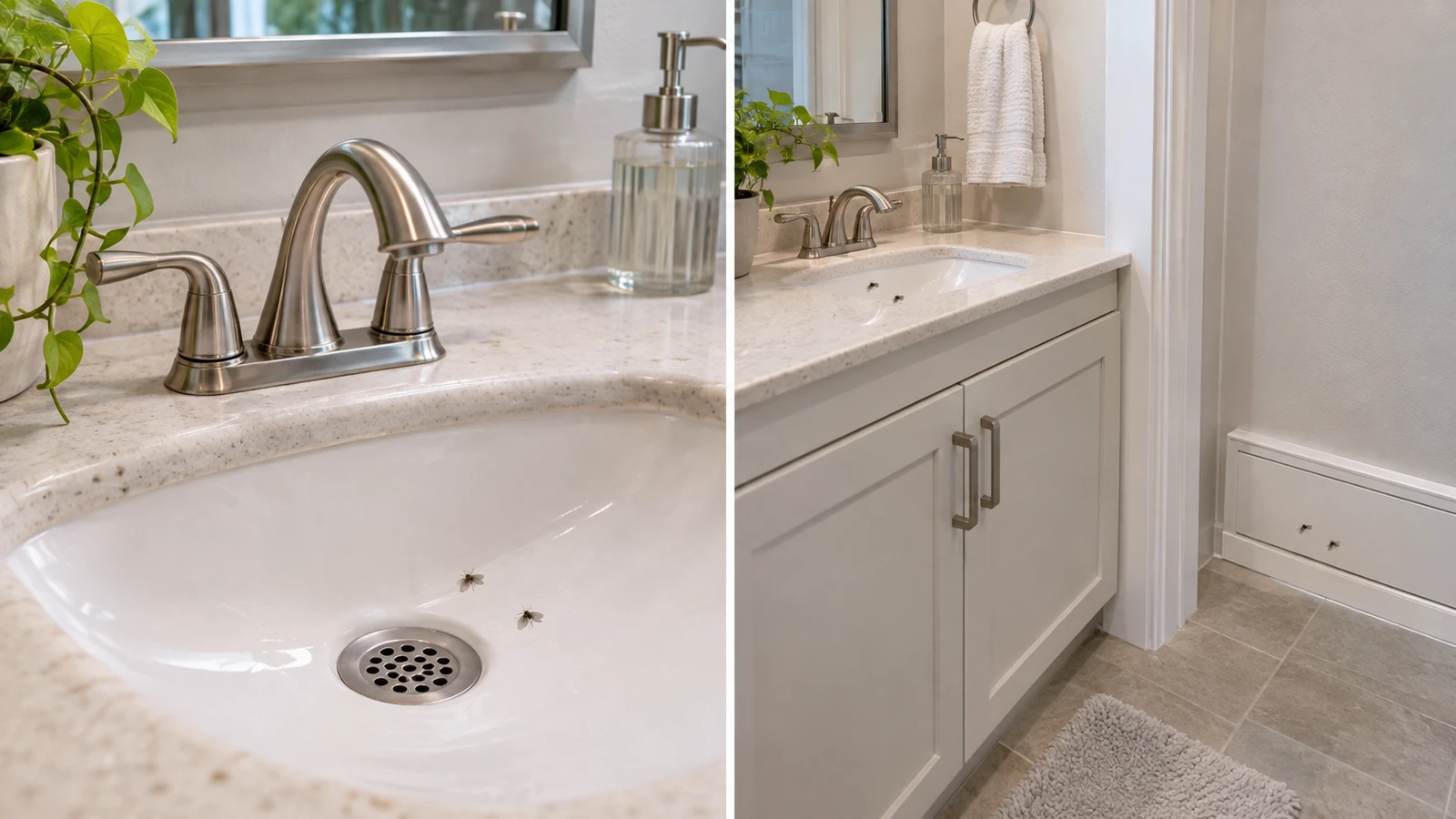
Tiny, fuzzy flies resting on a bathroom wall often lead people straight to the sink drain. That is a sensible place to investigate, but the first drain you notice may not be where the flies are developing. Start with the insect’s appearance, then use the pattern of sightings to find the wet organic material supporting it.
Are these really drain flies?
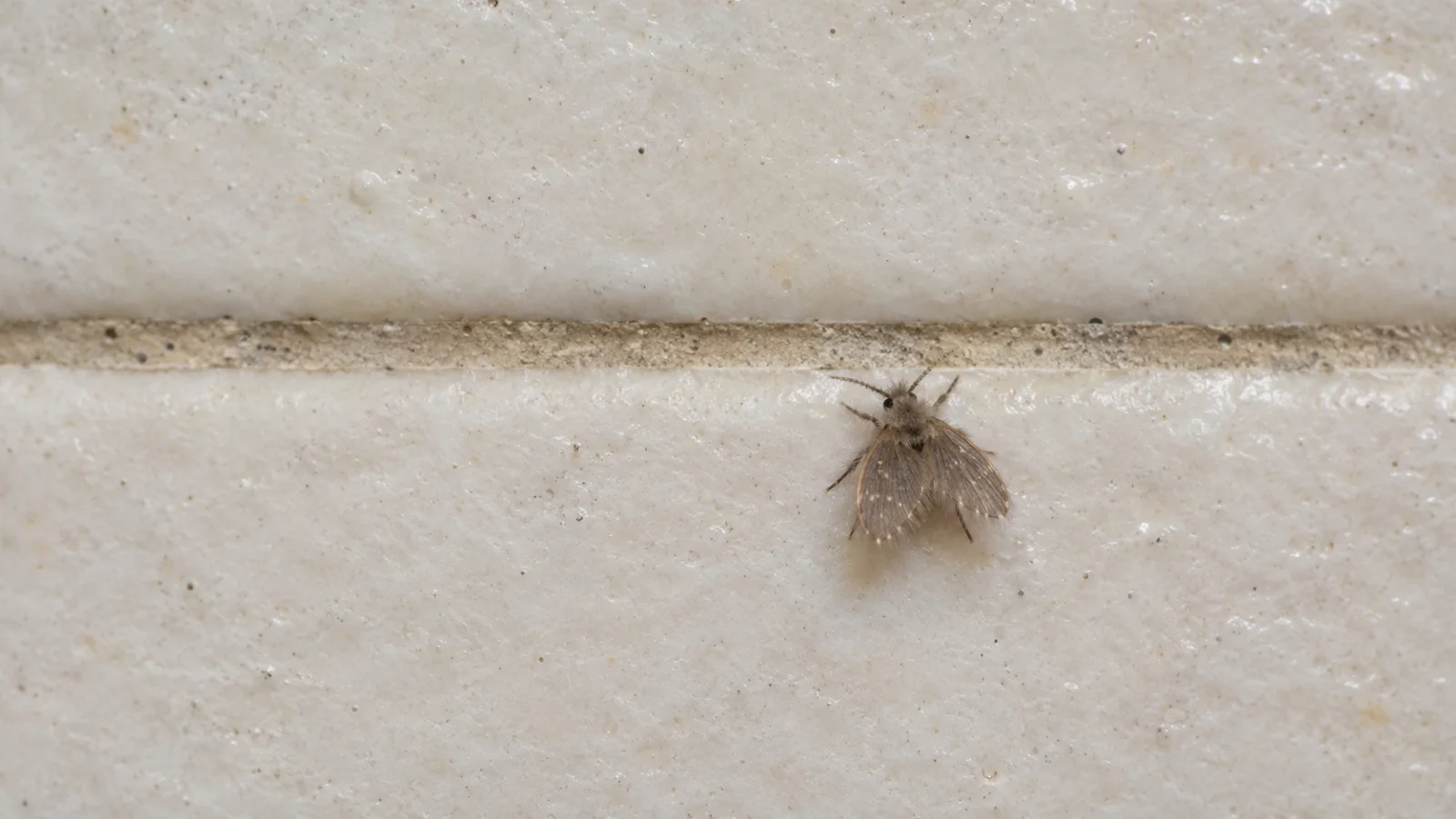
Drain flies, also called moth flies, are tiny flies in the family Psychodidae. Adults are usually gray, brown, or nearly black and often around 1/8 inch long. Fine hairs cover their bodies and broad wings, giving them a miniature moth-like appearance. When resting, they often hold their wings roof-like over the body.
They are weak fliers. Instead of making sustained flights around a room, they commonly rest on walls near damp areas and make short, irregular flights when disturbed. Bathrooms, kitchens, laundry rooms, and basements are common places to notice them.
Identification in 30 Seconds
- Look for a small, fuzzy body with broad, hairy wings, rather than a smooth-bodied fly.
- Watch for short, fluttering flights and frequent resting on a wall or other nearby surface.
- Note whether sightings cluster around a sink, shower, floor drain, or another persistently damp area.
The location is a clue, not a species identification. A humpbacked fly that runs rapidly across a counter may be a phorid or scuttle fly; one near fermenting produce may be a fruit fly. Slender, mosquito-like flies around damp potting soil raise another possibility. If the insect lacks the fuzzy moth-like wings, use the gnats vs. fruit flies comparison to narrow the alternatives before treating a drain.
Where are the flies breeding?
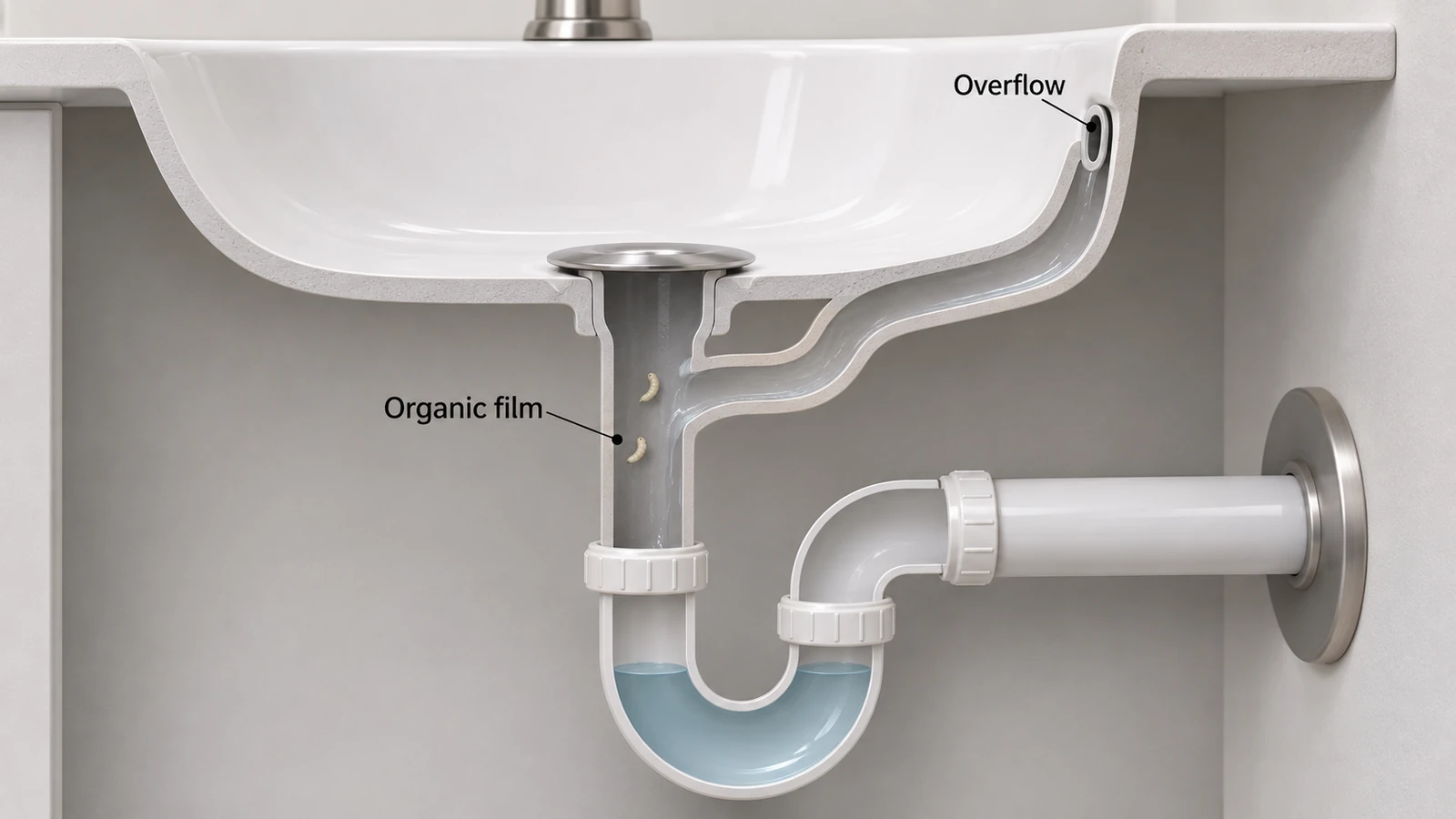
The adults are only the visible part of the problem. Drain fly larvae develop in wet organic buildup containing microbes, often the gelatinous film coating the inside of a drain. The water itself is not what feeds them. Hair, soap residue, grease, and other debris can help create the conditions where this film accumulates.
Begin with the fixtures nearest repeated sightings. Check accessible sink stoppers and openings, shower and tub drains, floor drains, and sink overflow channels. A sink may look spotless while buildup remains inside the opening or in an overflow passage. Damp condensate pans, dirty containers, or organic material around a leak are additional possibilities.
Check whether a particular drain is producing adults
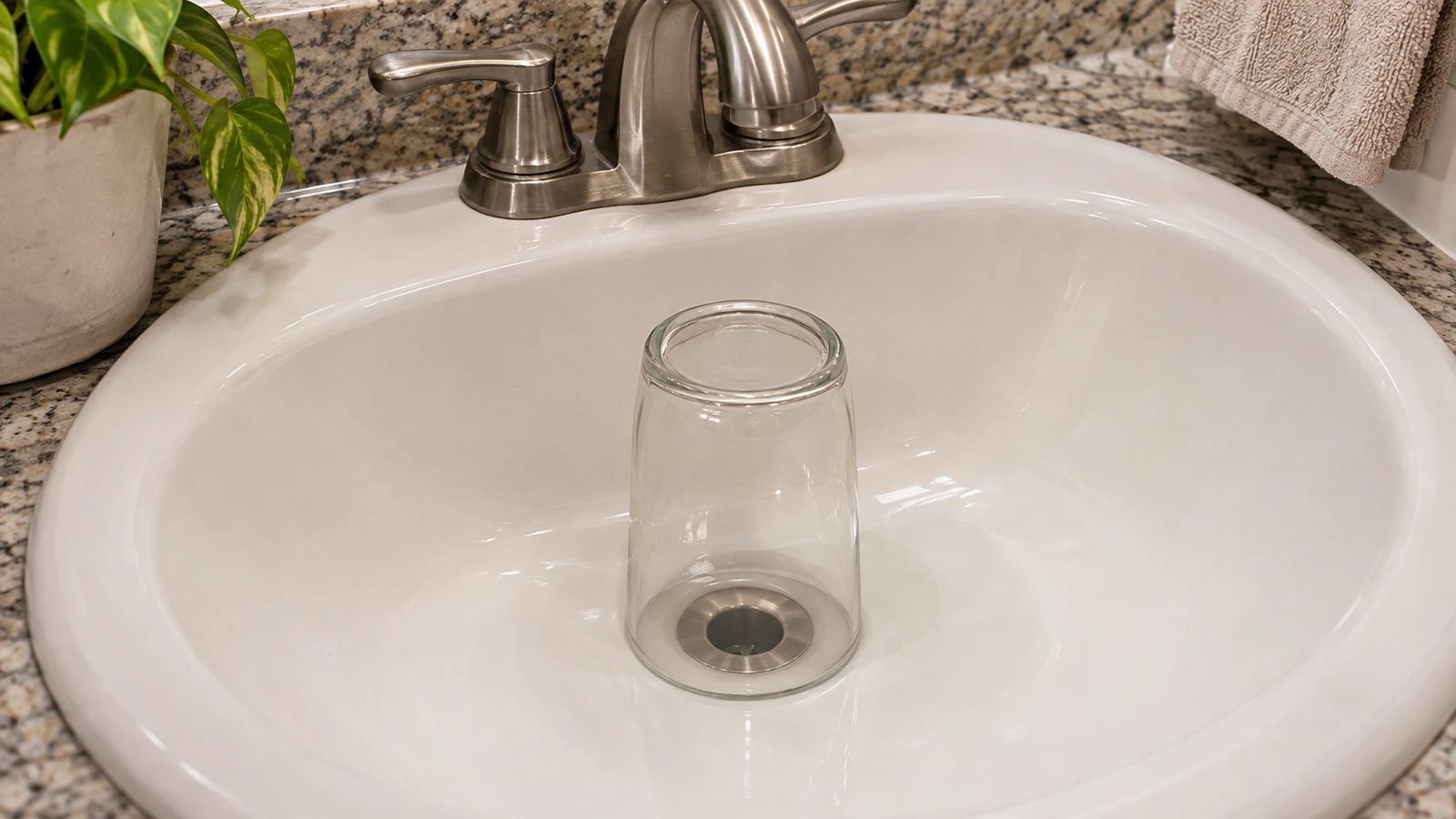
When a suspect drain is not in use, place a clear cup or jar, lightly coated on the inside with petroleum jelly, upside down over the opening. Check it after about 24 hours for emerging flies. This is a short diagnostic check, not a treatment, and the fixture must be left available for normal use afterward.
Finding moth-like flies emerging into a cup points toward that drain as a breeding source. If the result is empty, check other nearby drains and damp locations instead of treating the first one indefinitely. Where there are several fixtures, the goal is to find which one is producing flies.
Look beyond the obvious opening
If the usual drains do not account for the activity, inspect accessible areas around a leaking pipe, the base of a toilet, a basement floor drain, a sump area, or a wet appliance drip pan. Overflow channels and deposits concealed beneath a stopper are easy to overlook. Do not dismantle inaccessible plumbing or open walls as an insect-identification test.
Identification Mistakes
- Calling every small fly in a bathroom a drain fly without checking its wings and behavior.
- Treating the closest sink as the source solely because adults rest above it.
- Pouring bleach, pesticides, or mixed drain chemicals into pipes instead of locating the breeding material.
Key Clue
Moth-like adults caught emerging from a particular drain, especially where organic film is present, provide stronger evidence of a breeding source than flies merely sitting on a nearby wall.
What to Watch For
Persistent moisture at a wall or floor, sewage backup, or recurring leaks can point to a concealed source that needs plumbing assessment. Do not cut into walls or use chemicals to investigate a suspected broken line.
What do the clues tell you?
Combine three observations: what the insect looks like, where adults repeatedly appear, and whether you can connect them to a specific wet source. A fuzzy adult on one wall supports a possible identification. Emerging adults from a particular drain add a useful location clue. Neither a slow drain nor a stain, by itself, identifies the fly.
A source can also sit away from a visible drain. If the insects have a distinctly humpbacked profile and spend more time running than resting with fuzzy wings, reassess the identification before assuming the plumbing contains moth fly larvae.
Use the pattern below to choose the next check rather than the next chemical product.
| Observation | Most useful interpretation | Next check |
|---|---|---|
| Fuzzy adults emerge into a cup over one drain | That drain is a likely development site | Examine accessible stopper, opening, and organic buildup |
| Fuzzy adults rest nearby, but no emergence is found | The breeding site is still unlocated | Check other drains, overflow channels, and wet deposits |
| Smooth or humpbacked flies gather near food or moisture | Another small fly may be involved | Recheck the insect’s body, behavior, and likely food source |
| Flies persist near damp walls or a recurrent leak | A concealed wet organic source is possible | Arrange an inspection of the moisture or plumbing problem |
How extensive is the problem?
An occasional moth-like fly at a window is different from repeated adults appearing near the same bathroom fixture. If flies emerge from a specific drain, that location gives you a focused place to address. If several fixtures or rooms show activity, look for more than one wet source rather than assuming one drain explains the entire house.
You do not need an arbitrary fly count to decide whether to investigate. Repeated emergence, inaccessible damp areas, and signs of a plumbing fault matter more than a single evening’s sightings.
When a plumber or pest professional makes sense
A reachable drain with ordinary organic buildup may be manageable without professional service. A persistent leak, sewage backup, hidden wet area, or suspected damaged pipe is a plumbing problem first. If the fly identity or breeding location remains unclear after accessible checks, a pest professional can help confirm the insect and locate the source.
Learn more:
Once you’ve confirmed the flies are coming from a drain, follow our step-by-step guide to getting rid of drain flies.