
Identification
Flea vs. tick: how to tell them apart on pets and at home
Found a tiny parasite on your dog, cat, or bedding? Compare the way fleas and ticks move, their leg counts, and the clues around the finding before deciding what to inspect or do next.

You spot a tiny dark insect moving through your dog’s fur. Later, you notice a rounded bump fixed near its ear. Both discoveries might raise the same question: is it a flea or a tick?
The quickest distinction is usually how the parasite looks and moves. A flea is a six-legged insect built for jumping. A tick crawls and may attach firmly to skin while feeding. Looking at the body, legs, and exact location gives you a better starting point than scratching or bite marks alone.
What Does a Flea Look Like Compared With a Tick?
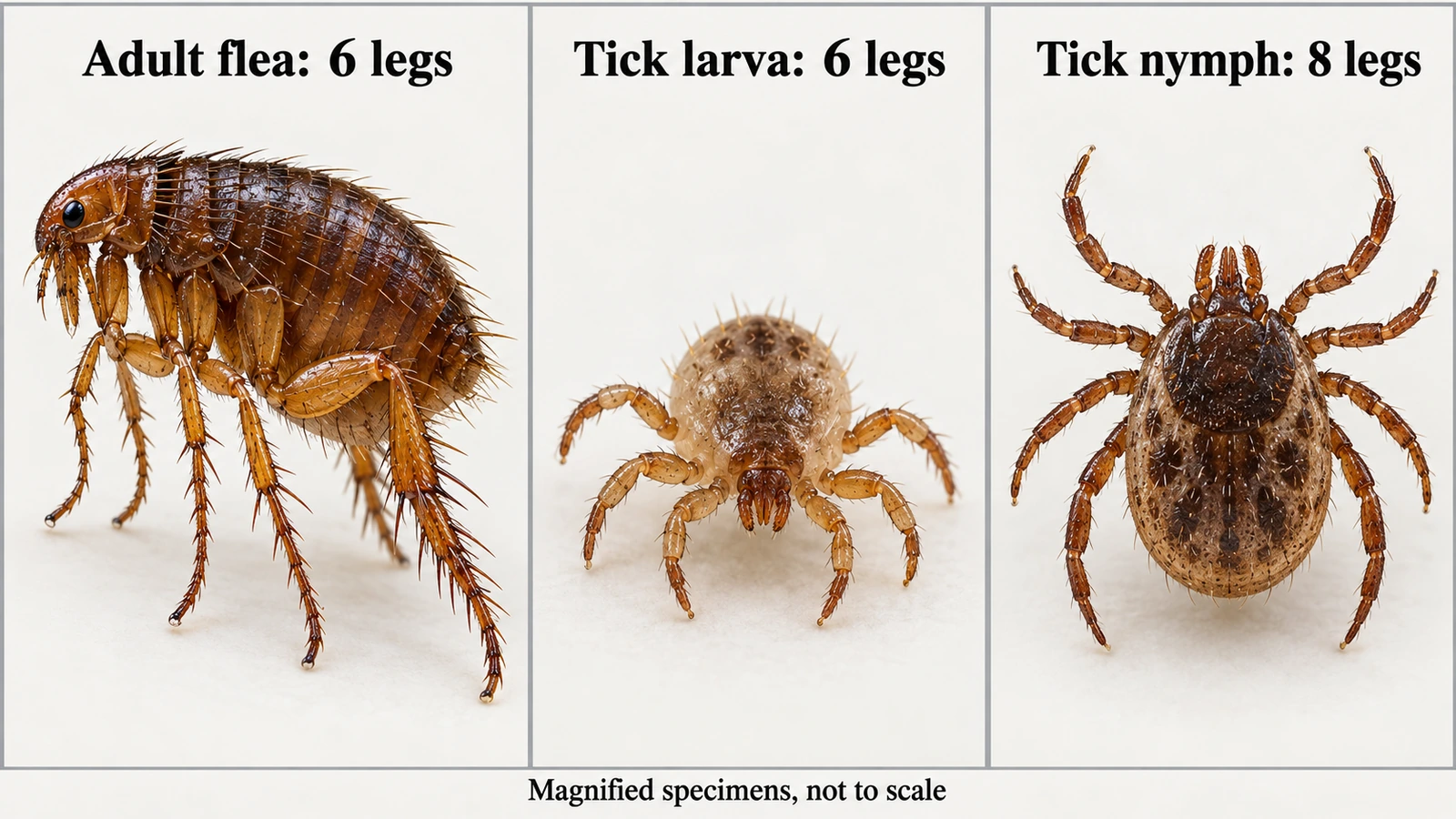
Adult fleas are usually about 1/32 to 1/8 inch (1–3 mm) long, reddish brown to nearly black, and flattened from side to side. This makes the body look particularly narrow when viewed from above. Fleas have six legs, including a powerful hind pair, and no wings. They can move quickly through fur and jump away when disturbed.
An unfed tick looks more like a flattened oval or teardrop when viewed from above. Its size varies considerably by species and life stage. Tick nymphs and adults have eight legs, while newly hatched tick larvae have six. As a female tick feeds, its body can swell into a much rounder shape. Ticks crawl rather than jump or fly.

Identification in 30 Seconds
- Jumping: a tiny, dark insect that springs away from fur or bedding is likely a flea.
- Eight legs: a crawling, oval-bodied parasite with eight legs is likely a tick nymph or adult.
- Attached to skin: a small body fixed in one spot, sometimes swollen, is more suggestive of a feeding tick.
- Only six legs: an adult flea has six, but so does a tick larva. Check its body shape and movement too.
Size can be misleading. A small unfed tick may be no larger than a flea, while an engorged tick can become much bigger. For a closer comparison, examine the specimen from above and from the side. A clear photograph with a size reference is more useful than estimating its dimensions from memory.
How to Check Your Dog, Cat, or the Place You Found It
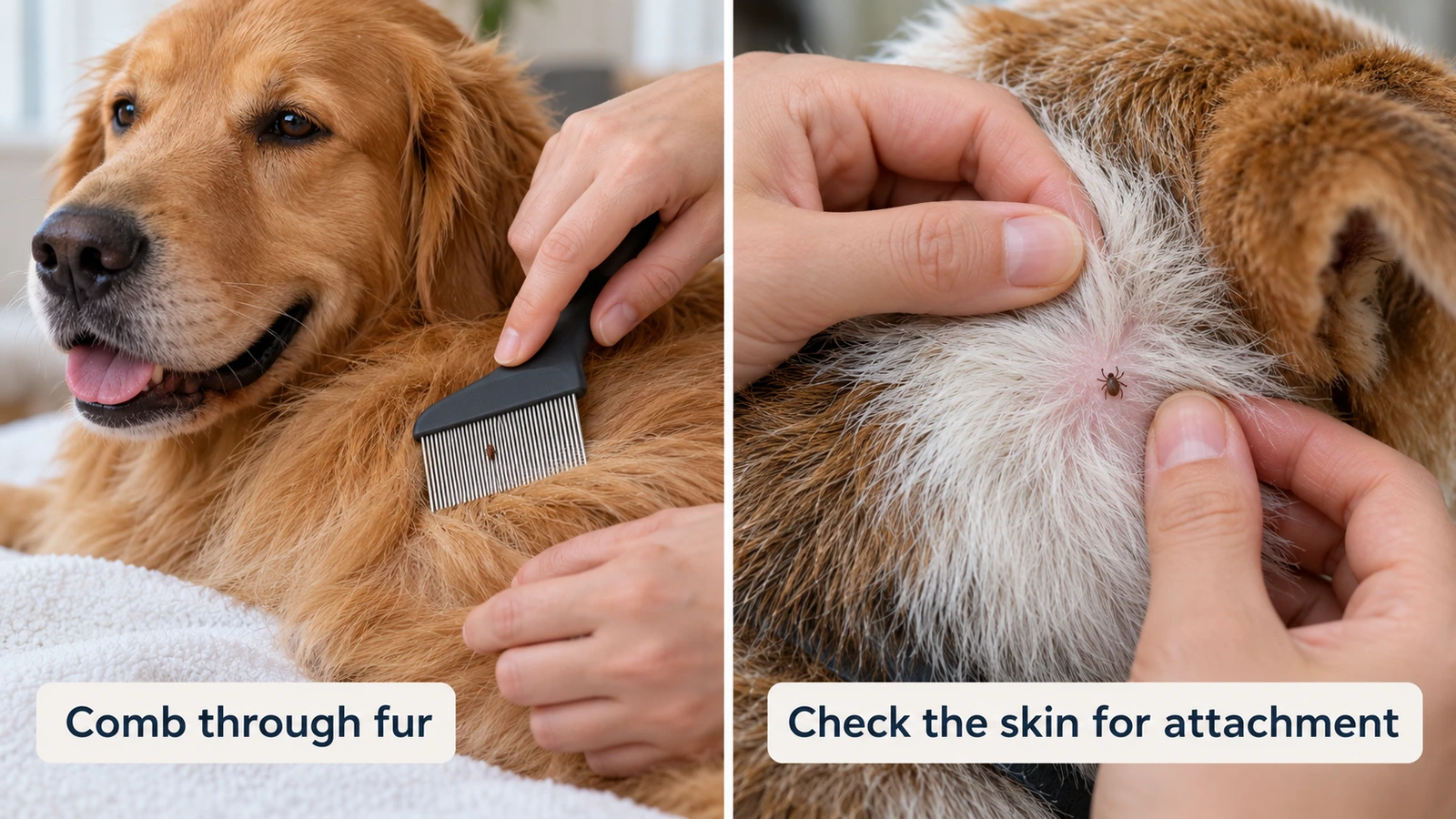
If the insect is moving through a dog’s or cat’s coat, gently part the fur under a bright light. A fine-toothed flea comb can help catch fast-moving insects, especially around the neck, back, and base of the tail. Hold the comb over a white towel or paper so that a small dark insect is easier to see.
If you suspect a tick, look directly at the skin. Check around the ears, under the collar, beneath the front legs, between the toes, and near the tail, particularly after time outdoors. A tick may be crawling through the coat or attached at one point. Its legs can be difficult to see when buried in thick fur. If you confirm an attached tick, remove it promptly rather than waiting to identify the exact species.
An insect found on a blanket, carpet, or piece of clothing needs a slightly different check. Record whether it jumped or crawled, and where it was found. Capture a clear photograph or place the specimen in a sealed container if practical. Then check the pet and the nearby resting area for additional evidence. A single insect on the floor tells you less than repeated sightings associated with the same animal or location.
Identification Mistakes
- Assuming itchy skin or red bumps on a pet automatically mean fleas.
- Calling a swollen tick a large flea because its legs are partly hidden.
- Looking only through the fur without checking whether a parasite is attached to the skin.
Key Clue
Watch what the parasite does before disturbing it. A flea moves freely through fur and may spring away, while a feeding tick remains anchored to the skin.
What to Watch For
Tick larvae have six legs, unlike the eight-legged nymphs and adults. A six-legged speck is not automatically a flea, especially when the specimen is too small to examine clearly.
What Other Clues Help Separate Fleas From Ticks?
Where you found the parasite matters. Fleas commonly live and feed on cats, dogs, and other animals. Their eggs can fall into bedding, carpets, and other places where an animal rests. Repeated jumping insects around those areas support a flea problem, even if you have trouble catching one in the fur.
Dark, pepper-like particles on an animal’s coat or bedding may be flea dirt, which is flea waste containing digested blood. This is a useful additional clue, but ordinary debris can look similar. The particles need to be examined rather than identified from color alone.
Ticks are frequently picked up outdoors, including in grassy, brushy, or wooded areas. They can ride into a home on pets, clothing, and gear. A tick found after a walk may simply have been brought indoors. However, an attached tick should be dealt with promptly regardless of where it came from.
Bite marks are a weaker way to distinguish the two. Flea bites can produce small, itchy bumps, while tick bites may initially go unnoticed. Skin reactions vary, and different biting organisms can produce similar marks. If you have only lesions and no specimen, return to checking the skin, pets, and surroundings instead of diagnosing the cause from the marks.
The comparison below brings the most useful distinctions together.
| What to compare | Flea | Tick |
|---|---|---|
| Body shape | Narrow and flattened from side to side, with prominent hind legs | Oval or teardrop-shaped when unfed; may become swollen after feeding |
| Size | Adult commonly about 1–3 mm (1/32–1/8 inch) | Highly variable; some unfed nymphs are about poppy-seed size, while engorged ticks can be much larger |
| Number of legs | Six in adults | Eight in nymphs and adults; six in larvae |
| Movement | Runs through fur and can jump | Crawls, does not jump, and may remain attached while feeding |
| Contact with skin | Feeds on blood but generally moves freely on the host | Uses its mouthparts to attach to skin for a blood meal |
| Associated clues | Repeated moving insects, flea dirt, activity near pet bedding | An attached specimen, recent outdoor exposure, or repeated ticks associated with a pet or resting area |
The most useful identification combines several traits. A jumping, narrow-bodied insect with enlarged hind legs strongly favors a flea. A crawling, oval-bodied parasite attached to the skin favors a tick. A blurry photograph or uncertain leg count calls for closer examination, not a guess based on size.
Does Finding One Mean You Have Fleas or Ticks in the House?
Several fleas on a pet, repeated jumping insects in living areas, or flea dirt in resting spots suggest activity that may extend beyond the insects you can see. Flea eggs can drop into bedding and carpets, allowing development to continue away from the animal. A single suspected flea, however, gives you little information about the extent of the problem.
One tick brought indoors after outdoor activity is a different situation. Many ticks are acquired outside, and finding one on a pet does not automatically mean ticks are reproducing in the house. There is an important exception: brown dog ticks can establish populations indoors, including in homes and kennels. Repeated indoor tick sightings, especially around dogs and their resting places, deserve closer investigation.

Use the pattern of evidence to decide what to check next:
- One attached tick after outdoor exposure: remove it promptly, check the pet and household members for other ticks, and note where the exposure may have occurred.
- Repeated jumping insects or flea dirt around a pet: inspect the animal and its usual resting areas for ongoing flea activity.
- Multiple ticks appearing indoors: examine the pet, bedding, and nearby crevices, and seek reliable identification, particularly if ticks continue appearing without an obvious recent outdoor source.
Neither a single insect nor a pattern of itchy bites establishes the severity of a household infestation. The organism you identify and the additional evidence determine how broadly you need to investigate.


