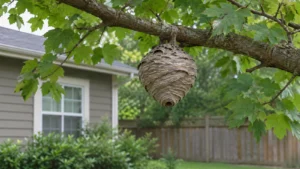
Comparison
Wasp spray: how to compare types and safety limits
Compare the main types of wasp and hornet sprays, understand what their labels permit, and decide when an insecticide is not the safest or most useful option.

A can of wasp and hornet spray may look like a straightforward purchase until you start comparing the labels. One product promises a directed stream, another produces foam, and a third is marketed for flying insects indoors. These differences matter, but none tells you whether a spray is the right response to the wasps you’ve found.
Start by separating the product’s intended use from the problem you actually have. A single wasp visiting the porch and an active colony hidden behind the siding call for very different decisions.
What to compare before choosing a spray
Look beyond the front of the can. The most important information is the permitted use on the full product label, including the listed insects, authorized locations and restrictions. An outdoor-only spray is not suitable for an indoor problem.
For products marketed as suitable for indoor and outdoor use, check what indoor use actually means. Some labels authorize particular settings, such as certain non-food areas, rather than unrestricted use throughout a house. Some nest-specific formulations explicitly exclude use on individual flying insects, even though the front of the can advertises a wasp killer.
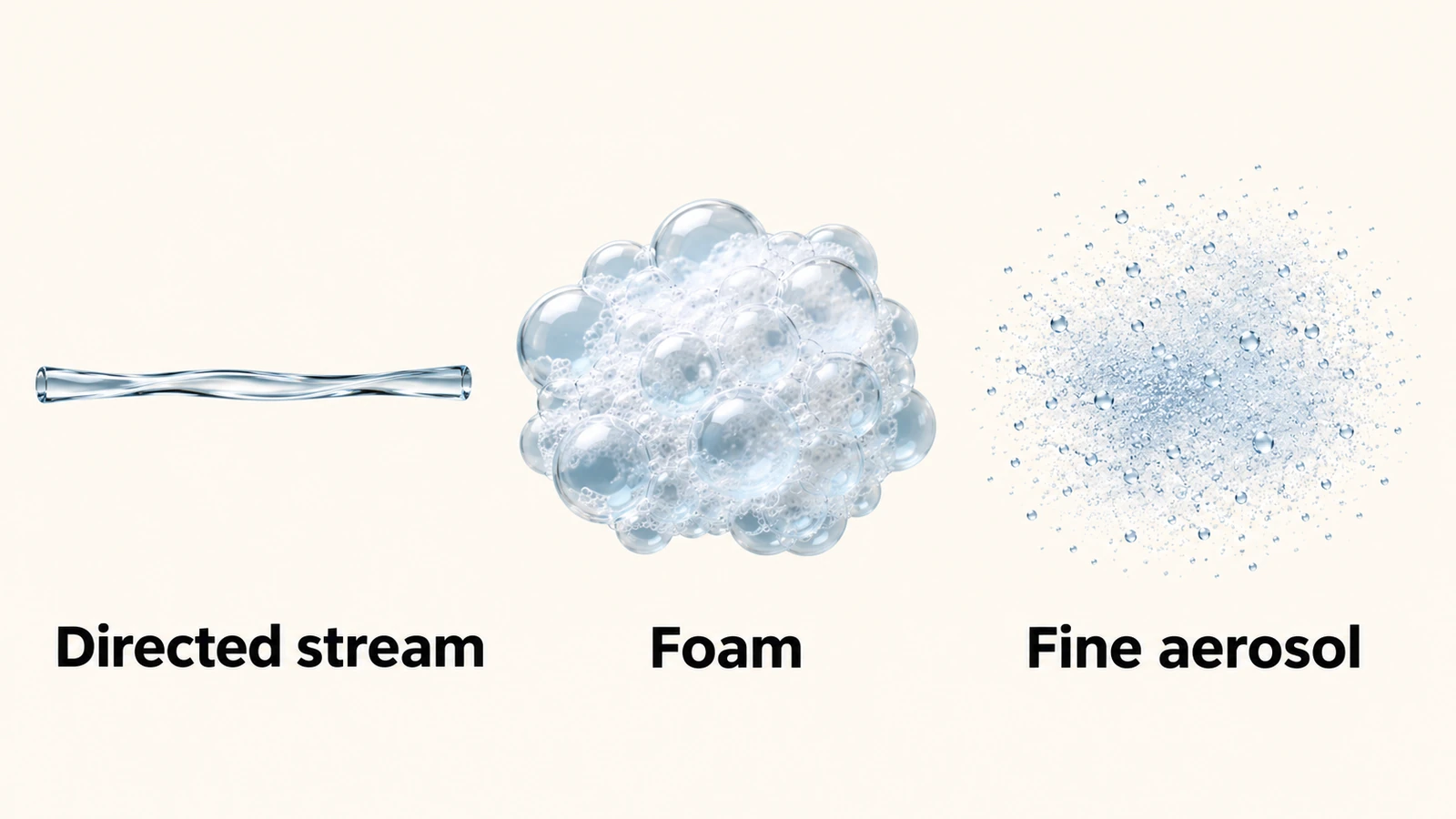
Also check the following points:
- Intended target: Is the product meant for individual flying insects, or does its label describe a different use?
- Formulation and claims: Does it produce a directed stream, foam or fine aerosol? Does the label describe contact action, residual action or both?
- Safety restrictions: Could occupants, pets, food, flowering plants, water or electrical equipment be exposed?
- Local requirements: Is the product authorized for your location? U.S. states can impose additional pesticide restrictions.
In the United States, using a registered pesticide contrary to its labeling violates federal law. Check the label on the actual container, not just the product description online. Similar-looking products may have different restrictions.
Here is how the main formats compare. The categories describe typical formulations, not universal authorizations or proven rankings of effectiveness.
| Spray type | Main characteristic | What to verify | Important limitation |
|---|---|---|---|
| Directed-stream aerosol | Concentrated liquid stream | Listed pests and permitted locations | Advertised reach is not protection from stings |
| Foaming aerosol | Visible foaming deposit | Authorized surfaces and settings | Visible foam does not establish complete control |
| Flying-insect aerosol | Dispersed droplets | Specific flying insects and indoor or outdoor authorization | Airborne droplets can be inhaled; not automatically a nest product |
The trade-offs: effectiveness, exposure and environmental risks

Many wasp insecticides contain pyrethrins or synthetic pyrethroids. These affect insect nervous systems, and some formulations are intended for rapid contact action. Others also carry residual-action claims. The effects are not limited to wasps: beneficial insects may also be exposed.
A spray that knocks down an exposed insect may still be unsuitable for the situation. Residual-action claims describe activity under particular labeled conditions, not a guarantee that wasps will never return. A botanical ingredient or water-based formulation does not make a product harmless.
Does wasp spray kill bees?
Yes. Many wasp insecticides can also kill bees, including honey bees and other beneficial pollinators. Pyrethrins, for example, can be highly toxic to honey bees. A spray may also harm other insects that come into contact with the pesticide.
If you see insects visiting flowers, first establish whether you are dealing with wasps or bees from a safe location. A suspected honey bee colony may warrant assessment by a qualified beekeeper or bee removal specialist rather than an insecticide purchase.
Exposure risks around people and pets
Outdoor sprays can drift onto nearby surfaces, and indoor aerosols may be inhaled. Pets can also come into contact with residues or lick contaminated objects. Check the product’s restrictions on food-contact areas, ventilation, access by people and animals, and environmental exposure. Many formulations are hazardous to aquatic organisms, so avoid contamination of drains, ponds and other water sources.
Keep pesticides stored securely away from children and pets. If someone is accidentally exposed, follow the product’s first-aid instructions and contact Poison Control at 1-800-222-1222 for U.S. treatment advice. Call 911 if the person has trouble breathing or collapses. Contact a veterinarian promptly if a pet may have been exposed.
The right label matters more than the spray format
A foam, stream or aerosol is only worth considering if its permitted uses match the situation and its exposure restrictions can be met.
What to Watch For
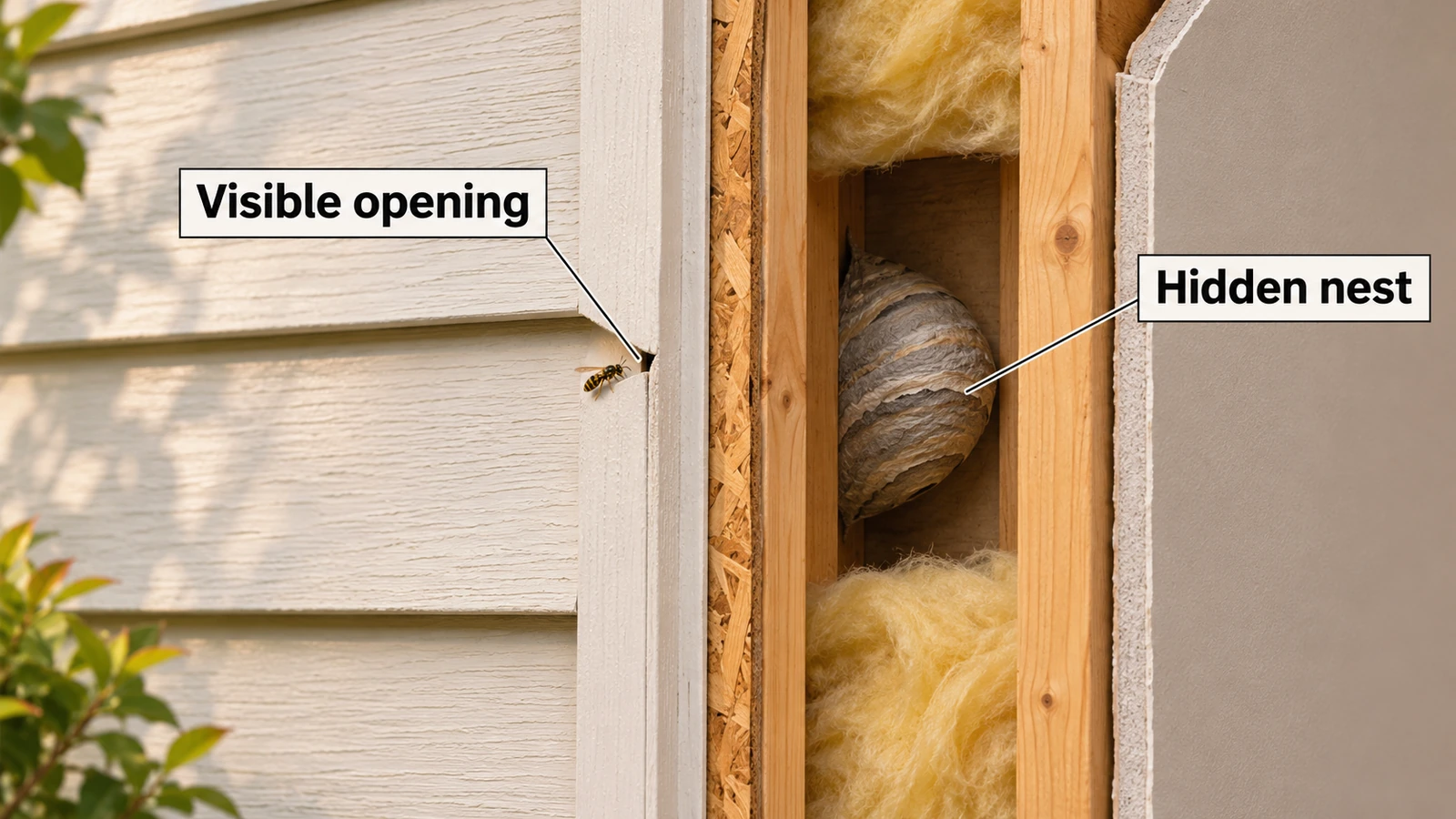
Wasps repeatedly entering a gap in siding may have a colony hidden inside the building. Surface activity alone tells you little about the extent of the nest.
Which wasp spray is the right choice for your situation?
When a spray is unnecessary or unsuitable
If you occasionally see a wasp around a patio or in the garden, you may not need an insecticide at all. Many wasps feed on other insects and are beneficial when they remain away from areas where people could be stung.
For recurring outdoor visitors, wasp traps may be worth considering for some species. A trap catches insects; a repellent is intended to discourage them; an insecticidal spray is intended to kill them. These products address different problems and should not be treated as interchangeable.
If an isolated wasp has entered your home, allowing it to leave safely may resolve the immediate problem without exposing the room to pesticides. If you still consider an insecticide, only consider products whose label specifically permits that use.
When professional help matters more than product choice
An active nest is a different situation. A hidden colony inside a wall, an underground nest, an elevated nest or one near a busy doorway can present a serious sting hazard. Sprays may affect exposed insects without resolving a concealed colony. Disturbing a hidden yellowjacket nest can also drive insects into living spaces.
Do not try to reach, open or seal an occupied nest, or choose a more powerful spray to compensate for difficult access. If you suspect an active nest, keep people and pets away from the area and consult a qualified pest control professional. Anyone with a known sting allergy should avoid attempting nest treatment.
The best wasp spray is therefore not a single brand or formulation. For an isolated insect, a product with the correct labeled use might be an option if nonchemical measures are unsuitable. For an active or inaccessible colony, safe assessment takes priority over buying a can.
Explore this topic further:
Wasp nest removal: when to hire a professional and what it costs