Identification
Termites with wings: how to recognize swarmers
Found winged insects or discarded wings near a window? Check the key termite swarmer traits, then use the location of the sighting to choose your next step.
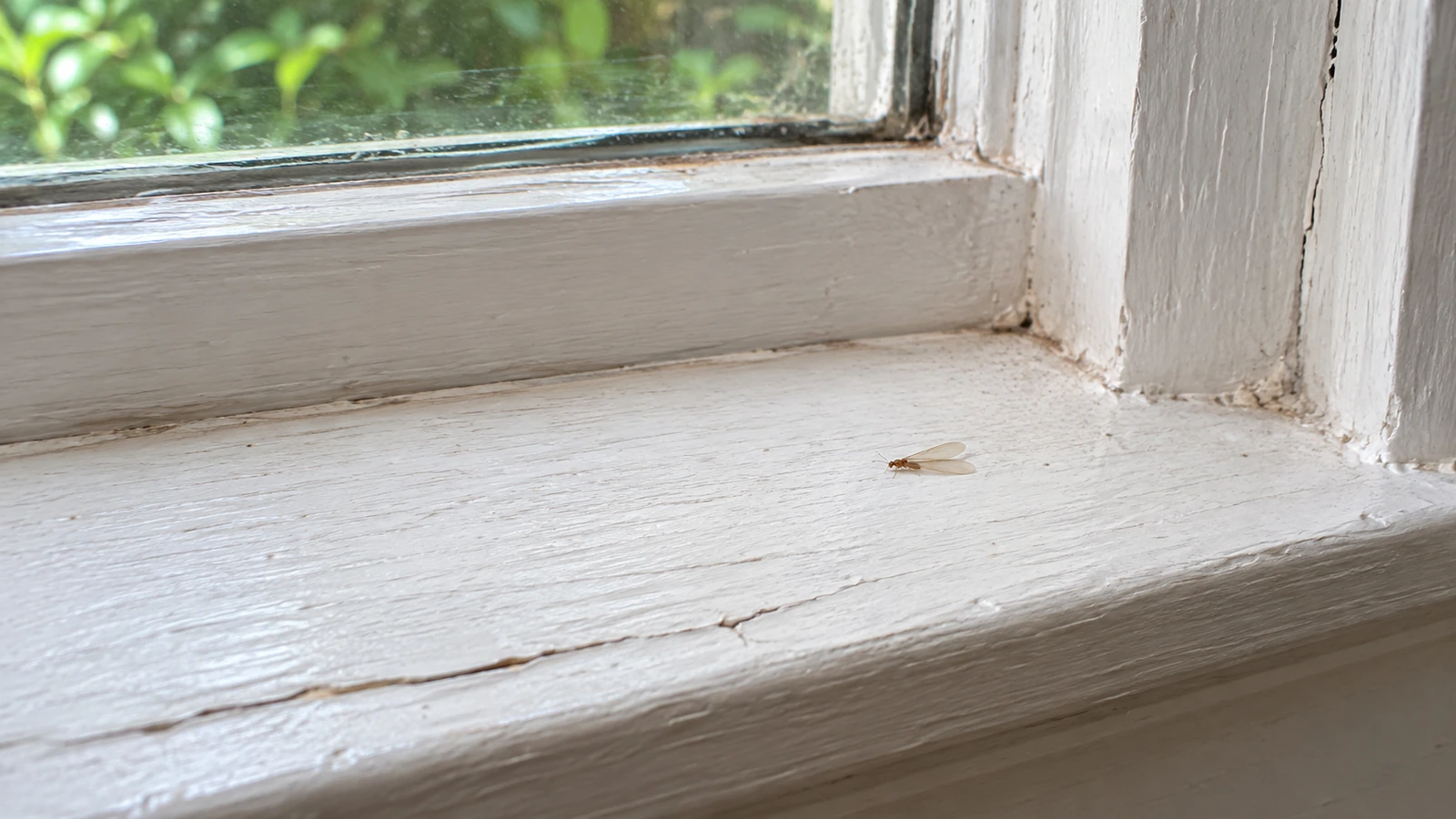
Several translucent wings have collected on a windowsill, or a few dark, four-winged insects suddenly appear near a light. The first question is whether they are termite swarmers, not whether an entire wall is already infested.
Winged termites, also called swarmers or alates, are the reproductive adults that leave established colonies during a swarm. Their bodies and wings offer useful clues, but the place where you found them determines what to check next.
What does a winged termite look like?
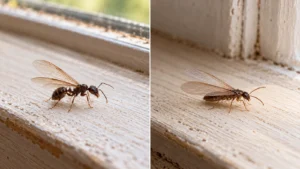
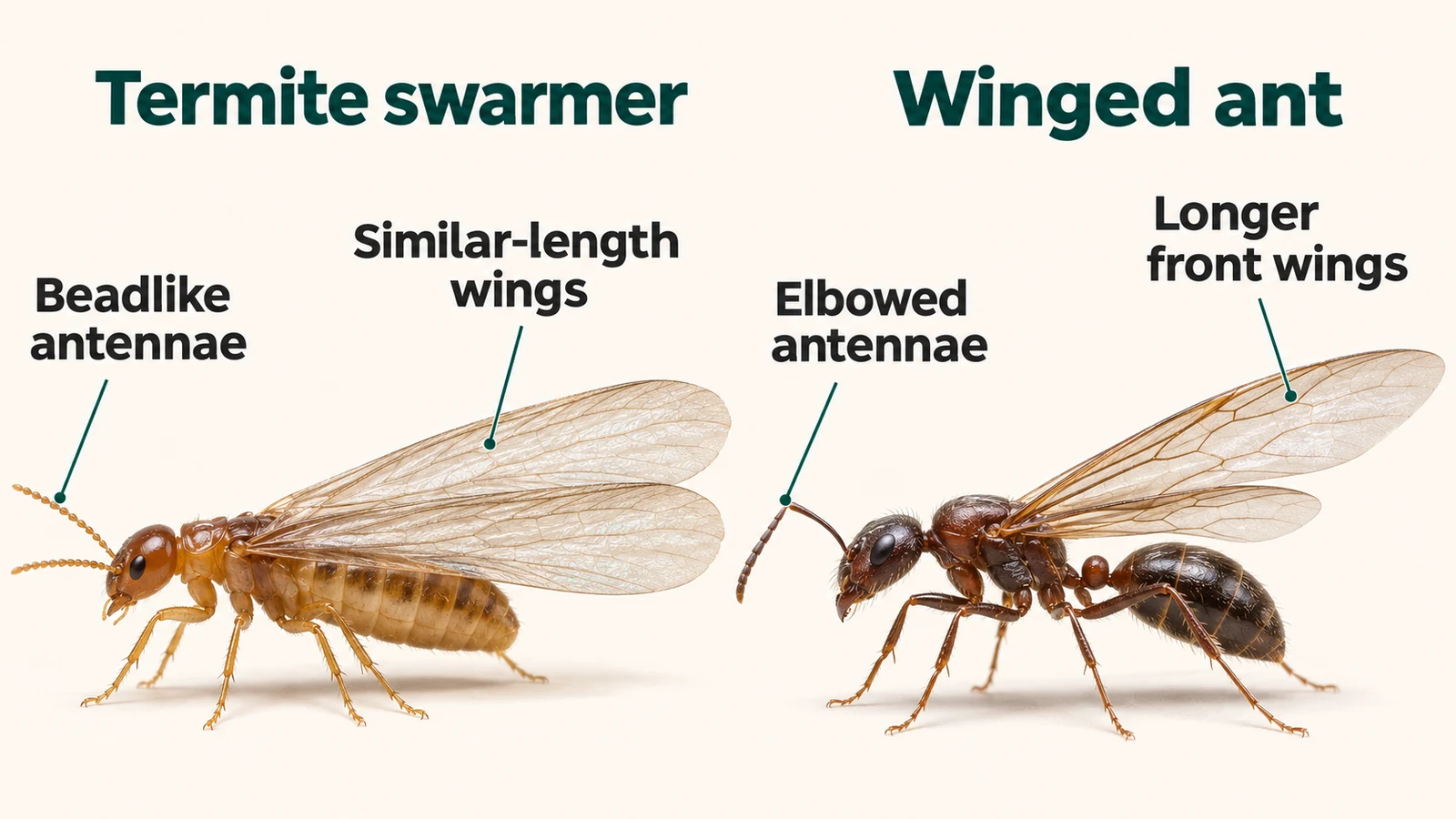
An intact termite swarmer has two pairs of long wings that are roughly equal in length, usually extending well past its body. Its abdomen joins the middle of the body broadly, without the sharply pinched waist typical of a winged ant.
The antennae provide another clue: they look relatively straight and beadlike on termites, while flying ants usually have a distinct elbow. Swarmer color varies by species and location, from yellowish-brown to dark brown or black, so color alone is a poor test.
Identification in 30 Seconds
- Four long wings, with the front and hind pairs about the same length? Look for the other termite traits.
- Broad waist and straight, beadlike antennae as well? Together, these strongly favor a termite swarmer.
- Pinched waist, elbowed antennae, and front wings longer than the hind wings? A flying ant is more likely.
Both termites and winged ants can shed their wings after a flight. If you have only a wingless insect or a few loose wings, try to find an intact specimen rather than making the identification from one feature.
Check the insect and where you found it
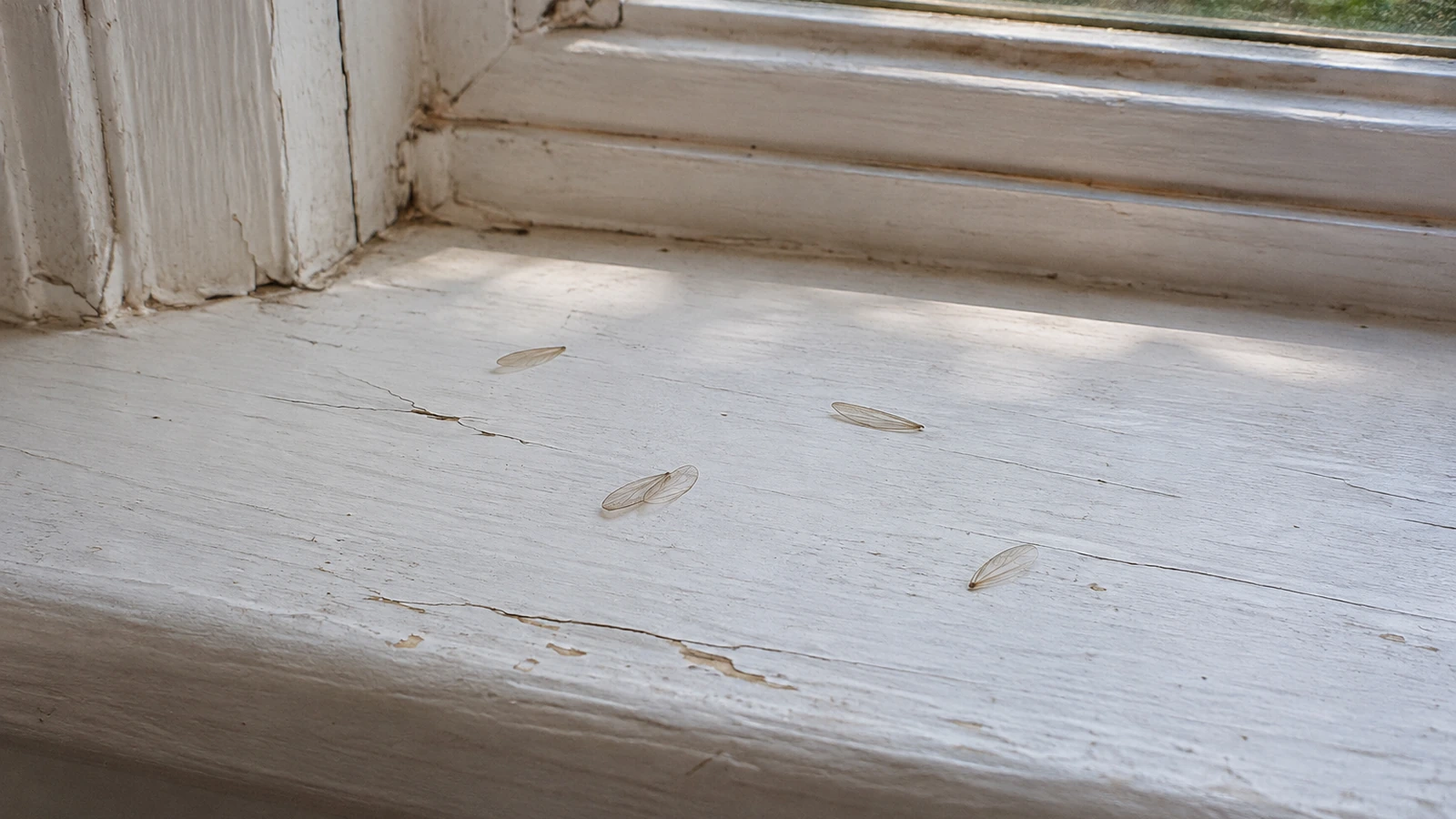
Photograph an intact insect from above and from the side if you can do so safely. Look for its waist, antennae, and both wing pairs. A clear photo of the actual specimen is more useful than a distant picture of insects around a window.
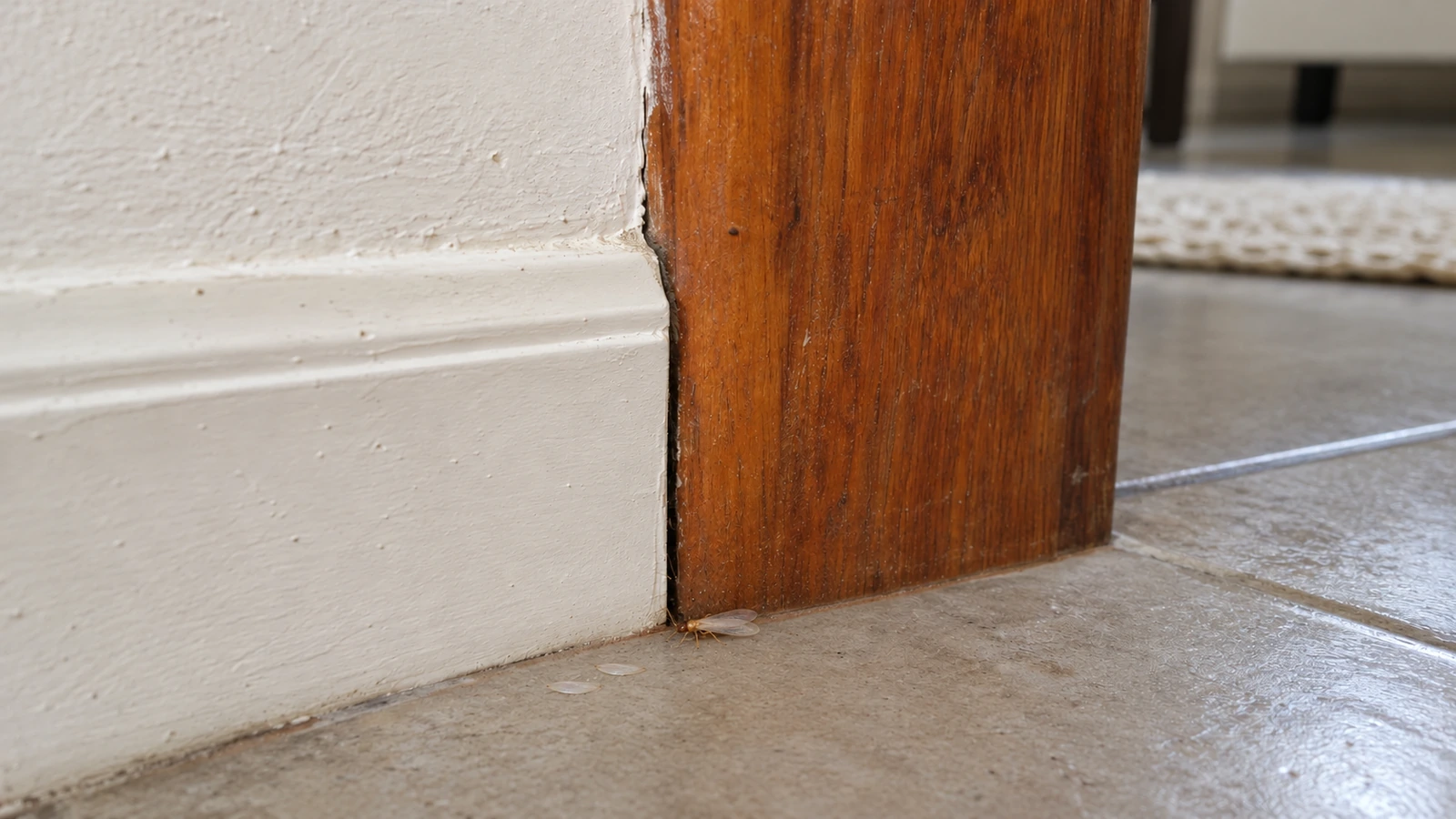
If the insects are dead, keep one in a closed container for later identification. Photograph any loose wings before cleaning them up, along with the exact windowsill, floor, or doorway where they collected.
Next, note whether you saw insects fly through an open window, gather near exterior lighting, or emerge directly from an interior gap in woodwork or trim. You can check accessible edges and surfaces without prying apart walls, disturbing structural wood, or spraying into suspected openings.
Identification Mistakes
- Calling every dark flying insect a termite because of its color or the season.
- Assuming a pile of wings on a windowsill pinpoints a colony inside that wall.
- Treating a blurry photo of one wing as a confirmed species identification.
Key Clue
On an intact specimen, a broad waist, beadlike antennae, and two similarly sized pairs of long wings make a much stronger identification together than any one feature alone.
What to Watch For
Swarm timing differs across termite groups and U.S. regions. A spring daytime flight or a warm evening swarm may involve different species, so the calendar cannot replace the insect’s physical features.
Interpret the swarm and wing evidence
A specimen with several matching termite features is a reasonable basis for suspecting a termite swarmer. The next question is where the insects originated. Swarmers may arrive from an outdoor colony and end up near an indoor light or window.
Seeing several insects emerge from a gap in a wall, floor, or interior trim is a much stronger warning about possible termite activity in the structure. Loose wings can remain after the insects have disappeared, and their location alone does not reveal where a colony is established.
Use the combination of the insect and its location to select the next check:
| What you found | What it suggests | Useful next step |
|---|---|---|
| Intact insect with equal-length wing pairs, broad waist, and beadlike antennae | A termite swarmer is likely | Save a photo or specimen and document where it appeared. |
| Intact insect with a pinched waist, elbowed antennae, and shorter hind wings | A winged ant is more likely | Use the dedicated ant-versus-termite comparison. |
| Shed wings near a lighted or open window, with no emergence observed | An outside arrival is possible; the original source is unclear | Check the entry point and watch for another event. |
| Repeated winged insects emerging from an interior wall or trim gap | A suspected structural termite source needs prompt attention | Record the location and arrange a qualified inspection. |
How concerning is a swarm inside your home?
A few swarmers by an open window or bright light may have entered from outdoors. If you did not see where they came from, keep the evidence and check whether the activity repeats instead of assuming an indoor nest.
Repeated swarms in one room, insects visibly emerging from the building, or fresh concentrations of bodies and wings at interior trim deserve a prompt professional inspection. Waiting for obvious wood damage is not a useful test in those circumstances.

The sighting cannot tell you the colony’s size, the exact location of any concealed activity, or which treatment would be appropriate. A qualified inspection can determine whether the structure is affected.