How-To
How to Get Rid of Pantry Moths: A Pantry Cleanup Plan
Find the source of pantry moths, remove affected dry goods, clean overlooked spaces, and protect the food you keep while you monitor the results.
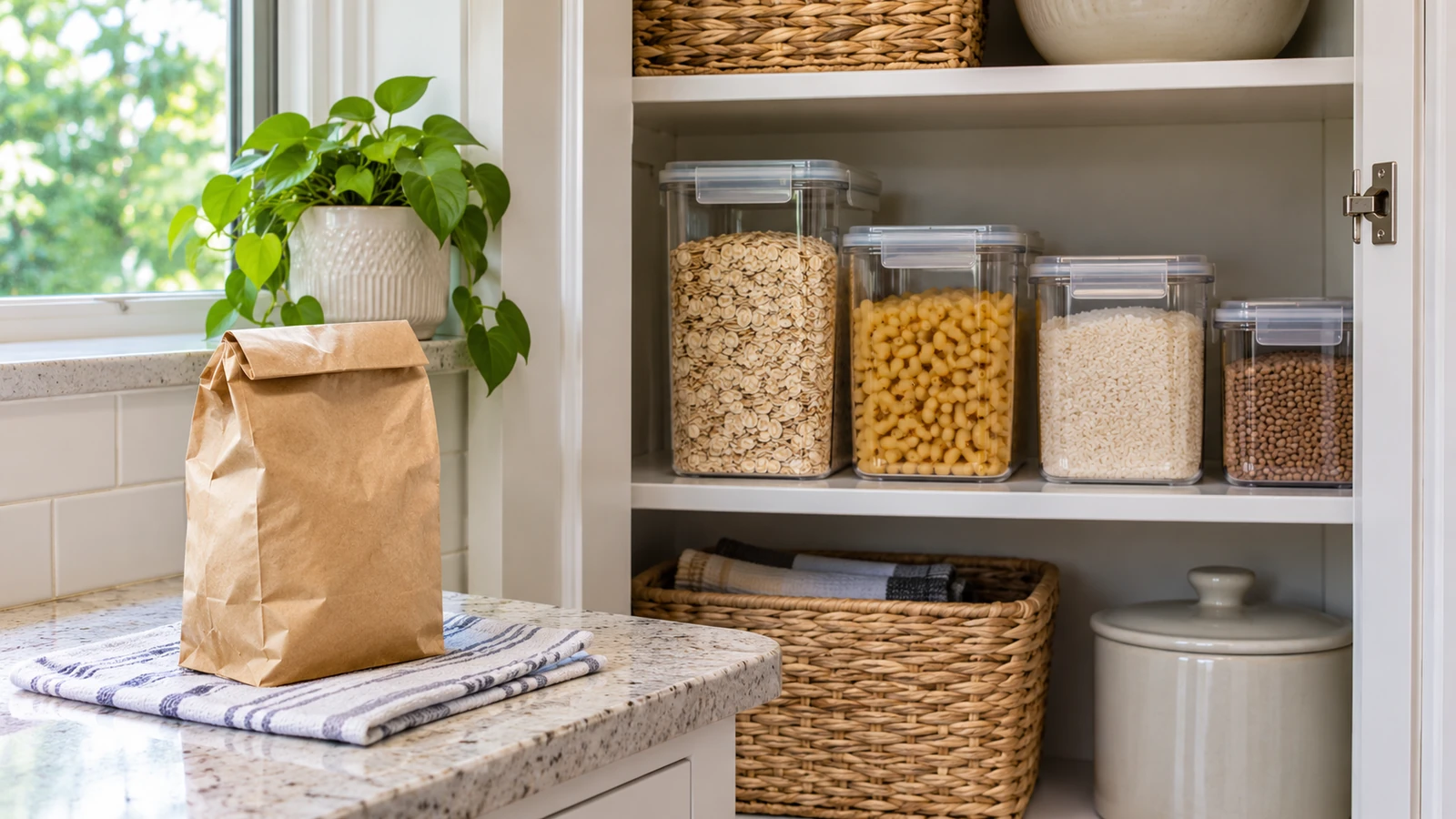
Pantry moths are frustrating because killing the few adults you see often changes very little. Another moth may have developed in a forgotten bag of dry food, and mature larvae can leave that food to pupate in nearby corners.
If the insects are pantry moths, the solution is practical: find the infested material, contain it, clean the storage area thoroughly, and protect the food you keep while you check the results. You usually do not need to spray your cabinets.
- Time Required: One thorough inspection and cleanup session, followed by checks over the next few weeks.
- Difficulty: Moderate; finding overlooked food sources is usually the hardest part.
- Equipment: Flashlight, sealable trash bags, vacuum with crevice attachment, mild dish soap, cleaning cloths, and rigid food containers with tight-fitting lids.
Prepare an area for sorting dry goods
Clear a counter and set out a trash bag before opening packages. Work one shelf or cabinet at a time so questionable food does not get mixed with items you intend to keep.
If you are unsure which insect you have, check the pantry moth identification guide first. This cleanup is for moths developing in stored dry foods, not clothes moths or small flies.
Before you start, gather everything that could be supporting the infestation:
- Dry goods from the affected shelves, including unopened boxes and bags.
- Nearby dry pet food, pet treats, birdseed, and rarely used baking ingredients.
- Seed-based decorations or other stored dry plant material near the activity.
Before You Start
Do not use mothballs or spray insecticides in food cupboards. They will not reach larvae inside packages and can contaminate food or food-contact surfaces. Removing the infested material is the priority.
Remove infested food and clean out the pantry
Start with the food, not the moths on the wall. Adults are easy to notice, but the developing larvae feed in stored products. Follow the sequence below before putting anything back on the shelves.
Step 1: Empty the affected shelves and inspect every package
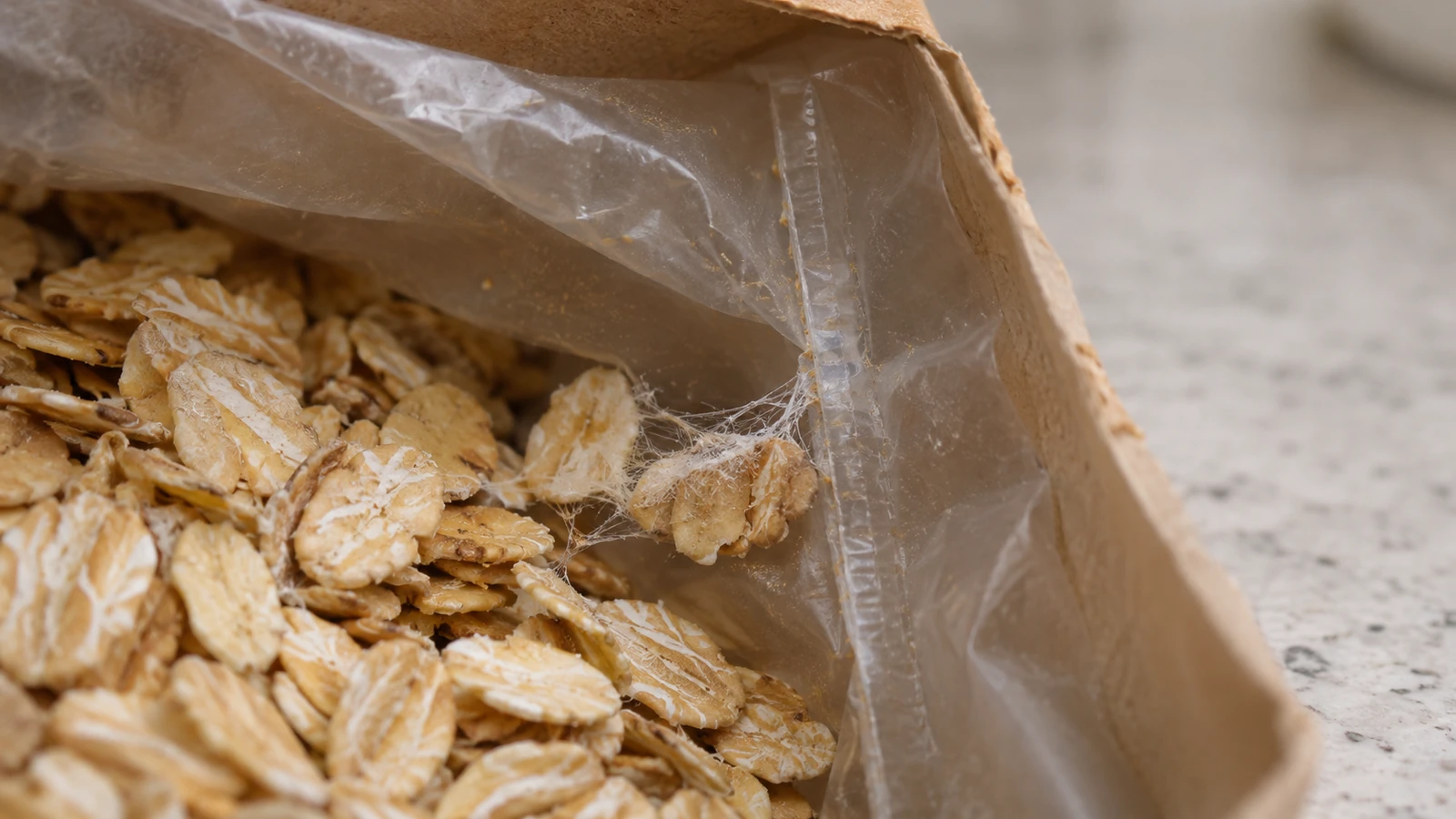
Take everything out, including unopened cardboard boxes and thin plastic bags. Check folds, seams, and package corners for silk threads, clumped food, crawling larvae, or insect debris. If you cannot see into a questionable package, pour a little onto a clean tray to inspect it, then contain it again.
Do not stop at the first affected bag. Cereal, rice, flour, pasta, nuts, dried fruit, birdseed, and dry pet food can all support pantry moths. Check adjoining storage if you find signs in more than one item.
Step 2: Seal and discard infested food
Put food with visible larvae, webbing, or cocoons into a sealed trash bag and take it to an outdoor garbage container. Do not sift the insects out or transfer contaminated food into a clean jar. Wipe the sorting surface before using it to prepare food.
Keep uncertain but apparently unaffected dry products separate from clean stock. If an item is suitable for freezing, sealing it and placing it in a working household freezer for a full week can kill unseen stages. This is a precaution for questionable food, not a way to salvage food with clear signs of infestation. Let a frozen, sealed package warm before opening it to limit condensation.
Step 3: Vacuum shelf joints, crevices, and nearby corners
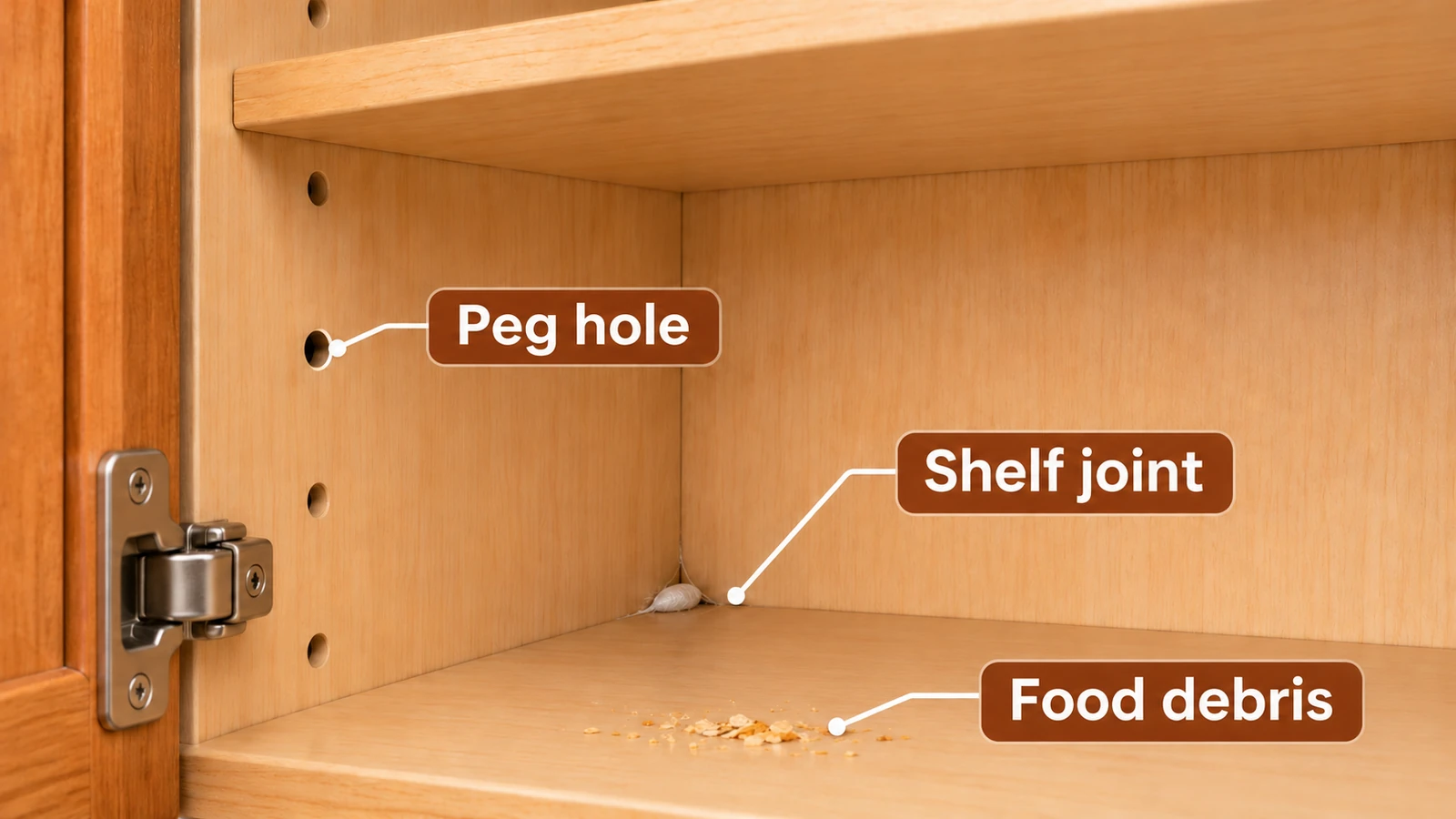
With the shelves empty, run a crevice attachment along back corners, peg holes, shelf brackets, undersides, and cabinet joints. If you have seen caterpillars on nearby walls or ceilings, check the upper corners as well. Mature larvae can travel away from food before forming cocoons.
Vacuum visible cocoons and adult moths. Empty the canister or discard the vacuum bag outside promptly so collected insects and food debris do not remain indoors.
Step 4: Wash, dry, and restock carefully
After vacuuming, wash cabinet surfaces with warm, soapy water and let them dry fully. Wash storage containers before refilling them, and avoid mixing new dry goods into old food.
Return only products without infestation signs. Store susceptible foods in glass, metal, or sturdy plastic containers with tight-fitting lids. Thin zip-top bags and cardboard packaging are poor long-term barriers.
Watch for the overlooked details that allow moths to return

A shelf can look spotless while one accessible package still supports larvae. The most common cleanup failure is leaving a food source behind, not using too little soap.
Pay particular attention to:
- Unopened packaging: The outer box may look intact even when its inner bag or folds contain webbing.
- Food outside the kitchen pantry: Dry pet food, birdseed, and decorations made from seeds or grains can support an infestation elsewhere in the home.
- Small hidden spaces: Shelf fittings, upper corners, and the edges of shelf liners may shelter cocoons or trapped food debris.
- Questionable items put back too soon: A new storage container will not fix a problem if infested food goes into it.
Check for new larvae, not just fewer flying moths
Inspect food and cabinet corners together. An occasional adult after cleanup may have emerged from a cocoon already present, while fresh webbing or larvae in stored food show that the source problem is still active.
A pantry moth pheromone trap can help monitor adult activity, but it typically catches males and cannot remove the eggs or larvae inside food. Do not judge the cleanup solely by a trap count.
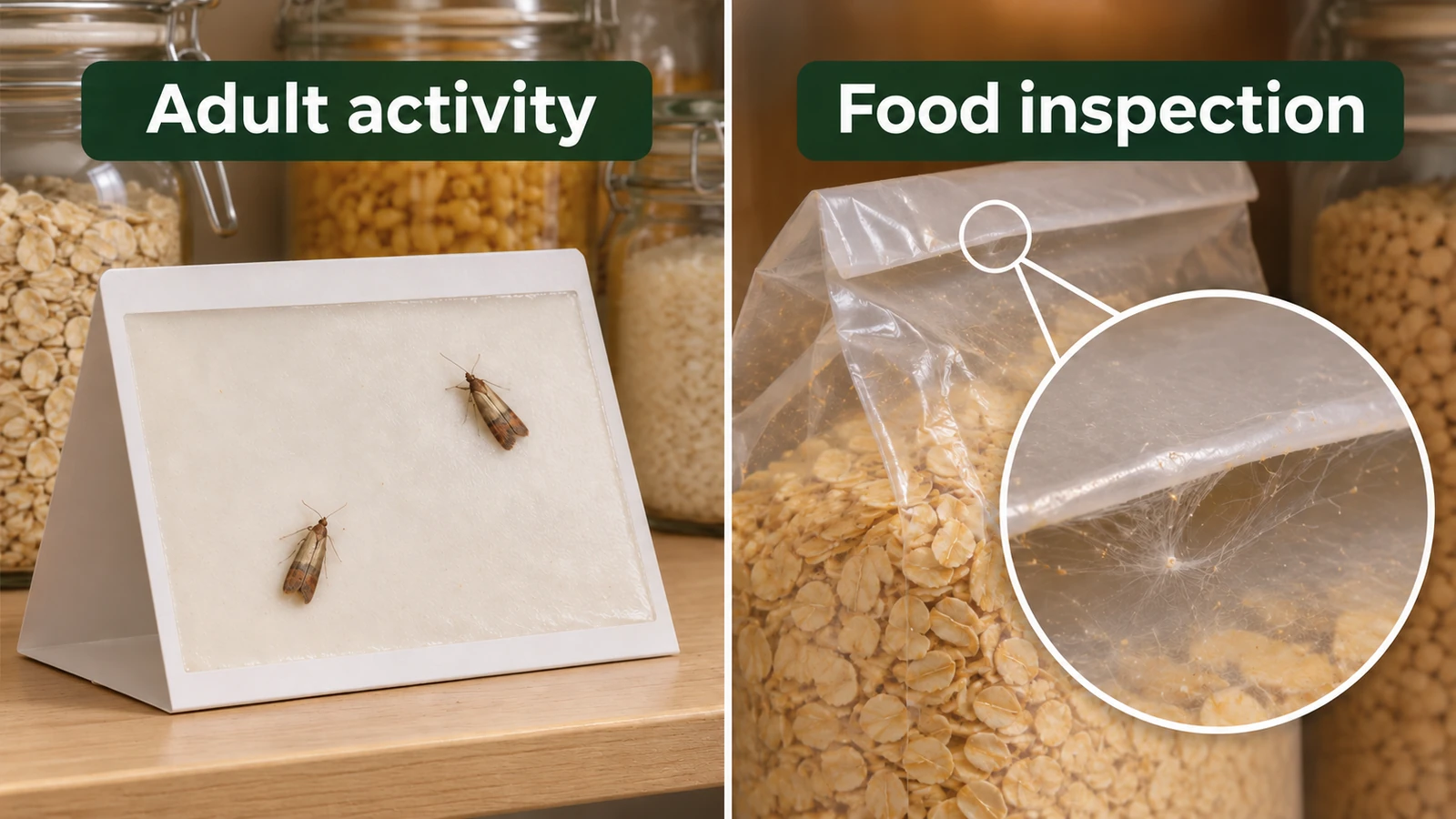
Look for these changes as you check the area:
- No fresh silk, clumped food, or larvae in the products you kept.
- No new cocoons around shelves or adjacent wall and ceiling corners.
- Adult sightings gradually becoming less frequent rather than continuing in the same location.
Expected Result
New signs in stored food stop, and adult moth activity tapers off. A few adults may still appear for up to about three weeks after the infested food is removed, because some were already developing elsewhere.
What to do if moths keep showing up
If you find new webbing or larvae, search the retained food again before buying additional traps or cleaners. Recheck unopened packages, dry animal food, birdseed, nearby cabinets, and seed-based decorations. Inspect around shelf liners and behind storage containers that were not moved during the first cleanup.
If adults continue appearing after roughly three weeks, an overlooked source becomes more likely. Follow the activity back toward stored dry material rather than spraying the room. Where rodents have stored seeds or grain in an inaccessible area, that hidden material may also support pantry pests.
When Should You Call a Professional?
For a small infestation traced to a bag of food, thorough DIY removal is usually enough. Consider a pest-control professional if activity continues after a repeat inspection and cleanup, or if the likely source is in an area you cannot safely reach or inspect.
Use the first new clue to decide which step to repeat:
| What you notice | Possible explanation | What to do next |
|---|---|---|
| A few adults appear but no new food damage is visible | Moths are emerging from cocoons formed earlier | Vacuum the adults, check nearby corners, and keep monitoring. |
| New larvae or webbing appear in stored food | A package was missed or newly introduced | Seal and discard the affected food, then inspect neighboring products. |
| Traps keep catching moths while pantry shelves look clear | The source may be outside the main pantry | Check pet food, birdseed, dry decorations, and nearby storage spaces. |
Keep dry goods protected as activity fades
Keep susceptible foods sealed while you watch for fresh signs over the next few weeks. Check new packages before putting them away, clean containers before refilling them, and use older stock first rather than letting opened bags sit at the back of a shelf.
Once the area stays free of new larvae and webbing and adult activity has faded, normal storage can resume. Tight lids and prompt cleanup of spilled food remain useful long after the moths disappear.
Explore this topic further: